How to Prepare for a First Menopause Hormone Therapy Appointment
A clear picture of your symptoms, health history, and priorities can make it easier to weigh hormone therapy against other options.
Bring a short record of what’s bothering you, how it affects daily life, your health history, and the medicines or hormones you use. Your clinician can use those details to discuss whether hormone therapy fits your goals, what form might be considered, and how your personal risks affect the decision. You can also ask about nonhormonal options and when you’ll revisit the plan. 12
A first appointment about menopause hormone therapy (also called menopausal hormone therapy or HRT) is a decision-making conversation, not a promise of a prescription. The useful starting point is what you want help with, what matters to you, and which parts of your health history could change the balance of benefits and risks. Hormone therapy is an effective option for hot flashes and night sweats, and for genitourinary symptoms such as vaginal or urinary changes. It isn’t the only option. 12
Bring the details that shape the conversation
You don’t need a perfect symptom diary. A few notes can help you describe the pattern and its impact:
- What you’re experiencing: for example, hot flashes, night sweats, sleep disruption, vaginal dryness, or discomfort with sex.
- When it started and how it’s changed: include whether symptoms seem connected to menstrual changes, if you still have periods, or whether you’ve reached menopause.
- What you most want to improve: sleep, comfort during sex, fewer hot flashes, or another specific goal.
- What you’ve already tried: include hormone products, over-the-counter treatments, or other approaches, and whether they helped or caused problems.
Also bring a current medication and supplement list, details of any hormone therapy you’ve used before, and relevant health history. Mention prior breast or other hormone-sensitive cancer, cardiovascular disease, and any other conditions you’re concerned may affect treatment. These details don’t determine the answer on their own; they help the clinician assess your situation rather than treating hormone therapy as one-size-fits-all. 12
Questions that clarify the options
You might ask:
- Which of my symptoms could hormone therapy help, and which might need a different approach? Systemic hormone therapy is used for symptoms such as hot flashes and night sweats. For bothersome vaginal or urinary symptoms, local vaginal treatment may be an option, and it’s worth asking whether you need systemic treatment at all. 1
- What options fit my health history and preferences? Ask how the potential benefits and risks vary with the type of hormone, route, and whether a progestogen is part of the plan. These factors, as well as timing, affect the balance of risks and benefits. 1
- If estrogen is considered, would progesterone or another progestin also be needed in my situation? Ask what the reason would be and how the options differ for you. Whether a progestogen is used is one factor in individualized treatment decisions. 1
- What are the alternatives if I prefer not to use hormones, or they aren’t a good fit? Evidence-supported nonhormonal options for hot flashes and night sweats include certain prescription medicines, cognitive behavioral therapy, and clinical hypnosis. Which options suit you depends on your circumstances and preferences. 2
- When should we check whether the plan is helping and revisit the tradeoffs? Hormone therapy should be individualized and periodically reevaluated, including when considering continued use. 1
Timing is part of the discussion, not the whole answer
For women younger than 60 or within 10 years of menopause onset who have no contraindications, the 2022 North American Menopause Society statement describes the benefit-risk balance as favorable when treating bothersome vasomotor symptoms or preventing bone loss. It describes a less favorable balance for starting therapy after age 60 or more than 10 years after menopause, because certain absolute risks are greater. These are broad clinical considerations, not a personal verdict: your symptoms, health history, treatment goals, and preferences still matter. 1
If you’ve had breast cancer, say so plainly and ask how that history changes the choices. A consensus review emphasizes weighing symptom impact, potential effects on recurrence risk, and the individual’s preferences; treatment decisions in this setting need particular care. 3
Leave with a plan you understand
Before you finish, try to make sure you know what option you’re considering and what it is meant to help, what uncertainties or risks matter most in your case, and when you’ll review whether it’s working. If you decide against hormone therapy, ask which nonhormonal or symptom-specific approaches are reasonable next steps. A good outcome from the appointment is a clear, shared plan, even if the plan is to think it over.
Your appointment notes
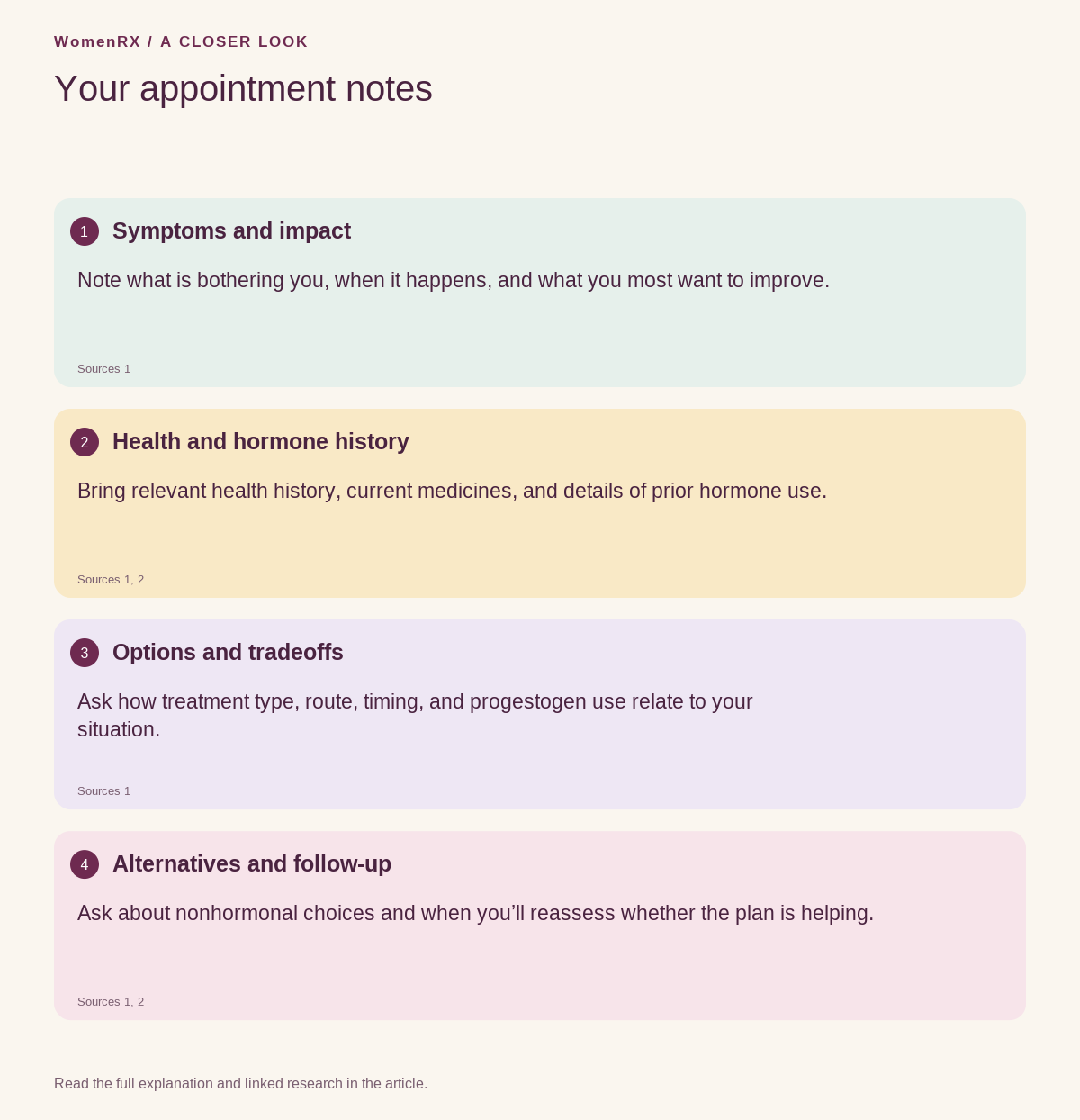
Symptoms and impact: Note what is bothering you, when it happens, and what you most want to improve.1
Health and hormone history: Bring relevant health history, current medicines, and details of prior hormone use.12
Options and tradeoffs: Ask how treatment type, route, timing, and progestogen use relate to your situation.1
Alternatives and follow-up: Ask about nonhormonal choices and when you’ll reassess whether the plan is helping.12
Read the figure as text
Use these prompts to organize what you want the clinician to know and what you want to leave understanding.- Symptoms and impact: Note what is bothering you, when it happens, and what you most want to improve.1
- Health and hormone history: Bring relevant health history, current medicines, and details of prior hormone use.12
- Options and tradeoffs: Ask how treatment type, route, timing, and progestogen use relate to your situation.1
- Alternatives and follow-up: Ask about nonhormonal choices and when you’ll reassess whether the plan is helping.12
More questions, answered
Does a first appointment mean I have to start hormone therapy?
No. The goal is to discuss your symptoms, priorities, health history, and options. Nonhormonal treatments are available for hot flashes and night sweats, and the plan should reflect your preferences. 2
Sources you can check
- The 2022 hormone therapy position statement of The North American Menopause Society.“The 2022 Hormone Therapy Position Statement of The North American Menopause Society” Advisory Panel. · Menopause (New York, N.Y.) · 2022Return to first citation
- The 2023 nonhormone therapy position statement of The North American Menopause Society.Menopause (New York, N.Y.) · 2023Return to first citation
- Menopausal hormone therapy for breast cancer patients: what is the current evidence?Glynne S, Simon J, Branson A, Payne S, Newson L, Manyonda I, Cleator S, Douek M, Usiskin S, Tobias JS, Vaidya JS. · Menopause (New York, N.Y.) · 2026Return to first citation