Your First Three Months on Menopause Hormone Therapy
Track symptoms, possible side effects, and bleeding in relation to your treatment schedule, without assuming there’s a fixed adjustment period.
Each week, note which symptoms you hoped hormone therapy would ease, any new effects, and when bleeding happens in relation to your periods and prescribed schedule. Menopause symptoms and treatment side effects can overlap; possible progestogen effects include tiredness, dizziness, and acne. Bleeding expectations vary by regimen. Seek advice sooner if bleeding becomes heavier or returns after a while without periods. 1
Treat the first three months as a check-in, not a deadline
Hormone therapy is the most effective treatment for menopause-related hot flashes and night sweats, but that doesn’t mean everyone responds on the same schedule. A three-month review is a useful opportunity to discuss what’s changing, what isn’t, and whether side effects are manageable. Treatment should be individualized and periodically reassessed. 12
Once a week, jot down the symptoms you wanted treatment to help with, such as hot flashes or sleep disruption, and whether they’re less disruptive, unchanged, or worse. Add any new effects and when they began. Menopause symptoms and hormone side effects can feel similar, so a pattern over time may be more useful than trying to identify the cause of one difficult day. 1
Possible progestogen side effects include tiredness, dizziness, or acne. You may have none, or you may notice a different effect. Record what you experience, whether it’s easing or continuing, and how it affects your day. 1
Read bleeding in the context of your regimen
With sequential combined therapy, progestogen is taken for part of the month, and a withdrawal bleed at the end of that course is expected. With continuous combined therapy, irregular spotting can occur during the first four to six months. These are different patterns, not a single rule for everyone taking hormone therapy. 1
If you’re still having periods, record the dates and whether bleeding seems to fall with your natural cycle, your prescribed hormone schedule, or both. In perimenopause, your own periods may continue while you’re tracking treatment-related bleeding. If you’re unsure which regimen you take or what bleeding pattern it’s meant to produce, ask the prescriber to explain it.
A simple weekly note can include:
- Symptoms: What you hoped treatment would ease, and whether it’s less disruptive, unchanged, or worse.
- Possible side effects: What’s new, when it began, and whether it’s easing or continuing. For example, note tiredness, dizziness, or acne if you experience them. 1
- Bleeding: Dates, whether it was spotting or heavier, and how it relates to your periods and treatment schedule.
- Treatment pattern: Whether you followed the prescribed schedule, and any changes made with your prescriber’s advice.
Use the weeks to spot patterns
Weeks 1-4: Write down what symptoms are bothering you at the start, then note any new effects or bleeding. The goal is to establish a useful record, not to decide from a single day whether treatment is working. 1
Weeks 5-8: Compare your notes. Are the symptoms you’re treating less disruptive, much the same, or worse? Are possible side effects easing or still affecting you? These are practical check-in points, not stages everyone passes through.
Weeks 9-12: Summarize what has changed and what hasn’t for your review. The NHS advises raising irregular bleeding at the first review after three months, and says severe side effects or side effects that continue longer than three months are reasons to seek advice. You don’t need to wait for that review if a problem is severe or bleeding becomes heavier. 1
Know when bleeding needs earlier advice
Some spotting can occur early on, particularly with continuous combined therapy, and a bleed at the end of the progestogen course is expected with sequential therapy. But don’t dismiss bleeding that becomes heavier, or bleeding after you’ve had no periods for a while, as routine adjustment. Contact your prescriber for advice. 1
Bring the pattern, not just a yes-or-no answer about whether treatment is working: which symptoms changed, what side effects you noticed, and how bleeding fits your regimen. That gives you a clearer basis for discussing whether the current plan still suits you. Treatment choices and risks vary, so reassessment should be individualized. 2
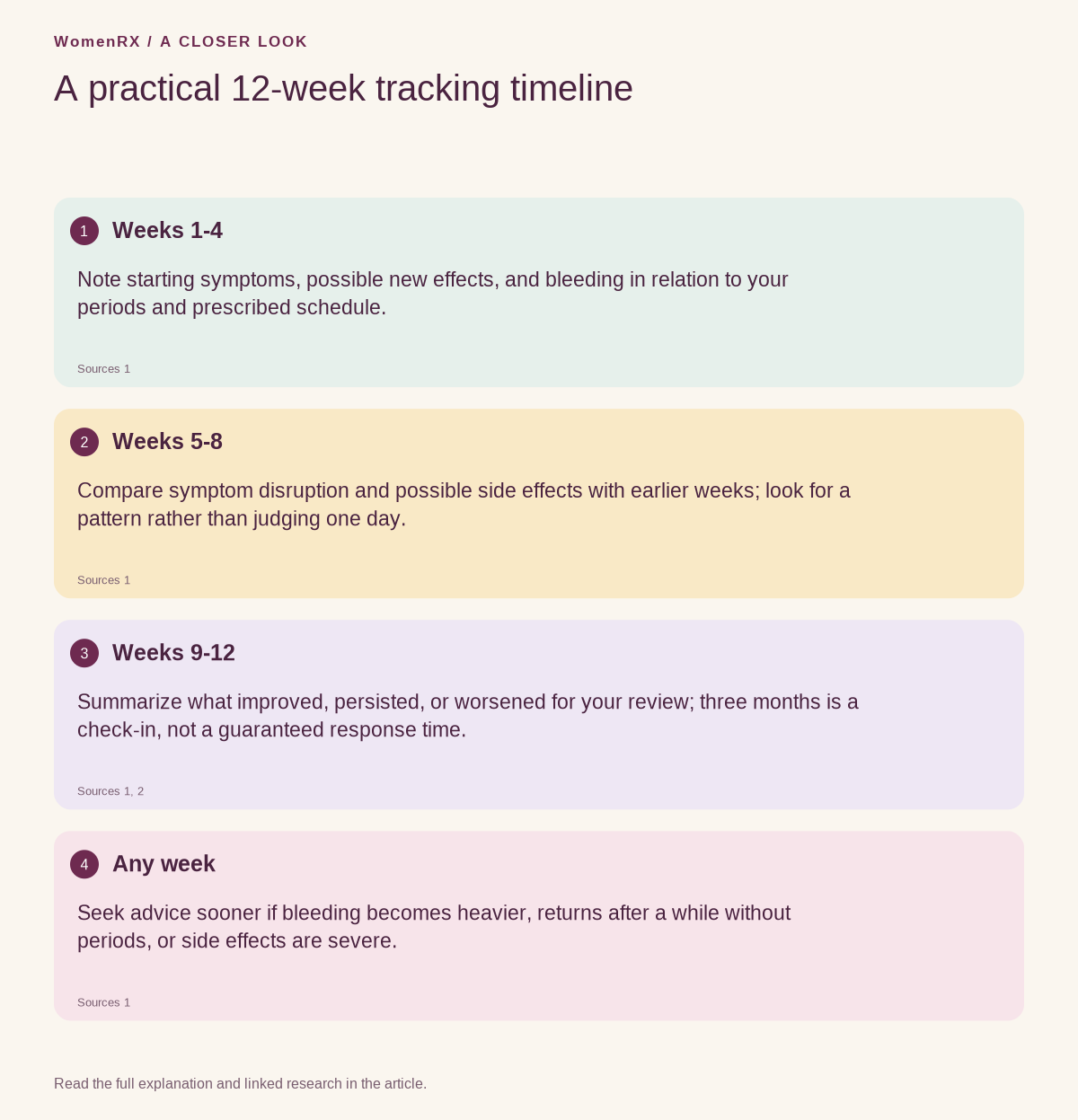
A practical 12-week tracking timeline
Weeks 1-4: Note starting symptoms, possible new effects, and bleeding in relation to your periods and prescribed schedule.1
Weeks 5-8: Compare symptom disruption and possible side effects with earlier weeks; look for a pattern rather than judging one day.1
Weeks 9-12: Summarize what improved, persisted, or worsened for your review; three months is a check-in, not a guaranteed response time.12
Any week: Seek advice sooner if bleeding becomes heavier, returns after a while without periods, or side effects are severe.1
Read the figure as text
Use these check-in points to record patterns, not to assume when treatment should work or side effects should end.- Weeks 1-4: Note starting symptoms, possible new effects, and bleeding in relation to your periods and prescribed schedule.1
- Weeks 5-8: Compare symptom disruption and possible side effects with earlier weeks; look for a pattern rather than judging one day.1
- Weeks 9-12: Summarize what improved, persisted, or worsened for your review; three months is a check-in, not a guaranteed response time.12
- Any week: Seek advice sooner if bleeding becomes heavier, returns after a while without periods, or side effects are severe.1
Sources you can check
- Side effects of hormone replacement therapy (HRT) - NHSAccessed 2026-09-25Return to first citation
- The 2022 hormone therapy position statement of The North American Menopause Society.“The 2022 Hormone Therapy Position Statement of The North American Menopause Society” Advisory Panel. · Menopause (New York, N.Y.) · 2022Return to first citation