Glucomannan: What the Evidence Says
Glucomannan isn’t a dependable weight-loss aid. A small pregnancy study offers limited insight into constipation, and tablet forms have been linked to esophageal blockage.
Glucomannan is a soluble fiber from konjac root. It absorbs water, but that property hasn’t translated into reliable weight loss in clinical trials. A small study in pregnant women reported improved bowel frequency, but it can’t establish benefits at other life stages. Tablet forms have been linked to esophageal blockage. 1 4
Glucomannan is a soluble dietary fiber derived from konjac root. It absorbs water in the digestive tract, which researchers have proposed could increase fullness and slow stomach emptying. Those proposed effects are not the same as proof of a health benefit: studies have found different results depending on the outcome measured. 1
Weight loss: a plausible idea, inconsistent results
Feeling fuller might sound like it should lead to weight loss, but the clinical results don’t reliably show that. One small US study in 20 women with obesity reported greater weight loss with glucomannan than with placebo over eight weeks. Other studies, including trials in men and adults with overweight or obesity, did not find a significant difference. 1
The larger picture is less encouraging than that one small study: two meta-analyses summarized by the NIH Office of Dietary Supplements found no significant weight-loss benefit compared with placebo. An older review of studies focused mainly on blood lipids and glucose did find a small average difference in weight, but the later reviews did not confirm a significant effect. Taken together, glucomannan isn’t a dependable weight-loss aid. 1
Women have been included in some research, but the evidence doesn’t show a special benefit for women. The summaries of the pooled studies report overall results, not women-specific estimates. One women-only weight study was small, so it can’t tell us whether results differ by menstrual stage, perimenopause, or postmenopause. 1
Glucomannan appears to have beneficial effects on blood lipids, but that finding alone doesn’t establish it as a way to manage high cholesterol. 1 If you’re managing high cholesterol, a blood test measures your levels, and care can include heart-healthy habits and, when needed, medication. 2 3 A supplement claim shouldn’t replace that care plan.
Constipation: a limited finding in pregnancy
A small clinical trial compared glucomannan with magnesium hydroxide in 64 pregnant women with constipation, all in their third trimester. After one month, the researchers reported improved bowel-movement frequency in the glucomannan group. But participants were assigned alternately rather than by a clearly described random process, and a single small study can’t establish how well glucomannan works for constipation generally or what its effects are at other stages of life. 4
That distinction matters if you’re not pregnant, or if you’re pregnant but outside the third trimester: this study doesn’t answer those situations. It also isn’t enough to establish safety during pregnancy. 4
The form matters for safety
Common short-term side effects include gas, bloating, loose stools, diarrhea, constipation, belching, and abdominal discomfort. Long-term safety hasn’t been well studied. 1
The clearest specific safety concern is with tablets: tablet forms have been associated with cases of esophageal obstruction. The NIH Office of Dietary Supplements reports that powdered and capsule forms haven’t been associated with that effect, but this isn’t proof that every product or use is risk-free. 1
Products can also combine glucomannan with other ingredients. When a product has multiple ingredients, it may be hard to tell which one caused an effect or whether the product matches what was studied. If you’re comparing products, look at the full ingredient list rather than relying on a weight-loss or cholesterol claim on the front of the package. 1
A practical way to weigh the choice
If your main goal is weight loss, the overall trial evidence doesn’t support expecting a reliable result. A small third-trimester study offers limited insight into constipation during pregnancy. 1 4
So the useful question isn’t simply whether glucomannan “works.” It’s whether the specific outcome you care about has convincing evidence, and whether the form’s risks are acceptable to you. If you’re managing high cholesterol, keep your testing and care plan in place. Because obstruction reports involved tablets, weigh that risk before choosing a tablet rather than a powder or capsule. Also check whether the product is a multi-ingredient blend. 1
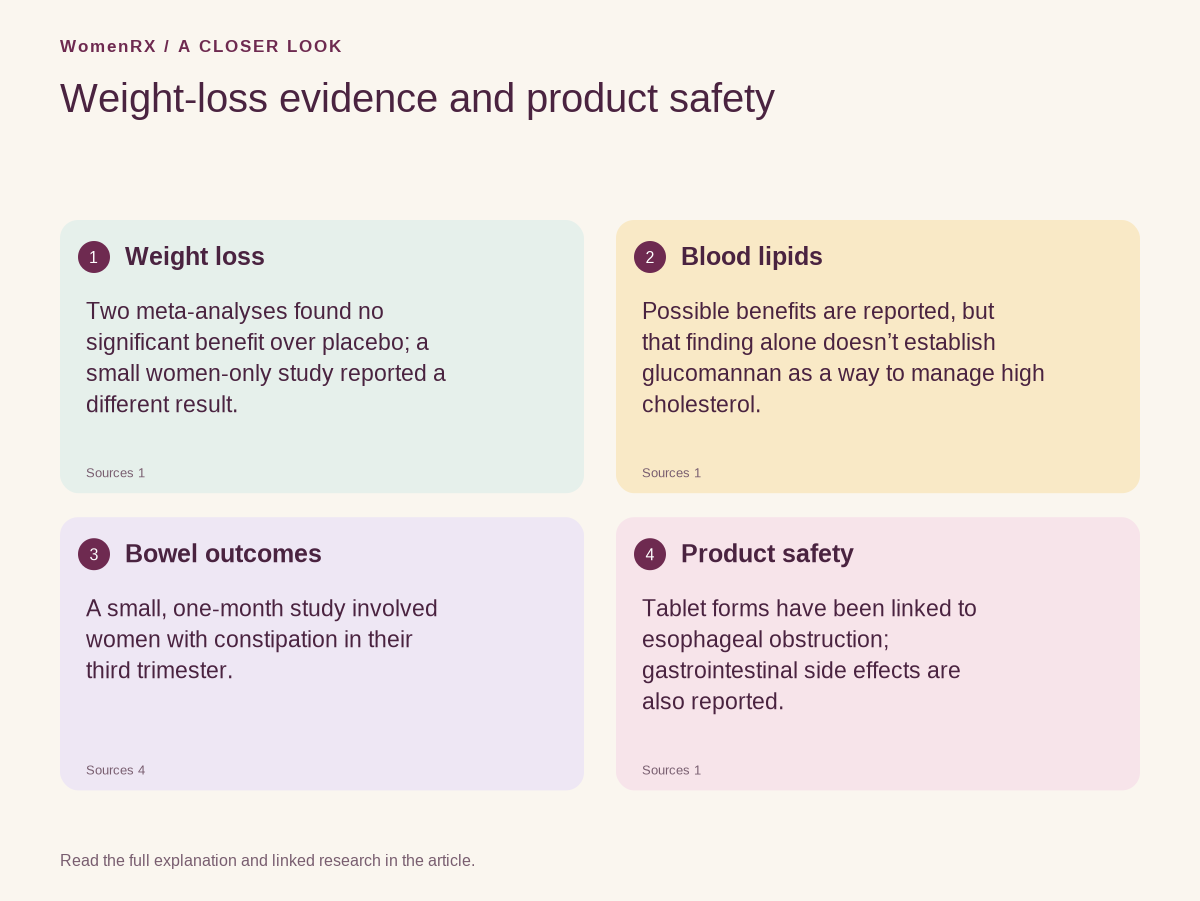
Weight-loss evidence and product safety
Weight loss: Two meta-analyses found no significant benefit over placebo; a small women-only study reported a different result.1
Blood lipids: Possible benefits are reported, but that finding alone doesn’t establish glucomannan as a way to manage high cholesterol.1
Bowel outcomes: A small, one-month study involved women with constipation in their third trimester.4
Product safety: Tablet forms have been linked to esophageal obstruction; gastrointestinal side effects are also reported.1
Read the figure as text
Weight-loss results are inconsistent, and tablet forms have been linked to esophageal obstruction. Findings on other outcomes are more limited.- Weight loss: Two meta-analyses found no significant benefit over placebo; a small women-only study reported a different result.1
- Blood lipids: Possible benefits are reported, but that finding alone doesn’t establish glucomannan as a way to manage high cholesterol.1
- Bowel outcomes: A small, one-month study involved women with constipation in their third trimester.4
- Product safety: Tablet forms have been linked to esophageal obstruction; gastrointestinal side effects are also reported.1
More questions, answered
Does glucomannan have a proven special benefit for women?
No special benefit is established. Some studies included women, including one small women-only weight-loss trial, but the pooled results summarized by the NIH Office of Dietary Supplements are not reported separately for women or by life stage. 1
Is glucomannan proven to treat constipation during pregnancy?
No. A small study in 64 women in their third trimester reported improved bowel-movement frequency after a month, but that result isn’t enough to establish effectiveness or safety for pregnancy generally. 4
Sources you can check
- Dietary Supplements for Weight Loss - Health Professional Fact SheetAccessed 2026-09-25Return to first citation
- Cholesterol | MedlinePlusAccessed 2026-09-25Return to first citation
- Cholesterol Medicines: MedlinePlusAccessed 2026-09-25Return to first citation
- The effect of glucomannan on pregnancy constipation.Janani F, Changaee F. · Journal of family medicine and primary care · 2018Return to first citation