GLP-1 Medicines and Fibroids: What’s Actually Known
Menstrual changes have appeared in GLP-1 adverse-event reports, but those reports don’t show whether the medicines affect fibroids.
The adverse-event analysis does not establish whether GLP-1 medicines change fibroid size, relieve fibroid pain, or treat fibroid-related bleeding. A study of adverse-event reports found differences in menstrual reports across medicines, but it didn’t identify which people had fibroids or measure fibroid outcomes. If heavy bleeding is already part of your life, keep its evaluation and treatment on a separate track. 52
A change in your period isn’t a measurement of your fibroids
It’s reasonable to wonder about a connection. Fibroids can cause heavy or painful periods and bleeding between periods, while many cause no symptoms at all. The symptoms you have can depend on a fibroid’s location, size, and number. 2
But bleeding alone can’t tell you whether a fibroid has grown or shrunk. Abnormal bleeding can have other causes, including hormone or thyroid problems and uterine polyps. A clinician may use an exam, blood tests, or imaging to work out what’s changed. 12
That distinction matters if you start a medicine such as semaglutide, liraglutide, or tirzepatide and then notice a different period. The timing is worth mentioning, but it doesn’t establish that the medicine changed your fibroids. Nor should a lighter period be taken as proof that a fibroid is smaller.
What the GLP-1 research can, and can’t, tell you
A 2026 study analyzed reports submitted to the U.S. FDA Adverse Event Reporting System for six medicines, including semaglutide, liraglutide, and tirzepatide. It found differences in how often certain menstrual events were reported alongside different medicines. For example, semaglutide had higher reporting odds for some events, including delayed menstruation and menstrual clots; tirzepatide had lower reporting odds for several events, including heavy menstrual bleeding. Semaglutide’s heavy-menstrual-bleeding finding was not statistically significant. 5
Those are reporting patterns, not rates of bleeding among everyone taking each medicine. The analysis did not establish that a medicine caused or prevented an event. Crucially for this question, it did not report fibroid size, identify bleeding or pain specifically caused by fibroids, or test how GLP-1 medicines work alongside fibroid treatments. It cannot tell you which medicine would be better for your fibroid symptoms. 5
Keep heavy bleeding on its own care track
If your bleeding is heavy, prolonged, or happening between periods, don’t wait to see whether weight change affects it. Fibroids are one possible cause, but not the only one. Heavy periods can also contribute to anemia, which may leave you tired, dizzy, or short of breath. Blood tests can help identify anemia and guide what happens next. 14
For a focused conversation before starting or while taking a GLP-1 medicine, these details are more useful than trying to guess whether the two conditions are connected:
- What has changed? Describe whether bleeding is heavier, lasts longer, or occurs between periods, and whether pelvic pain is new or different. 12
- Has heavy bleeding been checked for anemia? Mention fatigue, dizziness, or shortness of breath alongside the bleeding. 4
- What fibroid care is already underway? Bring the names of your current medicines and any planned procedures. Ask how new symptoms would be assessed and whether your treatments need to be considered together. The adverse-event study does not answer treatment-interaction questions. 25
- Do pregnancy plans affect the fibroid plan? Fibroid treatment decisions can depend on whether you want to become pregnant in the future. Bring that goal into the conversation rather than assuming a weight-loss treatment addresses it. 2
During perimenopause, it can be tempting to put every period change down to shifting hormones. Fibroids sometimes shrink during and after menopause, but bleeding that’s unusual for you still deserves its own explanation. Bleeding after menopause is abnormal bleeding. 21
Seek prompt care if pelvic pain is severe or getting worse, especially with heavy vaginal bleeding, faintness, or a possible pregnancy. Those combinations need assessment rather than an assumption that the fibroid or a new medicine is responsible. 3
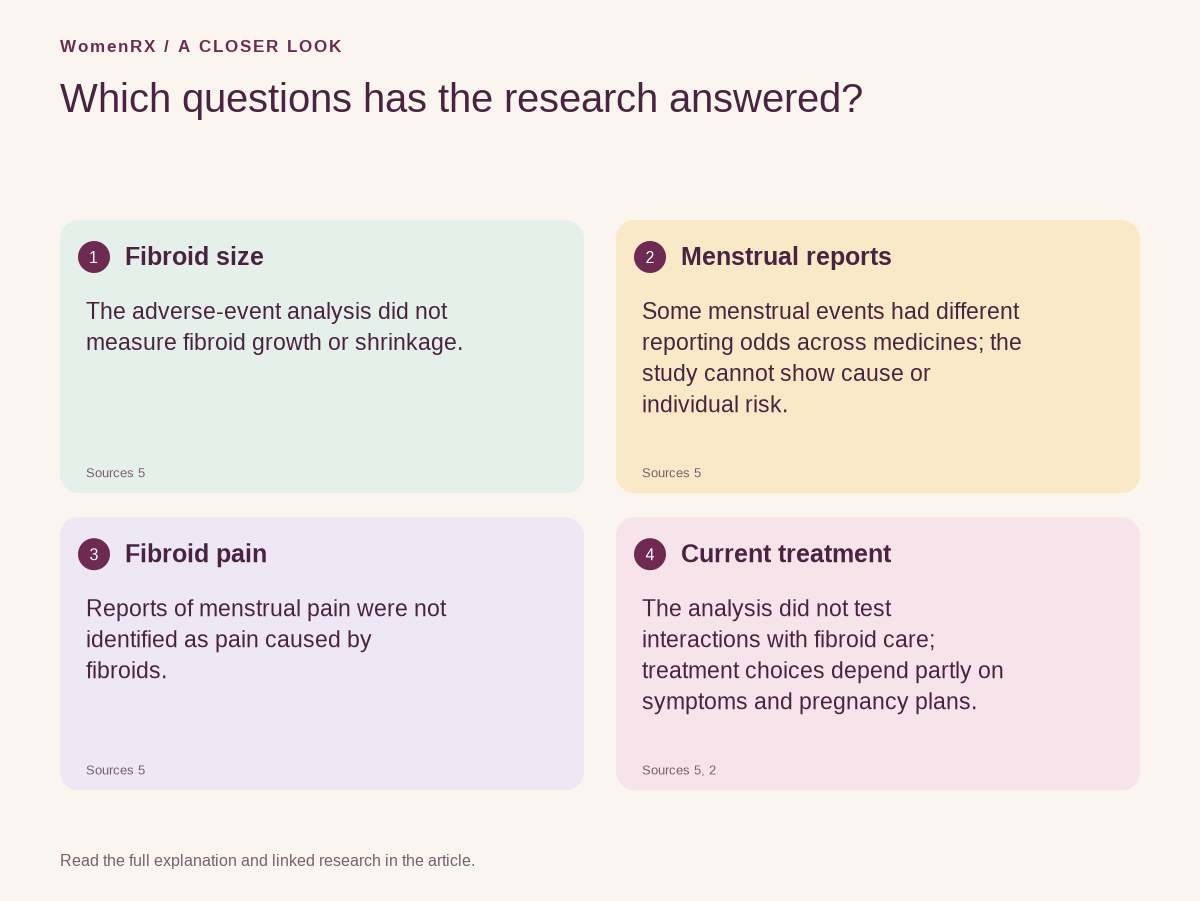
Which questions has the research answered?
Fibroid size: The adverse-event analysis did not measure fibroid growth or shrinkage.5
Menstrual reports: Some menstrual events had different reporting odds across medicines; the study cannot show cause or individual risk.5
Fibroid pain: Reports of menstrual pain were not identified as pain caused by fibroids.5
Current treatment: The analysis did not test interactions with fibroid care; treatment choices depend partly on symptoms and pregnancy plans.52
Read the figure as text
A menstrual adverse-event report and a measured fibroid outcome answer different questions.- Fibroid size: The adverse-event analysis did not measure fibroid growth or shrinkage.5
- Menstrual reports: Some menstrual events had different reporting odds across medicines; the study cannot show cause or individual risk.5
- Fibroid pain: Reports of menstrual pain were not identified as pain caused by fibroids.5
- Current treatment: The analysis did not test interactions with fibroid care; treatment choices depend partly on symptoms and pregnancy plans.52
Sources you can check
- Vaginal Bleeding | Uterine Fibroids | MedlinePlusAccessed 2026-09-25Return to first citation
- Uterine Fibroids | Fibroids | MedlinePlusAccessed 2026-09-25Return to first citation
- Pelvic pain - NHSAccessed 2026-09-25Return to first citation
- Anemia | MedlinePlusAccessed 2026-09-25Return to first citation
- Not All GLP-1 Receptor Agonists Are Alike: Real-World Evidence of Differential Endocrine and Dermatologic Safety.Lee N, Kim Y. · Diabetes/metabolism research and reviews · 2026Return to first citation