Folate-Rich Foods: Portions You Can Build a Meal Around
Compare folate in everyday portions, turn the numbers into meal ideas, and keep pregnancy-related folic acid guidance separate.
Beans and leafy greens can make useful contributions to folate intake. Compare an amount you would actually eat: half a cup of cooked spinach supplies 131 mcg DFE, while half a cup of cooked black-eyed peas supplies 105. If pregnancy is possible, food folate does not replace the separate folic acid recommendation. 12
Compare portions, not a list of “superfoods”
A long food list is less useful than knowing what can go on tonight's plate. The table uses the portions and preparation methods in NIH's folate food table. DFE means dietary folate equivalents. These figures are reference values, not a laboratory measurement of your dinner. 1
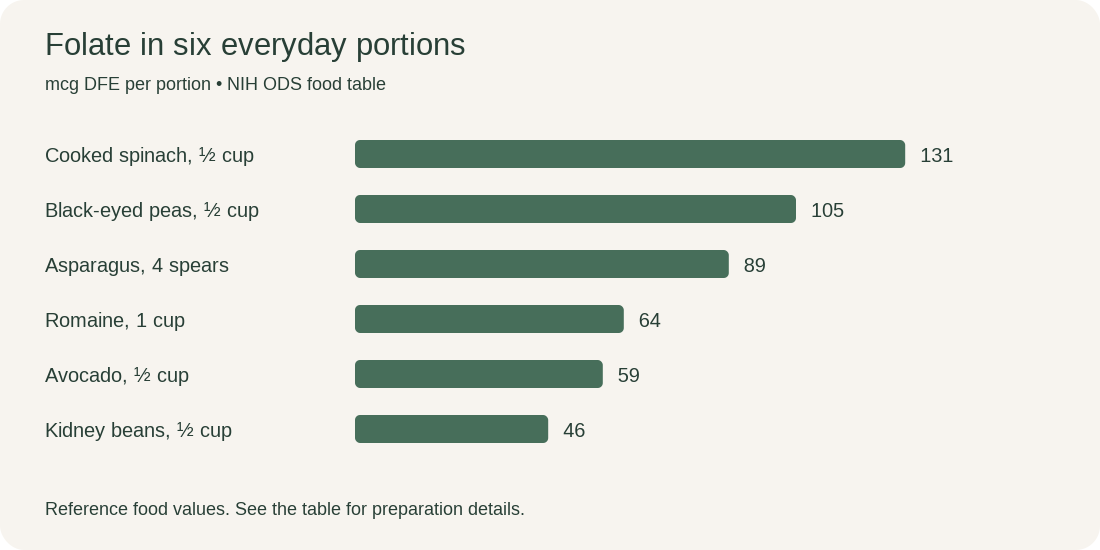
| Food and portion | Folate, mcg DFE |
|---|---|
| Cooked spinach, ½ cup | 131 |
| Cooked black-eyed peas, ½ cup | 105 |
| Boiled asparagus, 4 spears | 89 |
| Shredded romaine, 1 cup | 64 |
| Sliced avocado, ½ cup | 59 |
| Canned kidney beans, ½ cup | 46 |
Open the full diagram
Turn two ingredients into a starting point
Try choosing a familiar meal first, then adding a folate-containing ingredient you enjoy. You do not have to design an entire day around a nutrient spreadsheet.
- A warm bowl: put black-eyed peas over your usual rice or grain and add spinach on the side. Using the portions above, the peas and spinach contribute an estimated 236 mcg DFE together. That is the sum of those two ingredients, not the whole bowl.
- A chopped salad: combine romaine, avocado and kidney beans, then add the dressing and other ingredients you like. At the listed portions, those three ingredients contribute an estimated 169 mcg DFE.
- A familiar dinner: serve asparagus beside a meal already in your rotation. One change to a dinner you cook regularly may be easier to repeat than an ambitious new recipe.
These are WomenRX meal ideas with arithmetic based on the table, not tested recipes, complete meal plans or a promise that everyone will absorb the same amount. Scale the quantities to your appetite and the rest of your meal.
Make the shopping list fit your kitchen
Choose one option you will cook and one you can use without much preparation. For example, put spinach on the list for a warm meal and keep canned kidney beans for a quick salad. If asparagus is expensive or unappealing, there is no reason to make it the centerpiece of the plan.
Do not use the table as a ranking of foods overall. It answers one narrow question about folate in a specified portion. Price, preference, preparation time and what else is in the meal still matter.
Keep the folic acid question on a separate line
CDC recommends 400 mcg of folic acid daily for women who can become pregnant. Folic acid helps prevent neural tube defects, which develop early, often before pregnancy is recognized. That recommendation is not the same as adding up naturally occurring folate in vegetables. 2
For the difference between food folate, fortified foods, supplement labels and DFE, read when folic acid still matters even with a folate-rich diet. Here, the task is simpler: choose foods you will eat and build them into meals that already work for you.
Sources you can check
- NIH Office of Dietary Supplements: folate, Table 2 food values
Accessed October 31, 2026
Return to first citation - CDC: folic acid before and during early pregnancy
Accessed October 31, 2026
Return to first citation