Folate Before and During Pregnancy: Prevention vs Treatment
Folic acid prevention starts before pregnancy; treating a documented deficiency is a separate decision based on the person and the cause.
If you could become pregnant, routine prevention means getting folic acid before conception, because the neural tube closes very early. U.S. guidance recommends 400 mcg daily from supplements and/or fortified foods in addition to food folate; the USPSTF recommends a daily supplement containing 400-800 mcg, starting at least a month before conception. A diagnosed deficiency needs its own evaluation and treatment plan, not an assumed preventive dose. 1
Prevention starts before a positive test
Folate is the general name for vitamin B9 in foods, fortified foods, and supplements. Folic acid is the form used in most fortified foods and many supplements. Getting enough folic acid around conception helps prevent neural tube defects, which affect the developing brain or spine. 12
The timing matters: the neural tube closes about 21 to 28 days after conception, often before someone knows they’re pregnant. For this reason, U.S. guidance recommends that people who could become pregnant get 400 mcg of folic acid daily from supplements and/or fortified foods, in addition to folate from a varied diet. The U.S. Preventive Services Task Force recommends a daily supplement containing 400 to 800 mcg, starting at least one month before conception and continuing through the first two to three months of pregnancy. 1
Food folate comes from foods such as leafy greens, beans, peas, and some other vegetables. Enriched grain products and some cereals are fortified with folic acid. Those foods contribute to intake, but the prevention recommendation is specifically about folic acid from supplements and/or fortified foods, alongside a varied diet. 1
Food folate, folic acid, and supplement labels
These forms contribute to folate nutrition, but their amounts aren’t directly interchangeable on a label. The NIH Office of Dietary Supplements uses dietary folate equivalents (DFE) to account for differences in absorption: 1 mcg DFE equals 1 mcg of food folate, while 0.6 mcg of folic acid consumed with food equals 1 mcg DFE. Labels may show folate in mcg DFE and list the amount of folic acid in parentheses. 1
Some supplements contain 5-MTHF, also called methylfolate. It is a form of folate, but the NIH fact sheet says a conversion factor between 5-MTHF and DFE hasn’t been formally established. For preventing neural tube defects, the fact sheet reports that the CDC recommends folic acid, including for people with the common MTHFR 677C>T variant. Having that variant alone isn’t a reason to assume you need a different form or a higher amount. 1
A folate result answers a different question
A blood test is used to assess folate status, not to replace prevention guidance for someone who could become pregnant. Serum folate reflects recent intake more readily; red blood cell folate provides a longer-term measure. The NIH fact sheet describes serum concentrations above 3 ng/mL and red blood cell concentrations above 140 ng/mL as indicators of adequacy. Homocysteine can add information, but it isn’t specific to folate because vitamin B12 status, kidney function, and other factors can affect it. 1
A result needs to be interpreted in context. For example, a serum result may reflect recent food or supplement intake, while a red blood cell result reflects a longer period. Neither result by itself explains why a value is low or establishes the right treatment. Folate deficiency can occur alongside other nutritional problems, and vitamin B12 deficiency can also cause megaloblastic anemia. Folate may improve the anemia without preventing the nerve damage associated with B12 deficiency, so the two shouldn’t be treated as interchangeable. 1
When the question is deficiency, not prevention
If testing shows low folate, the next question is why. Diet, alcohol use, and conditions that interfere with absorption can be relevant. Some medicines also affect folate: sulfasalazine can reduce absorption; certain antiseizure medicines can lower folate and folate supplements may affect their blood levels. Methotrexate needs particular discussion because the considerations differ by why it’s being used. Don’t change a prescribed medicine or add a high-dose supplement on your own. 1
A useful question for a clinician is: “Is this a routine neural tube defect prevention question, or am I being treated for a confirmed deficiency, and what else should we check?” If you’re planning pregnancy, also mention any prior neural tube defect-affected pregnancy, medicines, digestive or absorption conditions, and existing folate results. Individual risk can change the plan; some higher-risk situations call for amounts above routine prevention guidance, which should be managed with medical supervision. 1
Routine prevention and deficiency treatment can overlap, but they aren’t the same task. Prevention is about having folic acid in place early enough; treatment is about interpreting the result, identifying the cause, and choosing a plan that fits your circumstances.
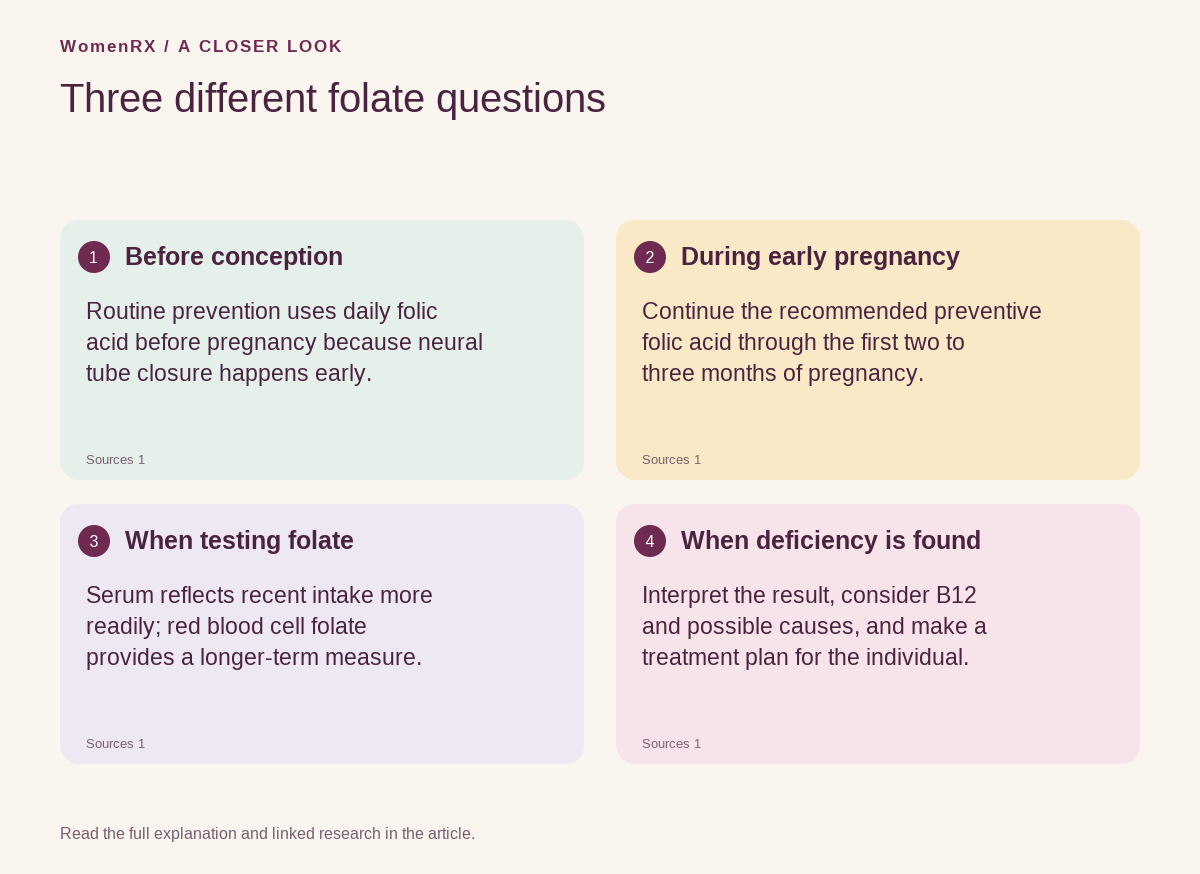
Three different folate questions
Before conception: Routine prevention uses daily folic acid before pregnancy because neural tube closure happens early.1
During early pregnancy: Continue the recommended preventive folic acid through the first two to three months of pregnancy.1
When testing folate: Serum reflects recent intake more readily; red blood cell folate provides a longer-term measure.1
When deficiency is found: Interpret the result, consider B12 and possible causes, and make a treatment plan for the individual.1
Read the figure as text
Routine prevention, a laboratory result, and treatment for deficiency answer different questions and can call for different next steps.- Before conception: Routine prevention uses daily folic acid before pregnancy because neural tube closure happens early.1
- During early pregnancy: Continue the recommended preventive folic acid through the first two to three months of pregnancy.1
- When testing folate: Serum reflects recent intake more readily; red blood cell folate provides a longer-term measure.1
- When deficiency is found: Interpret the result, consider B12 and possible causes, and make a treatment plan for the individual.1
More questions, answered
Does an MTHFR variant mean I should take methylfolate instead?
Not necessarily. The NIH fact sheet reports that the CDC recommends 400 mcg of folic acid daily for people who could become pregnant, even with the common 677C>T MTHFR variant. Ask about your own risk and supplement plan rather than changing forms or amounts based on the variant alone. 1
Sources you can check
- Folate - Health Professional Fact SheetAccessed 2026-09-25Return to first citation
- Folic Acid: MedlinePlusAccessed 2026-09-25Return to first citation