Fatigue During Perimenopause: Possible Causes and When to Get Help
Changing hormones may affect sleep and mood, but persistent tiredness can also have causes worth checking, from heavy bleeding to medication effects.
Perimenopause may contribute to fatigue indirectly when night sweats or sleep problems interrupt rest, or when mood symptoms add to the strain. But tiredness isn’t automatically part of the transition: heavy bleeding, a sleep disorder, pregnancy, medication effects, and other health conditions can also play a role. If fatigue lasts several weeks or disrupts daily life, seek an assessment rather than assuming it will pass. 1 2 3 6
How the transition might affect your energy
Fatigue means more than feeling sleepy after a short night. It can feel like low energy or weariness that makes usual activities harder. During perimenopause, symptoms such as hot flashes and mood changes may coincide with trouble sleeping. If you’re waking repeatedly, the sleep you get may be less restorative, leaving you tired the next day. Sleep problems can also have causes of their own, so the timing alone doesn’t prove perimenopause is responsible. 1 2 3
A useful distinction: sleepiness is feeling that you could doze off; fatigue is feeling depleted or lacking energy. They can overlap, but noting which describes you better may help clarify whether the main issue seems to be disrupted sleep, low energy, or both.
Follow the pattern, not just the period
For a short stretch, jot down when fatigue is strongest and what else is happening. A simple note on your phone can include:
- Sleep: bedtime, awakenings, night sweats, and whether you wake feeling rested.
- Bleeding: when it happens and whether it seems heavier or longer than your usual pattern.
- Other symptoms: hot flashes, mood changes, pain, or leg sensations that disturb sleep.
- Daytime effects: whether you’re struggling to focus, needing naps, or finding ordinary tasks harder.
- Recent changes: new or changed medicines, alcohol, caffeine, work hours, or stress.
This isn’t a diagnostic test. It can help you spot a connection, such as tired days following nights with frequent waking, and give a clearer account of what has changed. Fatigue itself has many possible causes, and a fatigue diary can help reveal patterns. 3
Clues that point beyond sleep disruption
Heavy or prolonged bleeding: Perimenopause can involve changes in menstrual timing, but bleeding may also be heavy. Blood loss is a common cause of iron deficiency, which can contribute to fatigue, even when anemia hasn’t been established. A 2025 review advises considering iron-deficiency assessment when symptoms or risk factors such as heavy menstrual bleeding are present. Don’t assume tiredness means you need iron; testing helps establish whether iron deficiency is present and what may be causing it. 4 6
Sleep symptoms that keep recurring: Regular trouble falling asleep or staying asleep, strong daytime sleepiness, or loud snoring, gasping, or pauses in breathing noticed by someone else can be clues to a sleep disorder. Tingling or crawling sensations in your legs that ease when you move them are another detail worth mentioning. These signs don’t establish a diagnosis, but they make it worth asking whether a sleep condition needs evaluation. 2
Medication changes or other health symptoms: Some medicines, including certain antidepressants, antihistamines, and medicines for nausea or pain, can be associated with fatigue. So can conditions such as thyroid disease, diabetes, anemia, depression, and anxiety. If your energy changed after starting or changing a medicine, note the timing and ask about it; don’t stop a prescribed medicine on your own. 3
A chance of pregnancy: Changing or widely spaced periods don’t by themselves rule out pregnancy. Pregnancy is one possible cause of fatigue, and pregnancies have occurred among women aged 40-55 in a study of people using natural family planning. If pregnancy is possible, include it in what you mention when seeking assessment. 3 5
When to get help
If you’ve felt tired for several weeks, contact a health care provider, especially if the fatigue is interfering with your usual activities. You don’t need to wait for a particular period pattern to bring it up. A useful assessment starts with the details that distinguish one cause from another: how long this has been happening, whether sleep is interrupted, what your bleeding is like, any medication changes, and other symptoms. Depending on that picture, evaluation may include an exam or lab tests. 3
In the meantime, a regular sleep routine may help when inconsistent sleep is part of the problem. If hot flashes, night sweats, or mood symptoms are repeatedly interrupting rest, bring those up too; there are approaches to perimenopause symptoms, including cognitive behavioral therapy for sleep problems. But don’t let a sleep strategy replace an assessment when fatigue persists or has another plausible explanation. 1 3
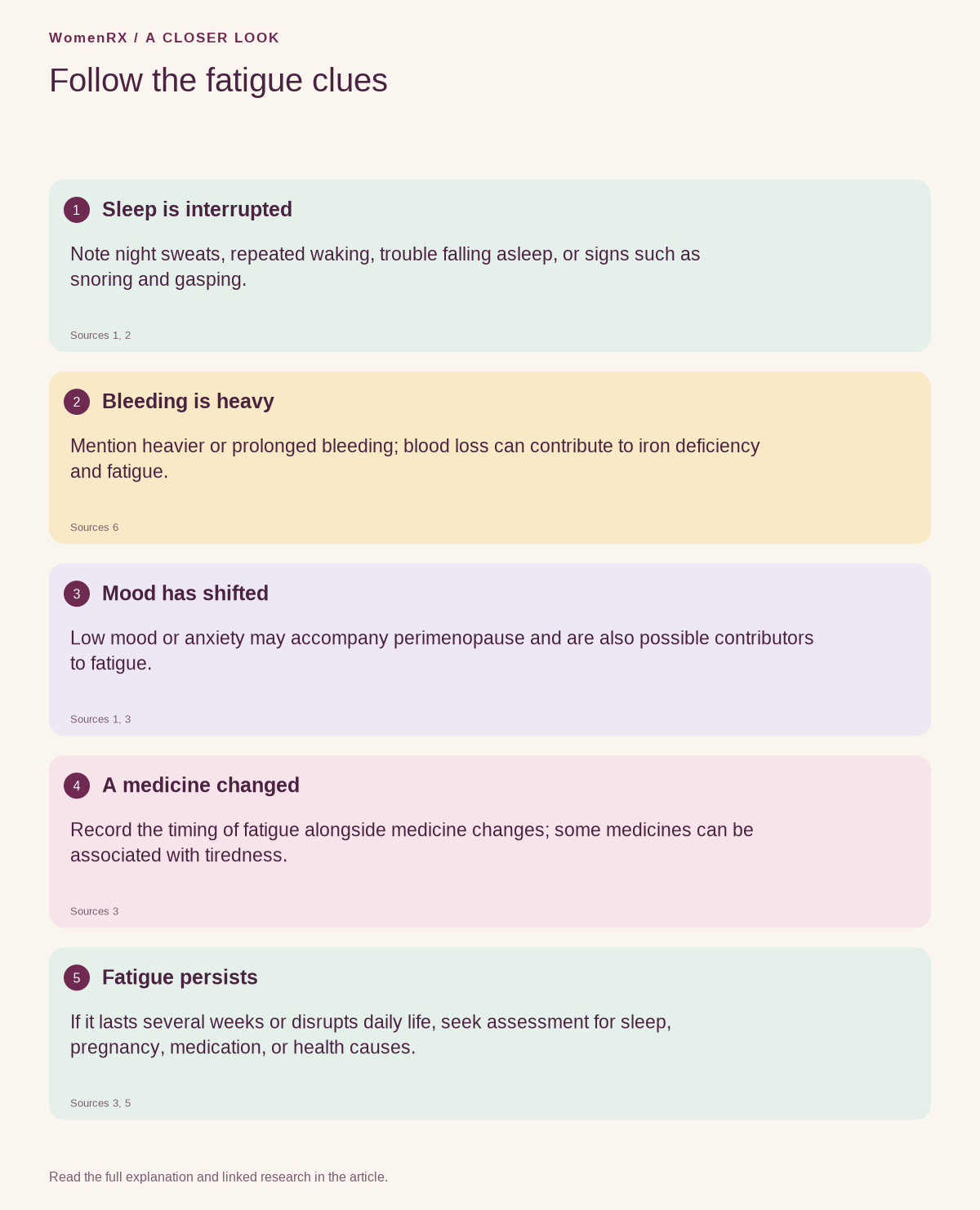
Follow the fatigue clues
Sleep is interrupted: Note night sweats, repeated waking, trouble falling asleep, or signs such as snoring and gasping.12
Bleeding is heavy: Mention heavier or prolonged bleeding; blood loss can contribute to iron deficiency and fatigue.6
Mood has shifted: Low mood or anxiety may accompany perimenopause and are also possible contributors to fatigue.13
A medicine changed: Record the timing of fatigue alongside medicine changes; some medicines can be associated with tiredness.3
Fatigue persists: If it lasts several weeks or disrupts daily life, seek assessment for sleep, pregnancy, medication, or health causes.35
Read the figure as text
Use the pattern you notice to identify what may be contributing and what to raise in an assessment. These clues guide a conversation; they do not diagnose a cause.- Sleep is interrupted: Note night sweats, repeated waking, trouble falling asleep, or signs such as snoring and gasping.12
- Bleeding is heavy: Mention heavier or prolonged bleeding; blood loss can contribute to iron deficiency and fatigue.6
- Mood has shifted: Low mood or anxiety may accompany perimenopause and are also possible contributors to fatigue.13
- A medicine changed: Record the timing of fatigue alongside medicine changes; some medicines can be associated with tiredness.3
- Fatigue persists: If it lasts several weeks or disrupts daily life, seek assessment for sleep, pregnancy, medication, or health causes.35
More questions, answered
Should I start taking iron for perimenopause fatigue?
Not based on fatigue alone. Iron deficiency can cause tiredness, and heavy menstrual bleeding is a risk factor, but testing is used to diagnose it. Ask whether assessment makes sense for your symptoms and bleeding pattern rather than treating yourself as though deficiency were confirmed. 6
Can changing periods mean I can’t get pregnant?
No. A study of women aged 40-55 who used natural family planning to avoid pregnancy recorded unintended pregnancies over 12 months. If pregnancy is possible, mention it when discussing fatigue or missed periods. 5
Sources you can check
- Things you can do to help menopause and perimenopause symptoms - NHSAccessed 2026-09-25Return to first citation
- Sleep Disorders | MedlinePlusAccessed 2026-09-25Return to first citation
- Fatigue: MedlinePlusAccessed 2026-09-25Return to first citation
- AmenorrheaNawaz G, Rogol AD, Jenkins SM. · 2024Return to first citation
- Cohort efficacy study of natural family planning among perimenopause age women.Fehring RJ, Mu Q. · Journal of obstetric, gynecologic, and neonatal nursing : JOGNN · 2014Return to first citation
- Iron Deficiency in Adults: A Review.Auerbach M, DeLoughery TG, Tirnauer JS. · JAMA · 2025Return to first citation