Why You Wake at Night and When to Get Help
The hour on the clock matters less than how often you wake, what interrupts your sleep, and how you feel the next day.
Waking at 3 a.m. doesn’t identify a particular cause. An occasional wakeful night is different from regularly waking and struggling to get back to sleep, especially if you’re tired or having trouble concentrating the next day. Stress, a changed schedule, pain, medicines, substances, or another sleep disorder may be involved. The pattern and accompanying symptoms offer better clues than the time. 12
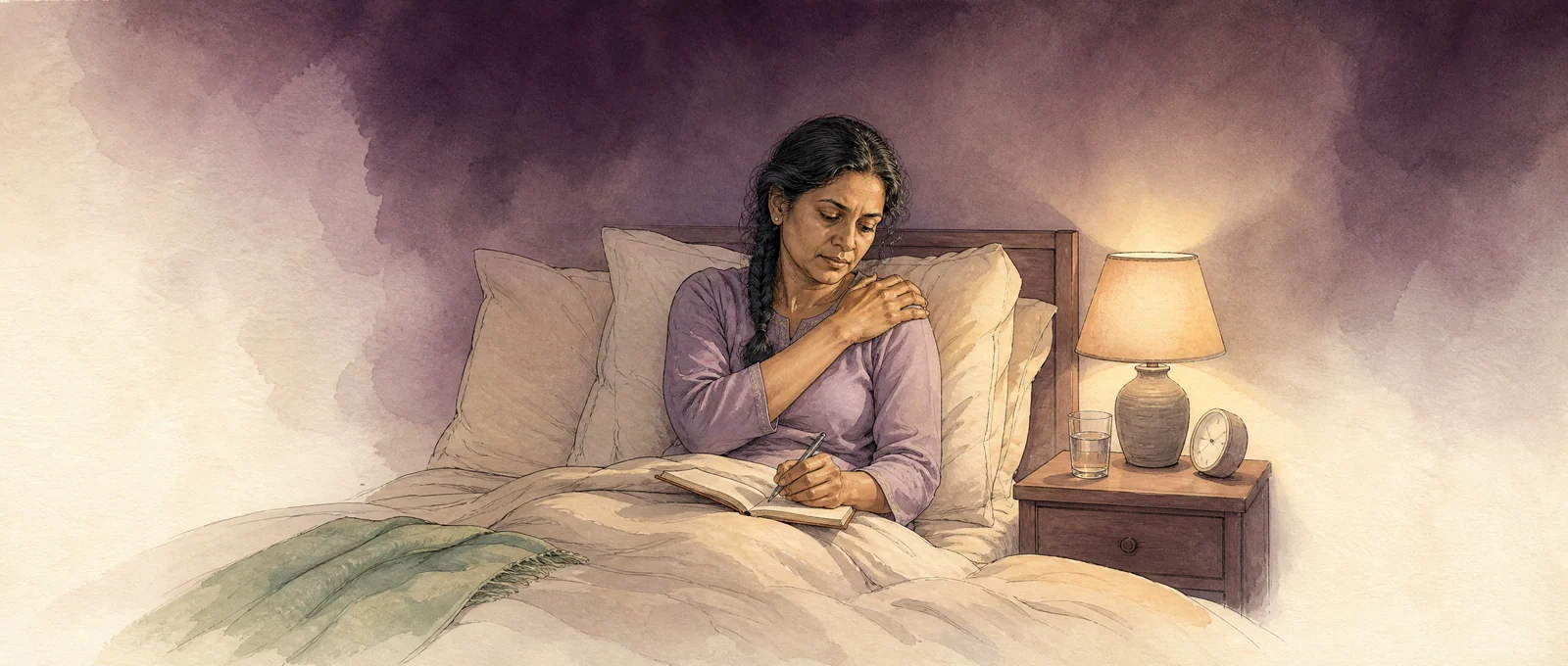
Start with what happens after you wake
Do you fall back asleep, or lie awake for a long stretch? Does it happen once in a while, or repeatedly? Insomnia can involve trouble falling asleep, staying asleep, or waking too early and being unable to return to sleep. It may leave you unrefreshed, tired, irritable, or struggling to concentrate during the day. A particular wake-up hour doesn’t tell you which cause, if any, applies. 12
A few difficult nights during a stressful spell are not the same pattern as sleep trouble that keeps returning. Short-term insomnia can follow work or family pressures or a traumatic event and may last days or weeks. If waking becomes a regular problem, look beyond the clock to what changed and what else happens when you wake. 1
Look for the clue that fits your night
Your schedule changed. Shift work, frequently changing hours, or travel across time zones can contribute to insomnia. If your waking began around a schedule change, that’s more useful information than whether the clock says 2 a.m. or 3 a.m. 12
You’re awake with stress on your mind. Stress and emotional upset can contribute to sleep trouble. For example, if you wake and begin thinking through tomorrow’s problems, notice whether that pattern began during a difficult stretch. Stress may be one part of the picture without ruling out another cause. 1
Something physical interrupts you. Long-term pain can disturb sleep. A health condition or another sleep disorder may also be involved in ongoing insomnia. If you wake because of pain, or you suspect a breathing-related sleep problem, describe that concern directly rather than treating it as a sleep-habit issue alone. 12
A medicine or substance changed. Some medicines can contribute to insomnia; caffeine, tobacco, and alcohol can too. A useful comparison is whether repeated waking began after a change in a medicine or in what you drink or use. Bring that timing up when you discuss the problem rather than stopping a prescribed medicine on your own. 12
Your mood has changed as well. Mental health conditions can occur alongside insomnia, and poor sleep can also leave you feeling anxious, depressed, or irritable. If both your sleep and mood have changed, mention both. The wake-up time alone can’t tell you which came first. 12
Your stage of life is context, not a diagnosis. If you’re pregnant, consider whether a particular discomfort wakes you or whether you wake without an obvious interruption. Postpartum, there’s a practical difference between waking to care for a baby and being unable to sleep when you have the chance. During perimenopause or after menopause, note whether a hot flash is part of the waking; hot flashes are a recognized menopause-related symptom. None of these situations makes 3 a.m. a special hormonal signal. 3
Decide whether to watch the pattern or get help
After an occasional rough night, return to your usual sleep and wake hours rather than sleeping in to make up for it. If you feel sleepy, don’t drive. These are sensible short-term steps, but a routine change won’t address every reason for repeated waking. 12
If it keeps happening, compare a few nights: Can you get back to sleep? Did your schedule, stress, pain, mood, or medicines change? Is something waking you, or are you waking without a clear interruption? This isn’t a diagnostic test. It helps you describe the problem clearly.
Seek help if sleep trouble has lasted for months or is making daily life hard to manage. You can also raise a suspected sleep disorder or another symptom that seems to be interrupting sleep. An evaluation may include your sleep and medical history and, when appropriate, a check for other causes. If the problem is ongoing insomnia, cognitive behavioral therapy is one treatment option; if another condition is contributing, addressing it matters too. 12
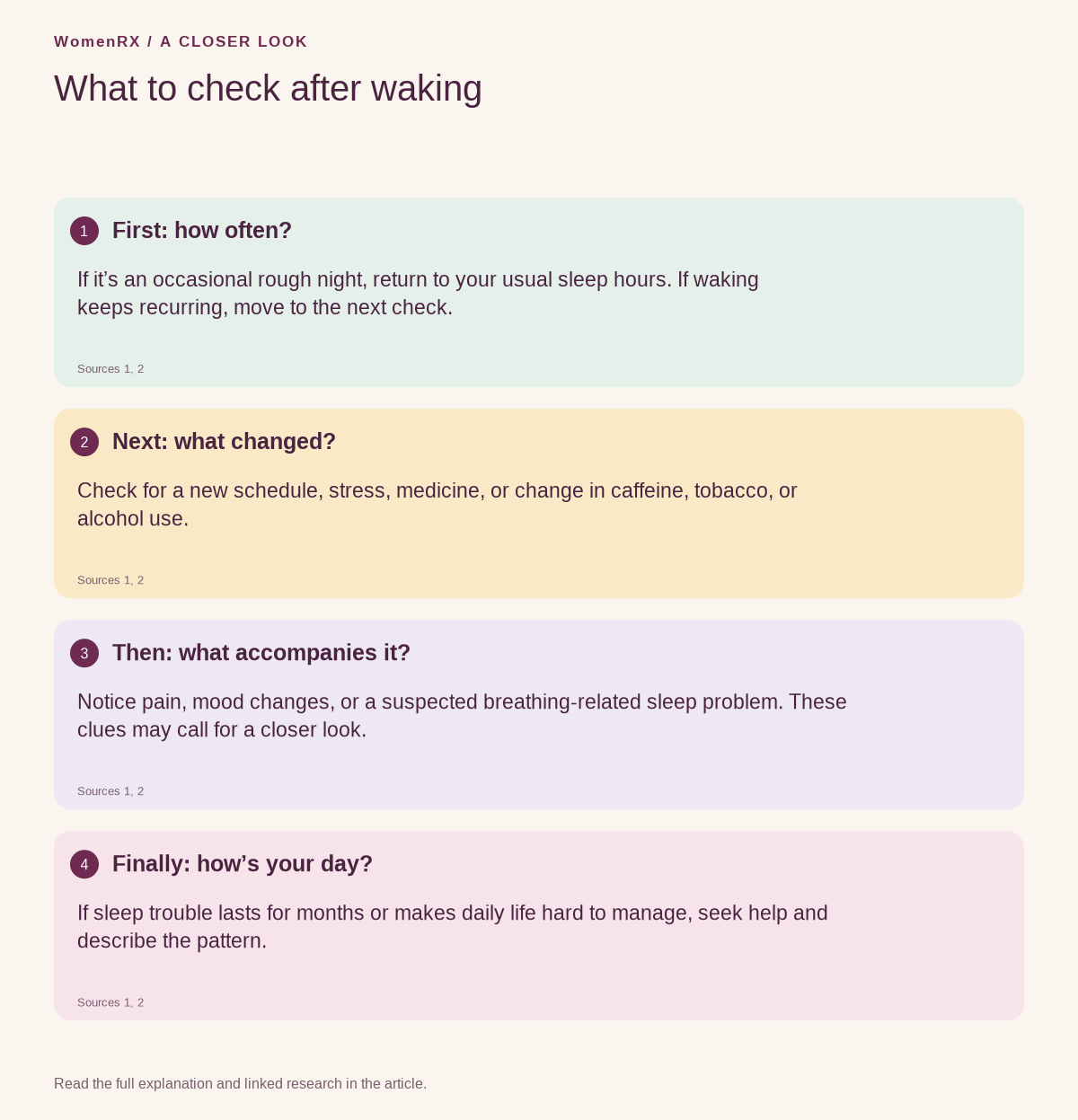
What to check after waking
First: how often?: If it’s an occasional rough night, return to your usual sleep hours. If waking keeps recurring, move to the next check.12
Next: what changed?: Check for a new schedule, stress, medicine, or change in caffeine, tobacco, or alcohol use.12
Then: what accompanies it?: Notice pain, mood changes, or a suspected breathing-related sleep problem. These clues may call for a closer look.12
Finally: how’s your day?: If sleep trouble lasts for months or makes daily life hard to manage, seek help and describe the pattern.12
Read the figure as text
Follow the route from frequency to accompanying clues, then use daytime impact to decide on a next step.- First: how often?: If it’s an occasional rough night, return to your usual sleep hours. If waking keeps recurring, move to the next check.12
- Next: what changed?: Check for a new schedule, stress, medicine, or change in caffeine, tobacco, or alcohol use.12
- Then: what accompanies it?: Notice pain, mood changes, or a suspected breathing-related sleep problem. These clues may call for a closer look.12
- Finally: how’s your day?: If sleep trouble lasts for months or makes daily life hard to manage, seek help and describe the pattern.12
Sources you can check
- Insomnia | MedlinePlusAccessed 2026-09-25Return to first citation
- Insomnia - NHSAccessed 2026-09-25Return to first citation
- Menopausal Hormone Therapy in Clinically Vulnerable Women: A Narrative Review of Guidelines and Real-World Evidence.Yanachkova V, Lebanova H, Stoev S. · Medicina (Kaunas, Lithuania) · 2026Return to first citation