Does Magnesium Glycinate Affect Weight?
Magnesium research suggests, at most, a small average weight change, but it doesn’t show that glycinate itself causes weight loss or gain.
A 2026 review of randomized trials found a small average weight reduction with magnesium supplements overall, but the reported result combines different magnesium forms and doesn’t show a separate effect for glycinate. It also found no significant change in body fat percentage, BMI, or waist circumference. So magnesium glycinate isn’t established as a weight-loss or weight-gain supplement. 3
What the weight studies actually show
The clearest relevant result comes from a 2026 systematic review and meta-analysis of 78 randomized controlled trials. Across magnesium supplements overall, participants weighed an average of 0.70 kg less than control participants (95% confidence interval: 0.09 to 1.30 kg less). That’s a modest average difference, and the review authors said its clinical importance was uncertain. 3
That number is not a result for magnesium glycinate specifically. The review grouped together different magnesium formulations. Its categories included chelated magnesium, such as magnesium diglycinate, but the reported overall weight estimate doesn’t separate glycinate from other forms. It also found no significant effects on body fat percentage, BMI, or waist or hip circumference. 3
In other words, a small difference in scale weight across mixed magnesium trials doesn’t establish that glycinate reduces body fat or changes body composition. The findings also don’t show that glycinate causes weight gain.
Weight, body fat, and magnesium status aren’t the same question
Magnesium has many roles in the body, including in energy production and blood glucose regulation. Those roles help explain why researchers study magnesium and metabolic health, but they don’t demonstrate that taking a supplement changes appetite, metabolism, or weight. 1
Magnesium status is a separate issue, too. Some people may be more likely to have inadequate magnesium intake or losses, including people with certain gastrointestinal conditions, type 2 diabetes, or alcohol dependence. Addressing an inadequate intake may matter for health, but that is not evidence that magnesium glycinate is a weight-management treatment. 1
The scale also measures more than body fat: body weight includes muscle, bone, fat, and water, and can change for everyday reasons. A weight difference by itself doesn’t tell you which part of body composition changed. 2
What we know for women, and what remains unclear
The presented pooled results don’t provide a women-specific weight estimate or show outcomes by menstrual stage, pregnancy, postpartum status, perimenopause, or postmenopause. They also don’t provide a separate weight result for glycinate. That means the overall magnesium finding can’t tell you whether glycinate affects weight for women at a particular life stage. 3
This is a limit on what the reported results can establish, not proof that no relevant study has ever been done. For now, there’s no basis here to expect a meaningful weight change from choosing glycinate over another form of magnesium.
A practical way to think about glycinate
If you’re considering magnesium glycinate for weight management, treat any weight-loss or body-composition claim as unproven. If you’re considering magnesium for another reason, keep that goal separate from the scale: evidence about magnesium’s role in the body or a person’s magnesium intake doesn’t establish a weight benefit from a particular supplement form. 13
Also check the amount of elemental magnesium on the Supplement Facts panel, rather than the total weight of the magnesium compound. 1 NIH’s Office of Dietary Supplements lists an adult upper limit of 350 mg per day from supplements and medications, not including magnesium naturally present in food; that limit is based largely on the risk of diarrhea and other gastrointestinal effects, and it is not a target intake. 1
High amounts of magnesium from supplements or medicines can cause diarrhea, nausea, and abdominal cramping. Those effects aren’t evidence of fat loss, and a short-term change on the scale doesn’t establish a change in body composition. 12
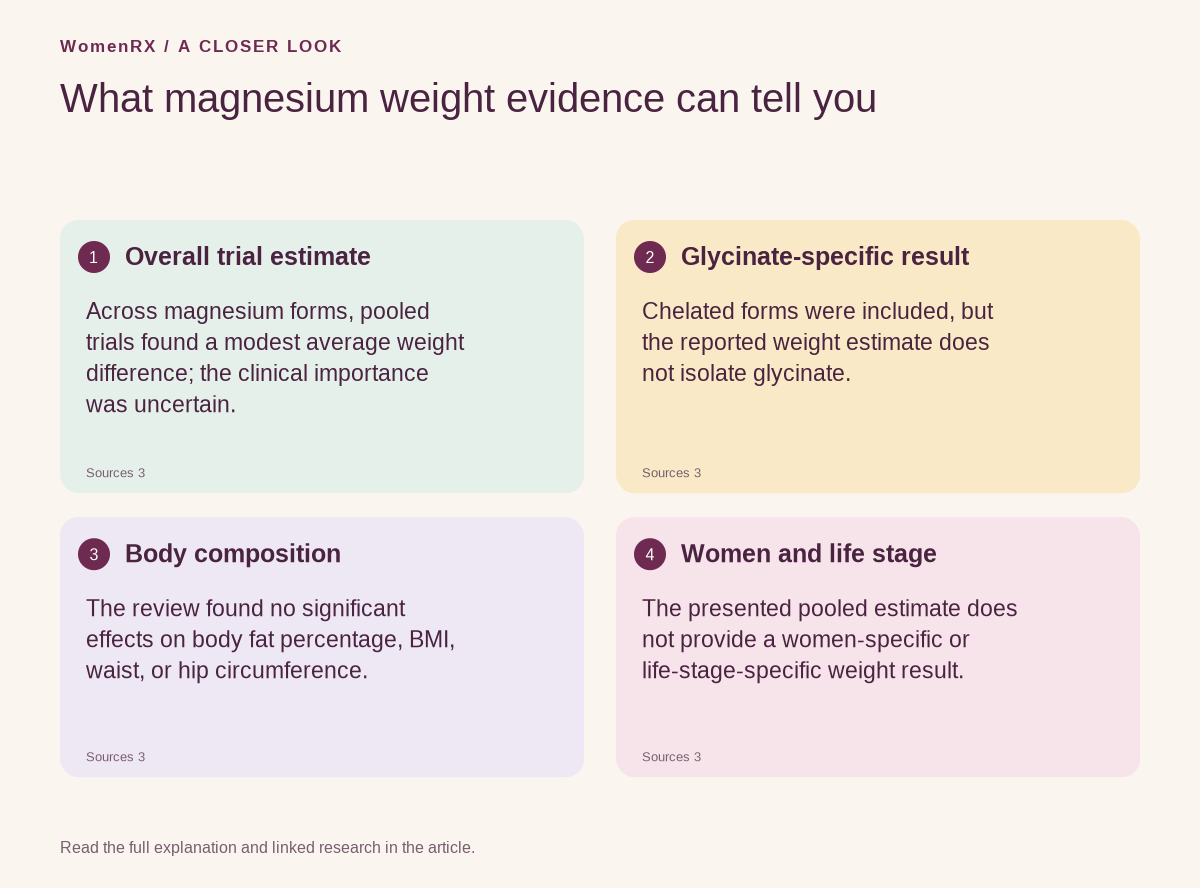
What magnesium weight evidence can tell you
Overall trial estimate: Across magnesium forms, pooled trials found a modest average weight difference; the clinical importance was uncertain.3
Glycinate-specific result: Chelated forms were included, but the reported weight estimate does not isolate glycinate.3
Body composition: The review found no significant effects on body fat percentage, BMI, waist, or hip circumference.3
Women and life stage: The presented pooled estimate does not provide a women-specific or life-stage-specific weight result.3
Read the figure as text
The overall trial result, the glycinate-specific question, and body-composition findings are distinct pieces of evidence.- Overall trial estimate: Across magnesium forms, pooled trials found a modest average weight difference; the clinical importance was uncertain.3
- Glycinate-specific result: Chelated forms were included, but the reported weight estimate does not isolate glycinate.3
- Body composition: The review found no significant effects on body fat percentage, BMI, waist, or hip circumference.3
- Women and life stage: The presented pooled estimate does not provide a women-specific or life-stage-specific weight result.3
More questions, answered
Can magnesium glycinate cause weight gain?
The reported human weight results don’t establish that glycinate causes weight gain. The large review pooled different magnesium forms and found a small average reduction in weight overall, without a separate glycinate estimate. That does not prove glycinate has no effect; it means a glycinate-specific effect isn’t established by these results. 3
Does magnesium glycinate reduce appetite or boost metabolism?
The magnesium roles described in health references include energy production and blood glucose regulation, but those functions don’t demonstrate that glycinate suppresses appetite or boosts metabolism enough to change weight. The reported trial review doesn’t provide a glycinate-specific weight result. 13
Sources you can check
- Magnesium - Health Professional Fact SheetAccessed 2026-09-25Return to first citation
- Body Weight: MedlinePlusAccessed 2026-09-25Return to first citation
- Comprehensive Effects of Magnesium Supplementation on Cardiometabolic Risk Factors: A Systematic Review and Dose-Response Meta-Analysis.Mohammadi S, Palermo A, Ojani P, Alaghemand N, Pirayvatlou PS, Mirkarimi M, Mavi SA, Tahouri K, Shokouhifar S, Ettehad Y, Borzabadi A, Ashtary-Larky D, Suzuki K, Bouzas C, Rodrigue... · Nutrients · 2026Return to first citation