Does Folate Affect Body Weight?
A small trial found changes in some metabolic markers, but not body weight, and it studied men with diabetes, not women.
In one small randomized trial, overweight and obese men with type 2 diabetes had changes in some blood-sugar and insulin-resistance measures after taking folic acid, but their body weight didn’t significantly change. This trial doesn’t establish whether folate affects weight in other groups, including women or people without diabetes. 3
The scale and metabolic markers are different outcomes
The clearest direct weight finding in the available human trial is no significant change in body weight. The study randomly assigned 48 overweight and obese men with type 2 diabetes to folic acid or placebo for eight weeks. Participants were taking metformin. The researchers reported changes in some metabolic measures in the folic-acid group, but no significant weight change in either group. 3
That distinction matters. A result involving blood sugar, insulin resistance, or homocysteine is not evidence of weight loss. Those measures may be relevant to health, but they don’t tell you that someone lost body fat or that folic acid will change the number on your scale. The trial’s metabolic findings also came from men with diabetes, so they shouldn’t be treated as results for women or for everyone with a higher body weight. 3
What this study can and can’t tell you
This trial offers a limited answer: folic acid did not significantly change body weight over eight weeks in the men who took part. It wasn’t a study of women, pregnancy, or people taking folate to correct a deficiency. Its results don’t establish what happens with longer use or in other groups. 3
So it’s fair to say that folate hasn’t been shown here to be a weight-loss tool, and this trial did not find weight gain. It would go too far to conclude from one study that folic acid can never affect weight in any person or circumstance.
Pregnancy and deficiency are separate reasons to use folate
Folate has important uses that have nothing to do with weight management. The NIH Office of Dietary Supplements says women who could become pregnant should get adequate folate to reduce the risk of neural tube defects; it also describes increased folate needs during pregnancy. These are pregnancy-related reasons for folic acid or folate use, not evidence that it causes a particular change in the pregnant person’s weight. 2
Folate deficiency can also cause megaloblastic anemia. The NIH fact sheet lists weakness, fatigue, and difficulty concentrating among possible symptoms. That’s a different question from whether folic acid changes weight, and the weight trial above doesn’t answer whether treating a deficiency affects the scale. 2
If you’re taking folic acid for pregnancy planning, pregnancy, or a diagnosed deficiency, don’t change that plan to try to alter your weight. If weight changes are your concern, keep the question separate from the reason folate was recommended. Unexpected weight change can have causes other than a supplement. 12
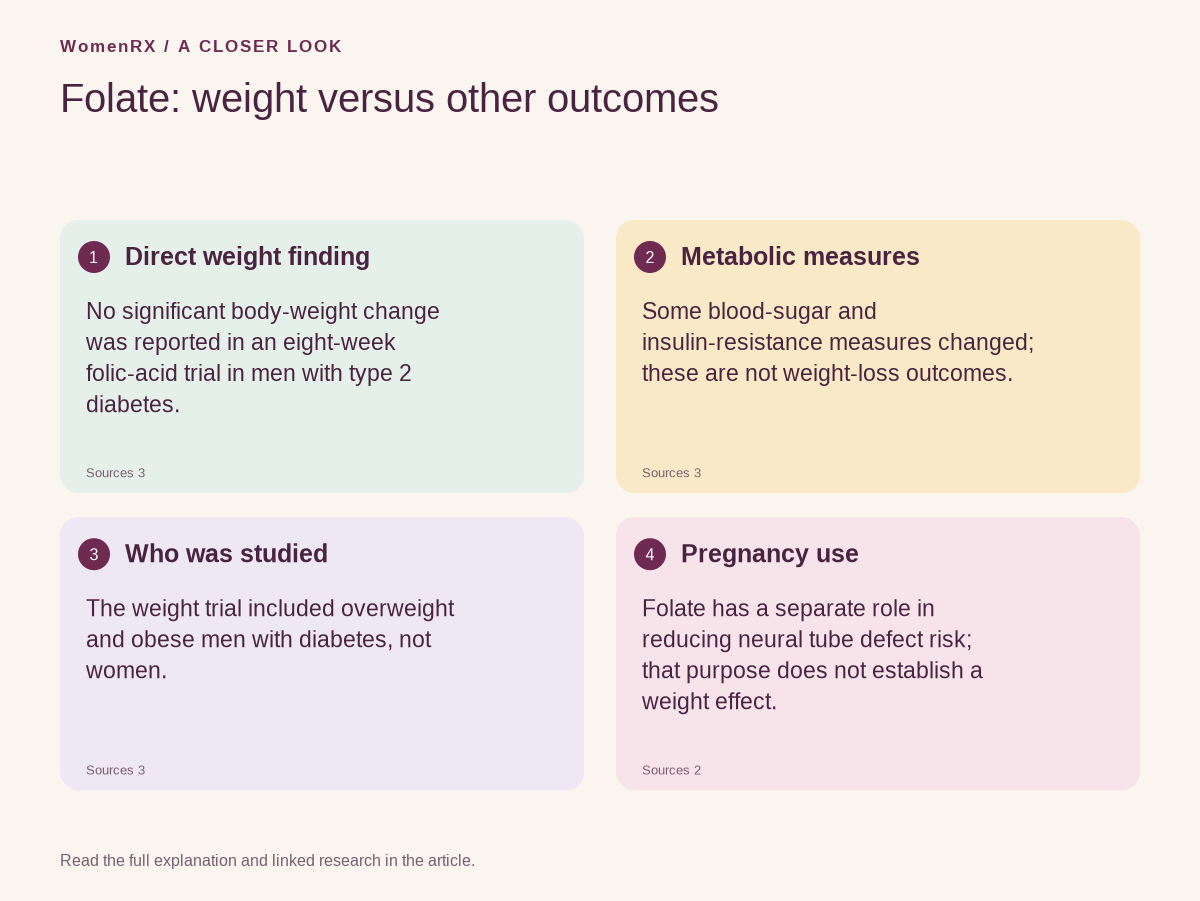
Folate: weight versus other outcomes
Direct weight finding: No significant body-weight change was reported in an eight-week folic-acid trial in men with type 2 diabetes.3
Metabolic measures: Some blood-sugar and insulin-resistance measures changed; these are not weight-loss outcomes.3
Who was studied: The weight trial included overweight and obese men with diabetes, not women.3
Pregnancy use: Folate has a separate role in reducing neural tube defect risk; that purpose does not establish a weight effect.2
Read the figure as text
The direct weight finding comes from a narrow trial; pregnancy use and metabolic markers answer different questions.- Direct weight finding: No significant body-weight change was reported in an eight-week folic-acid trial in men with type 2 diabetes.3
- Metabolic measures: Some blood-sugar and insulin-resistance measures changed; these are not weight-loss outcomes.3
- Who was studied: The weight trial included overweight and obese men with diabetes, not women.3
- Pregnancy use: Folate has a separate role in reducing neural tube defect risk; that purpose does not establish a weight effect.2
More questions, answered
Do improved blood-sugar or insulin markers mean folic acid caused weight loss?
No. In the randomized trial, some metabolic measures changed, but body weight did not significantly change. A change in a blood test isn’t the same outcome as weight loss. 3
Should I stop folic acid because I’m worried about weight?
Weight change wasn’t established as an effect in the trial, and folic acid has a separate role in reducing neural tube defect risk for women who could become pregnant. Keep any folate use for pregnancy or a diagnosed deficiency separate from weight goals. 23
Sources you can check
- Body Weight: MedlinePlusAccessed 2026-09-25Return to first citation
- Folate - Health Professional Fact SheetAccessed 2026-09-25Return to first citation
- Effect of folic acid supplementation on biochemical indices in overweight and obese men with type 2 diabetes.Gargari BP, Aghamohammadi V, Aliasgharzadeh A. · Diabetes research and clinical practice · 2011Return to first citation