Does Glycine Supplementation Affect Body Weight?
A small, short human study found no change in weight or body composition, so glycine isn’t established as a weight-loss supplement.
In a two-week exploratory study of 19 people with severe obesity, glycine supplementation did not significantly change body weight or measured body-composition parameters. Some blood markers changed, but those are not the same as losing weight or body fat. The study doesn’t establish an appetite effect or a women-specific benefit, and it can’t tell us about longer-term results. 2
What the human study actually measured
The clearest direct evidence comes from a small exploratory study in which 19 people with severe obesity took glycine for two weeks. Researchers reported no significant change in body weight or body-composition parameters. That means this study did not show that glycine reduced weight or changed the measured composition of the body during the trial. 2
The finding is a useful reality check, but it has limits: a two-week study in a small group can’t settle whether effects might differ over a longer period or in other populations. The study information reported here also doesn’t establish a separate result for women, by sex, or by life stage. Menopause-related weight concerns are not evidence that glycine has a special effect during menopause.
Metabolic markers aren’t weight-loss results
The researchers were primarily examining glycine-related metabolic pathways. They reported changes in triglycerides, liver enzymes, and an indirect marker related to liver health. They did not find changes in insulin-resistance measures, energy expenditure, or whole-body fuel use. These findings may be relevant to further research, but they don’t demonstrate a meaningful weight-loss effect or show that glycine improves health outcomes over time. 2
It helps to keep the outcomes separate. A change in a blood test is not a change on the scale, and a scale reading is not a direct measure of fat: body weight includes muscle, bone, and water as well as fat. 1 For glycine, the study reported no significant change in either weight or its measured body-composition parameters. 2
What about appetite?
The reported study findings don’t establish that glycine reduces appetite or food intake. So if appetite control is your reason for considering it, this evidence doesn’t show that glycine will help you feel less hungry or eat less. Claims about a mechanism or a metabolic marker shouldn’t be treated as proof of an appetite or weight effect.
A practical takeaway
Based on the direct human result described here, glycine shouldn’t be counted on for weight loss. The short study found no weight or body-composition change, and its other findings were changes in metabolic markers rather than demonstrated weight loss. That leaves open questions about longer-term use and other groups, but it doesn’t provide a reason to expect a clinically meaningful change in body weight, whether you’re in your cycling years, perimenopause, or postmenopause. 2
What Glycine Evidence Measures
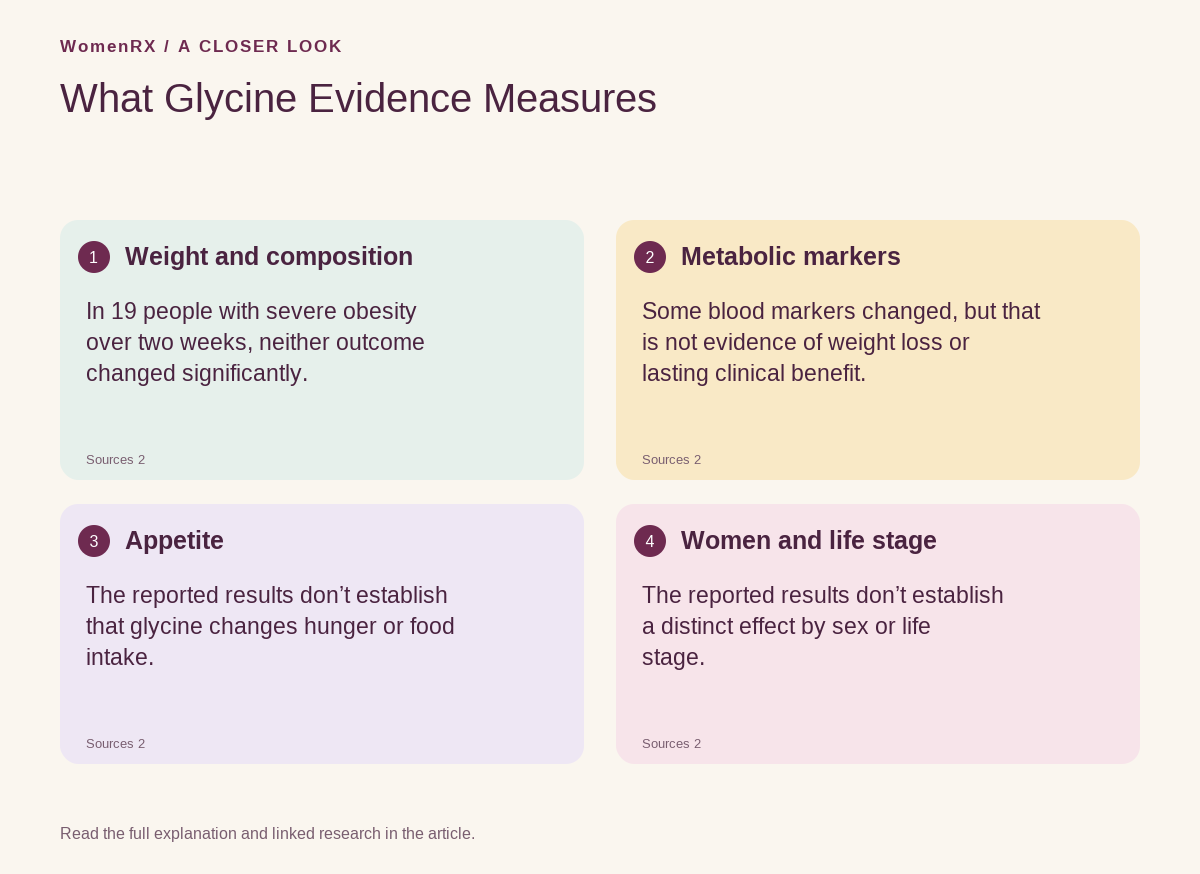
Weight and composition: In 19 people with severe obesity over two weeks, neither outcome changed significantly.2
Metabolic markers: Some blood markers changed, but that is not evidence of weight loss or lasting clinical benefit.2
Appetite: The reported results don’t establish that glycine changes hunger or food intake.2
Women and life stage: The reported results don’t establish a distinct effect by sex or life stage.2
Read the figure as text
Separate the direct weight findings from related markers and questions the reported study doesn’t settle.- Weight and composition: In 19 people with severe obesity over two weeks, neither outcome changed significantly.2
- Metabolic markers: Some blood markers changed, but that is not evidence of weight loss or lasting clinical benefit.2
- Appetite: The reported results don’t establish that glycine changes hunger or food intake.2
- Women and life stage: The reported results don’t establish a distinct effect by sex or life stage.2
More questions, answered
Did the study show that glycine changes appetite?
No appetite or food-intake effect is established in the reported findings. The study’s reported results don’t show that glycine makes people feel fuller or eat less. 2
Did glycine change body fat or muscle?
The study reported no significant change in its measured body-composition parameters. The available report doesn’t establish a separate effect on body fat or muscle. 2
Sources you can check
- Body Weight: MedlinePlusAccessed 2026-09-25Return to first citation
- Metabolic impact of dietary glycine supplementation in individuals with severe obesity.Tan HC, Hsu JW, Tai ES, Chacko S, Wu V, Yen PM, Kovalik JP, Jahoor F. · Scientific reports · 2025Return to first citation