Depression Around Menopause: When to Get Help
Low mood can overlap with the menopause transition, but persistent depression deserves care in its own right.
If low mood or loss of interest is sticking around, getting worse, or interfering with daily life, reach out to a primary care or mental health provider rather than assuming it’s just menopause. Depression is assessed by looking at symptoms, how long they’ve lasted, and their effect on your life, while also considering sleep, health conditions, and medicines. Persistent symptoms after menopause also deserve assessment. If you might harm yourself, get help right away. 2
First, separate a hard stretch from persistent depression
Mood changes can occur during perimenopause, when hormonal fluctuations and other changes may also affect sleep and well-being. But feeling low during this transition doesn’t, by itself, mean you have depression, and menopause isn’t a reason to dismiss symptoms that are lasting or disrupting your life. Depression has several possible contributors, and sometimes there isn’t a clear single cause. 2 4
A clinician may consider depression when low mood or loss of interest is present most of the day, nearly every day, for at least two weeks, especially when everyday activities become harder. That two-week period is part of how depression is diagnosed, not a reason to put off seeking help if you’re already concerned. 2
After menopause, persistent low mood or loss of interest still deserves attention. Depression can happen at any age; a clinician can assess your symptoms and daily functioning without assuming that menopause is the cause. 2
Choose the level of help that fits what’s happening
Get emergency help now if you may act on thoughts of suicide or self-harm, or can’t keep yourself safe. Call 911. If you’re having thoughts of hurting yourself, get help right away, even if you don’t feel in immediate danger. 2
Reach out promptly if symptoms are worsening, you’re struggling to manage basic daily tasks, or your mood is affecting work, relationships, or caring for yourself. You can contact a primary care provider or a mental health provider; you don’t need to decide whether menopause or depression is the cause before asking for help. Depression can affect sleep, eating, thinking, and day-to-day life, and early help can make symptoms easier to manage. 2
Make a routine appointment if low mood or loss of interest is persisting, even if you’re still getting through your usual responsibilities. A first conversation can help clarify what’s going on and what kind of support fits. If you’re unsure how soon to be seen, describe how the symptoms are affecting you when you call.
What an assessment may cover
A provider may ask when the mood changes began, how often they happen, and whether you’ve lost interest in things you usually enjoy. They’ll want to understand the effect on sleep, eating, work, relationships, and other daily activities. A medical and family history can help put the symptoms in context, including previous depression and stressful life events. 2
Sleep is worth mentioning, too. Perimenopause can involve sleep disruption alongside mood changes, so it can help to describe what’s happening rather than treating poor sleep and low mood as unrelated by default. A provider may also consider whether a health condition, such as a thyroid disorder, or a medicine could be contributing to depression-like symptoms. Medical tests may be used to check for other causes. 2 4
For example, you could bring a short note with when symptoms started, what a difficult day looks like, how sleep has changed, and any medicines or supplements you take. If you’re still having periods or also experiencing hot flashes or night sweats, mention those changes as context. This isn’t a diagnostic checklist; it’s a way to make the conversation more specific.
Treatment can address depression and menopause symptoms separately
Psychotherapy, antidepressant medicines, or both are common depression treatments. Talk therapy can help with difficult thoughts, emotions, and behaviors; antidepressants may help control symptoms. The right approach depends on your symptoms, health history, preferences, and other medicines. 1 2
If medication is discussed, ask what changes to watch for, how side effects will be handled, and when to check back. Antidepressants can take time to work, and side effects or concerns are reasons to contact the prescriber, not to change or stop a medicine on your own. 1
Menopause symptoms such as hot flashes or night sweats may also deserve attention, particularly if they’re disturbing sleep. But menopause treatment should not be treated as a substitute for depression care. Depression has its own assessment and treatment options, including psychotherapy and antidepressants. Tell your provider about both sets of symptoms so the plan can address what’s affecting you. 2 3 4
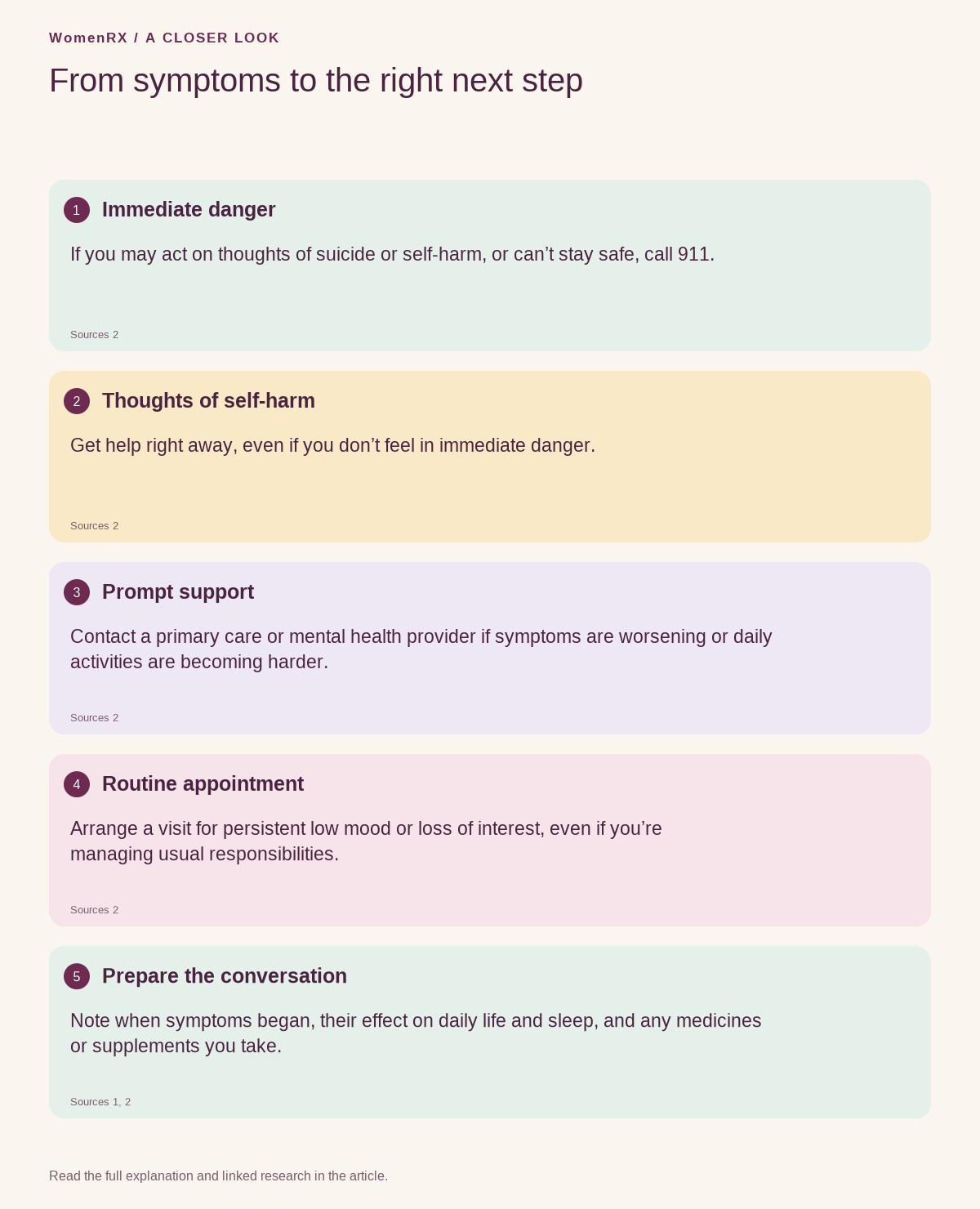
From symptoms to the right next step
Immediate danger: If you may act on thoughts of suicide or self-harm, or can’t stay safe, call 911.2
Thoughts of self-harm: Get help right away, even if you don’t feel in immediate danger.2
Prompt support: Contact a primary care or mental health provider if symptoms are worsening or daily activities are becoming harder.2
Routine appointment: Arrange a visit for persistent low mood or loss of interest, even if you’re managing usual responsibilities.2
Prepare the conversation: Note when symptoms began, their effect on daily life and sleep, and any medicines or supplements you take.12
Read the figure as text
Use this pathway to distinguish an emergency from symptoms that call for prompt or routine care, and to prepare a clearer account of what’s changed.- Immediate danger: If you may act on thoughts of suicide or self-harm, or can’t stay safe, call 911.2
- Thoughts of self-harm: Get help right away, even if you don’t feel in immediate danger.2
- Prompt support: Contact a primary care or mental health provider if symptoms are worsening or daily activities are becoming harder.2
- Routine appointment: Arrange a visit for persistent low mood or loss of interest, even if you’re managing usual responsibilities.2
- Prepare the conversation: Note when symptoms began, their effect on daily life and sleep, and any medicines or supplements you take.12
More questions, answered
Do I have to wait two weeks before asking for help?
No. Two weeks is part of the diagnostic criteria described for major depression, not a waiting rule. Seek help sooner if symptoms are troubling you, worsening, or affecting daily life. 2
Can menopause hormone therapy replace depression treatment?
Don’t assume menopause hormone therapy alone will treat depression. Depression deserves its own assessment, and common treatments include psychotherapy, antidepressants, or both. Tell your provider about menopause symptoms as well, so care can address each concern. 2 3
Sources you can check
- Antidepressants | Depression Medicines | MedlinePlusAccessed 2026-09-25Return to first citation
- Depression: MedlinePlusAccessed 2026-09-25Return to first citation
- Other medicines for menopause symptoms - NHSAccessed 2026-09-25Return to first citation
- Perimenopause and Lifestyle Medicine: A Window of Opportunity.Pangalangan JML, Tollefson M. · American journal of lifestyle medicine · 2026Return to first citation