Anxiety or Depression: Medication, Therapy, or Both?
Medication and therapy can each help, and they can be combined; the right starting point depends on your symptoms, preferences, health, and what you’ve already tried.
For anxiety and depression, treatment may involve psychotherapy, medication, or both. Therapy can build skills for changing difficult thought and behavior patterns; medication may help manage symptoms. Your symptoms, daily functioning, other medicines and health conditions, treatment history, and preferences can all shape the choice. Pregnancy plans and breastfeeding are also worth discussing when relevant. 1 2 3
Think in terms of fit, not a winner
Medication and therapy aren’t competing treatments. For anxiety disorders, the main treatment options are psychotherapy, medicines, or both. Depression care may also include medication, psychotherapy, or a combination. Which approach fits depends on the condition being treated and the person’s symptoms and needs. 2 3
An assessment helps clarify what’s going on. Anxiety can be a normal response to stress, but an anxiety disorder may involve fear or worry that persists, worsens, and interferes with daily life. Depression can affect ordinary activities such as sleeping, eating, and working. A clinician can ask about symptoms and health history and consider whether another health problem could be contributing. 2 3
What each option can offer
Psychotherapy is structured support for understanding and changing patterns that are causing distress. For anxiety, cognitive behavioral therapy (CBT) can help you respond differently to feared situations; it may include exposure therapy. Acceptance and commitment therapy is another approach used for some anxiety disorders. For depression, therapy can help you recognize and change troubling emotions, thoughts, and behaviors, and build coping skills. It may be individual or group-based. 2 3
Medication may be part of care for depression and can also be prescribed for anxiety. Antidepressants don’t all suit everyone, and finding one that helps can take trying more than one. The choice can depend on which symptoms are most troublesome, other medicines or supplements you take, other health conditions, and whether a close relative responded well to a particular antidepressant. 1
A medication trial also comes with tradeoffs: side effects are possible, and benefits may take time. MedlinePlus says antidepressants usually take four to eight weeks to work. Don’t change the dose or stop an antidepressant on your own; talk with the prescriber if side effects or other concerns are getting in the way. 1
Both together may make sense if one approach alone isn’t meeting your needs, or if you and your clinician prefer to address symptoms while also building coping skills. Combining treatments is an option, not a requirement or a guarantee of better results for every person. Depression treatment may include both, and anxiety care can as well. 2 3
Match the choice to your circumstances
Consider what you most want help with right now. For example, if worry leads you to avoid situations, a therapy approach that works with fear and avoidance may be worth discussing. If symptoms are affecting sleep, eating, work, or relationships, describe those effects clearly; they help the clinician understand how your day-to-day life is changing. 2 3
Practical fit matters, too. Think about whether you can attend therapy regularly, what kinds of support you’re comfortable with, and how medication follow-up would fit into your life. These are useful parts of the decision, not signs that you’re failing at treatment. If you’ve tried therapy or medication before, say what helped, what didn’t, and what made it hard to continue. For medication choices, include every medicine, supplement, and over-the-counter product you take, since some combinations can cause problems. 1
If you’re pregnant, planning a pregnancy, or breastfeeding, bring that up before choosing or changing treatment. The medication decision may need to account for your health and the baby’s; those circumstances call for an individualized discussion. If you’re postpartum, mention that as part of your current situation, too. 1
A useful way to start the conversation
You might say: “These are the symptoms getting in my way, and this is what I’ve tried. Can we talk about therapy, medication, or a combination, and how we’ll know whether the plan is helping?” You can also ask what side effects to watch for, when to check in, and what to do if symptoms worsen. If you’re having thoughts of ending your life, say so directly and seek urgent help rather than waiting to settle on a treatment format. Depression can include thoughts of suicide. 1
The aim isn’t to pick the option that sounds strongest on paper. It’s to find care that addresses your symptoms and fits your health, preferences, and circumstances, with room to reassess if it isn’t helping.
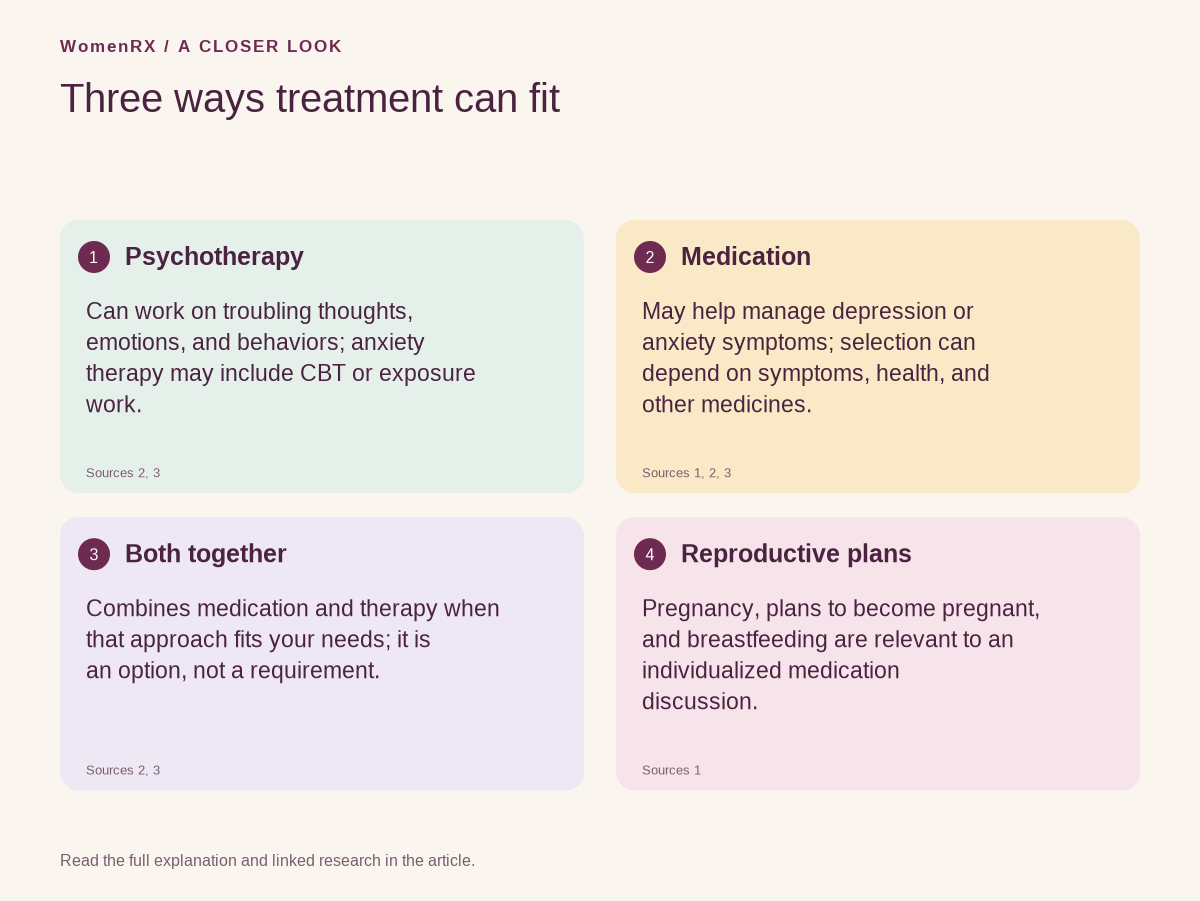
Three ways treatment can fit
Psychotherapy: Can work on troubling thoughts, emotions, and behaviors; anxiety therapy may include CBT or exposure work.23
Medication: May help manage depression or anxiety symptoms; selection can depend on symptoms, health, and other medicines.123
Both together: Combines medication and therapy when that approach fits your needs; it is an option, not a requirement.23
Reproductive plans: Pregnancy, plans to become pregnant, and breastfeeding are relevant to an individualized medication discussion.1
Read the figure as text
These options can be considered separately or together. The most useful choice depends on the symptoms and circumstances you want care to address.- Psychotherapy: Can work on troubling thoughts, emotions, and behaviors; anxiety therapy may include CBT or exposure work.23
- Medication: May help manage depression or anxiety symptoms; selection can depend on symptoms, health, and other medicines.123
- Both together: Combines medication and therapy when that approach fits your needs; it is an option, not a requirement.23
- Reproductive plans: Pregnancy, plans to become pregnant, and breastfeeding are relevant to an individualized medication discussion.1
Sources you can check
- Antidepressants | Depression Medicines | MedlinePlusAccessed 2026-09-25Return to first citation
- Anxiety: MedlinePlusAccessed 2026-09-25Return to first citation
- Depression: MedlinePlusAccessed 2026-09-25Return to first citation