Menopause Mood Changes: Choosing the Right Treatment Conversation
The pattern of your mood symptoms, sleep, hot flashes, and past mental health can help shape a more useful treatment discussion.
Mood changes during perimenopause can have more than one explanation. If low mood or loss of interest lasts most of the day, nearly every day, for at least two weeks, or disrupts daily life, ask about an assessment for depression, even if hot flashes or poor sleep are also present. Hormone therapy is mainly discussed for bothersome menopause symptoms such as hot flashes; antidepressants may be discussed for depression or, in some cases, hot flashes. 2 4 5
Start with the pattern, not a single cause
A rough night after repeated hot flashes can leave you tired, irritable, and less able to manage the day. That context matters, but it doesn’t by itself explain every mood change. Poor-quality sleep can affect mental health, thinking, and daily functioning, while depression can also change sleep and make everyday activities harder. These can overlap, so it’s worth describing both rather than assuming one caused the other. 2 3
Notice whether your mood dips mainly after disrupted nights or seems to persist across different kinds of days. Also notice whether you’ve lost interest in activities you usually enjoy, or whether sleep, eating, work, or basic tasks have become harder. These observations can help explain what’s happening; they aren’t a diagnosis.
When depression deserves its own assessment
Depression is more than feeling sad or irritable for a few days. MedlinePlus describes major depression symptoms as including depressed mood or loss of interest that affect daily activities and last at least two weeks. For diagnosis, symptoms occur most of the day, nearly every day, and a provider considers your symptoms and medical history. Some medical conditions and medicines can produce symptoms that look like depression, so an assessment may include checking for other explanations. 2
Mention any past episodes of depression, what treatment helped or didn’t, and relevant family history. A mood assessment and a discussion of menopause symptoms can happen together. If you’re thinking about ending your life or harming yourself, seek urgent help rather than waiting for a routine appointment. 1 2
Two treatment conversations, with different goals
Hormone therapy is primarily a conversation about menopause symptoms such as hot flashes. The North American Menopause Society says hormone therapy is the most effective treatment for vasomotor symptoms. For people younger than 60 or within 10 years of menopause onset, with no contraindications, its benefit-risk balance is generally favorable when treating bothersome vasomotor symptoms or preventing bone loss. The balance becomes less favorable when starting later, and the decision depends on personal factors such as type, route, timing, and whether a progestogen is used. 4
That makes hormone therapy a possible topic when hot flashes are a significant part of what’s affecting you. It should not be treated as a stand-in for assessing persistent depression. The menopause guidance here focuses on hormone therapy’s role in vasomotor symptoms; it doesn’t establish it as a treatment for a depressive disorder. 2 4
Antidepressants may be discussed for depression, and some may also reduce hot flashes. Depression treatment may include antidepressant medication, psychotherapy, or both. Separately, the menopause society’s nonhormone guidance recommends certain selective serotonin reuptake inhibitors and serotonin-norepinephrine reuptake inhibitors for vasomotor symptoms. If one of these medicines comes up, clarify which symptoms the treatment is intended to address. 2 5
These are different indications, not a simple head-to-head choice. A conversation can consider mood symptoms and hot flashes separately, even when both are present. Antidepressant choice depends on factors including the symptoms that bother you, other medicines and supplements, and health conditions. 1
A practical way to frame the visit
You might say: “My mood has been low for several weeks, and hot flashes are waking me up. I’d like to talk about both the mood symptoms and the menopause symptoms.” Then share how long the mood change has lasted, how it affects daily life, whether you’ve lost interest in usual activities, how sleep has changed, and any history of depression or treatment.
Useful questions include: “Could this meet the criteria for depression, or could a health condition or medicine be contributing?” “If hot flashes are a treatment target, what are the hormone and nonhormone options for me?” and “If an antidepressant is suggested, is the goal to treat depression, hot flashes, or both?” Those questions keep the treatment goal clear without forcing one explanation for every symptom. 1 2 4 5
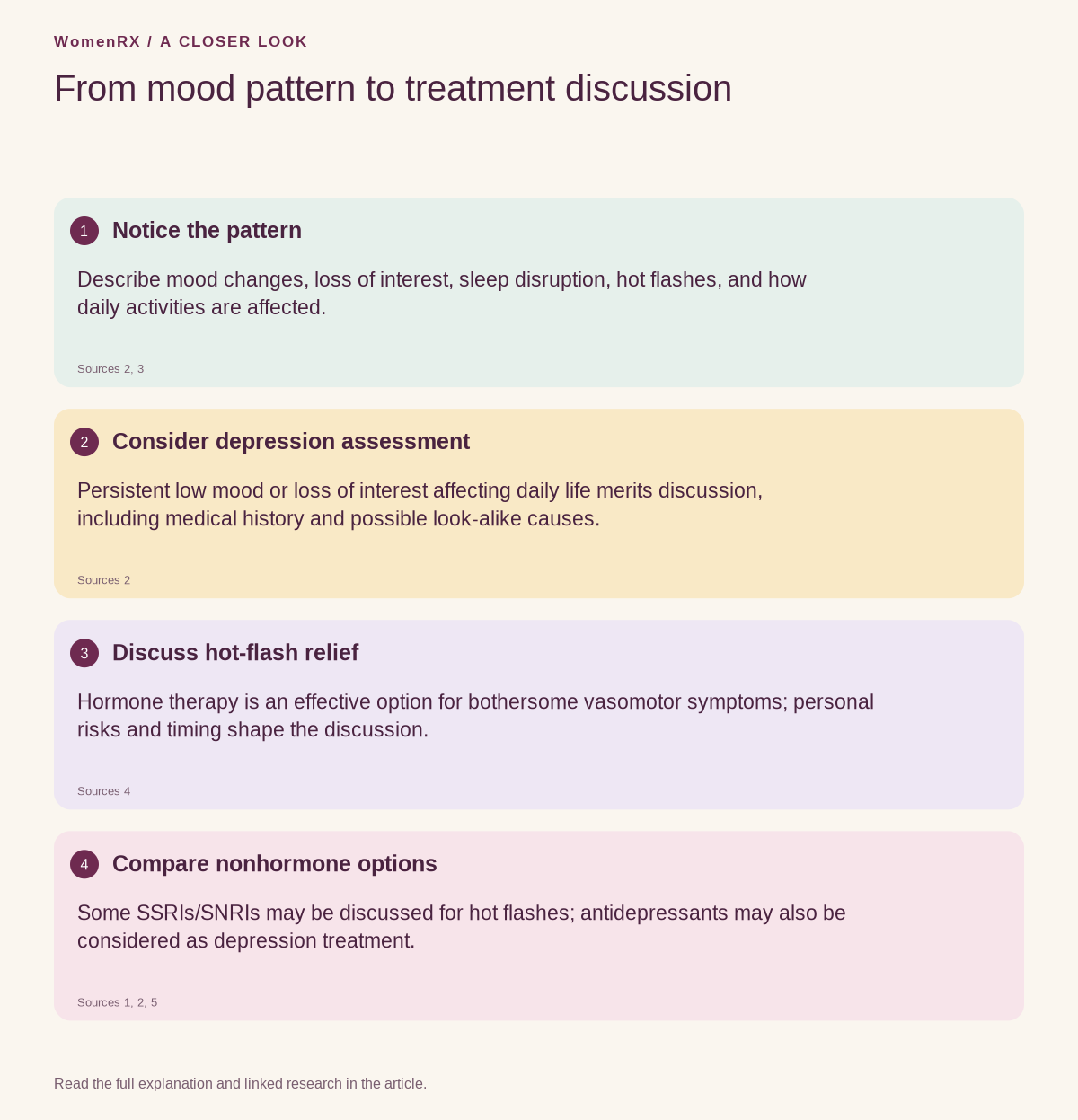
From mood pattern to treatment discussion
Notice the pattern: Describe mood changes, loss of interest, sleep disruption, hot flashes, and how daily activities are affected.23
Consider depression assessment: Persistent low mood or loss of interest affecting daily life merits discussion, including medical history and possible look-alike causes.2
Discuss hot-flash relief: Hormone therapy is an effective option for bothersome vasomotor symptoms; personal risks and timing shape the discussion.4
Compare nonhormone options: Some SSRIs/SNRIs may be discussed for hot flashes; antidepressants may also be considered as depression treatment.125
Read the figure as text
Use the pattern and impact of symptoms to organize the conversation. This flow supports discussion, not self-diagnosis.- Notice the pattern: Describe mood changes, loss of interest, sleep disruption, hot flashes, and how daily activities are affected.23
- Consider depression assessment: Persistent low mood or loss of interest affecting daily life merits discussion, including medical history and possible look-alike causes.2
- Discuss hot-flash relief: Hormone therapy is an effective option for bothersome vasomotor symptoms; personal risks and timing shape the discussion.4
- Compare nonhormone options: Some SSRIs/SNRIs may be discussed for hot flashes; antidepressants may also be considered as depression treatment.125
More questions, answered
Can an antidepressant help hot flashes as well as mood?
Some selective serotonin reuptake inhibitors and serotonin-norepinephrine reuptake inhibitors are recommended nonhormonal options for menopause-related hot flashes. They’re also used to treat depression, but the reason for considering one should be clear: relief of hot flashes, treatment of depression, or both. 2 5
Does discussing hormone therapy mean my mood symptoms are caused by menopause?
No. Hormone therapy may be discussed when bothersome hot flashes are part of the picture, but mood symptoms still deserve attention on their own. Depression assessment considers symptoms, their effect on daily life, and medical history. 2 4
Sources you can check
- Antidepressants | Depression Medicines | MedlinePlusAccessed 2026-09-25Return to first citation
- Depression: MedlinePlusAccessed 2026-09-25Return to first citation
- Sleep Disorders | MedlinePlusAccessed 2026-09-25Return to first citation
- The 2022 hormone therapy position statement of The North American Menopause Society.“The 2022 Hormone Therapy Position Statement of The North American Menopause Society” Advisory Panel. · Menopause (New York, N.Y.) · 2022Return to first citation
- The 2023 nonhormone therapy position statement of The North American Menopause Society.Menopause (New York, N.Y.) · 2023Return to first citation