Choosing Fiber for Constipation: Food, Psyllium, and What to Track
For hard or infrequent stools, start with a gradual fiber change; if you choose psyllium, the fluid you take with it matters.
For hard or infrequent stools, gradually add fiber-containing foods and pay attention to fluids. Psyllium is a bulk-forming option for constipation: it absorbs liquid and helps form stool that’s easier to pass, but it must be taken with the fluid specified in its directions. Track stool and discomfort rather than rapidly adding more fiber. Get assessed if constipation persists or your bowel habits change suddenly. 1248
First, name the problem you’re trying to solve
Constipation isn’t just a question of how often you go. Stools may be hard or painful to pass, and you may feel as though you haven’t fully emptied. You also don’t need a bowel movement every day for your pattern to be normal. What matters is whether your usual pattern has changed and what feels difficult now. 24
That distinction helps you judge a fiber change. If hard stools are the problem, notice whether they become easier to pass. If infrequent bowel movements are the problem, notice whether your pattern becomes more comfortable and regular. If you consistently struggle to empty despite diet and lifestyle changes, describe that difficulty when seeking advice instead of repeatedly adding fiber. In a trial involving people already diagnosed with a problem coordinating the muscles used to pass stool, fiber supplementation did not improve the main outcome, post-meal fullness. The trial did not test whether fiber treats difficulty emptying in ordinary constipation. 246
Food first, or a supplement?
For ordinary constipation, fruits, vegetables, and grains are a practical place to start. Wheat bran, oats, and linseed are other dietary options named in constipation guidance. Increase fiber gradually so you can judge whether the change helps. 4
If you’d rather try a supplement for hard or infrequent stools, psyllium is one identifiable option. It’s a bulk-forming laxative used for constipation: it absorbs liquid in the intestines, swells, and forms stool that’s easier to pass. Its need for fluid is part of the choice, not an optional extra. Follow the product’s directions for preparing and taking it with liquid; ask a pharmacist if those directions aren’t clear or you’re unsure it suits you. 8
Fiber may be labeled soluble or insoluble, but that broad label alone doesn’t tell you which supplement will suit your symptoms. If you’re comparing psyllium with a product labeled methylcellulose, check the ingredient rather than assuming the two work equally well or that one is better: the clinical findings discussed here don’t make that comparison. 1568
There is a different starting point if you’ve been diagnosed with IBS and constipation. IBS dietary guidance suggests increasing soluble fiber from foods, such as oats, pulses, and carrots. That is advice for IBS, not proof that a particular soluble-fiber supplement works best for everyone with constipation. 7
If diet and lifestyle changes have not helped, a pharmacist can help you consider whether a fiber product or another suitable laxative makes sense. Tell them whether the main problem is hard stool, infrequent bowel movements, bloating, or difficulty emptying, and bring the supplement’s ingredient name. 48
A trial of pectin found improved transit and symptom scores after four weeks in adults with diagnosed slow-transit constipation. A separate trial of plantago ovata in people with diagnosed defecation-coordination problems and functional dyspepsia found no improvement in its main outcome, post-meal fullness. Neither trial compared these ingredients with methylcellulose or established which supplement to choose for ordinary constipation. 56
Change one thing slowly enough to notice the difference
A sudden jump in fiber can bring gas, bloating, and cramps. If you start psyllium, follow its directions for use and fluids, and avoid sharply increasing high-fiber foods at the same time. Before increasing the amount, check whether stools are easier to pass and whether bloating or cramps have appeared; ask a pharmacist if you are unsure how to adjust it. Not drinking enough fluids is one possible contributor to constipation. There’s no need to chase an immediate result. The pectin trial measured outcomes after four weeks, which isn’t a promise that you should wait four weeks to feel any change, or keep taking something that makes you feel worse. 1458
A brief note on your phone can make the change clearer. Record the fiber food or supplement ingredient you changed, roughly when you changed it, what you drank, how often you had a bowel movement, whether stool was hard or painful to pass, and whether bloating or cramps appeared. For example, if you add a fiber supplement and also sharply increase high-fiber foods on the same day, you won’t know which change helped or caused discomfort. This isn’t a diagnostic score; it’s a way to see whether your original problem is improving without overlooking a new one. 124
When fiber shouldn’t be the whole plan
If your bowel habits change suddenly, constipation persists, or diet and lifestyle changes aren’t helping, get medical advice rather than repeatedly adding fiber. Get prompt assessment if constipation comes with blood in your stool, constant abdominal pain, vomiting, or an inability to pass gas. Medicines and supplements can contribute to constipation, including opioid pain medicines and iron supplements, so mention any recent change when you describe what’s happening. 49
Psyllium also deserves a check before use if you have difficulty swallowing or have had an intestinal blockage. It can interact with some medicines, including digoxin, aspirin, and nitrofurantoin; ask a pharmacist how to manage your medicines rather than assuming you can take them together. If you develop difficulty swallowing or breathing after taking psyllium, seek immediate help. 8
Pregnancy and the weeks after birth deserve separate attention. Constipation is common in both. During pregnancy, gradual dietary fiber changes and enough fluids are reasonable starting points, but these supplement trials don’t establish a choice or adjustment plan specifically for pregnancy. If you’re considering psyllium while pregnant, check with your prenatal care team; bring up constipation that is new, persistent, or not improving with dietary changes. 14568
After birth, recovery can also affect what activity feels possible or has been recommended for you. Bring up constipation that persists or is making recovery harder with your postpartum care team; follow your own recovery guidance for activity rather than treating exercise as a simple fix. 34
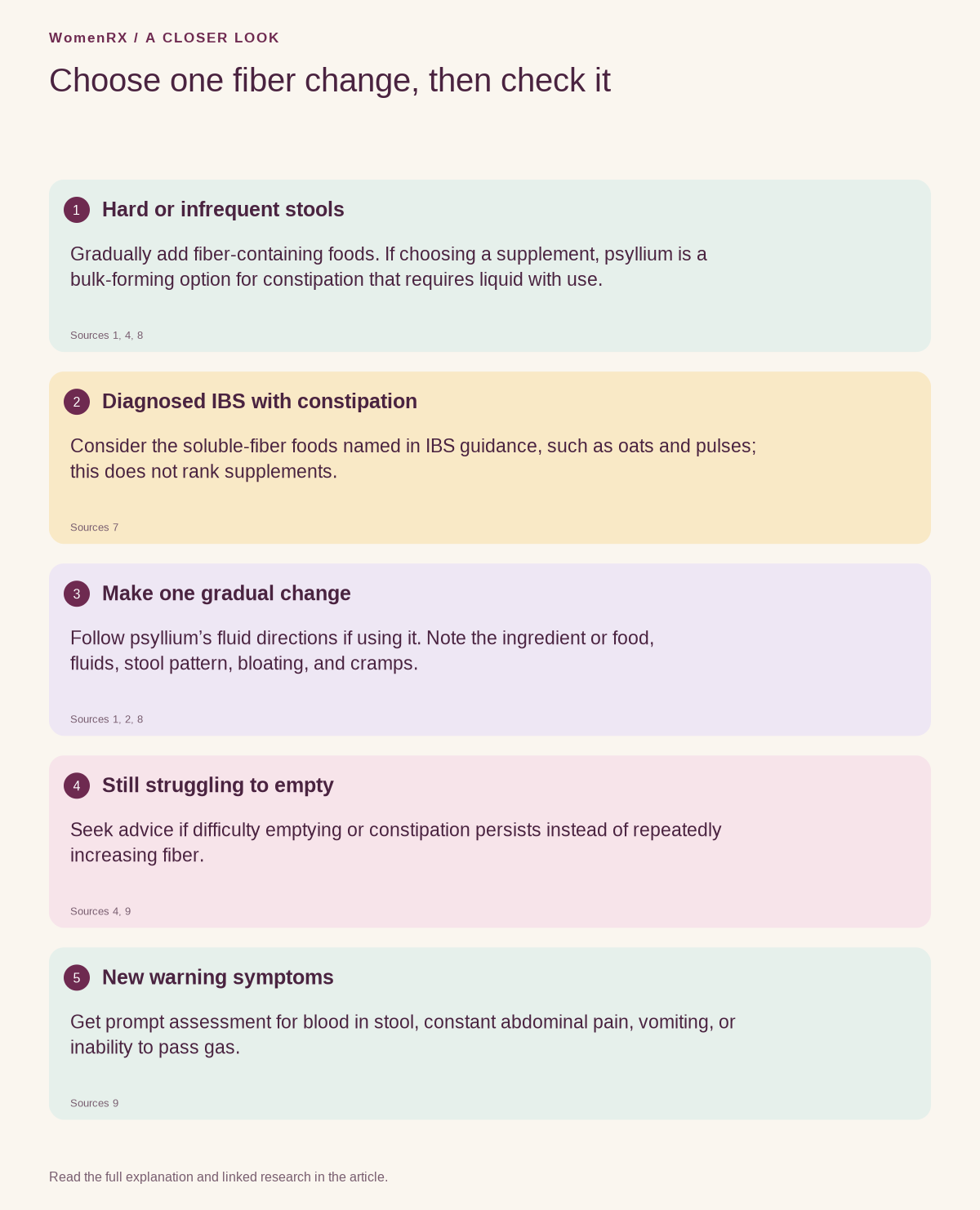
Choose one fiber change, then check it
Hard or infrequent stools: Gradually add fiber-containing foods. If choosing a supplement, psyllium is a bulk-forming option for constipation that requires liquid with use.148
Diagnosed IBS with constipation: Consider the soluble-fiber foods named in IBS guidance, such as oats and pulses; this does not rank supplements.7
Make one gradual change: Follow psyllium’s fluid directions if using it. Note the ingredient or food, fluids, stool pattern, bloating, and cramps.128
Still struggling to empty: Seek advice if difficulty emptying or constipation persists instead of repeatedly increasing fiber.49
New warning symptoms: Get prompt assessment for blood in stool, constant abdominal pain, vomiting, or inability to pass gas.9
Read the figure as text
Use your main symptom to choose a starting point, make a gradual change, and reassess rather than repeatedly adding fiber.- Hard or infrequent stools: Gradually add fiber-containing foods. If choosing a supplement, psyllium is a bulk-forming option for constipation that requires liquid with use.148
- Diagnosed IBS with constipation: Consider the soluble-fiber foods named in IBS guidance, such as oats and pulses; this does not rank supplements.7
- Make one gradual change: Follow psyllium’s fluid directions if using it. Note the ingredient or food, fluids, stool pattern, bloating, and cramps.128
- Still struggling to empty: Seek advice if difficulty emptying or constipation persists instead of repeatedly increasing fiber.49
- New warning symptoms: Get prompt assessment for blood in stool, constant abdominal pain, vomiting, or inability to pass gas.9
More questions, answered
How long might a fiber change take to help?
With diet and routine changes for constipation, you may notice a difference within a few days, though improvement can sometimes take a few weeks. A trial in adults with diagnosed slow-transit constipation measured improvement after four weeks of pectin supplementation; it doesn’t establish a timetable for psyllium or other kinds of constipation. Watch stool and comfort, including new bloating or cramps, rather than rapidly increasing fiber to meet a timetable. 145
Sources you can check
- Dietary Fiber: MedlinePlusAccessed 2026-09-25Return to first citation
- Constipation | MedlinePlusAccessed 2026-09-25Return to first citation
- Postpartum Care: MedlinePlusAccessed 2026-09-25Return to first citation
- Constipation - NHSAccessed 2026-09-25Return to first citation
- [Clinical benefits after soluble dietary fiber supplementation: a randomized clinical trial in adults with slow-transit constipation].Xu L, Yu W, Jiang J, Li N. · Zhonghua yi xue za zhi · 2014Return to first citation
- Correction of Dyssynergic Defecation, but Not Fiber Supplementation, Reduces Symptoms of Functional Dyspepsia in Patients With Constipation in a Randomized Trial.Huaman JW, Mego M, Bendezú A, Monrroy H, Samino S, Accarino A, Saperas E, Azpiroz F. · Clinical gastroenterology and hepatology : the official clinical practice journal of the American Gastroenterological Association · 2020Return to first citation
- Diet, lifestyle and medicines for IBS (irritable bowel syndrome) - NHSAccessed 2026-09-25Return to first citation
- Psyllium: MedlinePlus Drug InformationAccessed 2026-09-25Return to first citation
- Symptoms & Causes of Constipation - NIDDKAccessed 2026-09-25Return to first citation