Choosing Betaine HCl: Check the Reason Before the Brand
A supplement can change stomach acidity without proving it will solve your bloating or discomfort.
The cited research does not identify a best betaine HCl supplement for women. A small human experiment showed that it temporarily lowered stomach pH after an acid-suppressing medicine. It did not test lasting relief from bloating or indigestion. 11 Before comparing bottles, get clear on the symptom you want treated and whether low stomach acid has actually been established.
What the human experiment found
In a 2013 study, six healthy volunteers took rabeprazole to reduce stomach acidity before receiving 1,500 mg betaine HCl. Mean stomach pH fell from 5.2 to 0.6, and pH stayed below 3 for an average of 73 minutes. The participants tolerated the exposure. 11
That demonstrates a temporary acidifying effect in a tightly defined setting. It does not establish a daily dose for digestive symptoms, long-term safety or a benefit specific to women. Copying the experiment at home would also miss its purpose: the researchers were measuring acidity after deliberately suppressing it. 11
First, name the problem you want to solve
Upper-abdominal burning, feeling full unusually early, nausea and bloating can occur with indigestion. Possible explanations include functional dyspepsia, ulcers, infection and medicines. Iron supplements, NSAIDs and GLP-1 medicines are among NIDDK's examples. The symptom alone does not select betaine HCl as the answer. 13
Bring a short description to an appointment: when it happens, how long it lasts, whether meals change it and what medicines or supplements you use. That is more useful than arriving with a conclusion borrowed from a supplement advertisement.
Ask, “What makes low stomach acid a likely explanation in my case?” A clear answer should come before a recommendation to buy a larger bottle.
Read a real label, including its warnings
For a concrete example, Thorne's Canadian product page lists 1 g betaine hydrochloride plus 47 mg pepsin per two capsules. This is an ingredient comparison, not our recommendation to take it. Another product may use a different amount or additional ingredients. 12
The same page says not to use that product with peptic ulcers, proton pump inhibitors or H2-blocking medicines. It warns against opening the capsules because the powder can irritate the mouth. Those details matter more than the word “digestive” on the front. 12
Do not stop an acid-suppressing prescription to make room for a supplement. Ask the prescriber or pharmacist to review the proposed product alongside the reason you take your medicine.
What changes during pregnancy or breastfeeding?
Thorne directs pregnant users to consult a clinician. NCCIH notes that many supplements have not been tested during pregnancy or nursing. Neither statement supplies a proven safe betaine HCl dose for those stages. 1214
Take a photograph of the full label to your maternity clinician or pharmacist. Include the serving size and every active ingredient, especially if a product combines acids and enzymes.
A useful decision before checkout
Write down the expected benefit, how you would recognize it and who will reassess persistent symptoms. If those questions have no clear answer, a brand ranking will not resolve them.
Indigestion that does not improve deserves assessment. Difficulty swallowing, vomiting blood, black tarry stools, severe constant abdominal pain or unintended weight loss need prompt medical attention. 13 There is no need to work through several supplements before getting the problem explained.
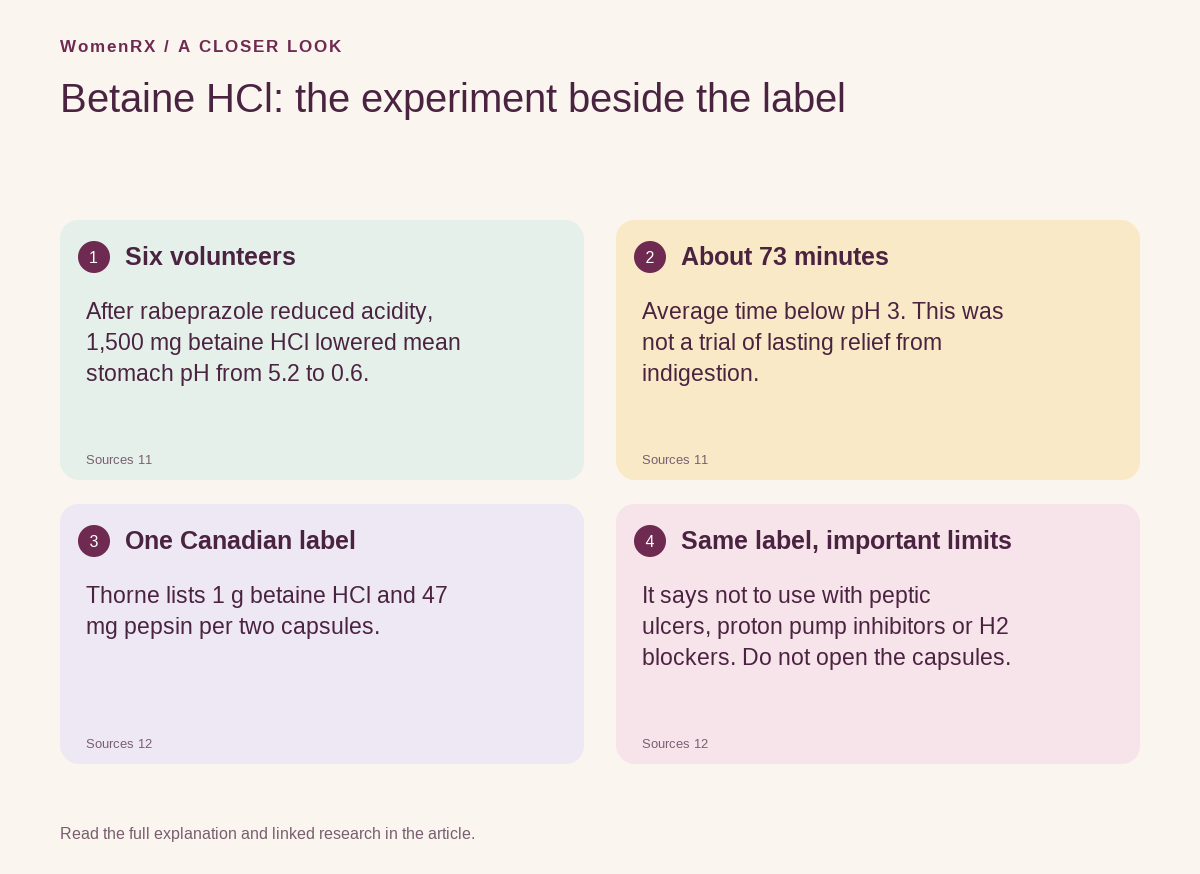
Betaine HCl: the experiment beside the label
Six volunteers: After rabeprazole reduced acidity, 1,500 mg betaine HCl lowered mean stomach pH from 5.2 to 0.6.11
About 73 minutes: Average time below pH 3. This was not a trial of lasting relief from indigestion.11
One Canadian label: Thorne lists 1 g betaine HCl and 47 mg pepsin per two capsules.12
Same label, important limits: It says not to use with peptic ulcers, proton pump inhibitors or H2 blockers. Do not open the capsules.12
Read the figure as text
A controlled acidification experiment and a retail product answer different questions.- Six volunteers: After rabeprazole reduced acidity, 1,500 mg betaine HCl lowered mean stomach pH from 5.2 to 0.6.11
- About 73 minutes: Average time below pH 3. This was not a trial of lasting relief from indigestion.11
- One Canadian label: Thorne lists 1 g betaine HCl and 47 mg pepsin per two capsules.12
- Same label, important limits: It says not to use with peptic ulcers, proton pump inhibitors or H2 blockers. Do not open the capsules.12
Sources you can check
- Betaine HCl temporarily lowers gastric pH in healthy volunteers, 2013Accessed 2026-09-26Return to first citation
- Thorne: Betaine HCl & Pepsin, Canadian product pageAccessed 2026-09-26Return to first citation
- NIDDK: Symptoms and Causes of IndigestionAccessed 2026-09-26Return to first citation
- NCCIH: Using Dietary Supplements WiselyAccessed 2026-09-26Return to first citation