Betaine HCl for Digestion: What the Evidence Shows
Betaine HCl can briefly change stomach acidity, but a change in pH doesn’t tell you why you have digestive symptoms.
Betaine hydrochloride (HCl) is sold as an acidifying supplement for digestion. In a small human study, it brought stomach pH back to its premeal level sooner after food, but the study didn’t test symptom relief or diagnose low stomach acid. If you’re considering it for recurring symptoms, the useful first question is what’s causing them, not whether a capsule changes your stomach pH. 1

Adding acid isn’t the same as fixing digestion
Betaine HCl combines betaine with hydrochloride and releases acid in the stomach. It’s different from anhydrous betaine, a form used for other purposes. Claims about one form shouldn’t be carried over to the other. 2
Stomach acid helps digest protein and release nutrients from food. That makes the idea of adding acid sound plausible. But symptoms such as discomfort after eating don’t, by themselves, establish that your stomach makes too little acid. An acid supplement also can’t serve as a home test: feeling better, worse, or no different after taking it wouldn’t identify the cause of your symptoms. 21
What has actually been measured
In an open-label, randomized crossover study of nine people, researchers measured stomach pH after food raised it. Without acid supplementation, pH returned to its premeal level in an average of about 50 minutes. With the studied 4,500 mg amount of betaine HCl, it returned in about 17 minutes. Those figures describe a pH measurement under study conditions, not a suggested amount to take. The study did not measure whether digestive symptoms improved. 1
The distinction matters when you see claims that betaine HCl treats indigestion, reflux, or nutrient deficiencies. Changing acidity for a short time is not evidence that it treats any of those problems. A review describes a symptom report involving an amino-acid hydrochloride plus bovine protease, rather than betaine HCl alone. It had no placebo group and participants used varying amounts, so it can’t establish a benefit from betaine HCl. In that report, 27 of 97 participants stopped the combination because of gastrointestinal symptoms they attributed to inadequate treatment or worsening symptoms. That figure isn’t a side-effect rate for betaine HCl. 2
A diagnosed low-acid condition is a different question
Autoimmune gastritis is one condition that can damage the stomach cells that make acid. Those cells also make intrinsic factor, which is needed for vitamin B12 absorption. Researchers have proposed studying acid replacement in people with autoimmune gastritis, but the proposal isn’t proof that over-the-counter betaine HCl treats the condition. Adding acid would not replace intrinsic factor. 2
This is why it’s worth separating a confirmed diagnosis from a guess based on how you feel after a meal. If someone has raised “low stomach acid” as an explanation for your symptoms, ask what points to that diagnosis and what other causes need consideration before trying to change your stomach acidity.
Before you decide to try it
Bring the exact product label to a clinician or pharmacist if you take medicines, particularly an acid-reducing medicine, or have an existing digestive condition. Stomach pH can matter for drug absorption, but the nine-person pH study did not establish which medicines interact with betaine HCl or whether changing pH would improve medication outcomes. Don’t use the supplement as a way to counteract a prescribed treatment on your own. 1
If you’re pregnant or breastfeeding, there isn’t a pregnancy- or breastfeeding-specific safety answer from the human research cited here. Discuss the product and the symptom you hope to treat with your pregnancy or postpartum care team before using it. That’s especially useful because the right next step depends on the cause of the symptom, while a response to an acid supplement wouldn’t confirm one.
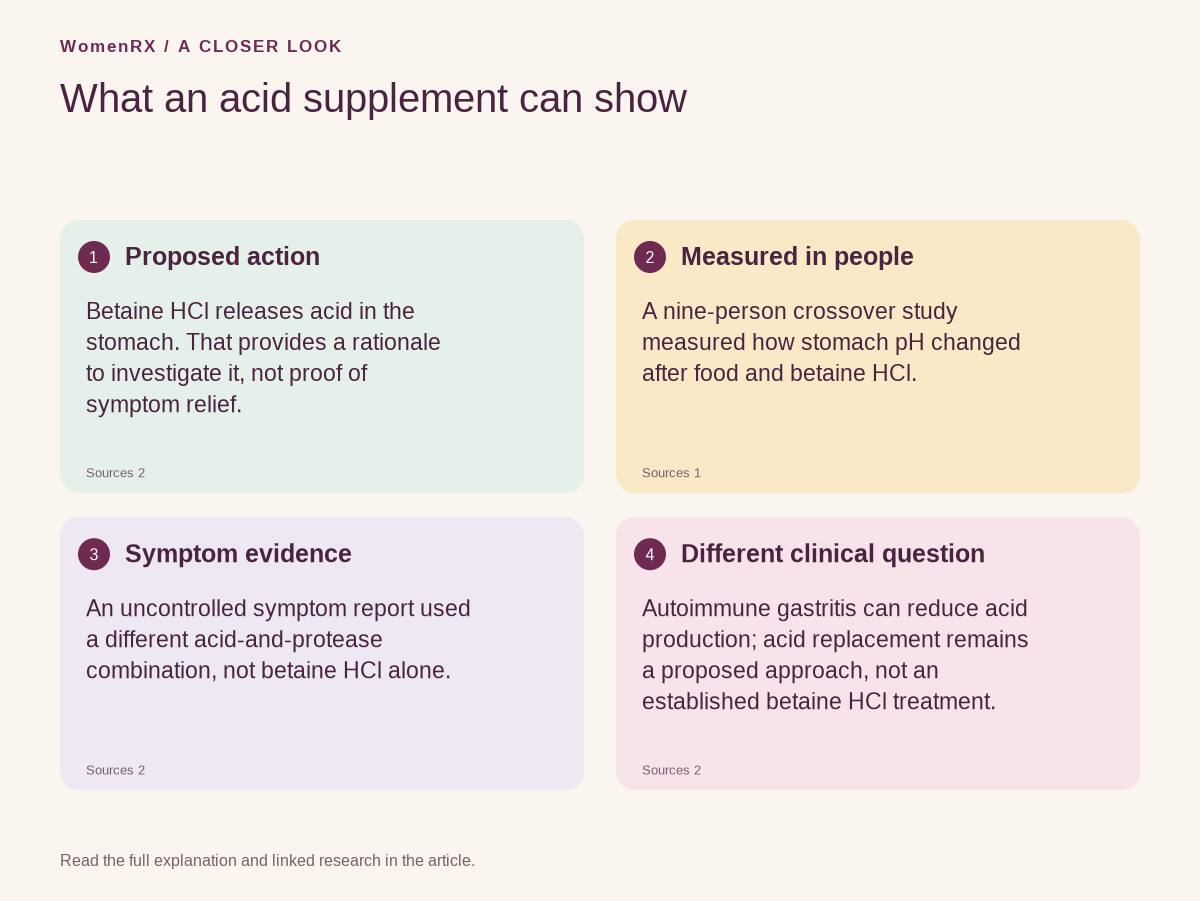
What an acid supplement can show
Proposed action: Betaine HCl releases acid in the stomach. That provides a rationale to investigate it, not proof of symptom relief.2
Measured in people: A nine-person crossover study measured how stomach pH changed after food and betaine HCl.1
Symptom evidence: An uncontrolled symptom report used a different acid-and-protease combination, not betaine HCl alone.2
Different clinical question: Autoimmune gastritis can reduce acid production; acid replacement remains a proposed approach, not an established betaine HCl treatment.2
Read the figure as text
The figure separates betaine HCl’s proposed action from the outcomes needed to judge a digestive-symptom claim.- Proposed action: Betaine HCl releases acid in the stomach. That provides a rationale to investigate it, not proof of symptom relief.2
- Measured in people: A nine-person crossover study measured how stomach pH changed after food and betaine HCl.1
- Symptom evidence: An uncontrolled symptom report used a different acid-and-protease combination, not betaine HCl alone.2
- Different clinical question: Autoimmune gastritis can reduce acid production; acid replacement remains a proposed approach, not an established betaine HCl treatment.2
More questions, answered
Is betaine HCl the same as anhydrous betaine?
No. They’re different forms of betaine. The evidence for uses of anhydrous betaine doesn’t establish that betaine HCl relieves digestive symptoms. 2
Can I use betaine HCl to check whether I have low stomach acid?
No. The human crossover study tested a change in stomach pH after food, not whether a person’s response to a capsule could diagnose low acid production. 1
Sources you can check
- Food, Acid Supplementation and Drug Absorption - a Complicated Gastric Mix: a Randomized Control Trial.Surofchy DD, Frassetto LA, Benet LZ. · Pharmaceutical research · 2019Return to first citation
- Creating a Framework for Treating Autoimmune Gastritis-The Case for Replacing Lost Acid.Taylor L, McCaddon A, Wolffenbuttel BHR. · Nutrients · 2024Return to first citation