Betaine HCl for Digestion: Timing, Evidence, and Safety
Betaine HCl can temporarily make stomach contents more acidic, but that isn’t the same as proving it relieves digestive symptoms.
There’s no clear evidence here that betaine HCl relieves common digestive symptoms or that one meal-time schedule works best. A small study measured stomach acidity after food, not symptom relief. If you have reflux, trouble swallowing, repeated vomiting, unexplained weight loss, or symptoms during pregnancy or breastfeeding, don’t use the supplement as a substitute for individual medical advice. 31
What betaine HCl can do, and what that doesn’t prove
Betaine hydrochloride is a supplement intended to add acidity in the stomach. A narrative review describes it as releasing hydrochloric acid in the stomach and discusses possible acid replacement for people with autoimmune gastritis, a condition that can destroy acid-producing cells. That is a proposed use for a specific condition, not proof that betaine HCl treats everyday indigestion or that symptoms alone mean you have low stomach acid. 2
The distinction matters because a change in stomach acidity is a measurement of what happens in the stomach, not a measure of whether you feel better. The review describes possible effects of low stomach acid, but some proposed effects are theoretical, and it does not establish that an over-the-counter supplement relieves digestive symptoms. 2
What the timing study actually measured
One small, open-label crossover study included nine participants. Researchers measured stomach pH after food and whether betaine HCl could bring it back toward baseline. Food temporarily raised stomach pH; acid supplementation changed that measurement. The study was about stomach acidity and implications for drug absorption, not about whether participants’ digestion, heartburn, or other symptoms improved. 3
So the study doesn’t establish a best time to take betaine HCl for symptom relief. Taking a supplement around a meal, or seeing a pH change after taking it, doesn’t show that it will help your symptoms. The study also can’t establish long-term safety or show how well the results apply to people with different digestive conditions. 3
Reflux is a different problem from low acid
Heartburn and acid reflux happen when stomach contents move up toward the throat. That’s different from a demonstrated lack of stomach acid. Betaine HCl hasn’t been shown by the small pH study to treat reflux symptoms. 13
If you have heartburn or a sour taste that keeps returning, or symptoms that happen most days, consider getting the cause assessed rather than trying to correct stomach acidity yourself. Seek medical assessment for food getting stuck when you swallow, frequent vomiting, or unexplained weight loss. 1
Pregnancy, breastfeeding, and safety questions
The human study described above was small and doesn’t establish safety for ongoing use, pregnancy, or breastfeeding. The review discusses possible acid replacement in autoimmune gastritis but does not provide evidence that resolves those questions for an individual. If you’re pregnant or breastfeeding, get individualized advice before using betaine HCl, rather than assuming meal-time use makes it appropriate. 23
If a clinician has diagnosed autoimmune gastritis or another condition involving reduced stomach acid, ask about the diagnosis and treatment options directly. That is a different situation from guessing that low acid explains bloating or indigestion. The available discussion of acid replacement is a review and a proposed approach, not proof that self-treatment improves symptoms or prevents complications. 2
The practical takeaway: evidence that a supplement can change stomach pH is not evidence that it improves digestion. Don’t use timing around food as a substitute for establishing what’s causing persistent symptoms.
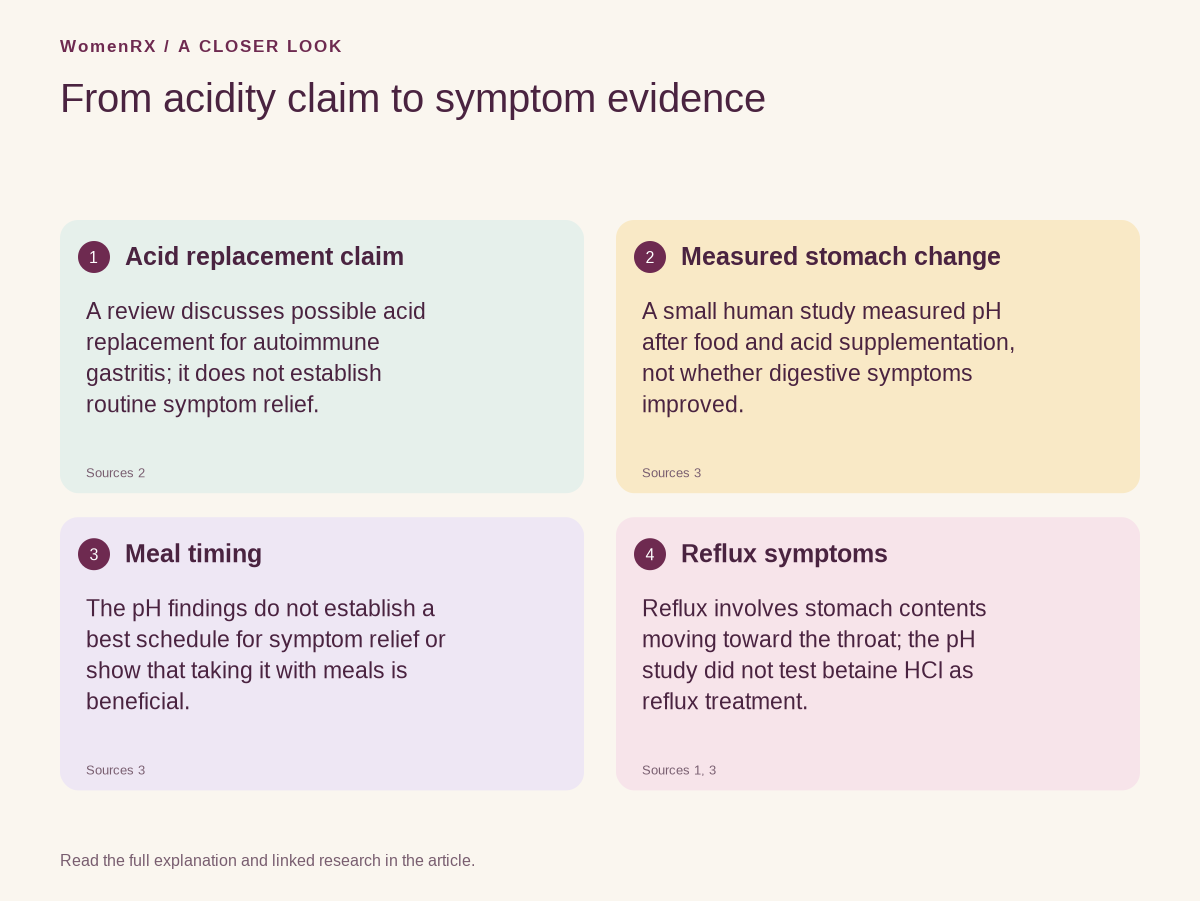
From acidity claim to symptom evidence
Acid replacement claim: A review discusses possible acid replacement for autoimmune gastritis; it does not establish routine symptom relief.2
Measured stomach change: A small human study measured pH after food and acid supplementation, not whether digestive symptoms improved.3
Meal timing: The pH findings do not establish a best schedule for symptom relief or show that taking it with meals is beneficial.3
Reflux symptoms: Reflux involves stomach contents moving toward the throat; the pH study did not test betaine HCl as reflux treatment.13
Read the figure as text
A change in stomach pH answers a different question from whether a supplement relieves symptoms or is appropriate for a particular condition.- Acid replacement claim: A review discusses possible acid replacement for autoimmune gastritis; it does not establish routine symptom relief.2
- Measured stomach change: A small human study measured pH after food and acid supplementation, not whether digestive symptoms improved.3
- Meal timing: The pH findings do not establish a best schedule for symptom relief or show that taking it with meals is beneficial.3
- Reflux symptoms: Reflux involves stomach contents moving toward the throat; the pH study did not test betaine HCl as reflux treatment.13
More questions, answered
Does taking betaine HCl with food make it more effective?
The small human study measured stomach pH after food, not relief of digestive symptoms. It doesn’t establish that taking betaine HCl with a meal is more effective for indigestion or any other symptom. 3
Does indigestion mean I have low stomach acid?
No. The review discusses reduced stomach acid in autoimmune gastritis, a condition involving damage to acid-producing cells, but it does not establish that common symptoms alone identify low stomach acid. 2
Sources you can check
- Heartburn and acid reflux - NHSAccessed 2026-09-25Return to first citation
- Creating a Framework for Treating Autoimmune Gastritis-The Case for Replacing Lost Acid.Taylor L, McCaddon A, Wolffenbuttel BHR. · Nutrients · 2024Return to first citation
- Food, Acid Supplementation and Drug Absorption - a Complicated Gastric Mix: a Randomized Control Trial.Surofchy DD, Frassetto LA, Benet LZ. · Pharmaceutical research · 2019Return to first citation