Can Vitamins Help When You’re Low on Energy?
A nutrient deficiency can contribute to fatigue, but the right next step depends on what else is going on.
Vitamins and minerals help your body function, but tiredness alone doesn’t tell you which, if any, you need more of. Heavy periods and pregnancy can make iron worth discussing; diet can raise questions about B12. If fatigue lasts for weeks, an assessment can look at sleep, health conditions, and possible deficiencies before you choose a supplement. 234
Start with the cause, not the supplement aisle
There’s a difference between replacing a nutrient you lack and taking an “energy” supplement in the hope that more will make you feel better. Fatigue can follow poor sleep or stress, and it can also be related to anemia, pregnancy, sleep disorders, depression, thyroid disease, and other conditions. The feeling is real, but it isn’t specific enough to identify a deficiency. 3
That distinction matters because an energy product may contain a vitamin your body already gets enough of while leaving the actual cause untouched. Vitamins have different jobs, and high doses of some can cause problems. Iron, often sold alongside energy vitamins, is a mineral rather than a vitamin. 24
When iron moves higher on the list
If your periods are unusually heavy, mention that alongside the fatigue. Heavy menstrual bleeding increases the risk of iron deficiency because more iron is lost with menstrual blood. Pregnancy raises iron needs for a different reason: blood volume and red blood cell production increase to support the pregnancy. Neither situation proves that low iron is causing your fatigue, but each gives a concrete reason to consider it during an assessment. 34
Iron-deficiency anemia is one situation in which targeted treatment can matter. In a 60-day randomized trial of 96 adults with iron-deficiency anemia, iron-containing supplements improved hemoglobin compared with placebo, and participants reported better energy. The trial included men and nonpregnant, nonlactating women; it didn’t report a separate result for women or show that iron helps people whose iron status is normal. It also isn’t a reason to pick one of the tested products over other treatments. 5
Taking iron on a guess has a downside. Supplemental iron can cause nausea and constipation, particularly at high intakes. Mentioning heavy bleeding and fatigue together can help determine whether an assessment is appropriate; lab tests may be part of a broader evaluation for persistent fatigue. 34
Where B12 and vitamin D fit
What you eat can change which nutrient questions are worth asking. For example, someone following a vegetarian diet may need a B12 supplement. Plant-based iron is also less readily absorbed than iron from animal foods. Neither fact means that a vegetarian who feels tired has a deficiency; it means diet belongs in the conversation about possible causes. 24
Vitamin D helps your body absorb calcium and also has roles in your muscle, nervous, and immune systems. A blood test can measure vitamin D status, and deficiency is treated with supplements. Severe deficiency in adults can cause bone pain and muscle weakness. That’s a different reason to assess vitamin D than assuming every spell of low energy calls for a vitamin D pill. Too much supplemental vitamin D can also be harmful. 1
B6 and other B vitamins are essential nutrients, but being involved in normal body functions doesn’t establish that taking extra will relieve fatigue when you’re getting enough. Rather than choosing a long list of vitamins by name, look for a reason a particular deficiency might apply to you. 23
Make the next step fit your life stage
Pregnancy deserves its own discussion rather than an ordinary supplement decision. The NIH Office of Dietary Supplements describes increased iron needs during pregnancy and notes that professional recommendations about routine screening and supplementation for pregnant women without symptoms differ. If you’re pregnant and tired, bring up the fatigue rather than assuming a prenatal vitamin answers the question. 4
After childbirth, if sleep or recovery is affecting you, mention it; don’t assume a “postpartum energy” supplement identifies what you need. Around perimenopause or menopause, if bleeding or sleep has changed, you can mention that too. A life-stage label alone doesn’t establish a nutrient deficiency.
If low energy hasn’t improved after several weeks, seek an evaluation. Expect questions about sleep, daily activities, appetite, and exercise; an exam and lab tests may follow. You can make that conversation more focused by describing when the fatigue began and mentioning heavy periods, pregnancy, dietary changes, or other symptoms. The goal isn’t to build a perfect symptom log. It’s to find out whether a nutrient needs attention or something else does. 34
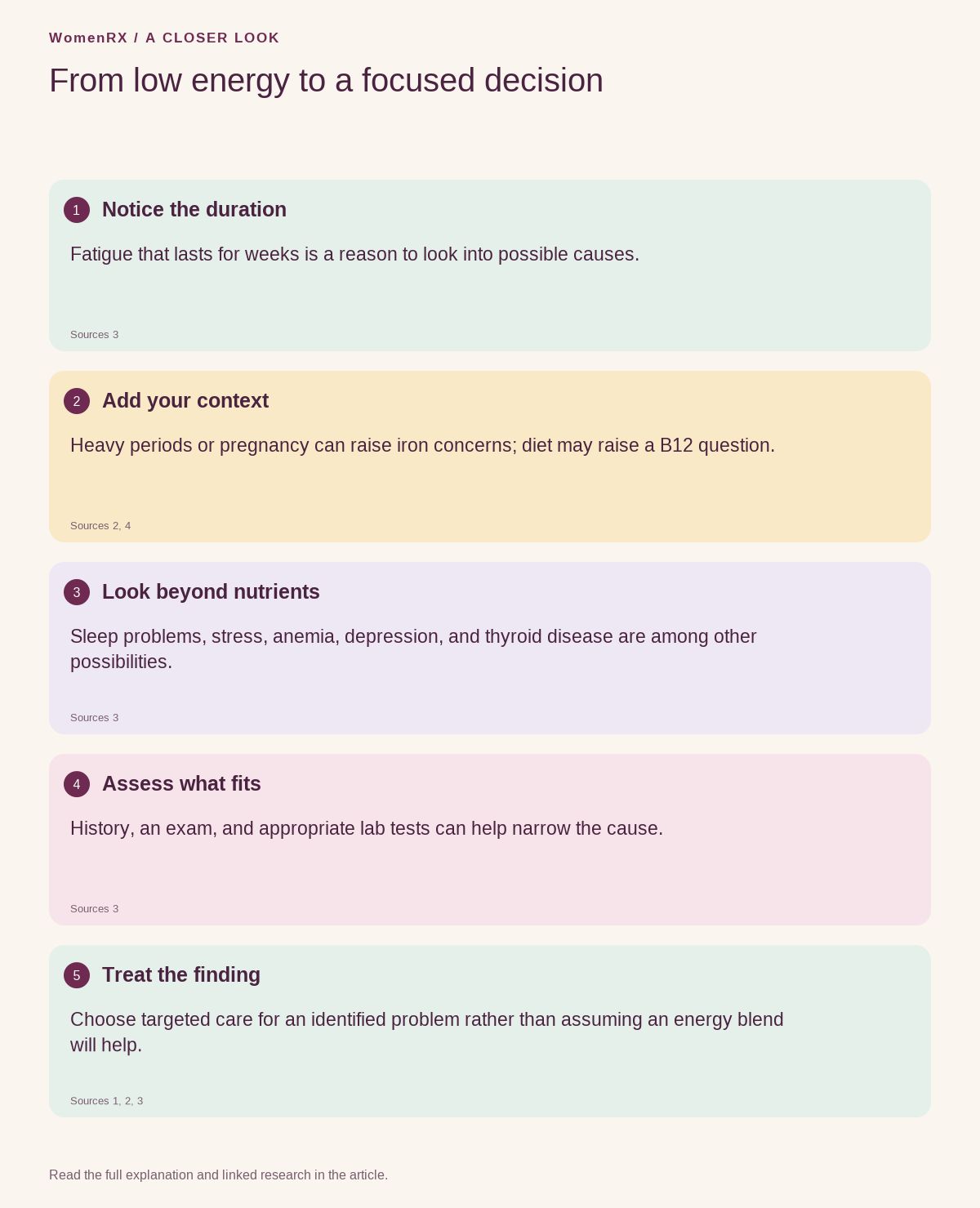
From low energy to a focused decision
Notice the duration: Fatigue that lasts for weeks is a reason to look into possible causes.3
Add your context: Heavy periods or pregnancy can raise iron concerns; diet may raise a B12 question.24
Look beyond nutrients: Sleep problems, stress, anemia, depression, and thyroid disease are among other possibilities.3
Assess what fits: History, an exam, and appropriate lab tests can help narrow the cause.3
Treat the finding: Choose targeted care for an identified problem rather than assuming an energy blend will help.123
Read the figure as text
This flow separates clues that make a deficiency worth assessing from the symptom of fatigue itself.- Notice the duration: Fatigue that lasts for weeks is a reason to look into possible causes.3
- Add your context: Heavy periods or pregnancy can raise iron concerns; diet may raise a B12 question.24
- Look beyond nutrients: Sleep problems, stress, anemia, depression, and thyroid disease are among other possibilities.3
- Assess what fits: History, an exam, and appropriate lab tests can help narrow the cause.3
- Treat the finding: Choose targeted care for an identified problem rather than assuming an energy blend will help.123
More questions, answered
Should I take iron because my periods are heavy?
Heavy menstrual bleeding raises the risk of iron deficiency, but it doesn’t establish that your iron is low. Mention the bleeding and fatigue together so the cause can be assessed; iron supplements can cause side effects and won’t address every cause of tiredness. 34
Is vitamin D an energy vitamin?
Vitamin D has established roles in bone, muscle, and other body systems, and a deficiency can be measured and treated. Fatigue alone doesn’t identify vitamin D deficiency, so it’s worth considering the symptom in context rather than assuming vitamin D is the answer. 13
Sources you can check
- Vitamin D Deficiency: MedlinePlusAccessed 2026-09-25Return to first citation
- Vitamins: MedlinePlusAccessed 2026-09-25Return to first citation
- Fatigue: MedlinePlusAccessed 2026-09-25Return to first citation
- Iron - Health Professional Fact SheetAccessed 2026-09-25Return to first citation
- Efficacy of Plant-Based Iron and Vitamin C in Adults With Iron Deficiency Anemia: A Randomized, Double-Blind Clinical Study.Patel MN, Patel N, Maheshvari J. · Cureus · 2025Return to first citation