Low Energy: Could Food Help, and When Should You Look for Another Cause?
Food can help when low intake or a nutrient deficiency is part of the problem, but ongoing fatigue can also point to sleep, thyroid, or other health issues.
Eating regularly and choosing a varied mix of foods can support adequate nutrition, and iron- or B12-containing foods matter if your intake is low. Iron-deficiency anemia can contribute to fatigue, but low iron stores may appear before anemia develops. Fatigue isn’t proof of a deficiency. If tiredness lasts for weeks, or you have heavy periods, pregnancy, or another risk for deficiency, ask about an evaluation rather than starting iron on your own. 1 2 4
Start with what food can, and can’t, do
Food is one part of the picture. Eating enough and choosing a varied diet can help you meet your nutrient needs. If you’ve been skipping meals or eating a limited range of foods, making meals more consistent and varied is a reasonable first step. But there isn’t one “energy food” that can explain or resolve persistent fatigue. Tiredness can also be related to too little sleep, stress, medications, or health conditions, including thyroid disease and anemia. 1
The useful distinction is whether a nutrient is actually in short supply. Iron-deficiency anemia can cause fatigue, weakness, and difficulty concentrating. Iron stores can also become depleted before anemia develops, when hemoglobin may still be within the normal range. Vitamin B12 deficiency can cause fatigue, too. If your B12 status is adequate, taking more B12 hasn’t been shown to improve endurance or performance. A food or supplement marketed for energy shouldn’t stand in for finding out why you feel tired. 2 4
Build food choices around your likely gap
If iron intake may be low, sources include beans, lentils, tofu, nuts, iron-fortified cereals and breads, meat, poultry, and seafood. Iron from meat and seafood is generally more readily absorbed than iron from plant foods. Vitamin C-rich foods can help your body absorb plant-based iron, so you might pair beans or lentils with tomatoes or another fruit or vegetable you enjoy. This is a practical way to combine foods, not a treatment for unexplained fatigue. 2
If you eat few or no animal products, pay attention to both nutrients. Plant foods don’t naturally contain B12, but some fortified cereals and nutritional yeast do. Iron is found in plant foods and fortified grains, though it is less readily absorbed than iron from animal foods. A plant-based pattern can provide these nutrients, but it may take more attention to food choices. 2 4
If you eat animal products, fish, meat, poultry, eggs, and dairy provide B12. Still, eating these foods doesn’t rule out a B12 problem: absorption difficulties, some digestive conditions or surgeries, and long-term use of certain medicines can contribute to deficiency. 4
When your life stage changes the question
Heavy menstrual bleeding increases iron loss and raises the chance of iron deficiency. If your periods are heavy and you’re persistently tired, that history is worth mentioning when you seek care. Iron stores may be depleted before anemia is present, so a normal hemoglobin result by itself may not tell the whole story; clinicians may use more than one blood measure to assess iron status. 2
Pregnancy raises iron needs as the body supports changes in blood volume and red blood cells. Guidance differs on routine iron screening and supplements for pregnant people without symptoms, while some professional organizations recommend screening and supplementation. If you’re pregnant, bring fatigue and your eating pattern to your pregnancy care team rather than guessing at a supplement dose. 2
If your sleep is disrupted after birth, insufficient sleep can contribute to fatigue, but it won’t explain every case. If fatigue hasn’t improved after several weeks, seek an evaluation as you would at any other time. Mention concerns about blood loss, food intake, or nutrient absorption if they apply. 1 2
When fatigue deserves another explanation
If fatigue hasn’t improved after several weeks, contact a healthcare provider to discuss what could be causing it. Thyroid disease, anemia, sleep disorders, depression and anxiety, medication effects, and other conditions are among the possibilities. A clinician may ask about sleep, appetite, daily activities, and medicines, examine you, and order tests based on your situation. 1
Mention heavy periods, pregnancy or recent birth, a mostly plant-based diet, digestive conditions or surgery, and medicines such as metformin or acid-reducing drugs if they apply. These details can help guide whether checking iron or B12 makes sense. B12 deficiency can also cause numbness or tingling, sometimes even without anemia, so don’t assume that a food change alone is enough if you notice these symptoms. 2 4
Don’t start iron just because you feel tired. Iron supplements can cause stomach upset and constipation, and too much iron can be harmful. The next helpful step is not a ranked list of “energy foods,” but matching your eating pattern and relevant health history to the possible cause. 2 3
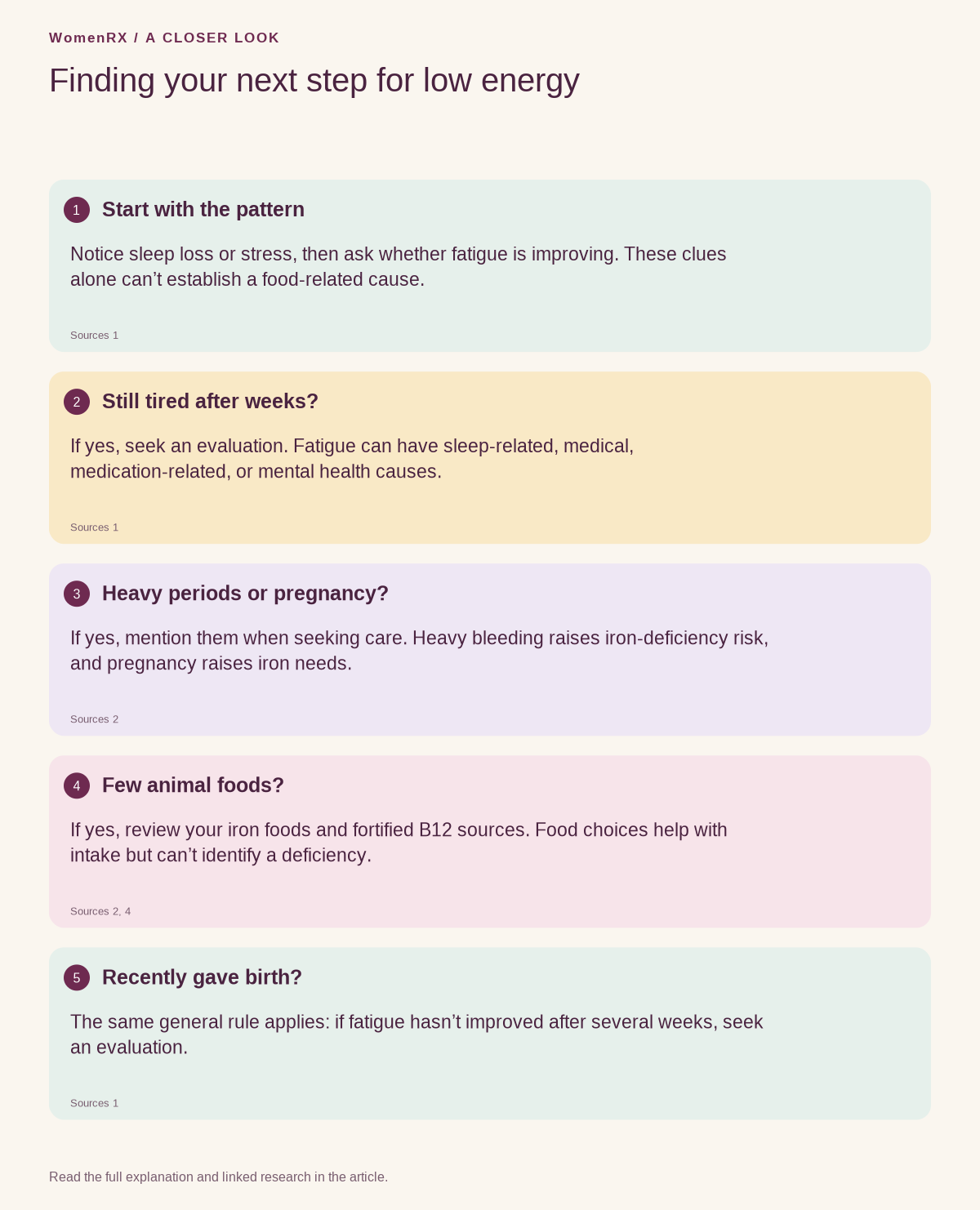
Finding your next step for low energy
Start with the pattern: Notice sleep loss or stress, then ask whether fatigue is improving. These clues alone can’t establish a food-related cause.1
Still tired after weeks?: If yes, seek an evaluation. Fatigue can have sleep-related, medical, medication-related, or mental health causes.1
Heavy periods or pregnancy?: If yes, mention them when seeking care. Heavy bleeding raises iron-deficiency risk, and pregnancy raises iron needs.2
Few animal foods?: If yes, review your iron foods and fortified B12 sources. Food choices help with intake but can’t identify a deficiency.24
Recently gave birth?: The same general rule applies: if fatigue hasn’t improved after several weeks, seek an evaluation.1
Read the figure as text
Start with how long fatigue has lasted, then follow the branches that fit your health history and eating pattern.- Start with the pattern: Notice sleep loss or stress, then ask whether fatigue is improving. These clues alone can’t establish a food-related cause.1
- Still tired after weeks?: If yes, seek an evaluation. Fatigue can have sleep-related, medical, medication-related, or mental health causes.1
- Heavy periods or pregnancy?: If yes, mention them when seeking care. Heavy bleeding raises iron-deficiency risk, and pregnancy raises iron needs.2
- Few animal foods?: If yes, review your iron foods and fortified B12 sources. Food choices help with intake but can’t identify a deficiency.24
- Recently gave birth?: The same general rule applies: if fatigue hasn’t improved after several weeks, seek an evaluation.1
More questions, answered
Will B12 supplements give me more energy?
They can help correct a B12 deficiency, but B12 supplements don’t appear to improve performance or endurance when someone already has adequate B12 status. Fatigue by itself doesn’t establish that you’re deficient. 4
Can food alone fix iron deficiency?
Iron-rich foods can contribute to iron intake, but fatigue may have another cause, and iron deficiency can relate to blood loss or problems absorbing iron as well as diet. If you suspect a deficiency, assessment can help determine what is going on and what approach is appropriate. 1 2
Sources you can check
- Fatigue: MedlinePlusAccessed 2026-09-25Return to first citation
- Iron - Health Professional Fact SheetAccessed 2026-09-25Return to first citation
- Iron: MedlinePlusAccessed 2026-09-25Return to first citation
- Vitamin B12 - Health Professional Fact SheetAccessed 2026-09-25Return to first citation