Low Energy: Which Supplements Should Follow a Test?
Tiredness can’t identify a nutrient deficiency, but the right assessment can show whether a targeted supplement makes sense.
If you’ve felt tired for weeks, look for the cause before buying an “energy” supplement. Fatigue can come from sleep problems, medicines, pregnancy, anemia, and other conditions. 3 Iron treatment has eased self-reported fatigue in trials involving people with documented iron deficiency, but those results don’t tell us it helps people whose iron levels are adequate. 4
Start with the cause, not the supplement aisle
Fatigue is a symptom, not a diagnosis. Too little sleep or stress may be involved, but so may sleep apnea, anemia, a thyroid condition, depression, pregnancy, or a medicine you take. If you’ve been tired for weeks, an assessment can help sort out which possibilities fit. It may include questions about your sleep and daily life, an exam, and lab tests. 3
That doesn’t mean everyone needs every nutrient test. It means a test is most useful when it can answer a specific question: Is a shortfall likely, and would finding one change what I take?
Iron: the fatigue evidence depends on iron status
Iron is the clearest example of why that question matters. You can have iron deficiency without anemia, so a normal hemoglobin result alone does not describe the iron status of people studied in iron-deficiency trials. In a review of 18 trials involving 1,170 adults who had iron deficiency but not anemia, only four trials involving 714 participants contributed to the pooled result for self-reported fatigue. Iron treatment was associated with less fatigue in that analysis, but the review did not find an improvement in objective measures of physical capacity. The trials used different forms of iron, and the authors noted limitations in study quality. 4
This evidence is relevant to women, but it needs the right boundaries. Healthy women made up the study population in 15 of the 18 trials; the findings don’t establish that iron helps every tired woman, or that tiredness by itself means iron is low. 4 If you’re pregnant, don’t assume tiredness points to iron deficiency: pregnancy itself is among the possible contributors to fatigue. 3 If your periods are unusually heavy, tell your care provider when discussing whether iron assessment fits your situation. That detail is more useful than choosing iron based on fatigue alone.
B12 and vitamin D call for different questions
Vitamin B12: If you eat a vegetarian diet, B12 supplementation may be relevant to how you meet your nutrient needs. That dietary clue is worth raising, but it does not establish that B12 explains your fatigue. 2
Vitamin D: Certain circumstances, including conditions that make nutrients harder to absorb, can increase the risk of deficiency. A blood test can measure vitamin D status, and confirmed deficiency is treated with supplements. That’s a reason to consider vitamin D in context, not to use it as a general energy booster. Very high levels from supplement overuse can raise blood calcium and damage the kidneys. 1
What to do with the result
If an assessment finds a deficiency, the next question is which treatment addresses that finding and whether your fatigue has another contributor too. If it doesn’t find one, adding more vitamins is unlikely to answer why you’re tired. Go back to the other possibilities, especially sleep, medicines, and health conditions, rather than treating a normal nutrient result as the end of the investigation. 3
The distinction is simple: a supplement can correct a nutrient shortfall. It cannot, by itself, tell you what caused your low energy.
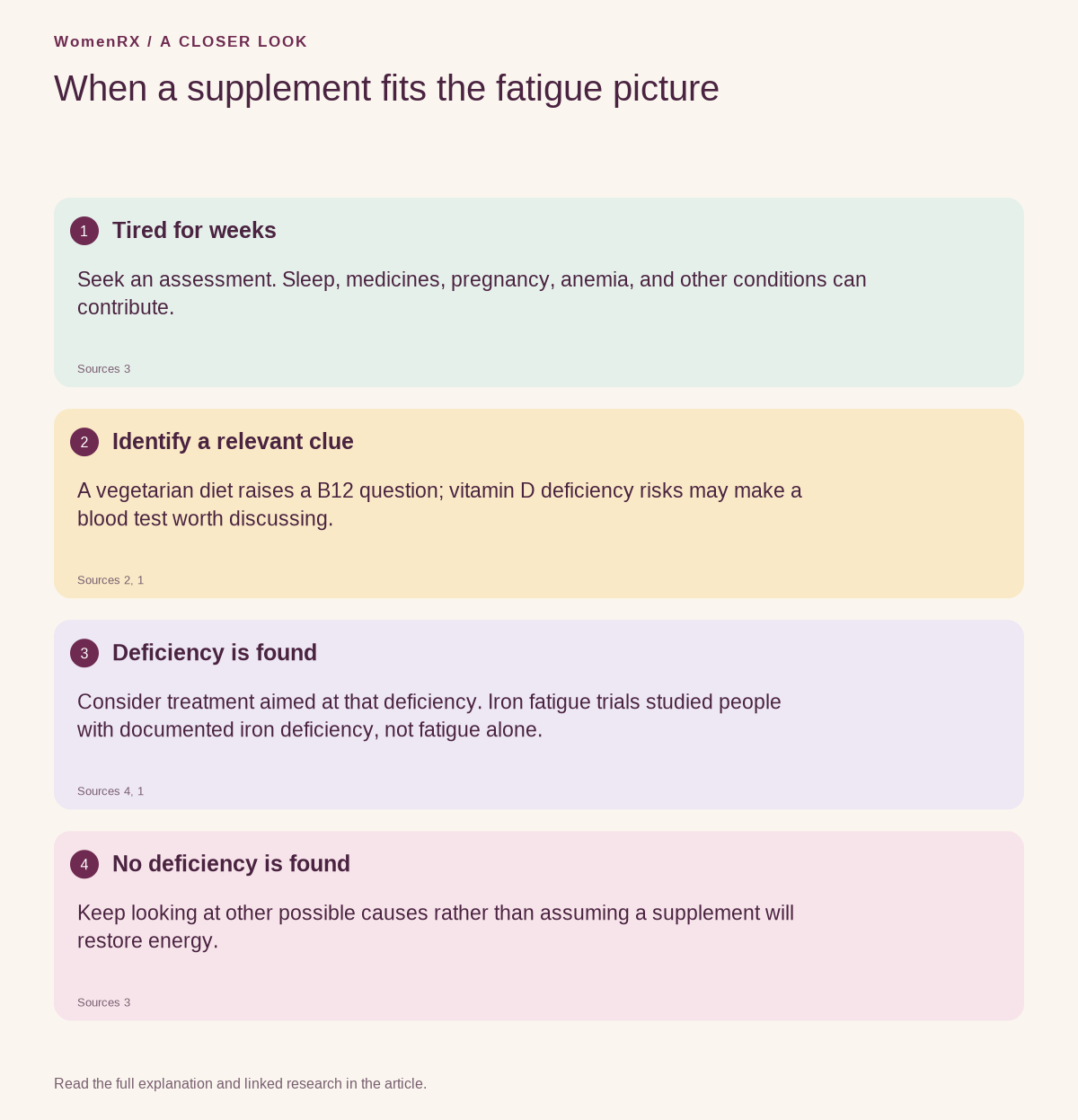
When a supplement fits the fatigue picture
Tired for weeks: Seek an assessment. Sleep, medicines, pregnancy, anemia, and other conditions can contribute.3
Identify a relevant clue: A vegetarian diet raises a B12 question; vitamin D deficiency risks may make a blood test worth discussing.21
Deficiency is found: Consider treatment aimed at that deficiency. Iron fatigue trials studied people with documented iron deficiency, not fatigue alone.41
No deficiency is found: Keep looking at other possible causes rather than assuming a supplement will restore energy.3
Read the figure as text
Follow the question from persistent tiredness to a finding that can guide a targeted choice.- Tired for weeks: Seek an assessment. Sleep, medicines, pregnancy, anemia, and other conditions can contribute.3
- Identify a relevant clue: A vegetarian diet raises a B12 question; vitamin D deficiency risks may make a blood test worth discussing.21
- Deficiency is found: Consider treatment aimed at that deficiency. Iron fatigue trials studied people with documented iron deficiency, not fatigue alone.41
- No deficiency is found: Keep looking at other possible causes rather than assuming a supplement will restore energy.3
Sources you can check
- Vitamin D Deficiency: MedlinePlusAccessed 2026-09-25Return to first citation
- Vitamins: MedlinePlusAccessed 2026-09-25Return to first citation
- Fatigue: MedlinePlusAccessed 2026-09-25Return to first citation
- Efficacy of iron supplementation on fatigue and physical capacity in non-anaemic iron-deficient adults: a systematic review of randomised controlled trials.Houston BL, Hurrie D, Graham J, Perija B, Rimmer E, Rabbani R, Bernstein CN, Turgeon AF, Fergusson DA, Houston DS, Abou-Setta AM, Zarychanski R. · BMJ open · 2018Return to first citation