Iron Deficiency: What Food Can Do, and When to Get Tested
Iron-rich meals can support your intake, but heavy periods, pregnancy, or persistent symptoms may call for blood tests rather than a diet change alone.
Meat and seafood provide more readily absorbed heme iron; beans, lentils, tofu, greens, and fortified grains provide non-heme iron. Pairing plant sources with vitamin-C-rich food can help absorption. Heavy menstrual bleeding and pregnancy raise the chance of low iron, but fatigue alone can’t confirm it. A blood test can check iron stores before anemia develops, and diagnosed deficiency may need treatment beyond food. 1 2
Iron in food: two forms, different absorption
Iron helps your body make hemoglobin, the protein in red blood cells that carries oxygen. Food contains two forms. Meat, poultry, and seafood contain heme and non-heme iron; plant foods and fortified foods contain non-heme iron only. Heme iron is generally absorbed more readily, while the amount of non-heme iron your body absorbs is more affected by the rest of the meal. 1 2
Useful sources include oysters, white beans, lentils, tofu, fortified breakfast cereal, and some meats. For a sense of serving size, the NIH Office of Dietary Supplements lists about 8 mg in 3 ounces of cooked oysters or 1 cup of canned white beans, and about 3 mg in a half-cup of cooked lentils or tofu. Food labels can also help you compare fortified cereals and grains. 1
A plant-based diet can still supply iron. Since non-heme iron is less bioavailable on average, it may take more attention to food choices and meal pairings to meet your needs. That doesn’t mean you need to eat meat; beans, lentils, tofu, nuts, vegetables, and fortified grains all contribute. 1
Make plant iron work harder at meals
Vitamin C can increase absorption of non-heme iron. For example, you might add vitamin-C-rich produce to a meal with beans, lentils, tofu, or iron-fortified grains. Meat, poultry, and seafood can also increase absorption of non-heme iron when eaten as part of the same meal. 1
Some compounds in grains and beans, and certain polyphenols in plant foods, can reduce non-heme iron absorption. Calcium may reduce absorption of both forms, although its effect isn’t fully settled. These effects don’t mean you need to avoid nutritious foods or reorganize every meal: the NIH notes that, in a typical Western diet, the influence of enhancers and inhibitors is often reduced and may have little effect on most people’s iron status. 1
A practical approach is to include iron-containing foods regularly and pair plant sources with vitamin-C-rich foods when it’s convenient. Focus on the overall pattern rather than trying to make every meal perfect.
Your life stage changes the picture
Menstruation increases iron loss through blood. Women with heavy menstrual bleeding are at higher risk of deficiency, so if your bleeding is heavy or you’re concerned about it, food choices aren’t the only thing to consider. 1 2
Iron needs also rise during pregnancy as the body makes more red blood cells and supports the fetus and placenta. The NIH’s recommended dietary allowance is 27 mg per day during pregnancy, compared with 18 mg per day for women ages 19 to 50 who aren’t pregnant. These are population-level intake recommendations, not a treatment dose or a way to diagnose deficiency. 1
For breastfeeding women ages 19 to 50, the listed recommended intake is 9 mg per day; for breastfeeding women ages 14 to 18, it is 10 mg per day. Pregnancy and breastfeeding are different stages, and your own iron status still depends on factors such as blood loss, intake, and absorption. If you’re pregnant, recently gave birth, or breastfeeding and have concerns about low iron, bring them to your prenatal or primary care team rather than starting a high-dose supplement on your own. 1 2
When a blood test is more useful than guessing
Fatigue, weakness, shortness of breath, or difficulty concentrating can occur with iron-deficiency anemia, but these symptoms aren’t specific to iron. Iron stores can also become depleted before hemoglobin falls, so a normal hemoglobin result alone may not identify early iron deficiency. 1 2
A clinician may use a blood count and ferritin, a measure of stored iron, along with other results and your health history. Ferritin can be higher during inflammation, so one number may not tell the whole story. Heavy periods, pregnancy, blood donation, digestive conditions that affect absorption, or persistent symptoms are reasons to ask whether testing makes sense. 1 2
Food is useful for meeting everyday needs and supporting iron intake, but it isn’t a substitute for assessing a confirmed deficiency. Treatment for low iron or iron-deficiency anemia often includes iron supplements; what’s appropriate depends on the test results and why your iron is low. Blood loss or trouble absorbing iron may need attention as well as the iron level itself. Don’t assume that taking more iron is harmless: supplements can cause side effects, and excess iron can be harmful. 1 2
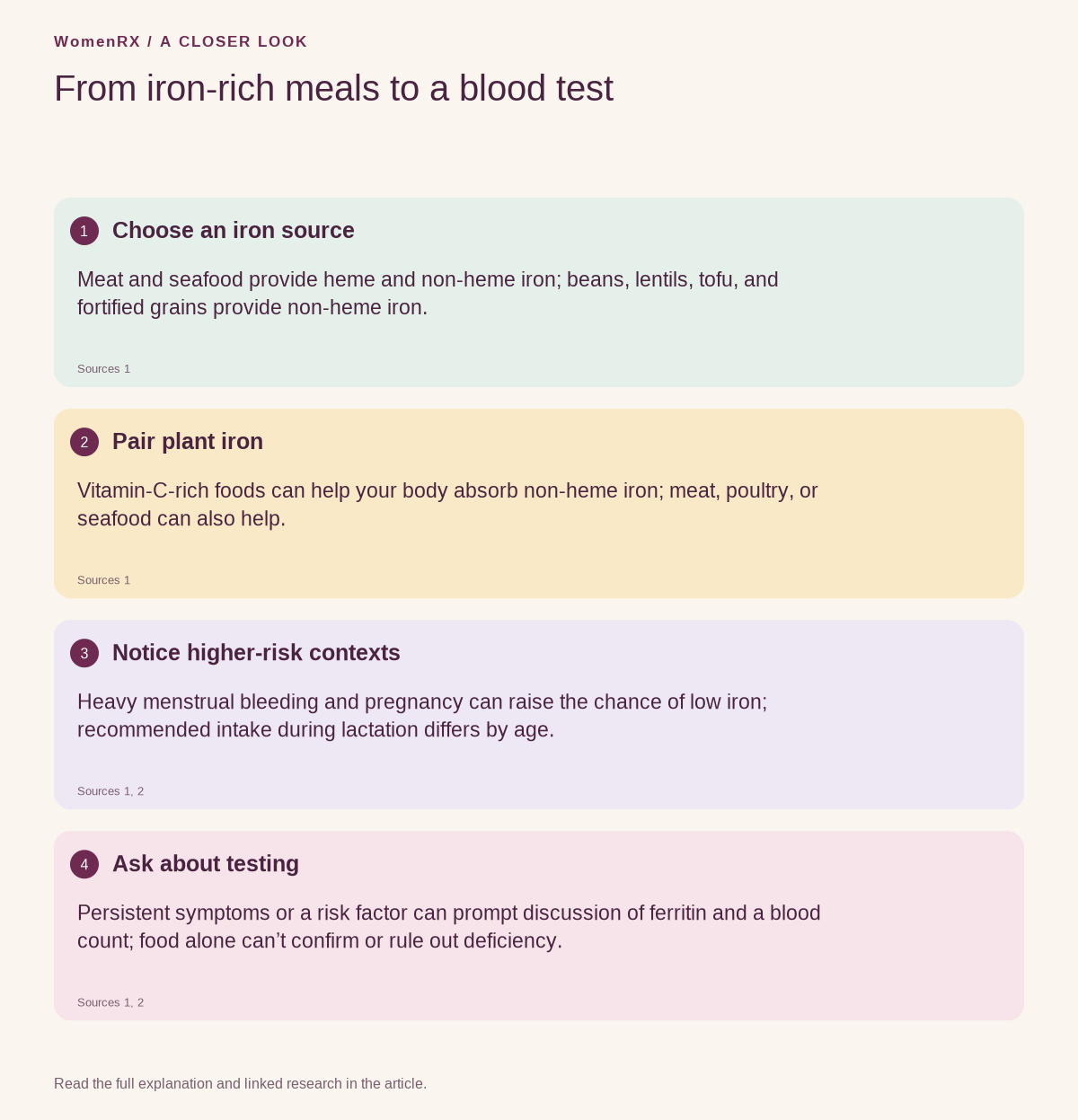
From iron-rich meals to a blood test
Choose an iron source: Meat and seafood provide heme and non-heme iron; beans, lentils, tofu, and fortified grains provide non-heme iron.1
Pair plant iron: Vitamin-C-rich foods can help your body absorb non-heme iron; meat, poultry, or seafood can also help.1
Notice higher-risk contexts: Heavy menstrual bleeding and pregnancy can raise the chance of low iron; recommended intake during lactation differs by age.12
Ask about testing: Persistent symptoms or a risk factor can prompt discussion of ferritin and a blood count; food alone can’t confirm or rule out deficiency.12
Read the figure as text
Food choices can support iron intake, while risk factors and symptoms help indicate when testing may be more useful than dietary changes alone.- Choose an iron source: Meat and seafood provide heme and non-heme iron; beans, lentils, tofu, and fortified grains provide non-heme iron.1
- Pair plant iron: Vitamin-C-rich foods can help your body absorb non-heme iron; meat, poultry, or seafood can also help.1
- Notice higher-risk contexts: Heavy menstrual bleeding and pregnancy can raise the chance of low iron; recommended intake during lactation differs by age.12
- Ask about testing: Persistent symptoms or a risk factor can prompt discussion of ferritin and a blood count; food alone can’t confirm or rule out deficiency.12
More questions, answered
Can I tell whether I’m iron deficient from fatigue?
No. Fatigue can happen with iron-deficiency anemia, but it has many possible causes. A blood test is needed to assess iron status; ferritin can identify depleted stores before anemia appears, though inflammation can affect its result. 1 2
Do plant-based foods provide enough iron?
They can contribute meaningfully: beans, lentils, tofu, nuts, vegetables, and fortified grains contain non-heme iron. Because it is less readily absorbed and more affected by meal components, pairing these foods with vitamin-C-rich foods can help. 1
Sources you can check
- Iron - Health Professional Fact SheetAccessed 2026-09-25Return to first citation
- Iron: MedlinePlusAccessed 2026-09-25Return to first citation