Biotin, Thyroid Tests, and Levothyroxine: What to Check
Biotin can distort some thyroid test results, and a supplement’s place in your routine matters if you take levothyroxine.
Check a supplement’s full ingredient label before relying on a “thyroid support” claim. Biotin can make some thyroid blood test results misleading, while levothyroxine has timing instructions that matter when you add other medicines or supplements. If symptoms have you wondering about your thyroid, testing can help answer that question more directly than a supplement label can. 1 2 3
Start with the claim, not the bottle
“Thyroid support” can describe very different products: a single nutrient, a blend, or a supplement with a high dose of biotin. The phrase on the front doesn’t tell you whether you need the ingredients, whether they’ll change your thyroid function, or whether they could affect a blood test.
Separate two questions: Has a specific nutrient deficiency been identified, and is this product meant to treat a thyroid condition? Those aren’t the same thing. For example, biotin is an essential nutrient, but deficiency is rare, and taking it isn’t a way to diagnose or treat an underactive thyroid. Thyroid blood tests help establish whether thyroid disease is present; levothyroxine is a medicine used to treat an underactive thyroid. 1 2 3
If a product contains iodine or selenium, the ingredient name alone doesn’t answer whether it’s appropriate for you. This article can’t tell you which, if either, you need based on a “thyroid support” claim. Your diagnosis and usual intake are more useful questions to bring to that decision.
Biotin can confuse thyroid blood tests
Biotin, also called vitamin B7, is included in some standalone supplements, multivitamins, and products marketed for hair, skin, or nails. It can interfere with certain laboratory methods and cause thyroid results to look falsely high or falsely low. That can make results seem inconsistent with how you feel or potentially lead to a mistaken interpretation. 3
The NIH Office of Dietary Supplements describes a small study in six healthy adults who took 10 mg of biotin daily for a week. Several lab tests were affected, including falsely decreased TSH results. It also reports that a single 10 mg dose interfered with thyroid tests taken within 24 hours. These findings don’t establish the amount in a typical beauty product or a universal waiting period for every person or every test. 3
If you have thyroid labs coming up, tell the ordering clinician and the lab about every product containing biotin, including multivitamins and hair or nail blends. Ask them what to do before the test. Don’t guess at a stopping interval: the appropriate instructions can depend on the test and your situation. If you’ve already had a test while taking biotin, mention it when discussing the results. 3
If you take levothyroxine, check where supplements fit
Levothyroxine treats an underactive thyroid, and its timing can matter. NHS guidance places it on an empty stomach, 30 to 60 minutes before the first meal, caffeine, or other medicine. That’s a reason to check before adding another product to the same part of your day, not a reason to change your prescription routine on your own. Follow the directions you were given and ask your pharmacist or prescriber how a supplement fits. 1
Check the full label, not just the words “thyroid support.” In particular, look for biotin if blood tests are planned. Tell your prescriber about the vitamins, supplements, and herbal products you use; the NHS reference also flags St John’s wort as a product to disclose when taking levothyroxine. Biotin’s documented concern here is interference with thyroid tests, which is different from a supplement changing how you take your medicine. 1 3
A practical example: if you take levothyroxine in the morning and also use a multivitamin or hair supplement, bring the bottle or a clear label photo to the pharmacy or appointment. The exact ingredients and amounts give your pharmacist something concrete to check against your prescription directions and any planned labs.
When testing is more useful than another product
If tiredness or low mood led you to consider a thyroid product, discuss those symptoms with a clinician and ask whether testing makes sense. They can occur with an underactive thyroid, but symptoms alone don’t tell you whether that’s the cause. Thyroid blood tests are used to help diagnose thyroid disease; TSH is usually the first blood test ordered, with other tests used when they help answer the clinical question. 1 2
An unexpected result is another reason to mention your supplements. If you were taking biotin when blood was drawn, tell the clinician and lab so they can consider whether it affected the interpretation. 3
Being a woman alone doesn’t tell you whether you need a thyroid supplement. If you’re pregnant, bring up a thyroid history or symptoms with your prenatal care team rather than trying a thyroid product first. Thyroid testing in pregnancy may be considered through an individual risk assessment. A 2025 systematic review found that evidence for many commonly used risk factors was limited and varied across studies, so a risk-factor list can’t replace that assessment. If you already take levothyroxine, let your prenatal care team know you’re pregnant; thyroid hormone levels may need closer monitoring. 1 4
The useful next move depends on what prompted the purchase. For a lab appointment, identify biotin on every label. For a levothyroxine routine, check where a new product fits. For symptoms or a surprising result, ask what testing can clarify before treating a marketing claim as an answer. 1 2 3
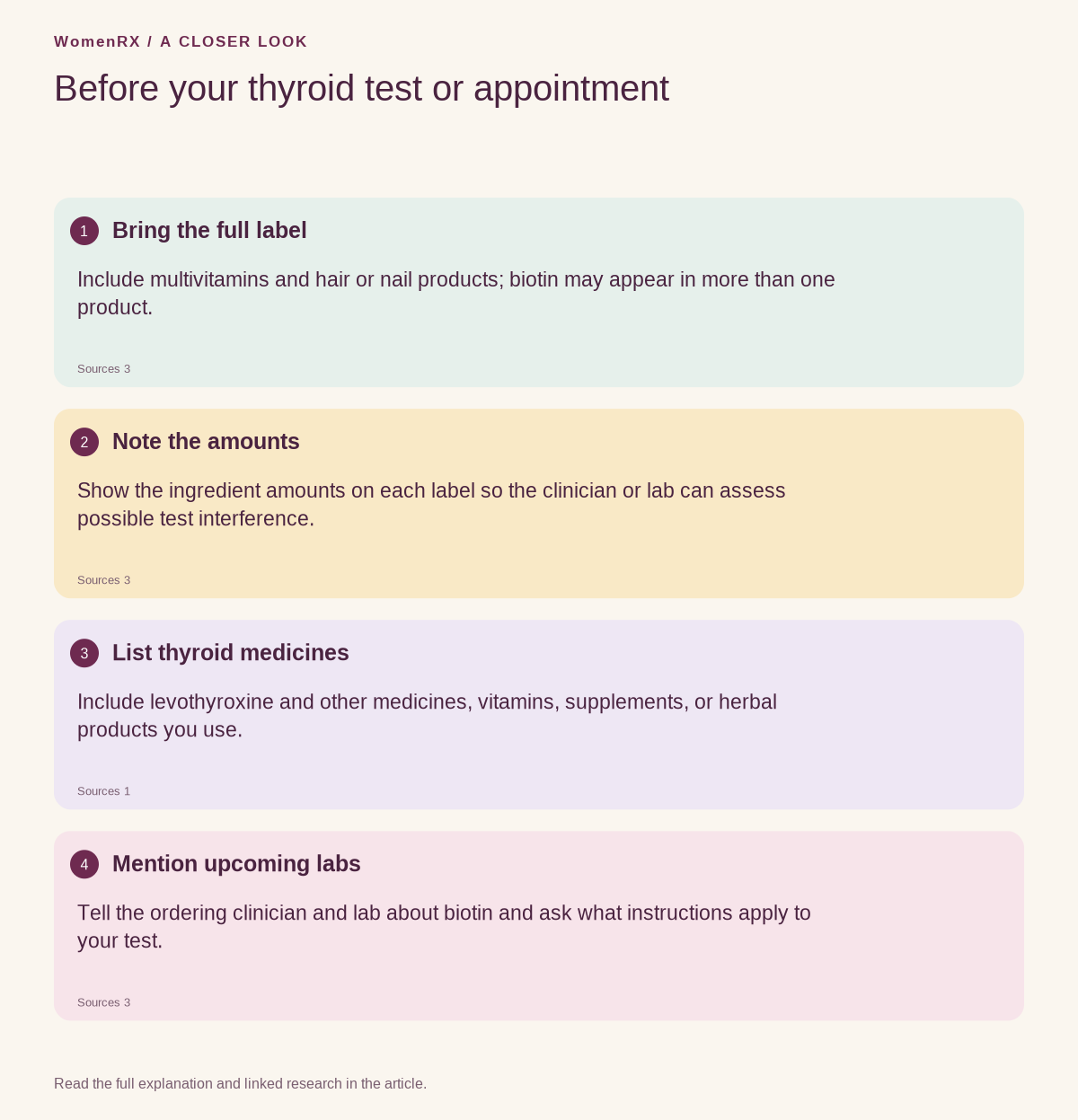
Before your thyroid test or appointment
Bring the full label: Include multivitamins and hair or nail products; biotin may appear in more than one product.3
Note the amounts: Show the ingredient amounts on each label so the clinician or lab can assess possible test interference.3
List thyroid medicines: Include levothyroxine and other medicines, vitamins, supplements, or herbal products you use.1
Mention upcoming labs: Tell the ordering clinician and lab about biotin and ask what instructions apply to your test.3
Read the figure as text
Use this short check to make supplement ingredients, medicines, and upcoming tests easier to discuss.- Bring the full label: Include multivitamins and hair or nail products; biotin may appear in more than one product.3
- Note the amounts: Show the ingredient amounts on each label so the clinician or lab can assess possible test interference.3
- List thyroid medicines: Include levothyroxine and other medicines, vitamins, supplements, or herbal products you use.1
- Mention upcoming labs: Tell the ordering clinician and lab about biotin and ask what instructions apply to your test.3
More questions, answered
Should I stop biotin before thyroid testing?
Don’t assume there’s one stopping interval for every test. Biotin can affect some thyroid assays, and interference has been reported when testing occurred within 24 hours of a single 10 mg dose. Tell the clinician and lab what you take and ask for instructions for your specific test. 3
What thyroid tests might be ordered?
TSH is usually the first blood test. Depending on the reason for testing, a clinician may also order T3, T4, or thyroid-antibody tests. 2
Sources you can check
- Levothyroxine: a medicine for an underactive thyroid (hypothyroidism) - NHSAccessed 2026-09-25Return to first citation
- Thyroid Tests: MedlinePlusAccessed 2026-09-25Return to first citation
- Biotin - Health Professional Fact SheetAccessed 2026-09-25Return to first citation
- Risk Factors for Thyroid Function Test Abnormalities During Pregnancy: A Systematic Review of the Literature to Validate Current Risk Factors and Identify Novel Ones.Liu Y, Osinga JAJ, Maraka S, Bliddal S, Alexander EK, Dosiou C, Boelaert K, Brenta G, Krabbendam E, Eaton JL, Guan H, Lee SY, Morris-Wiseman LF, Nguyen CT, Shan Z, Dhillon-Smith RK... · Thyroid : official journal of the American Thyroid Association · 2025Return to first citation