Iodine and Selenium for Thyroid Health: Who Needs Supplements?
Both nutrients support thyroid hormone biology, but needing them in your diet doesn’t mean extra supplements will treat a thyroid condition.
Most people in the United States get enough selenium from food, while iodine intake can be harder to judge if you avoid dairy, seafood, eggs, or iodized salt. Pregnancy raises iodine needs, and professional organizations recommend an iodine-containing supplement when planning or during pregnancy. Selenium supplements haven’t shown consistent thyroid benefits, and excess selenium can be harmful. Check what’s already in your prenatal or other supplements before adding either nutrient. 1 2 3
What these nutrients do, and what that doesn’t prove
Iodine is part of thyroid hormones. Selenium is used in proteins involved in thyroid hormone metabolism, including the conversion of T4 to active T3. Those roles make both nutrients necessary; they don’t show that extra iodine or selenium improves thyroid health when your intake is already adequate. 1 2
For selenium, the supplement evidence in autoimmune thyroiditis, including Hashimoto’s, is mixed. Some trials found lower thyroid-antibody levels, but a review of controlled trials found no consistent improvement in TSH, thyroid ultrasound measures, or quality of life. Lower antibody levels alone don’t establish that a supplement will improve how you feel or change the course of the condition. 1
Pregnancy research is mixed, too. In a randomized trial of 230 pregnant women in the UK with mild-to-moderate iodine deficiency, low-dose selenium did not reduce thyroid peroxidase (TPO) antibodies compared with placebo. The American Thyroid Association recommends against selenium supplementation for pregnant women who test positive for TPO antibodies. 1 4
Start with your food pattern and life stage
In the United States, most people get enough selenium from food. Seafood, meat, poultry, eggs, grains, and dairy can contribute; plant sources vary depending on the selenium in the soil where they grew. People eating vegan or vegetarian diets may have lower selenium intakes, but that possibility by itself doesn’t establish that a supplement is needed. 1
Iodine intake depends more visibly on food choices. Seafood, eggs, dairy, and iodized table salt provide iodine. Sea salt and other specialty salts usually aren’t iodized, and plant-based milk alternatives often contain little. Some breads contain iodine, but it depends on the ingredients. If you rarely eat dairy, seafood, or eggs and don’t use iodized salt, it’s worth checking your overall iodine sources rather than assuming a specialty salt or seaweed product fills the gap. Iodine levels in seaweed vary widely. 2
If you’re planning a pregnancy, pregnant, or breastfeeding
The recommended iodine intake is 150 micrograms per day for nonpregnant adults, 220 micrograms during pregnancy, and 290 micrograms while breastfeeding. For selenium, the recommended intake is 55 micrograms per day for adults, 60 during pregnancy, and 70 while breastfeeding. These are total daily intake targets, not automatic instructions to add a separate supplement. 1 2
Many professional organizations recommend 150 micrograms of iodine daily as a supplement for women planning pregnancy or who are pregnant, ideally starting before conception. Not all prenatal vitamins contain iodine, so check the label and review the product with your pregnancy-care clinician. A recommendation for iodine doesn’t mean you should add a second iodine product without checking the amount already in your prenatal. 3
Breastfeeding raises the recommended intake for both nutrients. That’s a reason to review food sources and supplement labels, not to assume you need separate iodine and selenium pills. The guidance for selenium is especially cautious if you test positive for TPO antibodies during pregnancy. 1 2
A practical check before adding a pill
- Look at the whole plan. Check your usual food sources and the ingredient amounts in multivitamins, prenatal vitamins, and any standalone products. For iodine, some prenatal products contain none; for selenium, multiple products can add up. 1 2 3
- Notice a plausible shortfall, not just a thyroid diagnosis. A vegan diet or avoiding major iodine sources can make intake worth reviewing. A thyroid diagnosis alone doesn’t establish that more iodine or selenium is the right response. 1 2
- Ask about your specific situation. This matters if you’re pregnant or planning pregnancy, have a diagnosed thyroid condition, or are considering a product with a large amount of either nutrient. 1 3
For selenium, the adult upper limit is 400 micrograms per day from food and supplements combined. It’s a ceiling, not a target. Brazil nuts can contain particularly high, variable amounts; regular intake can make it harder to estimate your total. Long-term excess can cause hair loss or brittle or lost nails, among other symptoms. 1
For women ages 19-50, the iodine upper limit is 1,100 micrograms per day; for ages 14-18, it is 900 micrograms per day. These limits are the same for pregnant and nonpregnant women in each age group. Some iodine supplements contain high amounts, and seaweed iodine varies widely. During pregnancy, both low and high iodine intakes have been associated with developmental concerns, so more is not automatically better. 2 3
The useful question isn’t simply whether iodine and selenium are “good for the thyroid.” It’s whether your food pattern or life stage makes a shortfall plausible, what you’re already getting, and whether a supplement has a clear purpose in your situation.
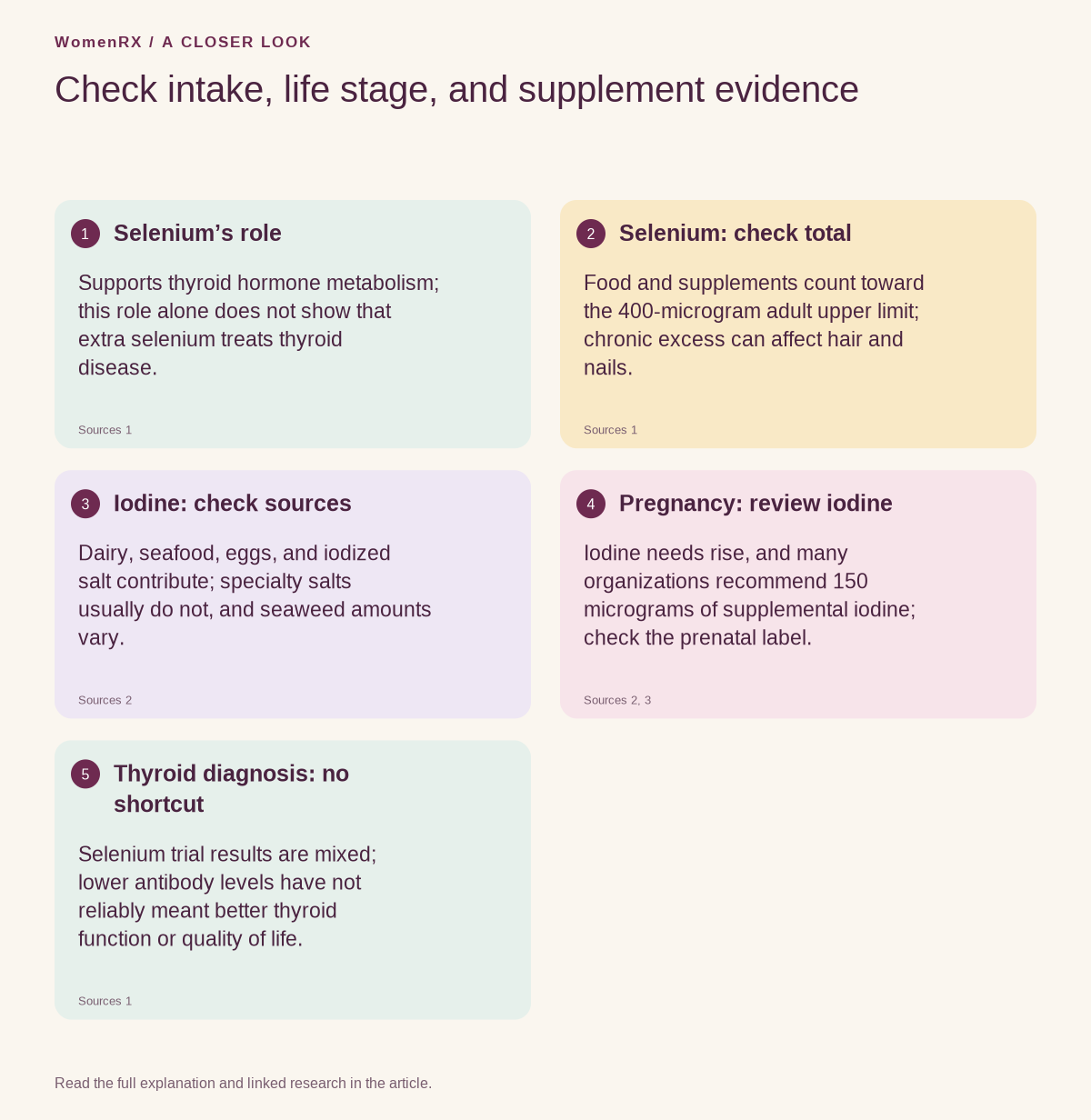
Check intake, life stage, and supplement evidence
Selenium’s role: Supports thyroid hormone metabolism; this role alone does not show that extra selenium treats thyroid disease.1
Selenium: check total: Food and supplements count toward the 400-microgram adult upper limit; chronic excess can affect hair and nails.1
Iodine: check sources: Dairy, seafood, eggs, and iodized salt contribute; specialty salts usually do not, and seaweed amounts vary.2
Pregnancy: review iodine: Iodine needs rise, and many organizations recommend 150 micrograms of supplemental iodine; check the prenatal label.23
Thyroid diagnosis: no shortcut: Selenium trial results are mixed; lower antibody levels have not reliably meant better thyroid function or quality of life.1
Read the figure as text
Use these distinctions to separate a possible nutrient shortfall from a reason to take more for a thyroid diagnosis.- Selenium’s role: Supports thyroid hormone metabolism; this role alone does not show that extra selenium treats thyroid disease.1
- Selenium: check total: Food and supplements count toward the 400-microgram adult upper limit; chronic excess can affect hair and nails.1
- Iodine: check sources: Dairy, seafood, eggs, and iodized salt contribute; specialty salts usually do not, and seaweed amounts vary.2
- Pregnancy: review iodine: Iodine needs rise, and many organizations recommend 150 micrograms of supplemental iodine; check the prenatal label.23
- Thyroid diagnosis: no shortcut: Selenium trial results are mixed; lower antibody levels have not reliably meant better thyroid function or quality of life.1
More questions, answered
Should I take selenium for Hashimoto’s?
Not automatically. Trials have sometimes found lower thyroid-antibody levels, but reviews have not shown consistent improvements in thyroid function or quality of life. Ask about your diet and existing supplements before adding selenium, especially if you’re pregnant and test positive for TPO antibodies. 1
How can I tell whether my prenatal contains iodine?
Check the supplement facts panel for iodine and its amount; not all prenatal vitamins include it. Many professional organizations recommend 150 micrograms of supplemental iodine for women planning pregnancy or who are pregnant, so review the product with your pregnancy-care clinician rather than doubling up. 3
Sources you can check
- Selenium - Health Professional Fact SheetAccessed 2026-09-25Return to first citation
- Iodine - Health Professional Fact SheetAccessed 2026-09-25Return to first citation
- Dietary Supplements and Life Stages: Pregnancy - Health Professional Fact SheetAccessed 2026-09-25Return to first citation
- Effect of low-dose selenium on thyroid autoimmunity and thyroid function in UK pregnant women with mild-to-moderate iodine deficiency.Mao J, Pop VJ, Bath SC, Vader HL, Redman CW, Rayman MP. · European journal of nutrition · 2016Return to first citation