Thyroid Health and Food: Iodine, Supplements, and What to Check
Iodine and selenium support normal thyroid function, but getting enough is different from treating a thyroid condition.
Iodine and selenium are needed for normal thyroid hormone production and metabolism, but taking extra doesn’t treat every cause of hypothyroidism. Food can supply both, while supplements vary and may add up across a multivitamin and a thyroid product. Check labels before adding one. If you’re pregnant, planning pregnancy, or taking levothyroxine, discuss your specific needs and monitoring with your clinician. 1 2 3
Iodine and selenium matter to the thyroid, but a nutrient’s role in normal function doesn’t mean a supplement can treat thyroid disease. A useful first step is to check what you already get from food and products, then separate that question from whether your thyroid condition needs medical treatment.
Iodine: meet a need, don’t chase a “boost”
Iodine is part of thyroid hormones. For most adults, the recommended intake is 150 micrograms a day; it rises to 220 micrograms during pregnancy and 290 micrograms while breastfeeding. Those are nutrition targets, not doses for treating hypothyroidism. 3
In the US, useful food sources include iodized table salt, dairy foods, seafood, and eggs. But salt types aren’t interchangeable for iodine: sea salt and other specialty salts are usually not iodized. Many processed foods use noniodized salt, too, so eating salty foods doesn’t necessarily mean you’re getting iodine. Check the salt package to see whether it’s iodized. 3
Iodine can be hard to estimate from some labels. Bread made with iodate dough conditioners may contain iodine, but the Nutrition Facts label isn’t required to list it. Seaweed iodine varies greatly by species, and some iodine supplements contain high amounts. A product labeled “thyroid support” or made with kelp isn’t automatically a better choice. 3
If you eat little or no dairy, seafood, or eggs, or follow a vegan diet, it’s reasonable to review your iodine sources. That doesn’t mean you should start a high-dose supplement on your own. The amount in a supplement, what else you take, and whether you have a thyroid condition all matter. 3
Selenium: important role, uncertain supplement benefit
Selenium-containing proteins help with thyroid hormone metabolism. Foods that provide selenium include seafood, meat, poultry, eggs, grains, and dairy products. Plant sources can vary with the selenium content of the soil where they were grown. 2
Research on selenium supplements in autoimmune thyroiditis has found a distinction worth knowing: some trials found lower thyroid antibody levels, but a review of controlled trials did not find improvements in TSH, thyroid ultrasound measures, or health-related quality of life from selenium alone. Lowering an antibody result is not the same as showing that a supplement improves how you feel or treats hypothyroidism. 2
Before taking selenium, add up the amount in your multivitamin, prenatal, and any thyroid-specific product. Brazil nuts are particularly rich in selenium, so they can add substantially to your intake as well. For adults, the upper limit is 400 micrograms a day from food and supplements combined. That’s a safety ceiling, not a target. 2
A label check that catches common surprises
Look at the Supplement Facts panel for the actual amount of iodine or selenium per serving. Then check the serving size and compare it with other products you take. For iodine, look for the listed amount rather than relying on a product’s name or on kelp imagery. For selenium, include multivitamins and prenatal vitamins in the total. Not every prenatal supplement contains iodine. 2 3
A food-first approach can help meet nutrient needs, but it doesn’t mean every person needs the same foods or a supplement. The US recommended intake for selenium is 55 micrograms a day for adult women, 60 during pregnancy, and 70 while breastfeeding. Most people in the US get adequate selenium, according to the NIH Office of Dietary Supplements; a supplement isn’t automatically needed just because selenium supports the thyroid. 2
Pregnancy calls for a closer look
Iodine needs increase during pregnancy and breastfeeding. Some pregnant women in the US may have insufficient iodine intake, and not all prenatal vitamins contain iodine, so check the label and ask about your intake when planning a pregnancy or once you’re pregnant. 3
If you have thyroid disease and take levothyroxine, pregnancy can also change how closely your thyroid levels need to be monitored. Levothyroxine is used to treat an underactive thyroid, and blood tests are used to check whether the dose is right; more testing may be needed during pregnancy. Don’t change your medication based on a food or supplement label. 1
Selenium supplements aren’t a routine answer in pregnancy either. The NIH fact sheet reports that the American Thyroid Association recommends against selenium supplementation for pregnant women who test positive for thyroid peroxidase antibodies (TPOAb). If that applies to you, ask about your care rather than trying to manage the result with a supplement. 2
Food and supplements don’t replace thyroid treatment
If you have hypothyroidism, eating iodine- or selenium-containing foods supports ordinary nutrient intake; it doesn’t tell you why your thyroid is underactive or whether your medication dose is right. Levothyroxine dosing is individualized and checked with blood tests. Keep food choices and supplements in the conversation, but don’t use them as a reason to stop or adjust prescribed treatment. 1
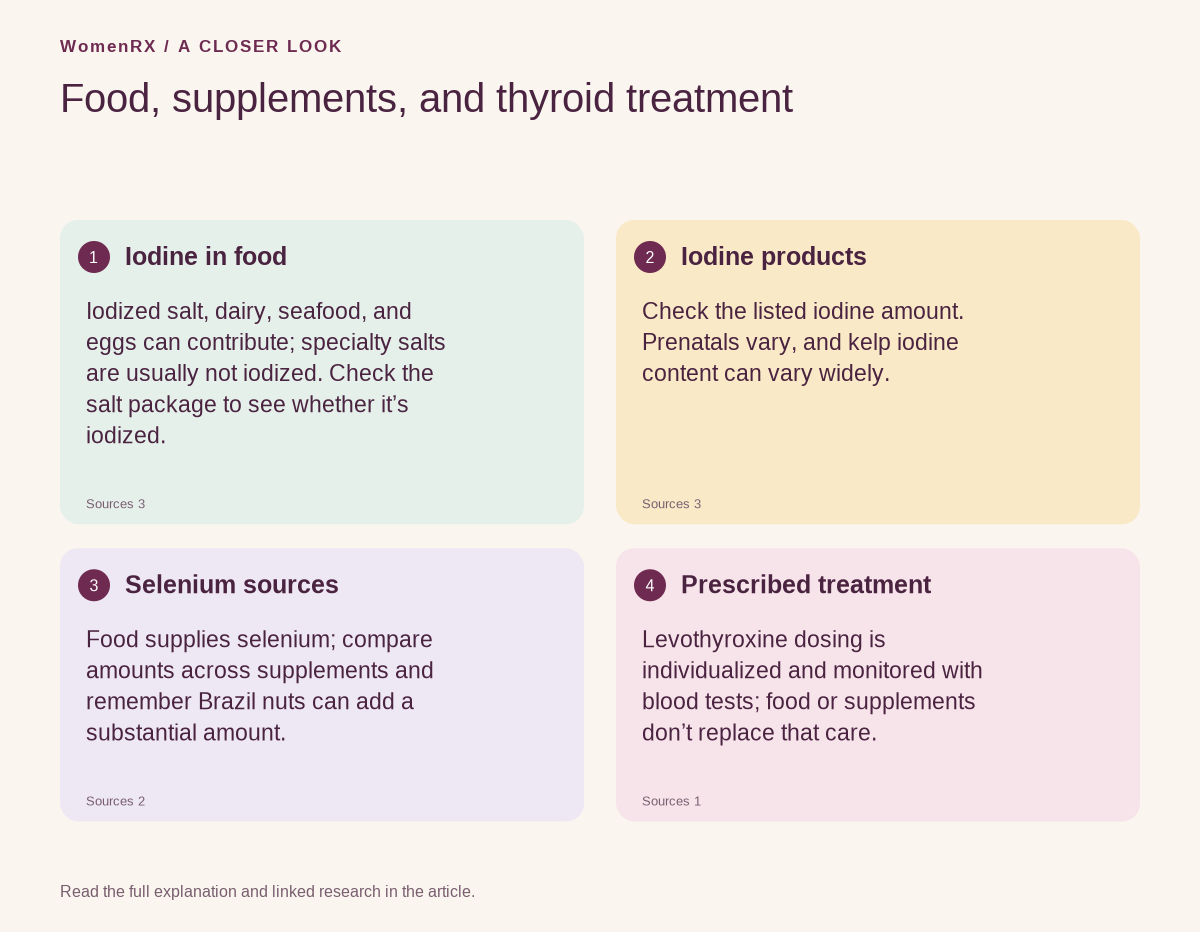
Food, supplements, and thyroid treatment
Iodine in food: Iodized salt, dairy, seafood, and eggs can contribute; specialty salts are usually not iodized. Check the salt package to see whether it’s iodized.3
Iodine products: Check the listed iodine amount. Prenatals vary, and kelp iodine content can vary widely.3
Selenium sources: Food supplies selenium; compare amounts across supplements and remember Brazil nuts can add a substantial amount.2
Prescribed treatment: Levothyroxine dosing is individualized and monitored with blood tests; food or supplements don’t replace that care.1
Read the figure as text
Compare where iodine and selenium come from, what labels can hide, and which decisions relate to prescribed treatment.- Iodine in food: Iodized salt, dairy, seafood, and eggs can contribute; specialty salts are usually not iodized. Check the salt package to see whether it’s iodized.3
- Iodine products: Check the listed iodine amount. Prenatals vary, and kelp iodine content can vary widely.3
- Selenium sources: Food supplies selenium; compare amounts across supplements and remember Brazil nuts can add a substantial amount.2
- Prescribed treatment: Levothyroxine dosing is individualized and monitored with blood tests; food or supplements don’t replace that care.1
More questions, answered
Do I need to avoid broccoli, cabbage, or soy for my thyroid?
For most people who get enough iodine and eat a varied diet, reasonable amounts of soy and cruciferous vegetables such as broccoli and cabbage aren’t considered a concern. The issue is more relevant where iodine intake is low, not a reason to automatically cut out these foods. 3
Sources you can check
- Levothyroxine: a medicine for an underactive thyroid (hypothyroidism) - NHSAccessed 2026-09-25Return to first citation
- Selenium - Health Professional Fact SheetAccessed 2026-09-25Return to first citation
- Iodine - Health Professional Fact SheetAccessed 2026-09-25Return to first citation