Iodine in Food: Sources, Salt Labels, and Pregnancy Needs
Seafood, dairy, eggs, and iodized salt can contribute iodine, but food and salt labels rarely tell the whole story.
Good iodine sources include seafood, dairy products, eggs, and salt specifically labeled iodized. In the U.S., iodine content can vary considerably, and food labels usually don’t list it unless iodine has been added. The recommended intake is 150 mcg daily for adults, 220 mcg during pregnancy, and 290 mcg while breastfeeding, so a familiar food list can guide an estimate but can’t guarantee adequacy. 1
Start with the sources you actually use
Iodine helps your body make thyroid hormones. In everyday U.S. diets, useful sources include seafood, dairy products, eggs, and iodized table salt. Some bread also contributes a surprising amount when the manufacturer uses an iodine-containing dough conditioner. 1
For a sense of scale, NIH lists approximate amounts of 146 mcg in 3 ounces of baked cod, 84 mcg in a cup of nonfat milk, 31 mcg in one large hard-boiled egg, and 78 mcg in a quarter teaspoon of iodized table salt. Two slices of bread made with an iodate dough conditioner are listed at 273 to 296 mcg. Those figures describe specific servings and products, not a promise about every meal or brand. 1
Dairy can be a meaningful source, but its iodine content isn’t fixed: farming and milk-processing practices affect how much is present. Plant-based milk alternatives generally contain little iodine unless fortified. A review also reports lower urinary iodine concentrations among women of childbearing age who drink plant-based beverages instead of cow’s milk; that association doesn’t establish what any one person’s iodine intake is. 1 3
Why labels make intake hard to calculate
In the U.S., manufacturers aren’t required to list iodine on the Nutrition Facts label unless iodine has been added. That means a label may tell you more about a product’s ingredients than its iodine amount. For bread, look in the ingredient list for potassium iodate or calcium iodate, but don’t assume all bread contains iodine: most commercially prepared bread has very little without an iodate dough conditioner. 1
Salt is another source that’s easy to misread. Iodine is added to U.S. table salt voluntarily, and specialty salts such as sea, kosher, and Himalayan salt usually aren’t iodized. Check the package for “iodized” or a statement that it provides iodide. Most salt in the U.S. food supply is used in processed foods, and manufacturers almost always use noniodized salt in those products. Don’t increase salt just to get iodine; use the label to understand what you already choose. 1
Food estimates have limits even when the ingredient list is clear. Iodine in dairy varies with production practices, fruit and vegetable iodine depends partly on soil and growing conditions, and seaweed amounts vary greatly by species. NIH’s listed food amounts are approximate guides, not a reliable tally of every product you eat. 1
Pregnancy and breastfeeding change the target
For adults, the recommended dietary allowance is 150 mcg a day. It rises to 220 mcg during pregnancy and 290 mcg while breastfeeding. The World Health Organization recommends 250 mcg daily during pregnancy, a somewhat different target from the U.S. allowance. 1
Pregnancy is a reason to look more closely at the sources in your routine, not to assume that one food will cover the need. U.S. national survey data summarized by NIH found a median urinary iodine concentration of 144 mcg/L among pregnant women in 2007-2014. That population-level finding suggests some pregnant women may be at risk of low intake; it cannot tell an individual whether her intake is adequate. 1
If you’re pregnant or breastfeeding, check whether your prenatal supplement contains iodine rather than assuming it does. Kelp supplements aren’t a predictable shortcut: iodine varies widely across seaweed, and some iodine supplements contain high amounts. If you have a thyroid condition or are considering an iodine supplement, ask your care team for advice that fits your situation instead of adding one on your own. 1 2
Make a practical source check
Look across a typical day or week: do you eat seafood, dairy, eggs, or foods made with iodized salt? If you use plant-based milk, check whether iodine is listed as a fortification ingredient. If you use specialty salt, verify whether it’s iodized. Then check a prenatal supplement label if pregnancy or breastfeeding applies. This gives you a more useful picture than relying on a single “high iodine” food, while keeping in mind that labels and food composition can leave gaps. 1
A urine iodine result also needs context. A spot urine test can help assess iodine status in groups, but one spot measurement isn’t a reliable way to diagnose an individual’s iodine intake or deficiency. 1
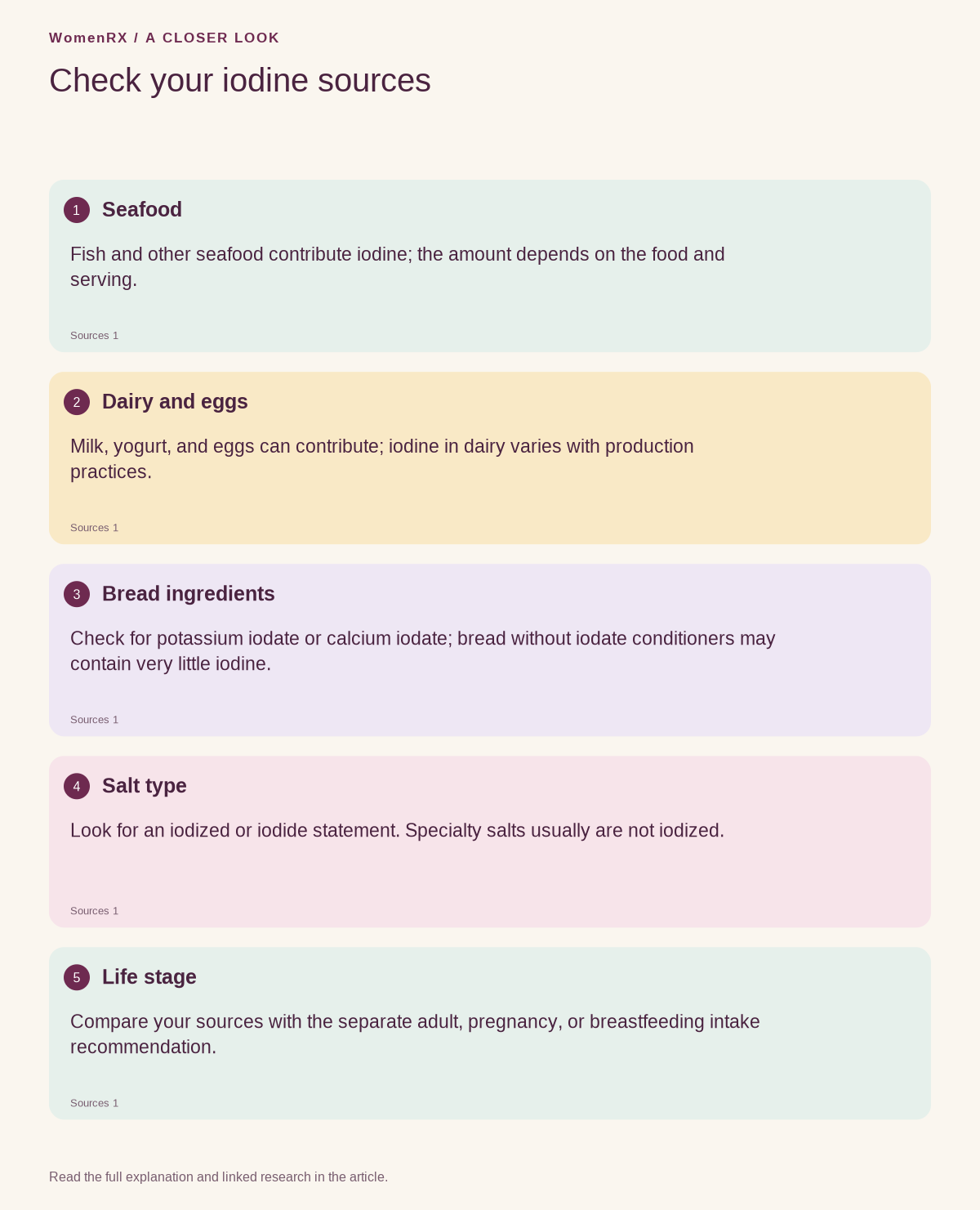
Check your iodine sources
Seafood: Fish and other seafood contribute iodine; the amount depends on the food and serving.1
Dairy and eggs: Milk, yogurt, and eggs can contribute; iodine in dairy varies with production practices.1
Bread ingredients: Check for potassium iodate or calcium iodate; bread without iodate conditioners may contain very little iodine.1
Salt type: Look for an iodized or iodide statement. Specialty salts usually are not iodized.1
Life stage: Compare your sources with the separate adult, pregnancy, or breastfeeding intake recommendation.1
Read the figure as text
Use this checklist to see where iodine may come from in your routine and where labels or food variation make an exact estimate difficult.- Seafood: Fish and other seafood contribute iodine; the amount depends on the food and serving.1
- Dairy and eggs: Milk, yogurt, and eggs can contribute; iodine in dairy varies with production practices.1
- Bread ingredients: Check for potassium iodate or calcium iodate; bread without iodate conditioners may contain very little iodine.1
- Salt type: Look for an iodized or iodide statement. Specialty salts usually are not iodized.1
- Life stage: Compare your sources with the separate adult, pregnancy, or breastfeeding intake recommendation.1
More questions, answered
Does sea salt provide iodine?
Usually not. Sea salt and other specialty salts are generally noniodized, so check the package for an iodized or iodide statement rather than relying on the salt’s name. 1
Can I tell my iodine status from one urine test?
A single spot urine iodine measurement isn’t a reliable individual diagnostic measure. It’s more useful for assessing iodine status across populations than for deciding whether one person is getting enough. 1
Sources you can check
- Iodine - Health Professional Fact SheetAccessed 2026-09-25Return to first citation
- Pregnancy and Medicines | MedlinePlusAccessed 2026-09-25Return to first citation
- Cow milk is an important source of iodine for prenatal health, and switching to plant-based milk can lead to iodine insufficiencies.Lundquist H, Hess J, Comeau M, Slavin J. · JDS communications · 2024Return to first citation