Iodine Deficiency: Symptoms, Testing, and Next Steps
Fatigue and weight changes can have many causes, so iodine deficiency is best considered through your diet, life stage, and thyroid evaluation, not symptoms alone.
Iodine deficiency can affect thyroid hormone production, but fatigue, weight changes, and trouble concentrating are not specific to low iodine. It’s more plausible if you rarely eat iodine-rich foods or use iodized salt, and pregnancy or breastfeeding raises iodine needs. Ask about assessment if these factors apply; don’t use a high-dose “thyroid support” supplement to diagnose or treat yourself. 3 5
Symptoms can point to a thyroid issue, not its cause
Iodine is needed to make thyroid hormones. When iodine intake is too low, the thyroid may not have enough raw material to maintain hormone production. 3 But symptoms such as fatigue, weight gain, slowed heart rate, or difficulty concentrating don’t tell you whether iodine is the problem. They can occur with hypothyroidism, which has several causes. In the United States, Hashimoto’s disease is a common cause of hypothyroidism where iodine intake is adequate. 2 5
An enlarged thyroid, called a goiter, can make the front of your neck look swollen. It may occur with thyroid problems, but it doesn’t identify the cause by itself. Neck swelling, especially if it causes trouble swallowing or breathing, deserves medical assessment. 2
When low iodine becomes more plausible
Iodine deficiency is uncommon in North America, but intake can be low for some people. Seafood, dairy products, eggs, and iodized salt are useful dietary sources. If you eat few or none of these foods, or use specialty salt that isn’t iodized, your usual intake may be lower. Plant-based milk alternatives often contain relatively little iodine, and the amount in foods such as dairy, bread, and seaweed can vary. 3
Pregnancy and breastfeeding change the picture. The U.S. recommended intake rises from 150 micrograms per day for adults to 220 during pregnancy and 290 while breastfeeding. Pregnancy increases iodine needs, and iodine is present in breast milk. These intake recommendations are goals for total intake, not a diagnosis or a personal supplement prescription. 2 3
If you’re pregnant or breastfeeding, check whether your prenatal or multivitamin lists iodine and bring the label to a conversation with your prenatal care team. Not all prenatal supplements contain it. This is especially worth discussing if you avoid seafood, dairy, and eggs, or have a thyroid condition. 2 3
What testing can, and can’t, tell you
A clinician may evaluate thyroid function with blood tests such as TSH and T4, alongside your history and an exam. These tests can help identify how the thyroid is functioning; they do not, by themselves, prove that a low iodine intake caused a thyroid problem. Hypothyroidism is diagnosed through biochemical testing, and symptoms alone aren’t enough. 2 5
Urinary iodine testing has a different limitation: a single spot urine result reflects recent intake and can vary from day to day. It’s useful for looking at iodine nutrition across populations, but it isn’t suitable on its own to diagnose an individual’s iodine status. A clinician can decide whether dietary review, thyroid testing, or other assessment fits your situation. 4
Why a thyroid supplement can backfire
More iodine isn’t automatically better. Too much iodine, including from seaweed-based products or supplements, can cause thyroid problems. It may be particularly relevant if you already have hyperthyroidism or an autoimmune thyroid condition; people with autoimmune thyroid disorders may be more sensitive to harmful effects from iodine. 1 2
Before starting a product marketed for thyroid support, check its label for iodine, potassium iodide, or kelp, and discuss it with your clinician if you have thyroid disease or are pregnant or breastfeeding. Kelp’s iodine content can vary widely, and some iodine-only supplements contain high amounts. Don’t stop prescribed thyroid medicine without discussing it with your clinician. 2 3
If you have ongoing symptoms, a visible neck enlargement, or a diet that may be low in iodine, ask about an evaluation rather than trying to identify deficiency from symptoms. If you’re pregnant or breastfeeding, raise your intake and supplement questions as part of your care, since both too little and too much iodine can matter.
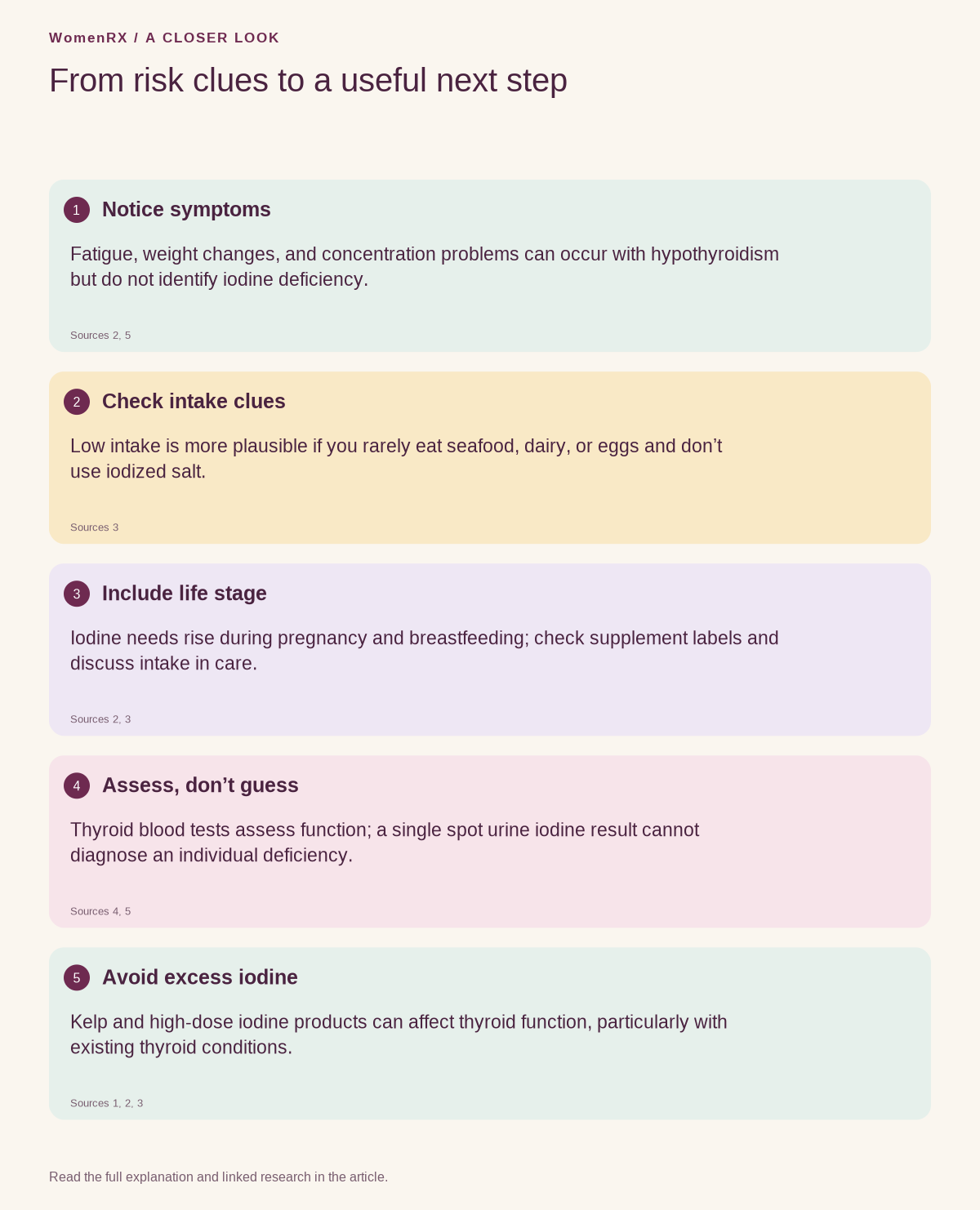
From risk clues to a useful next step
Notice symptoms: Fatigue, weight changes, and concentration problems can occur with hypothyroidism but do not identify iodine deficiency.25
Check intake clues: Low intake is more plausible if you rarely eat seafood, dairy, or eggs and don’t use iodized salt.3
Include life stage: Iodine needs rise during pregnancy and breastfeeding; check supplement labels and discuss intake in care.23
Assess, don’t guess: Thyroid blood tests assess function; a single spot urine iodine result cannot diagnose an individual deficiency.45
Avoid excess iodine: Kelp and high-dose iodine products can affect thyroid function, particularly with existing thyroid conditions.123
Read the figure as text
Symptoms alone can’t diagnose iodine deficiency. Use this path to separate dietary clues from thyroid-function assessment and avoid treating uncertainty with excess iodine.- Notice symptoms: Fatigue, weight changes, and concentration problems can occur with hypothyroidism but do not identify iodine deficiency.25
- Check intake clues: Low intake is more plausible if you rarely eat seafood, dairy, or eggs and don’t use iodized salt.3
- Include life stage: Iodine needs rise during pregnancy and breastfeeding; check supplement labels and discuss intake in care.23
- Assess, don’t guess: Thyroid blood tests assess function; a single spot urine iodine result cannot diagnose an individual deficiency.45
- Avoid excess iodine: Kelp and high-dose iodine products can affect thyroid function, particularly with existing thyroid conditions.123
More questions, answered
Can a TSH test show whether I’m iodine deficient?
TSH helps assess thyroid function, but it doesn’t identify iodine deficiency as the cause. A single spot urine iodine result also isn’t a reliable individual diagnosis because it reflects recent intake and varies. Your diet and clinical context matter alongside thyroid tests. 4 5
Does sea salt provide iodine?
Sea salt and other specialty salts are not usually iodized. Check the label for “iodized” or iodine; noniodized sea salt provides virtually no iodine. 3
Should everyone take iodine during pregnancy?
Iodine needs are higher in pregnancy, but not all prenatal supplements contain iodine, and too much can also affect the thyroid. Check your supplement label and discuss your intake with your prenatal care team, particularly if you have a thyroid condition. 2 3
Sources you can check
- Hyperthyroidism | Graves' Disease | Overactive Thyroid | MedlinePlusAccessed 2026-09-25Return to first citation
- Hypothyroidism | Hashimoto's Disease | MedlinePlusAccessed 2026-09-25Return to first citation
- Iodine - Health Professional Fact SheetAccessed 2026-09-25Return to first citation
- Iodine in Health and Disease: A Comprehensive Review.Delić T, Karanović Štambuk S. · Nutrients · 2026Return to first citation
- Hypothyroidism: A Review.Chaker L, Papaleontiou M. · JAMA · 2025Return to first citation