Who May Need Selenium? Food, Testing, and Supplements
For most women in the U.S., selenium from a varied diet is enough; pregnancy and breastfeeding change the intake target, while some health and dietary contexts call for a closer look.
Most women in the U.S. don’t need a selenium supplement just because they’re women. The daily intake target is 55 mcg for adults, 60 mcg during pregnancy, and 70 mcg while breastfeeding, counting food and supplements together. Blood selenium can be used to assess status, but a measurement alone doesn’t establish that a supplement is needed or would help. 1 2
Start with what you eat and your life stage
Selenium is a nutrient your body needs, but a higher intake isn’t automatically better. In the U.S. and Canada, deficiency is uncommon, and selenium intake in North America is generally above the recommended amount, even in areas with lower-selenium soil. That makes a routine selenium-only supplement an unlikely need for most women. 1 2
The recommended intake is 55 micrograms (mcg) a day for adults, 60 mcg during pregnancy, and 70 mcg while breastfeeding. These are targets for total intake from food and supplements, not suggested supplement doses. 1
Pregnancy and breastfeeding raise the target, but that alone doesn’t show that you need an extra selenium pill. If you take a prenatal or multivitamin, check its label for selenium before adding a separate product. Supplement amounts vary: many multivitamins contain 55 mcg, while selenium-only products often contain substantially more. 1
Food can cover the target in different ways
Seafood, meat, poultry, eggs, grains, and dairy contribute selenium. For example, the NIH Office of Dietary Supplements lists 45 mcg in 3 ounces of sardines, 22 mcg in 3 ounces of chicken, 15 mcg in one large egg, and 8 mcg in a slice of whole-wheat bread. These are examples, not a required menu. 1
Plant-food amounts can vary with the selenium in the soil where they grew. Brazil nuts are especially concentrated: one ounce averages 544 mcg in the listed food data, but measurements vary widely. That makes Brazil nuts a poor way to aim for a precise daily amount, especially if you’re also taking a supplement. 1
A plant-based diet by itself doesn’t prove you’re deficient: the amount in plant foods varies, and U.S. diets draw from food grown in many places. Selenium inadequacy is a more specific concern in some regions where people rely heavily on locally grown plant foods from selenium-poor soil. 1
When health context deserves a closer look
The NIH fact sheet identifies people undergoing long-term hemodialysis and people living with HIV as groups who may have low selenium status. People on hemodialysis may have lower selenium concentrations, but levels vary between individuals, and evidence that supplements improve health outcomes is still limited. People living with HIV may also have low concentrations, with differences across settings; randomized trials suggest supplementation has little effect on HIV disease progression or treatment. These findings don’t mean everyone in either group needs a supplement. If either situation applies to you, discussing nutrition with the clinician managing your care is a cautious way to consider your individual circumstances. 1
What a blood measurement can tell you
Plasma or serum selenium is often used to assess selenium nutritional status. That makes it a measure of status, not a stand-alone answer to whether you should take a supplement. Selenium deficiency rarely causes overt illness on its own, and a measurement by itself doesn’t establish that supplementation will improve a health outcome. 1 2
If you have a specific concern, such as long-term hemodialysis or reliance on crops grown in selenium-poor soil, it may be useful to discuss whether a blood measurement would change your care. 1 If testing comes up in a conversation about your health, a useful question is what concern the test is meant to address and how the result would affect the next step. The result should be considered alongside your diet and health circumstances, rather than treated as a diagnosis or a supplement instruction on its own. 1 2
A practical decision path
- Check your life stage. Use the pregnancy or breastfeeding target if it applies, remembering that it includes food and supplements. 1
- Look at your overall food pattern. Seafood, eggs, grains, meat, poultry, and dairy are among common contributors; plant-food amounts vary with growing conditions. 1
- Check existing supplements. Add up selenium listed on a multivitamin, prenatal, and any separate product before considering another. Products vary widely in amount. 1
- Consider specific health or regional context. Long-term dialysis and HIV are identified as contexts where selenium status may be low. Reliance on crops grown in selenium-poor soil is another relevant context; a restricted diet generally is not, by itself, proof of selenium risk. 1
- If testing is discussed, ask what it would change. Blood measurements can assess status, but a result alone doesn’t show that a supplement is needed or would help. 1 2
For most women, the decision starts with the diet and any supplement already in the cabinet, not with a selenium pill. If a health condition creates a reason to look more closely, discuss how a status measurement or supplement would fit your situation.
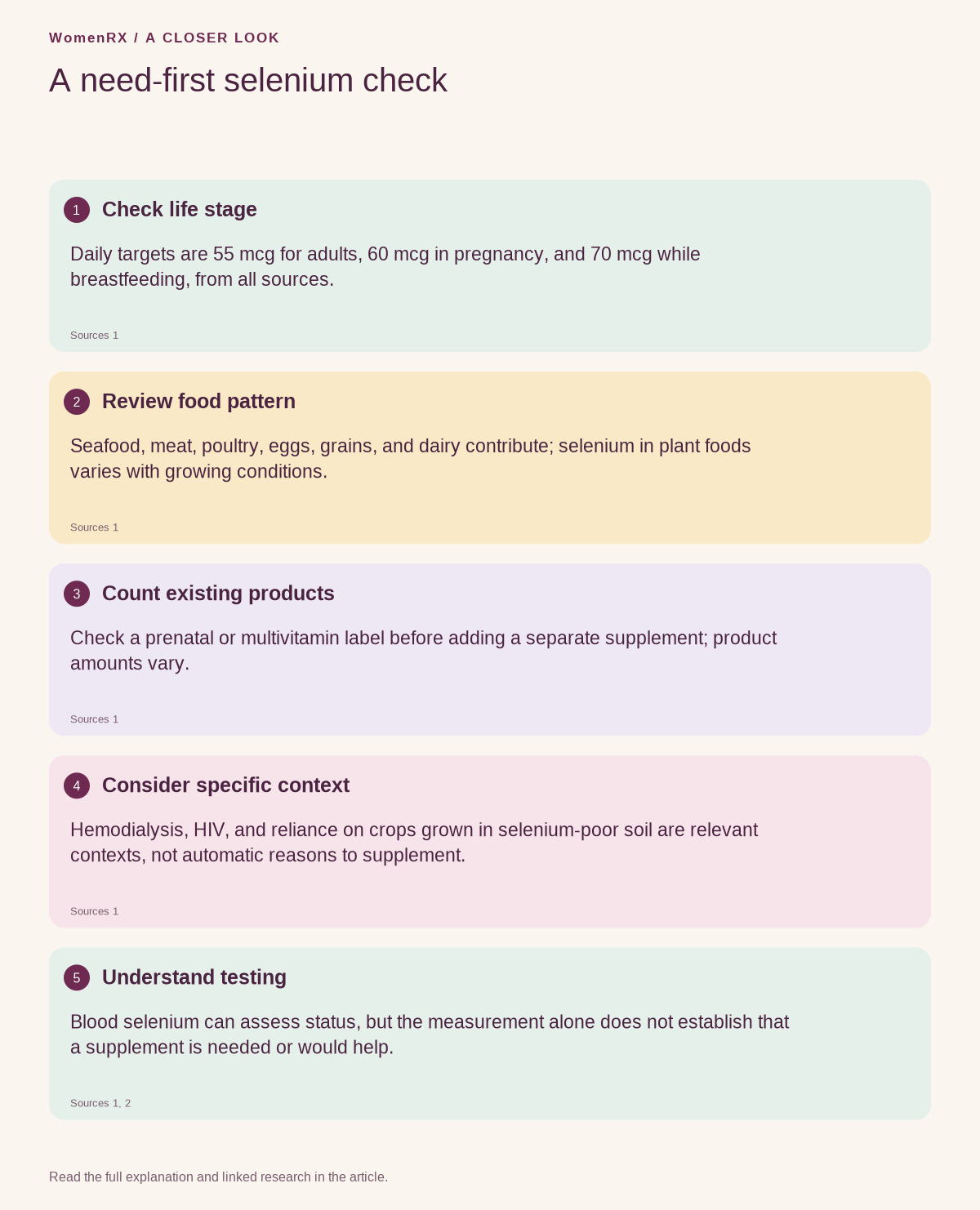
A need-first selenium check
Check life stage: Daily targets are 55 mcg for adults, 60 mcg in pregnancy, and 70 mcg while breastfeeding, from all sources.1
Review food pattern: Seafood, meat, poultry, eggs, grains, and dairy contribute; selenium in plant foods varies with growing conditions.1
Count existing products: Check a prenatal or multivitamin label before adding a separate supplement; product amounts vary.1
Consider specific context: Hemodialysis, HIV, and reliance on crops grown in selenium-poor soil are relevant contexts, not automatic reasons to supplement.1
Understand testing: Blood selenium can assess status, but the measurement alone does not establish that a supplement is needed or would help.12
Read the figure as text
Move from life stage and diet to existing supplements and relevant health context; a blood measurement can assess status but does not decide the supplement question by itself.- Check life stage: Daily targets are 55 mcg for adults, 60 mcg in pregnancy, and 70 mcg while breastfeeding, from all sources.1
- Review food pattern: Seafood, meat, poultry, eggs, grains, and dairy contribute; selenium in plant foods varies with growing conditions.1
- Count existing products: Check a prenatal or multivitamin label before adding a separate supplement; product amounts vary.1
- Consider specific context: Hemodialysis, HIV, and reliance on crops grown in selenium-poor soil are relevant contexts, not automatic reasons to supplement.1
- Understand testing: Blood selenium can assess status, but the measurement alone does not establish that a supplement is needed or would help.12
More questions, answered
Does pregnancy mean I should take extra selenium?
Pregnancy raises the recommended total daily intake from 55 to 60 mcg, but that amount includes food and any prenatal vitamin. Check the prenatal label before adding a separate selenium product. 1
Are Brazil nuts a dependable way to get selenium?
They contain a lot, but the amount varies. The listed average is 544 mcg per ounce, and analyses differ, so Brazil nuts don’t provide a predictable measured amount. 1
Sources you can check
- Selenium - Health Professional Fact SheetAccessed 2026-09-25Return to first citation
- Selenium, an antioxidant nutrient.Burk RF. · Nutrition in clinical care : an official publication of Tufts University · 2002Return to first citation