Selenium: Food, Daily Needs, and Supplement Risks
Most people in the United States get enough selenium from food, so a supplement is usually a question of a specific need, not an automatic extra.
Selenium helps the body make proteins involved in thyroid hormone metabolism, reproduction, and protection from oxidative damage. For women ages 19 and older, the recommended intake is 55 mcg daily; it’s 60 mcg during pregnancy and 70 mcg while breastfeeding. Food supplies selenium for most people in the United States, and taking extra without a reason can push total intake too high. 1
Selenium is an essential mineral, but more isn’t automatically better. It helps form selenoproteins, which support thyroid hormone metabolism, DNA synthesis, reproduction, and protection from oxidative damage. The practical question is whether your usual diet and life stage meet your needs, not whether you can add more. 1
Your reference intake depends on life stage
For women ages 19 and older, the recommended dietary allowance (RDA) is 55 micrograms (mcg) a day. It rises to 60 mcg during pregnancy and 70 mcg while breastfeeding. These are population reference values for healthy people, not personalized prescriptions or amounts you need to get from a supplement. 1
Most people in the United States consume adequate selenium. In a national survey, adult women averaged 94 mcg a day from food and beverages, and 102 mcg a day when supplements were included. An average doesn’t tell you what you personally get, but it helps explain why taking an extra supplement isn’t automatically necessary. 1
Food sources are varied, but not equally predictable
Seafood, meat, poultry, eggs, grains, and dairy can all contribute selenium. For example, a cooked 3-ounce serving of yellowfin tuna provides 92 mcg, while one large egg provides 15 mcg. Plant foods can contribute too, but their selenium content varies with the soil where they were grown. 1
Brazil nuts are unusually concentrated: an ounce, about six to eight nuts, averages 544 mcg. The amount varies, but that average is above the US adult upper intake level. If you eat Brazil nuts regularly, remember that they count toward your total, along with food and supplements. 1
When might a supplement help?
A supplement may be worth discussing when there’s a specific reason to suspect inadequate intake or absorption, rather than simply because selenium is linked to thyroid or immune function. Inadequacy is rare in the United States, though risk can be higher for people on long-term dialysis and for people living with HIV. Vegetarian or vegan eating patterns may also provide less selenium, depending on food choices and where foods were grown. 1
If you’re comparing products, selenium supplements may contain selenomethionine, selenium-enriched yeast, sodium selenite, or sodium selenate. Many multivitamins with minerals contain 55 mcg. Supplements with fewer ingredients often contain more: selenium combined with vitamin E or other ingredients commonly provides 50 to 200 mcg, while selenium-only products typically provide 100 to 400 mcg. These are examples of amounts found in products, not recommended doses. 1
Selenium status can be assessed with blood tests, but results need context: serum and plasma reflect more recent intake, and some functional measures can be affected by inflammation. A test result is not a reason to self-treat without considering diet, health circumstances, and all supplement sources. 1
A one-year observational study of 110 nonmetastatic breast cancer patients found that selenium deficiency was uncommon at the start, while supplement use was associated with higher selenium levels. The study doesn’t establish that supplements caused the higher levels or that the finding applies to all women, but it illustrates why an extra supplement isn’t automatically helpful. 2
Selenium’s role in thyroid function doesn’t mean an extra dose treats thyroid disease. In trials involving people with autoimmune thyroiditis, antibody results have varied, and studies have not consistently shown improved thyroid function or quality of life. The American Thyroid Association made a weak recommendation against selenium supplementation in pregnant women who test positive for thyroid peroxidase antibodies (TPOAb). If you’re pregnant or being treated for thyroid disease, bring the question to the clinician managing that care rather than adding selenium on your own. 1
Count the total before adding more
The US adult tolerable upper intake level is 400 mcg a day from food and supplements combined. It’s a ceiling unlikely to cause harm for most people, not a target to aim for. Check the selenium amount in a multivitamin as well as any standalone or combination supplement, and count concentrated food sources too. The upper limit isn’t intended to replace individualized medical care when a clinician is treating a documented need. 1
Too much selenium over time can cause selenosis. Hair loss and brittle or lost nails are common signs; a garlic-like breath odor, metallic taste, rash, nausea, diarrhea, fatigue, irritability, and nervous system symptoms can also occur. If you’re considering selenium, a sensible first step is to look at your usual foods and the labels on supplements you already take, then raise a specific concern with your care team. 1
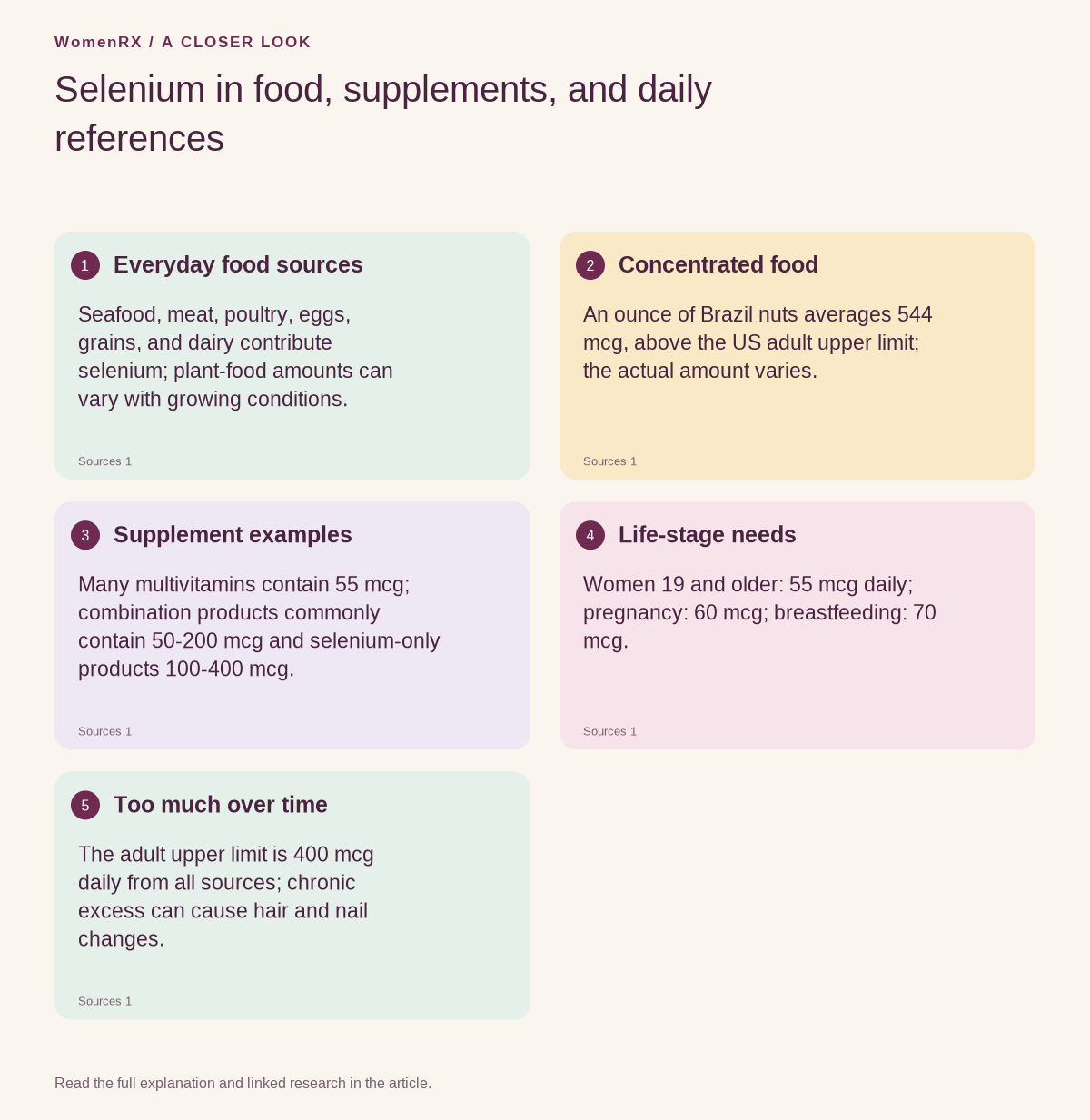
Selenium in food, supplements, and daily references
Everyday food sources: Seafood, meat, poultry, eggs, grains, and dairy contribute selenium; plant-food amounts can vary with growing conditions.1
Concentrated food: An ounce of Brazil nuts averages 544 mcg, above the US adult upper limit; the actual amount varies.1
Supplement examples: Many multivitamins contain 55 mcg; combination products commonly contain 50-200 mcg and selenium-only products 100-400 mcg.1
Life-stage needs: Women 19 and older: 55 mcg daily; pregnancy: 60 mcg; breastfeeding: 70 mcg.1
Too much over time: The adult upper limit is 400 mcg daily from all sources; chronic excess can cause hair and nail changes.1
Read the figure as text
Compare example food and supplement amounts with life-stage reference intakes and the adult upper limit. Product amounts and reference values are not individualized prescriptions.- Everyday food sources: Seafood, meat, poultry, eggs, grains, and dairy contribute selenium; plant-food amounts can vary with growing conditions.1
- Concentrated food: An ounce of Brazil nuts averages 544 mcg, above the US adult upper limit; the actual amount varies.1
- Supplement examples: Many multivitamins contain 55 mcg; combination products commonly contain 50-200 mcg and selenium-only products 100-400 mcg.1
- Life-stage needs: Women 19 and older: 55 mcg daily; pregnancy: 60 mcg; breastfeeding: 70 mcg.1
- Too much over time: The adult upper limit is 400 mcg daily from all sources; chronic excess can cause hair and nail changes.1
More questions, answered
Do Brazil nuts count as a selenium supplement?
They’re food, but they can contribute a large amount of selenium. An ounce averages 544 mcg, though the amount varies, so a regular serving can put total intake above the US adult upper limit of 400 mcg. 1
Does selenium supplementation prevent cancer?
Trials do not support taking selenium to lower overall cancer risk. In the trials summarized by NIH, supplementation had little to no effect on cancer incidence or mortality; most participants were men, so those results should not be presented as women-specific evidence. 1
Sources you can check
- Selenium - Health Professional Fact SheetAccessed 2026-09-25Return to first citation
- A Plea for Monitoring Serum Selenium Levels in Breast Cancer Patients: Selenium Deficiency Is Rare during the First Year of Therapy, and Selenium Supplementation Is Associated with Elevated Risk of Overdosing.Altmayer LA, Lang M, Schleicher JT, Stuhlert C, Wörmann C, Scherer LS, Thul IC, Spenner LS, Simon JA, Wind A, Tokcan M, Kaiser E, Weber R, Goedicke-Fritz S, Wagenpfeil G, Zemlin M,... · Nutrients · 2024Return to first citation