Selenium Supplements: Add Up Your Total Intake
Check food, fortified products, multivitamins, and stand-alone pills together before adding more selenium.
Start with the selenium listed on every supplement and fortified product you use, then consider regular food sources. A multivitamin may already provide 55 mcg, while some stand-alone products contain 100 to 400 mcg. Brazil nuts can add a lot, too. Pregnancy and breastfeeding raise the recommended intake modestly, but that alone doesn’t mean you need another pill. 1
Count all the places selenium can show up
Selenium comes from everyday foods as well as supplements. Seafood, meat, poultry, eggs, grains, and dairy contribute to intake. Brazil nuts are an especially concentrated source: one ounce averages 544 mcg, though the amount varies widely. That average is a reminder to include Brazil nuts in your overall picture, not a precise amount to expect from each serving. 1
Next, check the Supplement Facts panel on each product. Selenium may be in a multivitamin, a prenatal or other multi-ingredient product, and a separate selenium pill at the same time. Many multivitamins contain 55 mcg; combination supplements often contain 50 to 200 mcg, and selenium-only products often contain 100 to 400 mcg. Add the selenium amounts from the serving sizes you actually take. 1
Fortified foods can contribute too. In the United States, a food label is not required to list selenium unless it has been added, so check the label when you know a food is fortified. 1
Keep the target separate from the safety benchmark
For most adults, the U.S. recommended dietary allowance (RDA) is 55 mcg per day. It rises to 60 mcg during pregnancy and 70 mcg while breastfeeding. These are recommended total daily intakes, not amounts you need to take as a supplement. A varied diet and a prenatal or multivitamin may already contribute selenium. 1
A separate reference point comes from the European Food Safety Authority (EFSA). Its 2023 assessment sets an upper intake level of 255 mcg per day for adults, including during pregnancy and breastfeeding, counting selenium from all dietary sources. That is a European safety benchmark, not a supplement target or a U.S. recommendation. It can still help flag a high total, especially when a pill overlaps with a multivitamin or a selenium-rich food. 2
For example, a 200-mcg stand-alone pill plus a multivitamin containing 55 mcg adds up to 255 mcg before food. This example is simple arithmetic, not a prediction of what any particular person consumes. It shows why checking both labels matters. 12
A practical label-by-label review
- List products you use regularly. Include multivitamins, prenatal vitamins, stand-alone selenium, and combination supplements.
- Write down the selenium per serving. Check whether the serving is one pill or more, and calculate the amount you take.
- Add overlapping products. Don’t count a multivitamin as separate from a selenium pill just because they have different purposes.
- Consider regular food sources. Seafood, meat, poultry, eggs, grains, and dairy contribute; Brazil nuts can contribute substantially, and their selenium content varies. 1
- Check the total against your reason for taking it. The RDA is a daily intake goal from all sources. A supplement dose is not automatically needed just because the RDA is 55 mcg. 1
When to get help with the total
Ask a pharmacist, registered dietitian, or clinician to review the labels if you’re combining products, taking a high-dose selenium supplement, or unsure why a selenium product was recommended. If you’re pregnant or breastfeeding, compare the total with the life-stage RDA rather than assuming you need an extra pill. People on long-term hemodialysis can have lower selenium concentrations, but whether supplements provide clinical benefit is uncertain, so that’s a situation for individualized advice rather than self-adjusting. 1
Excess selenium can cause hair loss; EFSA used alopecia as the adverse effect informing its upper intake assessment. If hair loss begins after starting or combining selenium products, review the total promptly with a qualified professional rather than adding more selenium for hair concerns. 2
The useful next step is often not finding a new supplement. It’s checking whether the products you already use overlap, and whether there’s a clear reason to add more.
Where Your Selenium Adds Up
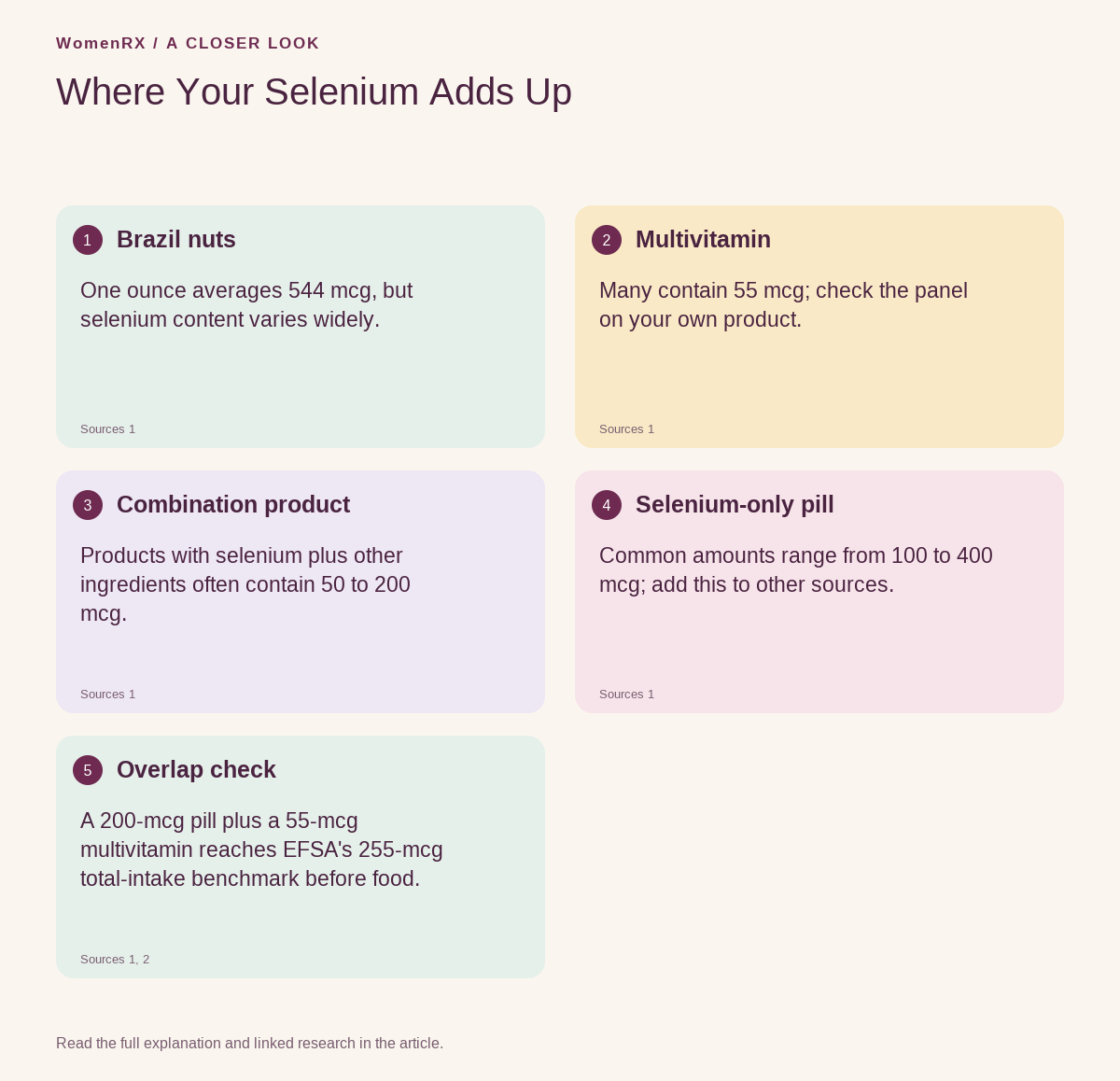
Brazil nuts: One ounce averages 544 mcg, but selenium content varies widely.1
Multivitamin: Many contain 55 mcg; check the panel on your own product.1
Combination product: Products with selenium plus other ingredients often contain 50 to 200 mcg.1
Selenium-only pill: Common amounts range from 100 to 400 mcg; add this to other sources.1
Overlap check: A 200-mcg pill plus a 55-mcg multivitamin reaches EFSA's 255-mcg total-intake benchmark before food.12
Read the figure as text
Compare everyday food contributions with common supplement amounts, then check for overlap before adding another product.- Brazil nuts: One ounce averages 544 mcg, but selenium content varies widely.1
- Multivitamin: Many contain 55 mcg; check the panel on your own product.1
- Combination product: Products with selenium plus other ingredients often contain 50 to 200 mcg.1
- Selenium-only pill: Common amounts range from 100 to 400 mcg; add this to other sources.1
- Overlap check: A 200-mcg pill plus a 55-mcg multivitamin reaches EFSA's 255-mcg total-intake benchmark before food.12
More questions, answered
Does a higher pregnancy or breastfeeding target mean I need a selenium supplement?
Not by itself. The U.S. RDA is 60 mcg per day during pregnancy and 70 mcg while breastfeeding, counting food and supplements together. Check whether your usual diet or prenatal product already contributes selenium before adding a separate pill. 1
Should I avoid Brazil nuts while taking selenium?
The amount in Brazil nuts varies widely, and an ounce averages 544 mcg. If you eat them regularly and also take selenium-containing products, include both when reviewing your total rather than assuming a nut serving has a predictable amount. 1
Sources you can check
- Selenium - Health Professional Fact SheetAccessed 2026-09-25Return to first citation
- Scientific opinion on the tolerable upper intake level for selenium.EFSA Panel on Nutrition, Novel Foods and Food Allergens (NDA), Turck D, Bohn T, Castenmiller J, de Henauw S, Hirsch-Ernst KI, Knutsen HK, Maciuk A, Mangelsdorf I, McArdle HJ, Peláe... · EFSA journal. European Food Safety Authority · 2023Return to first citation