Ashwagandha and Weight: What Human Trials Show
A few small studies measured weight directly, but they don’t establish ashwagandha as a reliable way to change weight or body composition.
Human studies have measured weight, but the findings are limited and mixed. An eight-week trial in adults experiencing chronic stress reported improvement in weight-related measures without stating how large the changes were. A 40-day pilot in adults with overweight or obesity found no significant change in weight, BMI, or waist circumference. The reported findings don’t show whether effects differ by sex or menopause status. 3 4
If you’re considering ashwagandha for weight management, start with what researchers actually measured. Stress, sleep, food cravings, weight, and body composition are different outcomes. A few small human trials measured weight, but they don’t show a dependable effect.
Two studies measured weight, with different results
A randomized, placebo-controlled trial followed 52 adults experiencing chronic stress for eight weeks. Researchers measured body weight and BMI at the start, week four, and week eight. The abstract reports significant improvements among the secondary outcomes, which included weight and BMI, but doesn’t state the size of the changes. Without that detail, you can’t tell whether the reported weight difference would be noticeable in everyday life. 3
A 2025 pilot study tested ashwagandha in adults with overweight or obesity in Mexico. Over 40 days, it found no statistically significant changes in body weight, BMI, or waist circumference. Participants also received dietary guidance, so the study wasn’t a test of ashwagandha entirely on its own. The report states that 43 adults participated, but its listed group counts add up to 38. That inconsistency makes the study’s size less clear. 4
These results aren’t a clear vote for or against an effect. The studies involved different groups and lasted only weeks. One reported a positive weight-related finding without its magnitude; the other found no significant change in the measurements it tracked. Together, they don’t establish a reliable weight-management benefit. 3 4
A scale change isn’t a body-composition result
Your weight includes fat, muscle, bone, and water. BMI uses weight and height, but it doesn’t distinguish fat from muscle or bone. Waist circumference provides different information about abdominal size and health risk; it isn’t the same outcome as weight or BMI. 2
That distinction matters if your real question is whether ashwagandha reduces body fat or helps preserve muscle. The stress-focused trial reported weight and BMI as outcomes, while the Mexican pilot reported no significant change in waist circumference alongside its weight and BMI findings. These findings don’t establish a body-composition benefit, and the reported results don’t show whether effects differ by sex or menopause status. 3 4
Stress and sleep are separate questions
Some trials suggest ashwagandha may improve perceived stress or aspects of sleep. Those outcomes may matter to you, but an improvement in either doesn’t demonstrate weight loss. A proposed link, such as sleeping better and finding it easier to keep a routine, still needs to be tested by measuring weight directly. 1
The chronic-stress trial did measure both weight and stress-related outcomes. Its abstract, though, doesn’t show that a change in stress caused a change in weight. 3
What this means if weight is your goal
There isn’t a strong basis for expecting ashwagandha to change your weight or body composition. The two direct studies are small and short. The findings reported here don’t show whether weight effects differ by sex or menopause status, so they can’t tell you how results might apply across women’s life stages. 3 4
If you’re interested in ashwagandha for stress or sleep, consider that a separate decision. Short-term studies have reported stomach upset, loose stools, nausea, and drowsiness. Longer-term safety isn’t known, and liver and thyroid concerns have been reported. Ashwagandha may also interact with thyroid hormone and some other medications; pregnancy and breastfeeding raise additional safety concerns. 1
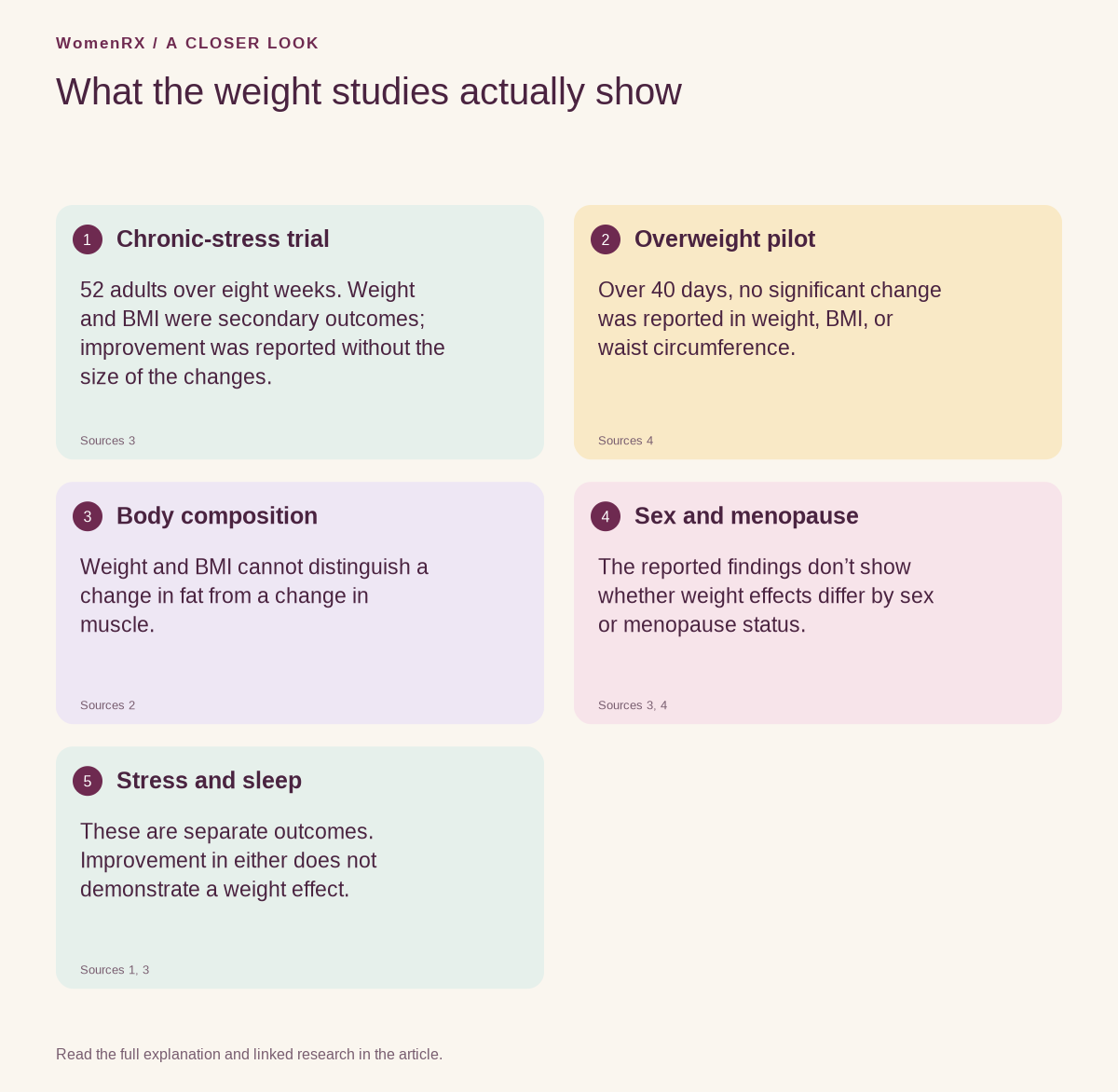
What the weight studies actually show
Chronic-stress trial: 52 adults over eight weeks. Weight and BMI were secondary outcomes; improvement was reported without the size of the changes.3
Overweight pilot: Over 40 days, no significant change was reported in weight, BMI, or waist circumference.4
Body composition: Weight and BMI cannot distinguish a change in fat from a change in muscle.2
Sex and menopause: The reported findings don’t show whether weight effects differ by sex or menopause status.34
Stress and sleep: These are separate outcomes. Improvement in either does not demonstrate a weight effect.13
Read the figure as text
A quick way to separate directly measured weight outcomes from related findings and unanswered questions.- Chronic-stress trial: 52 adults over eight weeks. Weight and BMI were secondary outcomes; improvement was reported without the size of the changes.3
- Overweight pilot: Over 40 days, no significant change was reported in weight, BMI, or waist circumference.4
- Body composition: Weight and BMI cannot distinguish a change in fat from a change in muscle.2
- Sex and menopause: The reported findings don’t show whether weight effects differ by sex or menopause status.34
- Stress and sleep: These are separate outcomes. Improvement in either does not demonstrate a weight effect.13
More questions, answered
Does a possible benefit for stress or sleep mean ashwagandha affects weight?
No. Stress and sleep are different outcomes from body weight. Improvements in them don’t establish that weight changed, or that ashwagandha caused a weight change through either pathway. 1 3
Sources you can check
- Ashwagandha: Is it helpful for stress, anxiety, or sleep? - Health Professional Fact SheetAccessed 2026-09-25Return to first citation
- Body Weight: MedlinePlusAccessed 2026-09-25Return to first citation
- Body Weight Management in Adults Under Chronic Stress Through Treatment With Ashwagandha Root Extract: A Double-Blind, Randomized, Placebo-Controlled Trial.Choudhary D, Bhattacharyya S, Joshi K. · Journal of evidence-based complementary & alternative medicine · 2017Return to first citation
- Impact of ashwagandha (Withania somnifera L.) supplementation on serum lipid concentrations and anthropometric parameters in adults with overweight and obesity: a double-blind, placebo-controlled pilot study.Ballesteros-Torres JM, Vázquez-Aguilar A, Luzardo-Ocampo I, Escalante-Aburto A, Caballero-Prado CJ. · Nutrition & metabolism · 2025Return to first citation