Z score bone mineral density: what your number actually means
TL;DR: Your Z score compares your bone density to other people your same age and sex. At or above -2.0 is normal. Below -2.0 means you've lost more bone than expected for your age, and your doctor should hunt for a cause beyond aging. The T score diagnoses osteoporosis. The Z score explains why bone loss is happening.
What is a Z score on a bone density test?
A Z score is a statistical comparison. It tells you how your bone mineral density (BMD) sits relative to a reference group of people who share your age, sex, and sometimes your ethnicity. A Z score of 0 means you match the average for your peers exactly. A score of -1.0 means you're one standard deviation below that average. A score of +1.5 means you're one and a half standard deviations above it.
The number comes from a DEXA (dual-energy X-ray absorptiometry) scan, which measures bone density at the lumbar spine and hip. Your raw density number in grams per square centimeter gets plugged into a formula using the mean and standard deviation of your age-matched reference population. The math is the same as any Z score in statistics, so the interpretation is straightforward: about 95 percent of healthy people fall between -2.0 and +2.0.
Z scores sit right next to T scores on every DEXA report, but they answer a different question. The T score compares you to a young adult peak bone mass database. The Z score compares you to your actual peers. Same scan, two lenses. [1]
How is a Z score different from a T score for bone density?
This is the single most confusing part of reading a DEXA report, so let's be direct. The T score diagnoses. The Z score explains.
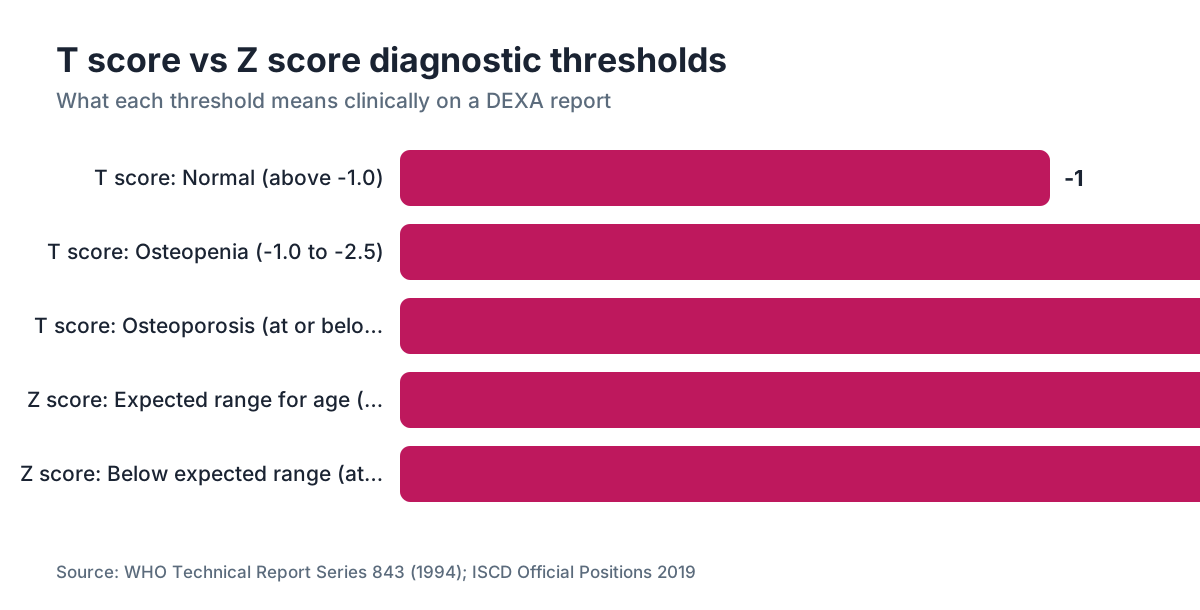
The T score is the number used to diagnose osteoporosis and osteopenia. The World Health Organization criteria say a T score at or above -1.0 is normal, between -1.0 and -2.5 is osteopenia, and at or below -2.5 is osteoporosis [2]. That comparison is always against young adult peak bone mass, typically a 30-year-old woman.
The Z score is not a diagnostic threshold for osteoporosis. It is a flag for secondary causes. The International Society for Clinical Densitometry (ISCD) says a Z score at or below -2.0 should prompt investigation into whether something besides normal aging is causing the bone loss: hyperparathyroidism, celiac disease, vitamin D deficiency, excessive alcohol use, glucocorticoid medications, or early estrogen loss from surgical menopause or premature ovarian insufficiency. [1]
Here's how the two numbers can tell opposite stories. A postmenopausal woman might have a T score of -2.8 (osteoporosis) and a Z score of -0.5 (normal for her age). Her bone density is low by the diagnostic standard, but it's right where you'd expect given her age. A different woman might have a T score of -1.8 (osteopenia) and a Z score of -2.3 (below expected for age). That second picture is more urgent in one sense, because the Z score is waving a flag that something is accelerating her bone loss beyond what aging alone explains.
| Score type | Compared to | Used for | Threshold that matters | |---|---|---|---| | T score | Young adult (age 30) peak BMD | Diagnosing osteopenia and osteoporosis | -1.0 (osteopenia), -2.5 (osteoporosis) | | Z score | Age-, sex-matched peers | Detecting secondary bone loss causes | -2.0 (below expected range) |
What is a normal Z score range for bone density by age?
A Z score between -2.0 and +2.0 covers roughly 95 percent of the reference population at any age. The ISCD classifies a Z score above -2.0 as "within the expected range for age" and a Z score at or below -2.0 as "below the expected range for age." [1]
Those exact words matter. The ISCD discourages using the term "osteoporosis" when discussing Z scores, because that diagnosis is built on the T score framework, not the Z score framework.
Your Z score shifts over your lifetime even if you lose bone at exactly the average rate, because the reference group ages with you. A woman at 45 is compared to 45-year-old women. At 65, the comparison is to 65-year-old women. So a Z score of -0.5 at 45 and a Z score of -0.5 at 65 describe different absolute bone densities, but both say the same thing: you're half a standard deviation below your age peers.
Bone density Z score by age charts show up in research, but they're reference tools for clinicians, not report cards for patients. What your doctor actually cares about is the direction of change over serial scans and whether the Z score is crossing that -2.0 line. [3]
What does a low Z score actually mean for your health?
A Z score below -2.0 means your bones have lost more density than your peers have, at your age. That's worth taking seriously for two reasons.
First, it points to an accelerant. Something may be pulling bone faster than normal aging would. The ISCD position paper says clinicians should evaluate for secondary causes whenever the Z score falls at or below -2.0. [1] Common culprits in women: hyperthyroidism, hyperparathyroidism, malabsorption conditions like celiac disease, chronic kidney disease, low testosterone (yes, women have testosterone and it matters for bone), long-term corticosteroids or aromatase inhibitors, and low estrogen from any cause including surgical menopause or premature ovarian insufficiency.
Second, absolute fracture risk still tracks more with absolute bone density and clinical factors than with the Z score alone. The FRAX tool (Fracture Risk Assessment Tool) from the World Health Organization uses T scores, age, sex, body mass index, prior fractures, parental hip fracture history, smoking, alcohol use, and steroid use to calculate your 10-year probability of a major osteoporotic fracture or hip fracture. [4] A low Z score might not change the FRAX output directly, but the conditions behind that low Z score often surface as other risk factors in the calculation.
A Z score below -2.0 is a signal to investigate, not a label to live with.
Why does Z score matter more than T score in premenopausal women?
Before menopause, the T score loses its value as a diagnostic tool. The World Health Organization T score criteria came from studies of postmenopausal white women and are meant for that population [2]. Applying them to a 38-year-old, or even a 48-year-old who is still cycling, over-diagnoses osteoporosis in women who simply haven't yet dropped from their peak.
This is why the ISCD says that in premenopausal women, low bone density should be described using the Z score and the phrase "low bone density for chronological age" rather than "osteoporosis" or "osteopenia" based on T scores alone, unless there's a secondary cause or a fragility fracture. [1]
This matters enormously in practice. A woman in her early 40s with a T score of -2.3 might read "osteopenia bordering on osteoporosis" and panic. But if her Z score is -0.8, her bone density is normal for her age group. That doesn't mean she ignores it. It means the urgency and the treatment decision look very different than if her Z score were -2.5.
Perimenopause is when this distinction earns its keep. Perimenopause can start as early as the mid-30s, and the estrogen swings during that transition speed up bone turnover. If you're in perimenopause and your Z score is trending down, that's the moment to act, not years later when the T score finally crosses a line.
How does estrogen loss in menopause affect Z score?
Estrogen is the main brake on bone breakdown. When estrogen drops at menopause, osteoclasts (the cells that break down bone) get more active relative to osteoblasts (the cells that build it). Women can lose 10 to 20 percent of their bone density in the five to seven years after the final menstrual period, according to data reviewed by NAMS. [5]
That loss is fast enough to move a woman's Z score in a few years even when she's losing bone at the same rate as her peers, because her peers are all losing at that rate too. The Z score won't automatically fall below -2.0 just because menopause is happening. But if her loss runs steeper than average, the Z score is where that shows up.
Hormone therapy (HT) is one of the best-studied ways to protect bone density around menopause. The Women's Health Initiative randomized trial found that combined estrogen plus progestin therapy increased bone density at the spine and hip and reduced osteoporotic fractures. [6] The North American Menopause Society (NAMS) states that "hormone therapy is effective for the prevention of osteoporosis and reduction of fracture risk in postmenopausal women." [5]
For women who are candidates, hormone replacement therapy is worth raising with a clinician if bone loss is a concern, especially in the early postmenopausal years when loss runs fastest. The estrogen patch delivers steady estradiol levels, which matters for bone. Progesterone gets added for women with a uterus to protect the endometrium, and some data suggest it supports bone health on its own too.
What secondary causes should a doctor rule out if your Z score is below -2.0?
If your Z score comes back below -2.0, your doctor should do more than hand you a calcium recommendation. The ISCD position is plain: a Z score in this range warrants a workup for secondary causes. [1]
A reasonable starting lab panel usually includes serum calcium and phosphorus, parathyroid hormone (PTH), 25-hydroxyvitamin D, thyroid-stimulating hormone (TSH), a complete metabolic panel (to check kidney and liver function), a complete blood count, and in women, FSH and estradiol to read menopausal status. Depending on the picture, a doctor might add celiac antibodies (anti-tissue transglutaminase IgA), serum and urine protein electrophoresis (to rule out multiple myeloma in older patients), and 24-hour urine calcium.
Medication history counts just as much. Long-term glucocorticoids (even inhaled steroids at high doses), proton pump inhibitors used for years, certain anticonvulsants, and aromatase inhibitors used in breast cancer treatment all speed bone loss and can push a Z score below -2.0 with no underlying metabolic disease.
A low Z score in a woman on a GLP-1 medication like semaglutide also deserves attention. GLP-1 receptor agonists cause weight loss, and weight loss itself can lower bone density, partly because mechanical loading on bone drops with body weight and partly because fat tissue is a source of estrogen. Early data from the STEP trials showed modest reductions in bone density markers, though fracture outcomes were not significantly different from placebo in those trial populations. [7] This is a moving area, and worth raising with your prescriber if you're on a semaglutide for weight loss program and have bone concerns.
WomenRx clinicians who prescribe GLP-1s and hormone therapy screen for this overlap, because menopause plus significant weight loss is exactly the setup where a DEXA scan and a Z score conversation earns its place.
How do DEXA scan results report Z score and what should you ask your doctor?
Every DEXA report gives both T scores and Z scores for each measured site, usually the lumbar spine (L1 through L4 combined), the total hip, and the femoral neck. Some reports add the one-third radius (forearm), particularly when the hip or spine can't be measured reliably.
The report shows your raw bone mineral density in g/cm², your T score at each site, and your Z score at each site. It may include a comparison to your prior scan if you've had one. That interval change is often the most useful number on the page: the rate of change matters more than the absolute value.
Four questions worth asking after a DEXA scan:
- Is my Z score above or below -2.0, and if below, what secondary causes should we look at?
- What is my FRAX score (10-year fracture probability), and does it cross the threshold for treatment?
- How does this scan compare to my last one, and what's the rate of change at the spine and hip?
- Are any of my current medications contributing to bone loss?
The bone density test article on this site goes deeper on the scan itself, including how to prepare and what the machine measures.
Medicare covers DEXA scans every 24 months for women with at least one risk factor for osteoporosis, and many private insurers follow similar rules, though your specific coverage depends on your plan. [8]
Can you improve your Z score with treatment?
Yes, but how much depends on what's causing the low score and how early treatment starts.
For secondary causes, treating the underlying problem often stabilizes bone loss and can partially reverse it. Correcting vitamin D deficiency, treating hyperparathyroidism, stopping a bone-damaging medication where possible: these can move the Z score in a positive direction over two to three years of follow-up scans.
For postmenopausal bone loss, the evidence base is deep. FDA-approved medications for osteoporosis include:
- Bisphosphonates (alendronate, risedronate, zoledronic acid, ibandronate): they reduce osteoclast activity and are generally first-line. The FDA label for alendronate cites a 6 to 8 percent increase in lumbar spine BMD over three years in postmenopausal women with osteoporosis. [9]
- Denosumab (Prolia): a RANK ligand inhibitor injected every six months. FDA label data show increases in BMD at the spine and hip compared to placebo. [10]
- Romosozumab (Evenity): a sclerostin inhibitor given monthly for 12 months that builds bone and reduces resorption at the same time. Approved for postmenopausal women at high fracture risk.
- Teriparatide and abaloparatide: anabolic agents that drive bone formation directly.
Lifestyle factors matter too, though they can't carry the load alone when Z scores run significantly low. Weight-bearing exercise and resistance training are the most evidence-backed non-drug moves for bone. Calcium (1,000 to 1,200 mg per day total, food and supplements combined, per National Institutes of Health recommendations) and vitamin D (600 to 800 IU per day, with many experts recommending 1,000 to 2,000 IU for women with documented insufficiency) are the foundation you build on. [11]
Serial DEXA scans are how you measure whether treatment is working. Most guidelines recommend repeating the scan one to two years after starting a new therapy.
What risk factors most commonly drive a low Z score in women 35 to 65?
Women 35 to 65 are a wide range for bone density. A 38-year-old with premature ovarian insufficiency carries a very different risk profile than a healthy 60-year-old who's been postmenopausal for a decade.
Still, these are the most common drivers of a low Z score (below the expected range for age) in this group:
Low estrogen, from any cause. This includes when menopause starts earlier than average, surgical removal of the ovaries, premature ovarian insufficiency (ovarian failure before age 40), or prolonged amenorrhea from low body weight or heavy exercise.
Glucocorticoid exposure. Even 5 mg of prednisone per day for three or more months causes clinically meaningful bone loss, per American College of Rheumatology guidelines.
Malabsorption. Undiagnosed celiac disease is more common in women than men and quietly erodes bone density over years through calcium and vitamin D malabsorption, often before any gut symptoms show up.
Low body weight. Body weight loads bone. Women at a BMI under 18.5 consistently have lower bone density than their peers. Weight loss from GLP-1 medications raises a related concern worth monitoring.
Rheumatoid arthritis and other inflammatory conditions. Chronic inflammation stimulates osteoclast activity through cytokine signaling, independent of any steroid use.
Family history. A mother or sister with osteoporosis or a fragility fracture is a real flag, often reflecting a genetic contribution to peak bone mass.
Smoking and heavy alcohol use. Both are independent risk factors, and both feed into the FRAX calculator. [4]
How often should you get a bone density test if your Z score was low?
It depends on what you and your doctor find and what treatment starts.
For women with a Z score below -2.0 who are starting a new medication for bone loss, most guidelines recommend a follow-up DEXA in one to two years to check response. If the Z score is borderline (around -1.5 to -2.0) and no treatment starts but a secondary cause was found and treated, a repeat scan in one to two years is also reasonable.
For women with a normal Z score but real risk factors, the National Osteoporosis Foundation recommends rescreening every one to two years for high-risk women and every two years for average-risk postmenopausal women, though many clinicians follow the Medicare interval of every 24 months for routine monitoring. [11]
For women under 50 with an incidental low Z score but no secondary cause and no fragility fracture, some guidelines suggest a longer interval (two to three years) while focusing on lifestyle and watching for new risk factors.
One practical point carries the whole section. A single DEXA is a snapshot. The story is in the trend. Getting scanned on the same machine, or at least with the same software version, matters for a valid comparison, because different DEXA machines can produce numbers that differ by a few percent on the same patient.
Frequently asked questions
What is a good Z score for bone density?
A Z score above -2.0 is within the expected range for your age, according to the International Society for Clinical Densitometry. There's no specific 'good' number beyond that threshold. A Z score of 0 means you exactly match your age-matched peers. Positive scores mean denser bone than average for your age. The goal is staying above -2.0 and tracking the trend over time.
Is a Z score of -1.5 bad?
A Z score of -1.5 is below average for your age but above the -2.0 threshold that triggers concern about secondary causes. It is not a diagnosis on its own. Your doctor should look at the full picture: T score, FRAX fracture risk, medical history, and medications. Monitor it with a follow-up scan, and shore up calcium, vitamin D, and weight-bearing exercise.
What does a Z score of -2.5 mean?
A Z score of -2.5 means your bone density is 2.5 standard deviations below other people your age. This falls below the -2.0 threshold the ISCD uses to define 'below expected range for age.' It's a clear signal to investigate secondary causes such as vitamin D deficiency, hyperparathyroidism, malabsorption, or medication effects, and to have a serious talk about treatment with your doctor.
Why is my Z score higher (less negative) than my T score?
Because the Z score compares you to your age peers, who have also lost some bone with age, while the T score compares you to the peak bone mass of a 30-year-old. It's normal for your T score to sit lower than your Z score once you're past your 30s. A T score of -2.0 with a Z score of -0.3 is reassuring: your bone loss tracks normally for your age.
Can Z score improve with treatment?
Yes. If a secondary cause is found and treated, bone density often stabilizes and can partially recover. FDA-approved medications like bisphosphonates, denosumab, and romosozumab can increase bone mineral density at the spine and hip, moving both the T score and Z score upward over one to three years. Response is measured by follow-up DEXA scans, usually done one to two years after starting therapy.
Does hormone therapy improve bone Z score?
Estrogen-based hormone therapy is one of the most effective ways to slow bone loss in menopausal women. The Women's Health Initiative trial found combined estrogen plus progestin increased bone density at the spine and hip and cut fracture rates. NAMS states hormone therapy is effective for osteoporosis prevention in postmenopausal women. It won't reverse decades of prior loss, but it can significantly slow further decline when started early in menopause.
Is Z score or T score more important for predicting fracture risk?
T score, combined with clinical risk factors in the FRAX calculator, is the primary tool for estimating absolute fracture risk. The Z score is more useful for identifying why bone loss is happening than for predicting whether a fracture will occur. That said, a low Z score often predicts finding a secondary cause that, once treated, lowers fracture risk. Both numbers have a role; neither tells the whole story alone.
What Z score should prompt treatment for bone loss?
The Z score alone doesn't trigger a treatment decision the way a T score does. A Z score at or below -2.0 triggers an investigation for secondary causes. Treatment decisions for osteoporosis rest on T score (at or below -2.5) and FRAX-calculated fracture risk. Some guidelines recommend treatment when the 10-year probability of hip fracture reaches 3 percent or major osteoporotic fracture reaches 20 percent.
Can GLP-1 weight loss medications affect my bone density Z score?
Possibly. Weight loss from any cause reduces mechanical loading on bone, which can lower bone density. Early data from the STEP semaglutide trials showed some decrease in bone density markers with significant weight loss, though fracture rates were not significantly higher than placebo in trial populations. Women on GLP-1s who are also perimenopausal or postmenopausal should ask their prescriber whether a baseline DEXA scan makes sense.
Do Z scores differ by race or ethnicity?
Yes. DEXA reference databases were historically built mostly from white populations. Black women on average have higher bone mineral density than white women at the same age, while some Asian and Hispanic subgroups show different patterns. Most modern DEXA machines offer ethnicity-specific reference databases, though the ISCD notes that using a non-race-adjusted (white reference) database is also acceptable and avoids masking real risk in non-white women.
At what age should women start getting DEXA scans to track Z score?
The U.S. Preventive Services Task Force recommends DEXA screening for all women 65 and older and for postmenopausal women under 65 who have risk factors. ISCD recommends earlier scanning for women with conditions tied to bone loss: premature ovarian insufficiency, prolonged steroid use, or fragility fractures at any age. There's no universal recommendation for routine DEXA before 50 without risk factors.
What is the difference between bone density Z score below expected range and osteoporosis?
Osteoporosis is diagnosed by T score at or below -2.5, using the WHO criteria. 'Below expected range for age' is the language for a Z score at or below -2.0. A woman can have a Z score within the normal range and still meet the T score threshold for osteoporosis, because the two comparisons use different reference populations. Osteoporosis is a diagnosis. A low Z score is a signal to investigate further.
What labs should I ask for if my Z score is below -2.0?
A reasonable secondary cause workup includes serum calcium, phosphorus, PTH, 25-hydroxyvitamin D, TSH, FSH and estradiol (in premenopausal women), a complete metabolic panel, complete blood count, and celiac antibody testing. Depending on context, your doctor might also check 24-hour urine calcium or protein electrophoresis. The specific panel should follow your medical history and your doctor's judgment.
Does low body weight cause a low Z score?
Yes. Body weight loads bone mechanically, and fat tissue produces estrogen that protects bone. Women with a BMI under 18.5 consistently have lower bone density than their age peers, which shows up as a lower Z score. Weight loss from any cause, including GLP-1 medications, eating disorders, or malabsorption, can drive the Z score down. This is one of the secondary causes that warrants investigation when Z scores fall below -2.0.
Sources
- International Society for Clinical Densitometry, 2019 Official Positions
- World Health Organization, WHO Technical Report Series 843 (1994) on assessment of osteoporosis
- National Institute of Arthritis and Musculoskeletal and Skin Diseases (NIH), Bone Mass Measurement information
- WHO FRAX Fracture Risk Assessment Tool, University of Sheffield
- North American Menopause Society (NAMS), 2022 Hormone Therapy Position Statement
- Women's Health Initiative Writing Group, JAMA 2002; 288(3):321-333
- Wilding JPH et al. (STEP 1 trial), New England Journal of Medicine 2021; 384:989-1002
- Centers for Medicare and Medicaid Services, Bone Mass Measurement Coverage
- FDA, Fosamax (alendronate sodium) Prescribing Information
- FDA, Prolia (denosumab) Prescribing Information
- NIH Office of Dietary Supplements, Calcium Fact Sheet for Health Professionals
- U.S. Preventive Services Task Force, Osteoporosis Screening Recommendation (2018)