100 symptoms of perimenopause: the complete list explained
TL;DR: Perimenopause produces far more than hot flashes. Research from NAMS and the Study of Women's Health Across the Nation (SWAN) documents symptoms across sleep, mood, memory, skin, joints, digestion, bladder, and libido. Most start in the mid-to-late 40s, some as early as the mid-30s, and they can last 7 to 14 years.
What exactly is perimenopause, and how long does it last?
Perimenopause is the hormonal transition leading up to menopause, defined as 12 consecutive months without a period. During this stretch, estrogen and progesterone swing up and down unpredictably instead of declining in an orderly way. That volatility drives most of the symptoms women describe.
The average age perimenopause begins is 47, but the range is wide. Some women notice changes in their late 30s. Others sail through their early 50s with little disruption before everything shifts. The SWAN study, which has followed more than 3,000 women across racial and ethnic groups since 1996, found the full menopausal transition averages about 7 years, with some women having symptoms for up to 14 [1].
Why so many symptoms? Because estrogen receptors live everywhere. The brain, gut, skin, bladder, bones, heart, joints, and immune system all have them. When estrogen starts swinging instead of following its monthly pattern, nearly every system that depends on it can signal distress.
For a fuller picture of the age ranges involved, see perimenopause age and when does menopause start.
What are the most common perimenopause symptoms?
The most documented symptoms are what NAMS calls vasomotor symptoms: hot flashes, night sweats, and sleep disruption [2]. The SWAN study found about 80% of women experience vasomotor symptoms at some point, with Black women reporting significantly higher frequency and severity than white, Chinese, or Japanese women [1].
Beyond the classics, irregular periods are usually the first thing women notice. Cycles get shorter, then longer, then erratic before stopping. Mood changes, including irritability, anxiety, and low-grade depression, are also very common and often show up years before the first hot flash.
Brain fog, memory lapses, and trouble concentrating get less attention than they deserve. The SWAN study documented measurable declines in processing speed and verbal memory during the transition, with most (but not all) women returning to baseline after menopause [1]. That is reassuring. It does not make the experience less disruptive while it is happening.
See the full symptom list below, organized by body system.
The complete list: 100 perimenopause symptoms by body system
This list draws on NAMS clinical guidance, SWAN study findings, and published endocrinology literature. It is organized by body system so you can quickly find what you are experiencing [1][2][3].
Menstrual and reproductive changes (1-12)
- Irregular periods (cycles shorter than 21 days or longer than 35)
- Heavier-than-usual bleeding
- Lighter-than-usual bleeding
- Spotting between periods
- Skipped periods
- Longer or shorter periods
- Passing large clots
- Worsening PMS symptoms
- New onset of premenstrual dysphoric disorder (PMDD)
- Breast tenderness or swelling that fluctuates with cycle
- Changes in cervical mucus
- Decreased fertility
Vasomotor symptoms (13-18) 13. Hot flashes (sudden intense warmth, usually chest, neck, face) 14. Night sweats 15. Cold chills following a hot flash 16. Flushing or visible redness of the face and neck 17. Palpitations during or after a hot flash 18. Sweating during the day independent of exertion
Sleep (19-26) 19. Difficulty falling asleep 20. Waking multiple times per night 21. Early morning waking 22. Restless legs syndrome (RLS) onset or worsening 23. Vivid or disturbing dreams 24. Sleep apnea onset (risk increases after 40 in women) [3] 25. Chronic fatigue despite adequate sleep time 26. Hypersomnia (sleeping too much)
Mood and mental health (27-37) 27. Irritability 28. Mood swings 29. Anxiety, including new-onset panic attacks 30. Low-grade depression 31. Crying spells with no clear trigger 32. Loss of motivation 33. Emotional numbness or feeling disconnected 34. Increased sensitivity to stress 35. Rage episodes disproportionate to the trigger 36. Social withdrawal 37. Worsening of existing anxiety or depression
Cognitive symptoms (38-44) 38. Brain fog (mental cloudiness, slow thinking) 39. Difficulty concentrating or staying on task 40. Short-term memory lapses (losing words, forgetting names) 41. Difficulty with multi-tasking 42. Slower processing speed 43. Difficulty finding words mid-sentence 44. Feeling mentally exhausted by activities that used to feel easy
Genitourinary and sexual symptoms (45-56) 45. Vaginal dryness 46. Vaginal atrophy (thinning and shrinking of vaginal tissue) 47. Painful intercourse (dyspareunia) 48. Reduced libido 49. Difficulty achieving orgasm 50. Decreased genital sensitivity 51. Urinary urgency (sudden strong need to urinate) 52. Urinary frequency 53. Urinary incontinence (leaking with coughing, sneezing, or urgency) 54. Recurrent urinary tract infections 55. Feeling of pelvic heaviness or pressure 56. Vulvar itching or burning
Genitourinary syndrome of menopause (GSM) is the clinical umbrella term for symptoms 45 through 56. Unlike hot flashes, GSM tends to worsen over time without treatment [2].
Musculoskeletal symptoms (57-65) 57. Joint pain, especially knees, hips, and hands 58. Joint stiffness, worse in the morning 59. New or worsening back pain 60. Muscle aches and cramps 61. Reduced muscle mass and strength 62. Decreased bone density (often asymptomatic until fracture) [4] 63. Increased fracture risk 64. Tendon and ligament laxity (feeling looser or more injury-prone) 65. Heel pain or plantar fasciitis onset
Bone density changes are clinically silent, which is why NAMS recommends a bone density test for women at menopause or earlier if risk factors exist [4].
Cardiovascular symptoms (66-71) 66. Heart palpitations (not linked to a hot flash) 67. Increased resting heart rate 68. New or worsening hypertension 69. Increased LDL cholesterol 70. Decreased HDL cholesterol 71. Heightened awareness of heartbeat at rest
Skin, hair, and nails (72-79) 72. Dry skin 73. Thinning skin (skin feels more fragile, bruises more easily) 74. New facial hair (chin, upper lip) 75. Thinning scalp hair 76. Hair loss at the temples or crown 77. Brittle nails 78. Increased acne in adults who did not have it before 79. Changes in skin texture or tone (collagen loss)
Digestive and metabolic symptoms (80-88) 80. Bloating 81. Increased gas 82. Changes in bowel habits (constipation or looser stools) 83. Nausea, especially around the time of a hot flash 84. Increased abdominal (visceral) fat accumulation 85. Changes in appetite 86. Food sensitivities that seem new 87. Slower metabolism 88. Weight gain, particularly in the midsection
Neurological and sensory symptoms (89-95) 89. Headaches or migraines that worsen or shift in pattern 90. Dizziness or lightheadedness 91. Tinnitus (ringing in the ears) 92. Tingling or numbness in hands and feet (paresthesia) 93. Electric shock sensations under the skin or in the head 94. Increased sensitivity to noise or light 95. Altered sense of smell or taste
Psychological and behavioral symptoms (96-100) 96. Decreased self-confidence or identity disruption 97. Increased risk aversion or phobias 98. Difficulty with change or new situations 99. Feeling a loss of purpose or direction 100. Heightened existential awareness (sometimes described as a midlife awakening)
Symptoms 96 through 100 show up less in clinical literature but appear consistently in qualitative research and patient-reported outcome studies. The Menopause Rating Scale and the Greene Climacteric Scale both include psychological and social subscales that capture these experiences [5].
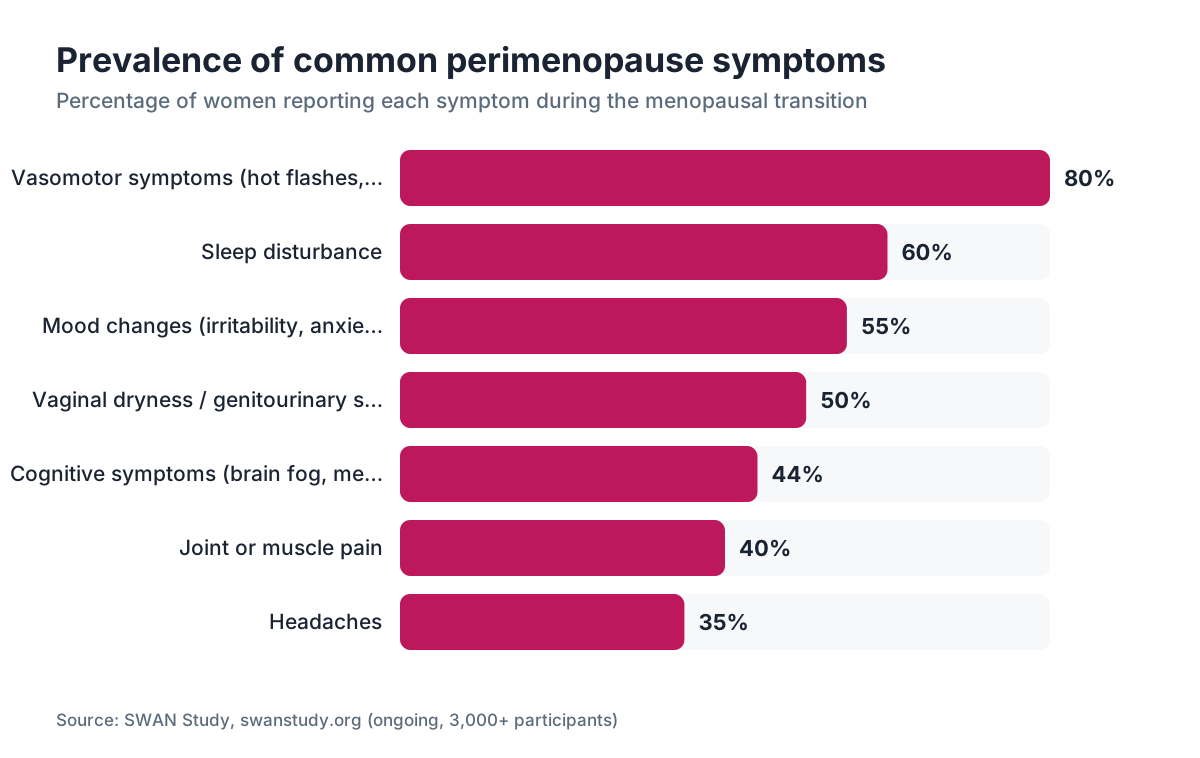
Which symptoms show up first in perimenopause?
The earliest signs are usually menstrual cycle changes and mood shifts, often before any hot flash arrives. Cycles may shorten by a few days, or PMS may get noticeably worse. Many women in their early to mid-40s describe a sudden spike in anxiety or irritability and never connect it to hormones [1].
Brain fog can also appear early, which surprises people. They expect cognitive symptoms later in life, not in their 40s. The SWAN study's cognitive data showed processing speed begins to decline in the early transition, before the final menstrual period [1].
Hot flashes typically peak in late perimenopause and early postmenopause, not at the very start. So if you have erratic periods and mood changes but no hot flashes yet, that does not mean you are not in perimenopause.
Why do perimenopause symptoms vary so much between women?
Genetics is the biggest driver. If your mother or older sister had severe hot flashes, you are more likely to as well. Race and ethnicity matter too, in ways genetics alone does not explain. The SWAN study found Black women report more frequent and more bothersome vasomotor symptoms than women of other backgrounds, while Chinese and Japanese women report fewer [1].
Body composition is another factor. Fat tissue produces a form of estrogen (estrone), so women with higher body fat sometimes have a different symptom profile. Excess visceral fat brings its own hormonal disruptions, though, so the relationship is not simple or linear.
Stress and lifestyle compound everything. Poor sleep from any cause worsens how you perceive hot flashes. Smoking is consistently linked to earlier and more severe symptoms. Alcohol can trigger hot flashes directly. Exercise helps mood and sleep but probably does not reduce vasomotor symptoms on its own [2].
Your baseline sensitivity to hormonal change matters too. Women with a history of PMDD or postpartum depression tend to have more pronounced mood symptoms during perimenopause, because their brains react more sharply to shifts in estrogen and progesterone.
How do doctors diagnose perimenopause, and do you need a blood test?
Perimenopause is mostly a clinical diagnosis based on symptoms and menstrual history in a woman over 40. No single blood test confirms it [2].
FSH (follicle-stimulating hormone) is often ordered and can be elevated during perimenopause, but estradiol and FSH swing wildly from week to week. A single FSH result can read normal one week and elevated the next. NAMS states hormone levels should not be used alone to diagnose perimenopause in women over 45 [2].
Where blood tests earn their keep is in ruling out other causes. Thyroid dysfunction mimics perimenopause closely: fatigue, mood changes, weight changes, irregular periods, and cognitive fuzziness all overlap. A TSH test, a metabolic panel, and iron studies are reasonable first steps if your clinician wants to rule out thyroid disease or anemia before blaming hormones for everything.
AMH (anti-Müllerian hormone), a marker of ovarian reserve, can hint at where you are in the transition, but it is not a standard diagnostic tool for perimenopause management. It is more useful in fertility contexts.
What are the treatment options for perimenopause symptoms?
Treatment splits into hormonal and non-hormonal options, and the right choice depends heavily on which symptoms are wrecking your life.
Hormone therapy is the most effective treatment for vasomotor symptoms. The 2023 NAMS Hormone Therapy Position Statement concludes that for healthy women under 60 or within 10 years of menopause onset, the benefits outweigh the risks for most [2]. This means estrogen alone (for women without a uterus) or combined estrogen and progesterone (for women with a uterus). Forms include pills, patches, gels, sprays, and rings. An estrogen patch is a commonly preferred option because it bypasses first-pass liver metabolism.
For genitourinary symptoms specifically, low-dose vaginal estrogen is safe and effective with minimal systemic absorption. NAMS considers it appropriate even for women who are not candidates for systemic hormone therapy [2].
Non-hormonal options for hot flashes include fezolinetant (Veozah), an FDA-approved neurokinin 3 receptor antagonist cleared in 2023 [6]. Paroxetine 7.5 mg (Brisdelle) is the only antidepressant with FDA approval specifically for vasomotor symptoms. Venlafaxine, gabapentin, and clonidine have evidence but are used off-label.
For mood and cognitive symptoms, some women benefit from low-dose hormone therapy. Others do better with cognitive behavioral therapy, which has solid trial data for menopausal anxiety and sleep disruption [7].
Weight changes during perimenopause are common and often frustrating. If your metabolism has shifted substantially, you may want to read about semaglutide for weight loss, which some clinicians now discuss with perimenopausal patients who meet GLP-1 criteria. WomenRx offers personalized hormone and metabolic consultations if you want to figure out what combination makes sense for your symptoms.
For a broader look at hormonal treatment, hormone replacement therapy is a good next read.
Can perimenopause cause anxiety and depression, or does it just worsen existing conditions?
Both. Perimenopause can trigger new-onset anxiety and depression in women who have never had either, and it reliably worsens conditions that already exist.
The mechanism runs through estrogen's effect on serotonin, dopamine, and GABA signaling in the brain. Estrogen shapes serotonin receptor density and reuptake. When it fluctuates erratically, serotonin signaling gets unstable, which is one reason so many women describe feeling chemically different during perimenopause rather than merely stressed [3].
A 2018 meta-analysis in JAMA Psychiatry found women in the menopause transition had a twofold to fourfold higher risk of depressive symptoms compared with premenopause, even after controlling for prior depression history [8]. That is a real risk jump, not a statistical footnote.
SSRIs and SNRIs can help. But for many women the mood symptoms lift more effectively with hormone therapy, because the root cause is hormonal instability rather than a primary mood disorder. This is not universally true. For women with moderate to severe depression, psychiatric evaluation should happen alongside any hormonal treatment decision.
How does perimenopause affect weight, metabolism, and body composition?
Weight gain during perimenopause is real, but the mechanism is more specific than a slowing metabolism. What actually changes is body composition: fat redistributes toward the abdomen (visceral fat) even in women whose total weight holds steady [1].
Visceral fat is metabolically active in ways subcutaneous fat is not. It produces inflammatory cytokines, raises cardiovascular risk, and worsens insulin sensitivity. Women who gain midsection weight during perimenopause often watch fasting glucose creep up, cholesterol panels shift, and blood pressure inch higher, all pushed partly by the hormonal change.
Estrogen normally steers fat storage toward the hips and thighs (subcutaneous fat) and protects against belly fat. As estrogen falls, that pattern shifts toward the abdominal distribution more typical of male physiology.
Sleep disruption compounds it. Poor sleep raises cortisol and ghrelin, both of which drive appetite and fat storage. Night sweats that wake you at 2 a.m. are more than annoying. They are biochemically disrupting your metabolic regulation.
Muscle mass also declines with estrogen loss. Muscle is metabolically expensive tissue. Less of it means fewer calories burned at rest, which looks like a slowing metabolism but is really a body composition change. Resistance training is one of the most evidence-supported fixes for this specific problem.
Which perimenopause symptoms are most often mistaken for other conditions?
Several perimenopause symptoms get pinned on other causes so often that women spend years chasing the wrong diagnosis.
Brain fog and memory lapses get blamed on stress, overwork, or early dementia. Cognitive changes in the transition are real and documented [1], but they are usually temporary and reversible, which is very different from neurodegenerative disease.
Heart palpitations send many women to cardiologists for workups that come back normal. Palpitations during perimenopause are usually benign and tied to vasomotor instability, though cardiac causes should always be ruled out first.
Joint pain gets read as osteoarthritis or an autoimmune condition. Perimenopausal musculoskeletal symptoms can look almost identical to early rheumatoid arthritis, and plenty of women in their 40s go through unnecessary rheumatology workups. Estrogen has real anti-inflammatory properties, and its loss feeds joint inflammation directly.
Urinary urgency and frequency get treated as UTIs when cultures come back negative. The actual cause is often genitourinary syndrome of menopause affecting the urethra and bladder tissue.
Thyroid disease deserves its own category because the overlap is nearly total. Fatigue, weight changes, mood shifts, brain fog, hair loss, and menstrual irregularity are symptoms of both. Every woman with suspected perimenopause should have thyroid function checked.
See menopause for a deeper look at how symptoms evolve after the transition is complete.
When should you see a doctor about perimenopause symptoms?
Any symptom that interferes with your daily life, work, sleep, or relationships is reason enough to seek care. That sounds obvious, but a surprising number of women get told their symptoms are normal and must be tolerated. Normal does not mean untreatable.
Situations that warrant prompt evaluation: bleeding significantly heavier than your usual period (soaking a pad or tampon every hour for two or more hours), any bleeding after 12 months without a period (this needs endometrial evaluation), new or severe headaches, chest pain or palpitations with other cardiac symptoms, and mood symptoms severe enough to affect daily function.
Hot flashes that are mild and infrequent may not need treatment. Hot flashes that wake you every night, leave you drenched, and wreck the next day are worth treating aggressively. There is no virtue in suffering through symptoms when effective, safe options exist.
The North American Menopause Society recommends that all women receive individualized risk-benefit counseling on hormone therapy and other options as they enter the transition [2]. If your current provider is not having that conversation, finding a menopause-trained clinician is a reasonable next step.
How are perimenopause symptoms different from menopause symptoms?
The symptoms themselves overlap a lot. The distinction is timing. Perimenopause is the transition period with fluctuating hormones. Menopause is a single point in time (defined retrospectively as 12 months without a period). Postmenopause is everything after.
What changes across these stages is the pattern of symptoms, not the type. Hot flashes and night sweats often peak in early postmenopause before gradually fading. Genitourinary symptoms, by contrast, tend to worsen steadily after menopause without treatment. Mood symptoms often improve once perimenopause's fluctuations settle into the lower but more stable estrogen of postmenopause, though not for everyone.
Bone loss accelerates most sharply in the first few years after the final menstrual period, which is why that window matters for protective interventions [4].
The practical difference: during perimenopause you can still get pregnant (ovulation is irregular but not gone), so contraception still counts. After menopause that concern disappears, but cardiovascular and bone health move to the front of the risk conversation.
What lifestyle changes actually help perimenopause symptoms?
The evidence varies a lot by symptom, so here is an honest breakdown.
Regular aerobic exercise has strong evidence for improving mood, sleep quality, and overall quality of life during perimenopause [2]. It probably does not cut hot flash frequency on its own, but it improves how well you function with them. Aim for 150 minutes of moderate aerobic activity per week, plus two days of resistance training.
Diet changes that trim refined carbohydrates and ultra-processed foods help with the metabolic shifts: visceral fat accumulation, insulin sensitivity, and cholesterol changes. A Mediterranean-style pattern has the most evidence for cardiovascular benefit in this age group.
Alcohol worsens hot flashes and disrupts sleep architecture. Even one to two drinks a night can meaningfully worsen night sweats and fragment sleep. This is one of the clearest and most actionable diet levers you have.
Sleep hygiene matters more during perimenopause than at any other stage, because you are fighting hormonal disruption and normal age-related changes in sleep at the same time. A consistent wake time, a cool bedroom, and less screen light in the two hours before bed are not fancy. They actually help.
Cognitive behavioral therapy for insomnia (CBT-I) has trial evidence for improving sleep in menopausal women and is recommended before or alongside pharmacological sleep aids [7].
Phytoestrogens (soy isoflavones, red clover) have inconsistent evidence. The best systematic reviews suggest modest benefit for hot flash frequency in some women, with effects far smaller than hormone therapy [2]. They are not harmful and may be worth trying for women who cannot or will not use hormonal treatment.
Frequently asked questions
Can perimenopause start at 35?
It can, though it is uncommon. Perimenopause before 40 is called premature ovarian insufficiency (POI) when accompanied by elevated FSH. Between 40 and 45, it is considered early menopause. Symptoms in the mid-to-late 30s that suggest hormonal shifts, such as shorter cycles, worsening PMS, or mood changes, are sometimes the earliest edge of the transition, but other causes should be ruled out first. See perimenopause age for more detail.
What does a perimenopause hot flash actually feel like?
Most women describe an abrupt wave of intense heat starting in the chest and spreading to the neck and face, sometimes with visible flushing, sweating, and a racing heart. It typically lasts 1 to 5 minutes. After it passes, some women feel chilled. Hot flashes can happen a few times a week or dozens of times a day. Night sweats are simply hot flashes during sleep that often soak clothing or bedding.
Is perimenopause brain fog real, or is it just stress and aging?
It is real and distinguishable from normal aging. The SWAN study documented measurable declines in verbal memory, processing speed, and attention during the menopause transition in women who had no prior cognitive issues. Most (though not all) women see these scores return to baseline after menopause. Hormone therapy started during perimenopause may help preserve cognitive function, though the evidence is strongest for verbal memory specifically.
Can perimenopause cause weight gain even if you have not changed your diet?
Yes. The main mechanism is a shift in body composition: muscle mass drops as estrogen falls, and fat redistributes toward the abdomen even when total calorie intake stays constant. The SWAN study documented abdominal fat accumulation in perimenopausal women independent of overall weight change. Resistance training is the most evidence-supported intervention for preserving muscle mass during this period.
How do I know if my irregular periods are perimenopause or something else?
Irregular periods in a woman over 40 with symptoms like hot flashes, night sweats, or mood changes are most likely perimenopause. But irregular cycles can also come from thyroid disease, polycystic ovary syndrome, uterine fibroids, endometrial polyps, or stress. A pelvic exam, thyroid panel, and sometimes a pelvic ultrasound help rule out structural causes. Any bleeding dramatically heavier than your baseline warrants evaluation regardless of age.
Can perimenopause cause anxiety and panic attacks?
Yes. New-onset anxiety and panic attacks are documented perimenopause symptoms, even in women with no prior anxiety history. Estrogen shapes GABA and serotonin signaling, and erratic fluctuations can destabilize these systems. A 2018 JAMA Psychiatry meta-analysis found two to four times higher risk of depressive symptoms during the menopause transition compared with premenopause. Hormone therapy can help when anxiety is hormonally driven; psychiatric evaluation is appropriate for moderate to severe cases.
Do perimenopause symptoms go away on their own?
Many do, eventually. Vasomotor symptoms (hot flashes, night sweats) typically peak in early postmenopause and gradually fade over years, though about 10% of women keep having them into their 70s. Genitourinary symptoms tend to worsen without treatment rather than resolve. Mood and cognitive symptoms often improve once hormones stabilize in postmenopause. The timeline is highly individual, and 'eventually' can mean 7 to 14 years of active symptoms.
Is hormone therapy safe for perimenopause symptoms?
For most healthy women under 60 or within 10 years of the final menstrual period, the 2023 NAMS position statement concludes the benefits of hormone therapy outweigh the risks. The absolute risk increases from combined estrogen-progestogen therapy are small in this age group. Women with a history of estrogen-receptor-positive breast cancer, uncontrolled hypertension, or certain clotting disorders are not candidates. Individual risk-benefit assessment with a clinician is essential. See hormone replacement therapy.
What blood tests should I ask for if I think I am in perimenopause?
A useful starting panel includes TSH (to rule out thyroid disease), FSH and estradiol (taken on day 2 or 3 of a cycle if you are still cycling, knowing levels fluctuate widely), CBC (to check for anemia from heavy bleeding), and a metabolic panel. AMH can estimate ovarian reserve. A fasting lipid panel is worth adding because cardiovascular risk begins shifting during this period. No single test confirms perimenopause; the diagnosis is clinical.
Can perimenopause cause joint pain?
Yes. Joint pain, stiffness, and new musculoskeletal aches are well-documented perimenopause symptoms. Estrogen has anti-inflammatory effects, and its decline lets low-grade joint inflammation emerge. The knees, hips, and small joints of the hands are most commonly affected. Perimenopausal joint pain can closely resemble early rheumatoid arthritis, so if symptoms are severe or symmetric, rheumatologic evaluation is worth pursuing to rule out autoimmune causes.
How long do perimenopause symptoms last?
The average duration of the menopausal transition is about 7 years, based on SWAN study data, but the range is 2 to 14 years. Vasomotor symptoms often peak around the final menstrual period and then fade over 3 to 5 years of postmenopause. Some women have hot flashes for a decade or more after menopause. Genitourinary and musculoskeletal symptoms tend to persist and worsen without treatment. Early intervention generally leads to better outcomes.
Can perimenopause affect my bladder and cause UTI-like symptoms?
Yes. The bladder, urethra, and pelvic floor all have estrogen receptors. As estrogen falls, these tissues thin and lose elasticity, causing urinary urgency, frequency, and greater susceptibility to urinary tract infections. This is part of genitourinary syndrome of menopause (GSM). Low-dose vaginal estrogen, which has minimal systemic absorption, is safe and effective for these symptoms and is recommended even for women who are not candidates for systemic hormone therapy.
What is the difference between perimenopause and menopause?
Perimenopause is the transition during which ovarian hormone production becomes erratic and menstrual cycles turn irregular. Menopause is the specific moment defined as 12 consecutive months without a period, which can only be confirmed in hindsight. The average age of menopause in the United States is 51 to 52. Postmenopause is everything that follows. Symptoms overlap across all three phases, but the hormonal pattern shifts from volatile (perimenopause) to low but more stable (postmenopause). See when does menopause start.
Can perimenopause cause hair loss?
Yes. Thinning scalp hair, hair loss at the temples and crown, and changes in hair texture are recognized perimenopause symptoms. The mechanism involves both falling estrogen (which normally supports hair growth cycling) and the relative rise in androgens as estrogen declines. Thyroid disease, iron deficiency, and stress can all cause similar hair changes, so a basic workup is worth doing before blaming all hair loss on perimenopause alone.
Sources
- North American Menopause Society, 2023 Hormone Therapy Position Statement
- Endocrine Society, Clinical Practice Guideline on Menopause
- National Institutes of Health, Office of Dietary Supplements: Calcium
- Greene JG, Climacteric Scale — Maturitas Journal, original validation
- FDA Drug Approval: Fezolinetant (Veozah), NDA 216578
- Menopause Journal, CBT for menopausal symptoms, systematic review
- JAMA Psychiatry, 2018: Risk of Depressive Disorder Following the Menopausal Transition
- NIH National Institute on Aging, Menopause overview
- CDC, Women and Heart Disease, cardiovascular risk and menopause