20 units of semaglutide is how many mg: the exact conversion explained
TL;DR: 20 units of semaglutide equals 0.25 mg if you're drawing from a 1 mg/mL vial, or 0.5 mg from a 2.5 mg/mL vial, or 1 mg from a 5 mg/mL vial. The answer depends entirely on the concentration of your specific product. Without knowing the mg/mL on your vial label, the unit count alone is meaningless for dosing safety.
Why does the concentration of your vial change everything?
Units are a volume measurement. One unit on an insulin syringe equals 0.01 mL. That is fixed, regardless of what drug is in the syringe. What changes is how many milligrams of semaglutide are dissolved in each milliliter of solution.
So when someone asks "20 units is how many mg," the honest answer is: it depends on the concentration your pharmacy or manufacturer used. Ozempic, the brand-name GLP-1 pen, does not use unit markings at all. It delivers fixed doses (0.25 mg, 0.5 mg, 1 mg, 2 mg) by clicking a dial, with no syringes required [1]. The unit question almost always comes up with compounded semaglutide, which comes in vials and requires drawing with an insulin syringe.
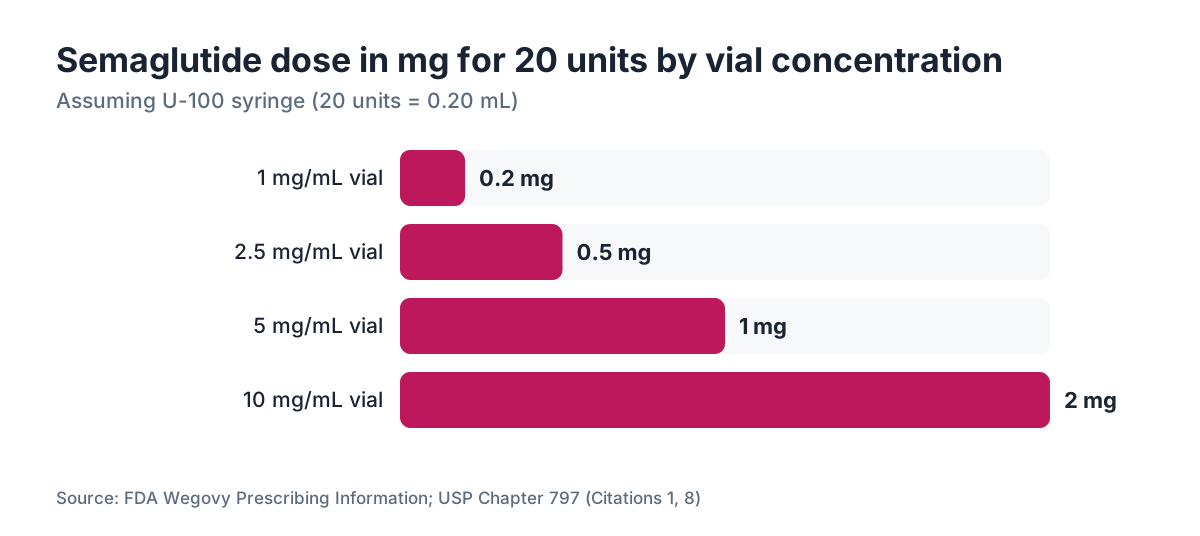
Compounding pharmacies are legally permitted to prepare semaglutide at whatever concentration the prescribing clinician specifies. Common concentrations include 1 mg/mL, 2.5 mg/mL, 5 mg/mL, and 10 mg/mL. That range means 20 units drawn from one vial could contain ten times the semaglutide of 20 units drawn from a different vial. This is not a rounding issue. It is the difference between a starting dose and an overdose.
Always read the label on your specific vial before calculating. If the label is missing or unclear, call the pharmacy before injecting.
How do you convert units to mg for any semaglutide concentration?
The math is two steps and it never changes.
Step 1: Convert units to milliliters. Because 100 units = 1 mL on a standard U-100 insulin syringe, dividing your unit count by 100 gives you volume in mL.
20 units ÷ 100 = 0.20 mL
Step 2: Multiply volume by concentration.
0.20 mL × concentration (mg/mL) = dose in mg
That gives you the table below.
| Concentration (mg/mL) | 20 units (0.20 mL) = | 40 units (0.40 mL) = | |---|---|---| | 1 mg/mL | 0.20 mg | 0.40 mg | | 2.5 mg/mL | 0.50 mg | 1.00 mg | | 5 mg/mL | 1.00 mg | 2.00 mg | | 10 mg/mL | 2.00 mg | 4.00 mg |
Here is the supporting question this article also answers. 40 units of semaglutide equals 0.40 mg at 1 mg/mL, 1.0 mg at 2.5 mg/mL, 2.0 mg at 5 mg/mL, and 4.0 mg at 10 mg/mL. Those higher numbers at 10 mg/mL run well above any dose studied in the STEP trials, which topped out at 2.4 mg weekly for the obesity indication [2].
One more thing worth knowing. Some compounding pharmacies use a different syringe style (U-40) for certain veterinary products. U-40 syringes are uncommon in human compounding but they do exist, and a U-40 unit is not the same volume as a U-100 unit. If your syringe packaging does not say U-100, verify with your pharmacy before you draw anything.
What are the standard clinical doses of semaglutide for weight loss?
For weight loss in adults with obesity or overweight plus a weight-related condition, the FDA-approved dose escalation schedule for Wegovy (brand-name subcutaneous semaglutide) is [1]:
- Weeks 1-4: 0.25 mg once weekly
- Weeks 5-8: 0.5 mg once weekly
- Weeks 9-12: 1 mg once weekly
- Weeks 13-16: 1.75 mg once weekly
- Week 17 onward: 2.4 mg once weekly (maintenance)
The STEP 1 trial, published in the New England Journal of Medicine in 2021, found that participants on 2.4 mg weekly lost a mean of 14.9% of body weight at 68 weeks, compared with 2.4% in the placebo group [2]. That is the number behind most of the clinical enthusiasm for semaglutide.
For type 2 diabetes, Ozempic is approved at doses up to 2 mg weekly [1]. The diabetes and weight-loss products both use the same molecule. The approved maximum dose differs by indication.
Compounded semaglutide is usually dosed to mirror this schedule, but the starting concentration and titration pace vary by prescriber. If your prescription says "draw 20 units" at the starting phase and your vial is 2.5 mg/mL, that gives you 0.5 mg, which is the second step of the standard escalation, not the first. A 20-unit draw from a 1 mg/mL vial gives you 0.20 mg, which is actually below the standard 0.25 mg starting dose. Neither is wrong if your prescriber planned for it. But you can see why knowing the concentration is not optional.
What is compounded semaglutide and why does it come in vials?
Brand-name Wegovy and Ozempic come as prefilled autoinjector pens. Each pen is calibrated to click out a specific dose, so no unit math is required. Compounded semaglutide comes in multi-dose glass vials because compounding pharmacies prepare it in batches rather than factory-sealed pens.
During the 2022-2024 Wegovy and Ozempic shortage, the FDA listed semaglutide on its drug shortage database, which permitted 503A compounding pharmacies (traditional pharmacies) and 503B outsourcing facilities to prepare the drug legally [3]. Once the FDA determined the shortage was resolved, it notified 503B facilities in October 2024 that they needed to wind down compounded versions. The enforcement position for 503A pharmacies followed in early 2025, though litigation by some pharmacies complicated the timeline [3]. The regulatory picture is worth checking if you are currently using compounded semaglutide, because availability and legality can shift.
For a fuller explanation of the difference between brand-name and compounded options, see our article on compounded semaglutide.
The vial format is also why patients need to know unit-to-mg math. With a pen, the pen does the work. With a vial, you do.
How does a semaglutide injection syringe work and what syringe should you use?
Standard insulin syringes used for compounded semaglutide are U-100 syringes, typically 0.3 mL (30-unit), 0.5 mL (50-unit), or 1 mL (100-unit) capacity. The markings on the barrel count in units, not milliliters.
For most compounded semaglutide starting doses, a 0.5 mL syringe (50-unit capacity) gives you enough precision without wasted scale. A 0.3 mL syringe works well for low concentrations where doses stay below 30 units.
Needle gauge matters for comfort. Most subcutaneous injections of this type use a 31-gauge or 32-gauge needle, 4 mm to 6 mm in length. The injection site is typically the abdomen, outer thigh, or back of the upper arm, rotating each week to reduce skin reactions [1].
Draw technique: wipe the vial top with an alcohol swab, pull back the plunger to the unit mark equal to your prescribed dose, push the needle through the stopper, inject the air, invert the vial, and draw to your mark. Check for air bubbles. If you see them, flick the syringe and push the bubbles out before injecting. An air bubble in a subcutaneous injection is not dangerous the way it would be intravenously, but it displaces some of your dose.
How many mg is 40 units of semaglutide?
40 units equals 0.40 mL in a U-100 syringe. Multiply by your concentration:
- At 1 mg/mL: 0.40 mg
- At 2.5 mg/mL: 1.00 mg
- At 5 mg/mL: 2.00 mg
- At 10 mg/mL: 4.00 mg
The 2.5 mg/mL concentration is common because 40 units of a 2.5 mg/mL vial gives exactly 1.0 mg, which lands in the middle of the standard escalation schedule. Prescribers sometimes choose that concentration specifically so that round unit numbers correspond to round milligram doses, making patient instructions cleaner.
At 5 mg/mL, 40 units gives 2.0 mg, which is close to but still below the 2.4 mg weekly maintenance dose for weight loss. Some prescribers write for 48 units from a 5 mg/mL vial to hit 2.4 mg exactly.
4.0 mg from a 10 mg/mL vial (40 units) would exceed the maximum studied dose for weight management by a wide margin and is not a dose any compounding prescription should specify for this indication. If your math lands there, recheck your vial label.
What are the most common semaglutide dosing errors and how do you prevent them?
The most common error is using the wrong concentration for the calculation. Someone gets a new vial, the concentration changed from 2.5 mg/mL to 5 mg/mL, but they keep drawing the same number of units. They have just doubled their dose. This happens. Pharmacies sometimes switch concentrations when supply of a specific API batch changes.
The FDA's MedWatch system has received adverse event reports tied to dosing errors with compounded GLP-1 products, including semaglutide [4]. The agency issued a safety communication in December 2023 flagging concentration confusion and measurement errors as a patient safety concern [4].
Second common error: confusing mg and mcg. Some compounding pharmacy labels list doses in micrograms (mcg), especially for lower-concentration preparations. 250 mcg is 0.25 mg. If a label says 250 mcg/mL and you read it as 250 mg/mL, you will draw a catastrophically wrong amount. Always confirm the unit of measurement on your label.
Third error: using a U-40 syringe with a U-100 concentration or the reverse. U-40 syringes are designed for insulin products labeled as 40 units per mL. If you draw 20 marks on a U-40 syringe, you are pulling 0.50 mL, not 0.20 mL. At 2.5 mg/mL, that is 1.25 mg, not 0.50 mg.
Here are the habits that actually help. Photograph your vial label every time you open a new vial. Write the mg/mL on a sticky note next to where you store the syringe. Do the unit-to-mg math out loud before drawing. Call your pharmacy if anything looks different on the new vial.
Does semaglutide work differently for women in perimenopause or menopause?
This is a fair question with an honest answer: the major semaglutide trials were not designed to sort results by menopausal status. The STEP 1 trial enrolled 1,961 participants, 74.1% of whom were female, but the published results do not break out outcomes by menopausal status [2]. So any claim that semaglutide is specifically more or less effective in perimenopausal women is extrapolating beyond the available data.
What we do know is that the hormonal shifts of perimenopause and menopause affect body weight and fat distribution. Declining estrogen is associated with central adiposity (fat shifting toward the abdomen) and a modest but real reduction in resting metabolic rate. These are the same mechanisms GLP-1 agonists address through appetite suppression and slowed gastric emptying.
The Endocrine Society's 2023 clinical practice guideline on obesity in adults notes that GLP-1 receptor agonists are among the most effective pharmacologic options for adults with a BMI of 30 or higher, or 27 or higher with a weight-related comorbidity [5]. Menopausal status is not listed as a contraindication.
Some women using semaglutide also use hormone replacement therapy. The interaction is not well-studied in randomized trials, but the pharmacokinetic mechanisms are different enough that a direct drug-drug interaction is unlikely. Clinicians at practices like WomenRx that manage both hormones and GLP-1s can run through your full medication list to check for any individual concerns. See also our overview of semaglutide for weight loss for more on how the drug fits into a broader weight management plan.
How should you store compounded semaglutide, and does storage affect the dose?
Compounded semaglutide in solution should be refrigerated at 36-46°F (2-8°C) and kept away from light [1]. Most compounders also state it can be kept at room temperature for up to 28 days once in use, mirroring the Ozempic pen labeling.
Storage matters for dosing accuracy because degradation of the peptide means you may be injecting fewer active milligrams than you drew. A vial stored improperly (left on a sunny counter, frozen accidentally, or kept too long) can degrade without any visible change in the solution. You cannot see degradation in a clear liquid.
Practical rules: do not freeze the vial. Do not leave it in a hot car. Do not use a vial past its beyond-use date, which the compounding pharmacy prints on the label. Typical beyond-use dates for compounded injectable peptides run 30 to 90 days from the date of preparation, depending on the pharmacy's stability data [8]. If your vial is cloudy, discolored, or has visible particles, do not use it.
Mark the date you first puncture the vial. Every needle puncture introduces a small contamination risk, and multi-dose vials have a finite window once opened.
How does semaglutide compare to tirzepatide on dosing math and effectiveness?
Tirzepatide (Mounjaro for diabetes, Zepbound for obesity) is a dual GIP/GLP-1 receptor agonist approved at doses up to 15 mg weekly. The compounded version also comes in vials requiring unit-to-mg conversion, using the same math: divide units by 100 to get mL, multiply by mg/mL.
The SURMOUNT-1 trial found that tirzepatide at 15 mg weekly produced a mean weight loss of 20.9% at 72 weeks, compared to 3.1% for placebo [6]. The STEP 1 trial found 14.9% weight loss with semaglutide 2.4 mg at 68 weeks [2]. Head-to-head trials are limited, but the SURMOUNT-5 trial (2024) found tirzepatide 10 mg or 15 mg produced about 20% weight loss versus about 14% for semaglutide 2.4 mg in adults with obesity without diabetes [7].
The dosing math differs. Tirzepatide concentrations in compounded form are commonly 5 mg/mL, so 20 units = 1 mg of tirzepatide. This is a different drug with different conversion numbers from semaglutide. You cannot use a semaglutide vial's concentration to calculate a tirzepatide dose or the reverse.
For a fuller comparison of the two drugs, including side effects and cost, see our article on semaglutide vs tirzepatide.
What should you do if you think you injected the wrong dose?
First, stay calm and do the math again with your actual vial label in hand. Most suspected overdoses turn out to be correct doses once the concentration is confirmed.
If you calculate that you genuinely took more than your prescribed dose, call your prescriber or telehealth provider right away. If the potential overdose is large (more than double your intended dose) or you have symptoms, call Poison Control at 1-800-222-1222 in the United States or go to an emergency room [10]. Semaglutide overdose symptoms can include severe nausea, vomiting, low blood sugar (especially if you are also on insulin or sulfonylureas), rapid heart rate, and in severe cases, dehydration from vomiting.
The FDA's adverse event reporting page (MedWatch) is at fda.gov. Reporting a dosing error helps the agency track patterns across compounding products [4].
If you underdosed by mistake, the practical answer for most people is to take the correct dose at the normal next injection day and not double up. But confirm with your prescriber, because the right answer can depend on how far off you were and your medical history.
Where can you get reliable, personalized guidance on your semaglutide dose?
The unit-to-mg math in this article is factual and applies universally. What this article cannot do is tell you what dose is right for your body, your medical history, or your specific compounded product.
Your prescribing clinician should give you a dosing instruction sheet that specifies: the concentration of your vial in mg/mL, the exact unit volume to draw for each phase of your titration, and the weekly schedule. If you were prescribed semaglutide without that written instruction, ask for it. Any legitimate prescriber will provide it.
Telehealth practices that focus on women's metabolic health, including WomenRx, typically provide detailed injection guides alongside the prescription, and have clinical staff available to answer dose questions between visits. That kind of ongoing access matters more than most people expect, because questions like "my new vial looks different, is the concentration the same?" come up regularly.
Your pharmacist is also an underused resource. They know the exact concentration they dispensed and can confirm your unit calculation before you inject.
For background on how semaglutide works as a drug class, our main semaglutide article covers the mechanism in full.
Frequently asked questions
20 units of semaglutide is how many mg if my vial says 2.5 mg/mL?
20 units equals 0.20 mL in a U-100 syringe. At 2.5 mg/mL, that is 0.50 mg. This is a common setup because it makes the standard 0.5 mg dose correspond to a clean 20-unit draw, reducing the chance of measurement error. Always verify the mg/mL on your vial label before calculating.
How many mg is 40 units of semaglutide?
40 units equals 0.40 mL. At 1 mg/mL that is 0.40 mg. At 2.5 mg/mL that is 1.0 mg. At 5 mg/mL that is 2.0 mg. At 10 mg/mL that is 4.0 mg. The 2.5 mg/mL concentration is popular partly because 40 units gives exactly 1.0 mg, matching a step of the standard titration schedule.
What concentration of semaglutide is most commonly prescribed in compounded form?
2.5 mg/mL and 5 mg/mL are the most frequently used concentrations in compounded semaglutide vials, though pharmacies use others. The prescriber chooses based on the dose range needed for the titration schedule. Always confirm the concentration on your specific vial, because pharmacies can and do change it between batches.
Can I use the same unit-to-mg math for tirzepatide?
The formula is the same: units ÷ 100 = mL, then mL × concentration = mg. But tirzepatide is a different drug at different concentrations. You cannot use a semaglutide vial's concentration to calculate a tirzepatide dose. Compounded tirzepatide is commonly made at 5 mg/mL, where 20 units equals 1 mg of tirzepatide, not semaglutide.
Is compounded semaglutide still legal to prescribe?
The FDA began restricting compounded semaglutide after declaring the drug shortage resolved in late 2024. As of early 2025, 503B outsourcing facilities were directed to wind down production, and enforcement guidance for 503A pharmacies followed. Legal availability is subject to ongoing litigation. Check with your prescriber or the FDA drug shortage database for current status.
What syringe size should I use to draw 20 units of semaglutide?
A U-100 insulin syringe with at least 0.3 mL capacity works for 20-unit draws. Many patients find a 0.5 mL (50-unit) syringe comfortable because the markings are easier to read at lower volumes. Use 31-gauge or 32-gauge, 4 mm to 6 mm needles for subcutaneous injection. Confirm the syringe is U-100, not U-40.
What happens if I accidentally inject too much semaglutide?
Symptoms of excess semaglutide include severe nausea, vomiting, low blood sugar (especially with other diabetes medications), and rapid heart rate. If you suspect a significant overdose, call Poison Control at 1-800-222-1222 or go to an emergency room. For a minor miscalculation, contact your prescriber before your next dose. Do not double up the following week without guidance.
Why doesn't Ozempic or Wegovy use unit measurements?
Brand-name Ozempic and Wegovy come as prefilled autoinjector pens with a built-in dose dial. The pen delivers a fixed amount per click, so the patient never needs to measure units or mL. Unit math only applies to compounded semaglutide in vials, where the patient draws the dose manually using an insulin syringe.
How do I know if my semaglutide vial has degraded or gone bad?
Discard any vial that is cloudy, has visible particles, is discolored, or is past the pharmacy's beyond-use date. Semaglutide solution should be clear and colorless to slightly yellow. Degradation from heat or light exposure may not be visible, which is why proper refrigeration and staying within the beyond-use date matter even when the solution looks fine.
Does the dose of semaglutide need to be adjusted during perimenopause or menopause?
There is no specific FDA-approved dose adjustment for menopausal status. The standard titration schedule applies regardless of hormonal phase. However, hormonal changes affect body composition and metabolic rate, which can influence weight loss response. Clinicians managing both hormone therapy and GLP-1s can tailor the approach based on individual progress and tolerance.
What is the maximum approved dose of semaglutide for weight loss?
The FDA-approved maximum dose of Wegovy (semaglutide) for chronic weight management is 2.4 mg once weekly, reached after a 16-week dose escalation starting at 0.25 mg. This was the maintenance dose tested in the STEP 1 trial, which showed a mean 14.9% body weight reduction at 68 weeks compared to 2.4% for placebo.
How often is semaglutide injected, and does timing affect the dose calculation?
Semaglutide is injected once weekly. Timing relative to meals does not affect dosing math. The concentration-to-units calculation is static and does not change based on what day or time you inject. What matters is injecting the same calculated volume every week from the same-concentration vial, rotating injection sites each time.
Can I split a semaglutide dose into twice-weekly injections?
No. Semaglutide has a half-life of approximately one week, and all approved dosing and clinical trial data are based on once-weekly administration. Splitting into twice-weekly injections has not been validated and changes the pharmacokinetic profile. Follow your prescriber's schedule unless they specifically modify it for a clinical reason.
Sources
- FDA, Wegovy (semaglutide) Prescribing Information
- Wilding JPH et al., New England Journal of Medicine, 2021. STEP 1 trial: 'Once-Weekly Semaglutide in Adults with Overweight or Obesity'
- FDA, Drug Shortages: Semaglutide
- FDA, MedWatch Safety Communication: Medication Errors with Compounded GLP-1 Products, December 2023
- Endocrine Society, Clinical Practice Guideline: Pharmacological Management of Obesity, 2023
- Jastreboff AM et al., New England Journal of Medicine, 2022. SURMOUNT-1 trial: 'Tirzepatide Once Weekly for the Treatment of Obesity'
- Rubino DM et al., New England Journal of Medicine, 2024. SURMOUNT-5: tirzepatide vs semaglutide head-to-head in adults with obesity
- USP, General Chapter 797 Pharmaceutical Compounding: Sterile Preparations
- Poison Control, American Association of Poison Control Centers