Average age of menopause: what's normal, what's early, and why it matters
TL;DR: The average age of menopause in the United States is 51, but the normal range runs from 45 to 55. Anything before 45 counts as early menopause; before 40 is premature ovarian insufficiency. Genetics, smoking, chemotherapy, and ovary removal all shift the timing. Perimenopause, the transition leading up to that final period, usually starts in the mid-to-late 40s and lasts 4 to 8 years.
What is the average age of menopause?
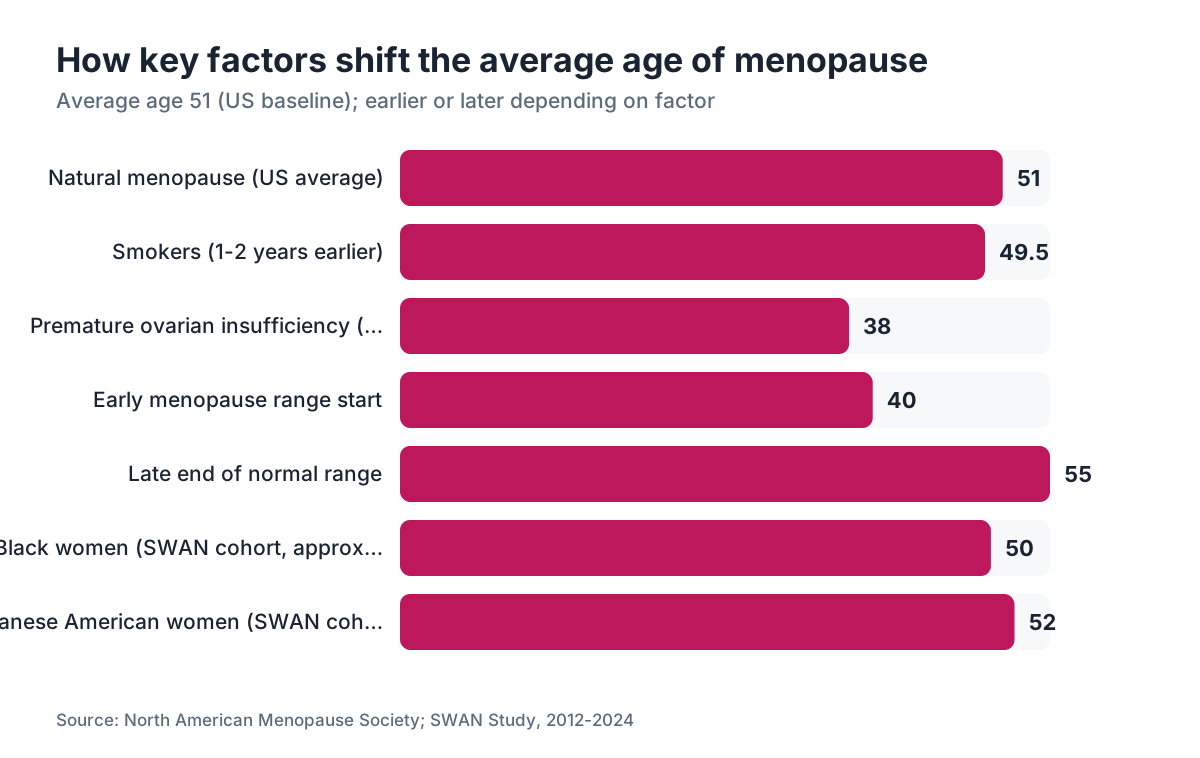
The average age of natural menopause in the United States is 51, and the normal range runs from 45 to 55. [1] That's the figure the North American Menopause Society (NAMS) and the Endocrine Society both use as the reference point, drawn from large population studies. Most women will have their last period somewhere inside that ten-year window.
Menopause is one specific moment: 12 consecutive months without a menstrual period, with no other medical explanation. It's a point in time, not a process. The process is perimenopause. And most of the symptoms people file under "menopause" (hot flashes, broken sleep, mood shifts, cycles that stop behaving) actually happen during perimenopause, often years before that 12-month mark arrives.
The word "menopausal" gets thrown around to describe anyone in this transition. Clinically it means the time after menopause has been confirmed. Premenopausal describes the reproductive years before any transition signs show up. The distinction isn't pedantic. Treatment approach and the urgency around certain health risks shift meaningfully from one stage to the next.
Want the full map of the transition? The menopause overview covers the stages, the symptoms, and what the research actually shows.
What age does perimenopause typically start?
Most women enter perimenopause between 44 and 50, with 47 or 48 the most common starting point in population data. [2] The transition lasts 4 to 8 years on average. So a woman who notices her first irregular cycles at 46 might not hit menopause until her early 50s.
The first signs are quiet. Cycles that ran like clockwork start showing up a few days early or late. Flow changes. The occasional skipped period. Hot flashes often begin before cycles get noticeably irregular. Sleep trouble, brain fog, and mood shifts can show up while periods are still fairly regular, which is exactly why so many women are stunned to learn they're already in it.
The perimenopause age guide walks through the staging criteria, including how clinicians use STRAW+10 to pin down where you are.
A few things move the timing less than people assume: stress, diet, and exercise. These change how hard your symptoms hit. They don't change the genetic program for ovarian aging, which was mostly set before you were born.
What shifts the age of menopause earlier or later?
Genetics is the biggest single factor. If your mother or older sister went through menopause early, your odds of doing the same go up sharply. Twin studies estimate genetics accounts for 50 to 80 percent of the variation in menopausal age. [3]
Smoking moves menopause earlier by 1 to 2 years on average. [1] The mechanism: toxic effects on ovarian follicles plus interference with estrogen metabolism. This is one of the cleaner dose-response relationships in reproductive epidemiology. Heavier smokers reach menopause earlier than light smokers.
Factors that tend to shift timing earlier:
- Smoking (1-2 years earlier on average)
- Chemotherapy or pelvic radiation
- Surgical removal of the ovaries (immediate)
- Certain autoimmune conditions
- Low body mass index
- Never having been pregnant (modest but consistent in the data)
Factors linked to later menopause:
- Higher number of pregnancies
- Higher body mass index (fat tissue makes estrogen, which may delay ovarian shutdown)
- Oral contraceptive use during reproductive years (data is inconsistent across studies)
Race and ethnicity influence timing in ways the factors above don't fully explain. In the SWAN (Study of Women's Health Across the Nation) cohort, Black women reached menopause about a year earlier than white women, and Japanese American women somewhat later. [2] Those gaps likely reflect a mix of genetic, environmental, and social factors.
If your cycles are changing significantly before 45, a baseline FSH and estradiol level is a reasonable first move. Not to self-diagnose, but to walk into a clinician's office with actual numbers.
What is early menopause and how is it different from premature ovarian insufficiency?
Early menopause means menopause between ages 40 and 45. Premature ovarian insufficiency (POI), sometimes still called premature menopause, means ovarian function declining before 40. [4] Different labels, different implications.
About 5 percent of women experience early menopause, and roughly 1 percent experience POI before 40. [1] Small percentages, but they add up to millions of women in the US.
POI is not the same as menopause. Women with POI often have intermittent ovarian function, so they can still ovulate occasionally and, rarely, conceive. Menopause is permanent. If you haven't finished building your family, that difference is everything.
The Endocrine Society's clinical practice guideline on POI ties the diagnosis to "elevated FSH levels on two occasions at least 4 weeks apart" in a woman under 40 with at least 4 months of oligo- or amenorrhea. [4] That's the bar. One high FSH on a bad week doesn't make the diagnosis.
Women who reach menopause early, especially those with POI, face higher risks of cardiovascular disease, osteoporosis, and cognitive decline than women who reach it at the average age. [4] The reason is simple. Estrogen protects the heart, bones, and brain, and losing it earlier means a longer stretch without that cover. That's why most guidelines say women with POI or early menopause should use hormone therapy at least until the average age of menopause (51), barring a specific contraindication.
What does menopause timing mean for bone health?
Bone loss speeds up sharply in the years around menopause. Estrogen keeps osteoclasts (the cells that break bone down) in check, so when estrogen drops, the balance tips toward resorption. Women can lose 10 to 20 percent of their bone density in the five to seven years around menopause. [5]
That's not a rounding error. It's why osteoporosis rates climb steeply through women's 50s and 60s while staying flat in men until much later. The earlier menopause hits, the longer the skeleton goes without adequate estrogen, and the more bone stacks up as loss.
The US Preventive Services Task Force recommends a bone density test (DEXA scan) for women 65 and older, and earlier for women with risk factors: early menopause, low body weight, smoking history, or a family history of osteoporosis. [6] Went through menopause before 45 and never had a DEXA? Raise it at your next visit.
Calcium and vitamin D matter. They don't replace fixing the underlying estrogen deficit in women who are candidates for hormone therapy. HRT plus adequate calcium and vitamin D has far stronger fracture-prevention evidence than supplements on their own.
How does menopause age affect heart disease risk?
Women who reach menopause before 45 carry roughly 40 to 55 percent higher risk of cardiovascular disease than women who go through it at the average age, even after adjusting for traditional risk factors. [7] The link between menopause timing and heart risk is one of the most studied areas in women's health, and the signal is real.
This is not a reason to panic. It's a reason to watch blood pressure, lipids, blood sugar, and weight starting in your late 40s, wherever you are in the transition. Estrogen affects LDL metabolism, arterial flexibility, and inflammatory markers, so losing it reshapes the cardiovascular risk picture over years before anything shows up as an actual event.
Timing of hormone therapy matters here too. The "timing hypothesis" (also called the "window of opportunity") holds that starting estrogen close to menopause, before arterial changes set in, carries different risk-benefit math than starting it 10 or more years later. [7] That's one reason current guidelines support hormone therapy for healthy women within 10 years of menopause onset or under 60, when the main goal is managing symptoms.
For the full breakdown, the hormone replacement therapy article covers the types, routes, risks, and the study data behind them.
Does menopausal age affect weight gain and metabolism?
Yes, and the mechanism is well understood. Estrogen decides where fat goes. During the reproductive years it steers fat toward the hips and thighs (subcutaneous). After menopause, it shifts toward the abdomen (visceral), the metabolically active kind that drives insulin resistance, inflammation, and cardiovascular risk. [8]
Total caloric needs also drop with age on their own, because muscle mass declines and basal metabolic rate falls. Menopause layers on top: the hormonal shift seems to lower energy expenditure and disrupt appetite-regulating hormones in ways that aren't purely about getting older.
So the thing that kept your weight steady in your 30s stops working in your late 40s and 50s, even with no obvious change in diet or exercise. The rules changed more than your effort did.
GLP-1 receptor agonists are now an option in this window. Semaglutide (covered in the semaglutide for weight loss guide) produced an average 14.9 percent body weight reduction over 68 weeks in the STEP 1 trial, versus 2.4 percent for placebo. [9] When weight gain is tied to the hormonal shift of menopause, addressing both the hormonal environment and the metabolic drivers usually beats treating either one alone.
WomenRx runs telehealth evaluations for both hormone therapy and GLP-1 medications, which makes it easier to treat these as one coordinated plan instead of two separate appointments with two providers who never talk.
Curious how the GLP-1 options stack up? Semaglutide vs tirzepatide lays out the head-to-head data.
What are the most common symptoms at different menopausal ages?
Symptoms don't line up perfectly with age, but the patterns are worth knowing.
Early perimenopause (typically mid-40s) tends to bring cycle irregularity, worse PMS-like symptoms, and new or worsening anxiety. Hot flashes can start here but are often mild. Sleep trouble often shows up before hot flashes do, which throws a lot of women off.
Late perimenopause (late 40s to early 50s) is when hot flashes and night sweats peak in frequency and intensity. Brain fog and memory complaints get more common. Vaginal dryness and changes in sexual function often begin. Mood disturbances, including depression, peak during this phase more than any other point in the transition. [2]
Once menopause is confirmed, vasomotor symptoms (hot flashes, night sweats) often ease, though they persist for an average of 7 years post-menopause in women who get them. [1] Genitourinary symptoms (vaginal atrophy, urinary urgency, recurrent UTIs) usually worsen over time without treatment, because they're driven by local tissue changes rather than fluctuating hormones.
Women who go through surgical menopause (both ovaries removed) often describe more intense and abrupt symptoms than women who reach it naturally, because the hormonal drop is a cliff, not a slope. This group usually needs more aggressive symptom management.
Local estrogen (vaginal cream, ring, or tablet) works well for genitourinary symptoms and is considered safe even for women who can't take systemic hormone therapy. The estrogen patch article covers systemic estrogen if that route fits.
How do doctors confirm menopause, and what lab tests are useful?
Menopause is a clinical diagnosis: 12 months without a period, no other explanation. Blood tests aren't required to confirm natural menopause in a woman over 45 with the typical picture. [1]
Labs earn their place in specific situations. Women under 45 where early menopause is suspected. Women on hormonal contraception whose cycles are masked. Women who've had a hysterectomy and have no periods to track. Women with atypical symptoms.
FSH (follicle-stimulating hormone) is the most commonly ordered test. An FSH consistently above 40 IU/L, on two measurements at least 4 weeks apart, is the standard threshold for confirming ovarian failure. [4] A single reading is unreliable because FSH swings wildly during perimenopause.
Estradiol sometimes gets checked alongside FSH. During menopause it typically falls below 30 pg/mL, though reference ranges vary by lab. AMH (anti-Mullerian hormone) marks ovarian reserve and can flag declining function earlier than FSH, but it isn't yet part of standard menopause diagnosis.
Thyroid function (TSH) often goes on the same order because thyroid disease is common in midlife women and produces overlapping symptoms: fatigue, weight changes, mood shifts, cycle changes. Checking TSH alongside FSH is good practice. It keeps you from blaming menopause when something else is doing the driving.
What is surgical menopause and how does age at surgery matter?
Surgical menopause happens when both ovaries are removed (bilateral oophorectomy), at any age. The drop in estrogen and progesterone is immediate, not gradual, which is why symptoms afterward tend to hit harder than with natural menopause.
Women who have a hysterectomy (uterus removed) but keep their ovaries don't go into immediate surgical menopause. Research suggests they may reach natural menopause 1 to 2 years earlier than women with an intact uterus, possibly from changes in blood supply to the ovaries. [3]
Age at surgery matters enormously for long-term health. Women who have bilateral oophorectomy before 45 and skip estrogen therapy have significantly higher rates of cardiovascular disease, osteoporosis, and all-cause mortality than women who reach menopause naturally. [7] The Mayo Clinic's cohort showed measurable increases in mortality, dementia, and Parkinsonism in women who had oophorectomy before 46 and took no estrogen.
None of this is an argument against oophorectomy when it's medically necessary, say in ovarian cancer, BRCA1/2 carriers with high genetic risk, or severe endometriosis. It's an argument for a serious conversation about hormone therapy afterward, and for keeping healthy ovaries in place when the hysterectomy is for benign reasons.
Progesterone is part of the hormone therapy picture for many women, especially those who still have a uterus. The progesterone article covers synthetic progestins versus bioidentical progesterone and what the research shows.
Is there anything that can delay or change menopause timing?
Not in any proven, available way. This is a field where wishful thinking runs well ahead of evidence.
Ovarian tissue freezing and reimplantation can, in theory, extend reproductive function. It's experimental, expensive, and used mainly for cancer patients before chemotherapy. It is not a routine anti-aging tool.
Some research has looked at whether NAD+ precursors, rapamycin, or other longevity-adjacent compounds might slow ovarian aging. The animal data is interesting. The human data, as of mid-2026, isn't enough to make any clinical recommendation.
What you can do is protect the organs and systems menopause affects. Not smoking is probably the single most useful modifiable factor for keeping menopause on a later timeline. Maintaining a healthy weight, managing chronic inflammation, and sleeping enough all support ovarian health broadly, though none has been shown to meaningfully delay the final ovarian clock.
The honest answer: your menopausal age is mostly set by genetics, and current medicine can't change that. What it can do is manage the downstream effects very well. That's where the real opportunity sits.
When should you talk to a doctor about your menopause timeline?
Under 45 with symptoms that point to perimenopause (irregular cycles, hot flashes, badly broken sleep, unexplained mood changes)? Get evaluated. Don't wait out a full year with no period before starting the conversation. Early menopause carries real health implications that respond to early intervention.
In your late 40s with classic perimenopause symptoms, you may not need labs to confirm what's happening. You do want a provider who takes the conversation seriously instead of waving it off as normal aging.
Gone more than 3 months without a period before 40? Treat that as POI until proven otherwise. Get FSH and estradiol checked, and see a reproductive endocrinologist or a menopause specialist rather than a general OB-GYN alone.
WomenRx runs telehealth evaluations built for this transition, including hormone therapy prescribing and guidance on whether GLP-1 medications fit alongside hormonal care. If finding a provider who treats the whole picture has been hard, that's one practical route.
For the broader question of when does menopause start and what the staging looks like clinically, that guide covers the STRAW criteria and what each stage means for treatment.
Frequently asked questions
What is the average age of menopause in the United States?
The average age is 51, with the normal range spanning 45 to 55. About 5 percent of women experience early menopause between 40 and 45, and about 1 percent experience premature ovarian insufficiency before age 40. These figures come from large US population cohorts including the SWAN study and match NAMS guidance.
What is considered a normal pre menopausal age range?
Premenopausal describes the years before any transition signs appear, essentially the full reproductive lifespan up to perimenopause. There's no single number, but most women stay fully premenopausal through their late 30s and begin the perimenopause transition between 44 and 50. If significant hormonal symptoms appear before 40, that warrants evaluation rather than watchful waiting.
Can menopause start at 40?
Yes. Menopause before 40 is called premature ovarian insufficiency (POI) and affects about 1 percent of women. It's diagnosed with two FSH measurements above 40 IU/L at least 4 weeks apart, combined with at least 4 months of irregular or absent periods. POI carries real risks for the heart, bones, and brain, and hormone therapy is generally recommended until at least age 51.
How long does perimenopause last before menopause?
Perimenopause lasts 4 to 8 years on average, though it can run as short as 1 to 2 years or as long as a decade. The SWAN cohort found a median of about 5.8 years from first menstrual irregularity to the final period. Women who start perimenopause earlier tend to have longer transitions than those who start closer to the average age.
Does smoking really make menopause happen earlier?
Yes, consistently across multiple studies. Smokers reach menopause an average of 1 to 2 years earlier than nonsmokers, and the relationship is dose-dependent: heavier, longer-term smokers reach menopause earlier than lighter smokers. The mechanism involves direct toxic effects of cigarette smoke on ovarian follicles and interference with estrogen metabolism.
What lab tests confirm menopause?
Natural menopause in women over 45 is a clinical diagnosis (12 months without a period). Labs matter most for women under 45 or with atypical presentations. FSH above 40 IU/L on two tests at least 4 weeks apart is the standard diagnostic threshold for ovarian failure. TSH should usually be checked at the same time to rule out thyroid disease, which mimics many menopause symptoms.
Is weight gain inevitable at menopause?
Weight gain isn't inevitable but is very common. The hormonal shift redirects fat storage from the hips and thighs to the abdomen, and basal metabolic rate falls with age. Many women gain 2 to 5 pounds during the transition without changing diet or exercise. Addressing the hormonal environment alongside diet and activity beats lifestyle changes alone for most women.
Does the age of menopause affect dementia risk?
Research suggests earlier menopause is linked to modestly higher dementia risk, likely because estrogen has neuroprotective effects and losing it earlier lengthens the low-estrogen window. The Mayo Clinic's oophorectomy cohort found elevated cognitive decline in women who had ovaries removed before 46 without estrogen therapy. Current evidence doesn't support hormone therapy specifically to prevent dementia, but the data are still evolving.
How does surgical menopause differ from natural menopause?
Surgical menopause from bilateral oophorectomy is immediate rather than gradual, so the hormonal drop is abrupt. Symptoms (hot flashes, mood shifts, broken sleep, vaginal dryness) tend to hit harder and faster than with natural menopause. Women who have surgical menopause before their natural menopausal age carry significantly elevated cardiovascular and bone risks if they don't use hormone therapy afterward.
Can you get pregnant during perimenopause?
Yes. Ovulation is irregular during perimenopause but not absent, so pregnancy stays possible until menopause is confirmed (12 months without a period). Women in their late 40s often underestimate this. If pregnancy isn't wanted, keep using contraception until menopause is confirmed. Hormone therapy does not provide contraceptive coverage.
What is the difference between perimenopause and menopause?
Perimenopause is the transition phase, often 4 to 8 years, when ovarian hormone production becomes irregular and symptoms emerge. Menopause is a single confirmed point: 12 consecutive months without a period. The word 'menopausal' technically applies to the time after that point, though it's often used loosely for the whole transition.
Does race or ethnicity affect the age of menopause?
Yes, though the differences are modest. In the SWAN cohort, Black women reached menopause about 1 year earlier on average than white women, while Japanese American women reached it somewhat later. These variations aren't fully explained by lifestyle or income and likely reflect a mix of genetic differences, environmental exposures, and disparities in healthcare access.
Should women with early menopause take hormone therapy?
Most major guidelines, including NAMS and the Endocrine Society, recommend hormone therapy for women with premature ovarian insufficiency or early menopause (before 45) at least until the average age of natural menopause (51), unless there's a specific contraindication like estrogen-sensitive cancer. The goal is to reduce the elevated cardiovascular, bone, and cognitive risks that come with a longer low-estrogen window.
How is the STRAW+10 staging system used to determine where you are in the transition?
STRAW+10 (Stages of Reproductive Aging Workshop) classifies women across 10 stages from peak reproductive years through late postmenopause, using menstrual cycle characteristics (regularity, length, frequency) and FSH levels. Clinicians use it to separate early from late perimenopause and to estimate how close a woman is to her final period. It's the closest thing reproductive medicine has to a standardized staging system.
Sources
- North American Menopause Society (NAMS), Menopause Practice: A Clinician's Guide
- Study of Women's Health Across the Nation (SWAN), NIH-funded longitudinal cohort
- Genetics of menopause timing review, Human Reproduction Update (Oxford Academic)
- Endocrine Society Clinical Practice Guideline: Premature Ovarian Insufficiency
- NIH National Institute on Aging, Menopause and Bone Loss
- US Preventive Services Task Force, Osteoporosis Screening Recommendation (2018)
- Parker WH et al., Ovarian conservation at the time of hysterectomy and long-term health outcomes, Obstetrics & Gynecology (2009); Mayo Clinic oophorectomy cohort studies
- Karvonen-Gutierrez C, Kim C, Association of mid-life changes in body size, body composition and obesity status, Current Nutrition Reports (2016)
- Wilding JPH et al., Once-weekly semaglutide in adults with overweight or obesity (STEP 1 trial), New England Journal of Medicine (2021)
- Harlow SD et al., Executive summary of the Stages of Reproductive Aging Workshop +10 (STRAW+10), Menopause (2012)
- FDA, Menopause: Medicines to Help You (consumer guidance)
- CDC, Women's Reproductive Health: Menopause data and statistics