Alternative medicine for perimenopause: what actually works
TL;DR: Some alternative therapies for perimenopause have genuine evidence. Black cohosh modestly cuts hot flashes in short-term trials. Cognitive behavioral therapy and clinical hypnosis have the strongest non-hormonal data for vasomotor symptoms. Most herbal supplements show weak or mixed results, and a few carry real safety concerns. Hormone therapy is still the most effective treatment, but the alternatives are worth understanding clearly.
What counts as alternative medicine for perimenopause?
Alternative medicine covers everything that sits outside conventional hormone therapy and FDA-approved non-hormonal drugs. That includes herbal supplements, acupuncture, mind-body therapies, dietary changes, homeopathy, and practices like yoga or tai chi. The line between "alternative" and "complementary" is blurry, and mainstream clinicians increasingly treat some of these options as reasonable additions rather than replacements for proven care.
A 2023 survey published in Menopause found that roughly 50 to 80 percent of women in perimenopause and menopause use some form of complementary or alternative medicine (CAM) for their symptoms [1]. That is a huge number. Most of them never tell their doctor.
That silence matters because herbs are pharmacologically active compounds. St. John's Wort, for example, induces CYP3A4 and can reduce the effectiveness of dozens of drugs. Phytoestrogens bind estrogen receptors, which is relevant if you have a personal or family history of hormone-sensitive cancers. None of this means you should avoid these options outright. It means you should use them with the same thoughtfulness you'd give a prescription.
This article covers the therapies with the most evidence, the ones with the most risk, and the honest gaps in the data. Perimenopause typically begins in the mid-40s and can last several years before the final menstrual period. If you want context on timing, perimenopause age and when does menopause start cover that ground.
Which alternative therapies have the strongest evidence for hot flashes?
Hot flashes are the most studied perimenopausal symptom, so this is where the evidence base is deepest, even if "deepest" is a relative term.
Cognitive behavioral therapy (CBT): CBT has the best non-hormonal evidence of anything in this category. The MENOS trials, a series of randomized controlled studies from King's College London, found that a brief CBT intervention (six sessions, group or self-help format) reduced hot flash problem rating scores by about 50 percent compared to usual care [2]. CBT does not reduce the number of hot flashes. It changes how much they bother you, which turns out to matter as much clinically as frequency.
Clinical hypnosis: A randomized trial funded by the National Institutes of Health (NIH) and published in Menopause in 2013 found that five sessions of clinical hypnosis reduced hot flash frequency by 74 percent compared to a structured attention control group [3]. That number is surprisingly large. The mechanism is unclear, but the study was well-designed with physiological verification using sternal skin conductance. This deserves more attention than it gets.
Black cohosh (Actaea racemosa): Black cohosh is the most studied herbal option. A Cochrane review of 16 trials found a modest reduction in hot flash frequency and severity compared to placebo, but effect sizes were small and studies were heterogeneous [4]. The North American Menopause Society (NAMS) notes it may be a reasonable short-term option (under 6 months) for women with mild to moderate vasomotor symptoms who cannot or prefer not to use hormones [1]. It is not estrogenic, which is an important distinction from phytoestrogens.
Phytoestrogens (soy isoflavones, red clover): These compounds bind estrogen receptors weakly. Meta-analyses show a modest reduction in hot flash frequency, somewhere in the range of 1 to 2 fewer episodes per day compared to placebo [5]. That is statistically significant but clinically small. Red clover isoflavones (specifically the Promensil formulation) have slightly more consistent data than soy. Safety in women with a history of estrogen-receptor-positive breast cancer is not established, and most oncologists recommend avoiding them in that context.
Paced respiration and mindfulness: Slow, diaphragmatic breathing (6 to 8 breaths per minute) practiced at the onset of a hot flash reduces both subjective intensity and duration in several small trials. Mindfulness-based stress reduction (MBSR) programs showed meaningful improvements in quality of life and sleep in a 2019 randomized trial, though effects on hot flash frequency were modest [6].
Does acupuncture work for perimenopause symptoms?
Acupuncture gets a lot of attention for perimenopause, and the evidence is genuinely mixed in an interesting way. It does seem to do something, but separating real acupuncture from sham acupuncture is harder than it sounds because sham needles still have physiological effects.
A 2019 randomized trial published in BMJ Open found that six weeks of acupuncture reduced hot flash frequency by about 36 percent, compared to 6 percent in a waiting-list control group [7]. That is a real effect. But studies comparing real acupuncture to sham acupuncture (needles placed at non-acupuncture points) frequently show no significant difference between the two conditions. This suggests the benefit may come from the needling itself, the therapeutic encounter, or both, rather than from traditional meridian-based mechanisms.
For sleep disturbance and mood symptoms in perimenopause, some systematic reviews show positive signals. For vaginal dryness or genitourinary symptoms, the evidence is much weaker.
Practically speaking: acupuncture is low-risk when performed by a licensed practitioner, modestly expensive (typically $75 to $150 per session, often not covered by insurance), and may be worth trying for women who want a non-pharmacological approach and understand the evidence ceiling.
How good is the evidence for herbal supplements beyond black cohosh?
The supplement market for perimenopause is enormous and the evidence for most products is thin. Here is an honest breakdown.
| Supplement | Evidence quality | Effect on hot flashes | Safety notes | |---|---|---|---| | Black cohosh | Moderate | Modest reduction | Rare hepatotoxicity; avoid >6 months | | Soy isoflavones | Moderate | Small reduction | Avoid in hormone-sensitive cancers | | Red clover | Moderate | Small reduction | Same caution as soy | | Evening primrose oil | Low | Not effective vs. placebo | Generally safe | | Maca (Lepidium meyenii) | Low | Limited positive signal | Drug interactions unclear | | Valerian | Low | Inconsistent for sleep | Sedation, drug interactions | | Sage (Salvia officinalis) | Very low | One small positive trial | Generally safe short-term | | St. John's Wort | Low | Combination products only | Major CYP3A4 inducer, many drug interactions | | DHEA (oral) | Moderate for genitourinary | Modest effect on vaginal dryness | Not FDA-approved for this indication; androgen side effects possible |
Maca is worth a separate note because it shows up constantly in perimenopause marketing. A small Peruvian trial showed improved mood and energy, but no hormonal changes were measured and replication has been inconsistent. Nobody has run a properly powered trial. The closest study found improvements in psychological symptoms but effects on vasomotor symptoms were not significant.
Valerian is frequently marketed for sleep. Meta-analyses are inconsistent and most individual trials have serious methodological problems. The NIH Office of Dietary Supplements notes the evidence is insufficient to draw conclusions [8].
The FDA does not evaluate dietary supplements for efficacy before they go to market. That matters. A product can say it "supports hormonal balance" without any evidence that it does. Quality control is also a real issue: independent testing by organizations like ConsumerLab.com has found that some supplements contain less than 50 percent of the labeled ingredient amount.
Can diet changes reduce perimenopause symptoms?
Diet is probably the most underrated non-pharmaceutical tool in this space, and it stays underappreciated in the clinical literature.
A 2023 randomized trial published in Menopause followed women on a low-fat, plant-based diet with half a cup of cooked soybeans daily for 12 weeks. Moderate-to-severe hot flashes decreased by 84 percent in the diet group, compared to 42 percent in the control group [9]. The effect size was striking. The mechanism is thought to involve equol, a gut-metabolized soy isoflavone that about 25 to 30 percent of Western women produce efficiently (compared to roughly 50 percent of Asian women). Equol binds estrogen receptors more potently than other isoflavones.
Beyond soy, several dietary patterns appear relevant. High glycemic diets are associated with more frequent and severe hot flashes in cross-sectional data. Alcohol reliably worsens vasomotor symptoms in many women. Spicy foods and caffeine are common triggers, though the evidence is anecdotal and individual responses vary enormously.
For bone health, which becomes a real concern during perimenopause as estrogen begins to decline, adequate calcium (1,000 to 1,200 mg per day from food and supplements combined) and vitamin D (1,500 to 2,000 IU daily is what many endocrinologists recommend, though the Endocrine Society says to adjust based on serum 25-OH vitamin D levels) are important. A bone density test is worth discussing with your clinician if you are in your 40s or early 50s and have risk factors.
Weight and metabolic health also matter here. Adipose tissue produces estrone, a weaker estrogen. Some evidence suggests women with higher body fat have more severe hot flashes, not fewer, despite the estrone production. Maintaining a healthy weight through perimenopause appears protective for cardiovascular and metabolic outcomes regardless of its direct effect on hot flashes.
What does the evidence say about yoga, exercise, and movement therapies?
Exercise has real perimenopausal benefits, just not quite the ones most people expect.
For hot flashes specifically, the evidence is frustratingly mixed. A large randomized trial (the MsFLASH trial) found that aerobic exercise did not significantly reduce hot flash frequency or severity compared to controls [10]. This surprised a lot of clinicians. But the same trial and others show consistent improvements in sleep quality, mood, and overall quality of life. Those outcomes matter.
Yoga has been studied in several randomized trials. A 2019 meta-analysis of 13 trials found yoga significantly improved total menopause symptom scores, with the strongest effects on psychological symptoms and sleep, and smaller effects on vasomotor symptoms. Restorative and Iyengar styles showed slightly more consistent results than vinyasa-style practices.
Tai chi and qigong have been studied primarily in postmenopausal women. The data suggests benefits for balance, bone density maintenance, and psychological wellbeing. For perimenopausal women specifically, evidence is thinner but points in a positive direction.
Strength training deserves special mention. Resistance exercise preserves muscle mass and bone density during the estrogen decline of perimenopause. It also improves insulin sensitivity, which matters because perimenopausal women frequently see shifts in body composition and metabolic function. Two to three sessions per week appears to be the minimum effective dose based on available trials.
Are there alternative approaches for perimenopause mood changes and sleep problems?
Mood changes and sleep disruption are often underreported relative to hot flashes, but they cause significant quality-of-life impact.
For sleep, the most evidence-supported non-pharmacological approach is cognitive behavioral therapy for insomnia (CBT-I). CBT-I consistently outperforms sleep medications in long-term outcomes in the general population, and several perimenopause-specific trials confirm it works here too. The American College of Physicians recommends CBT-I as first-line treatment for chronic insomnia regardless of cause [11]. Digital CBT-I programs (Sleepio, Somryst, and others) have made access much easier.
Melatonin is worth a separate note. It does not fix hot-flash-driven waking, which is a neurological event, not a circadian one. Melatonin can help if the primary problem is sleep-onset difficulty or circadian disruption. Doses above 0.5 to 1 mg are probably more than necessary for most women; the pharmacological data suggests lower doses work as well or better for circadian signaling.
For mood changes, CBT and mindfulness-based cognitive therapy (MBCT) have trial data in perimenopausal populations. St. John's Wort has modest evidence for mild to moderate depression in the general population, but the drug interaction profile is significant enough that it requires a real conversation with your prescribing clinician before use.
Adaptogenic herbs like ashwagandha (Withania somnifera) are marketed heavily for stress and mood. A 2019 randomized trial in adults showed improvement in stress and anxiety scores with 240 mg daily of a standardized extract. Perimenopause-specific data is limited, but the general evidence for stress reduction is at least plausible. It is one of the more reasonable supplements in this category, though that is a low bar.
L-theanine (found naturally in green tea) has small but consistent data for anxiety reduction and sleep quality improvement at 200 mg doses. The mechanism involves GABA and serotonin receptor modulation. It is generally considered safe and has a low interaction profile.
Is vaginal estrogen considered alternative medicine, and what non-hormonal options exist for genitourinary symptoms?
Vaginal estrogen is not alternative medicine. It is a low-dose, locally acting hormone treatment with a well-established safety profile and strong NAMS endorsement. This distinction matters because many women avoid it unnecessarily, assuming it carries the same risks as systemic hormone therapy. The systemic absorption from vaginal estrogen is minimal at therapeutic doses [12].
That said, non-hormonal options for vaginal dryness and genitourinary syndrome of menopause (GSM) do exist.
Vaginal moisturizers (Replens, Good Clean Love, and similar products) used regularly (two to three times per week, more than before sex) reduce chronic vaginal dryness by maintaining mucosal hydration. They are not the same as lubricants, which are for acute use. Hyaluronic acid vaginal products have performed comparably to estrogen cream in some smaller trials, though the sample sizes are modest.
Vaginal DHEA (prasterone, sold as Intrarosa) is FDA-approved for dyspareunia due to menopause. It is metabolized locally into estrogen and testosterone. Some women who prefer to avoid systemic or direct estrogen use find this a comfortable middle ground.
Oral ospemifene (Osphena) is a selective estrogen receptor modulator (SERM) approved for GSM. It is a conventional drug, not an alternative, but it is non-estrogen, which some women and their clinicians prefer.
For women who want to avoid hormonal approaches entirely, regular sexual activity (solo or partnered) maintains vaginal elasticity and blood flow. The evidence for this is genuinely decent and it is almost never mentioned.
What are the risks of alternative perimenopause treatments?
The biggest risk is not a dramatic adverse event. It is delay.
Women who rely on ineffective alternative treatments for years before getting adequate symptom management lose years of wellbeing unnecessarily. Hot flashes that continue for a decade (the average duration of vasomotor symptoms is about 7 years, though for some women they persist much longer) affect sleep, mood, cognitive function, cardiovascular health, and relationships. That is a real cost.
Beyond that, specific risks are worth knowing.
Hepatotoxicity with black cohosh is rare but documented. The FDA has received case reports of liver injury, including liver failure requiring transplant, in women taking black cohosh supplements [13]. The risk appears low, but it is not zero. Anyone with liver disease or who drinks alcohol regularly should be cautious.
Phytoestrogen safety in hormone-sensitive cancers: Most oncology guidelines recommend that women with estrogen-receptor-positive breast cancer avoid high-dose phytoestrogen supplements. Food-based soy (tofu, edamame, miso) appears to be safe and may even be protective based on epidemiological data from Asian populations, but supplements are a different story.
Supplement-drug interactions: St. John's Wort reduces plasma concentrations of many drugs including anticoagulants, antiretrovirals, cyclosporine, and oral contraceptives. Valerian potentiates sedatives. Maca has theoretical effects on thyroid function.
Quality control: The FDA does not inspect most supplement manufacturing facilities, and a 2015 New York Attorney General investigation found that many major-brand herbal supplements did not contain the labeled herbs at all.
If you are using any herbal supplements and also taking prescription medications, a conversation with a pharmacist about interactions is genuinely worthwhile and takes about five minutes.
How do alternative therapies compare to hormone therapy for perimenopause?
Honest answer: they do not compare favorably for most symptoms.
Hormone therapy (HRT) remains the most effective treatment for vasomotor symptoms, sleep disruption, mood changes, and genitourinary symptoms associated with perimenopause. The 2023 NAMS position statement, which reviewed the full evidence base, concluded that for women under 60 or within 10 years of menopause onset, the benefits of hormone therapy generally outweigh the risks for vasomotor symptoms [1]. That conclusion is not widely known among patients.
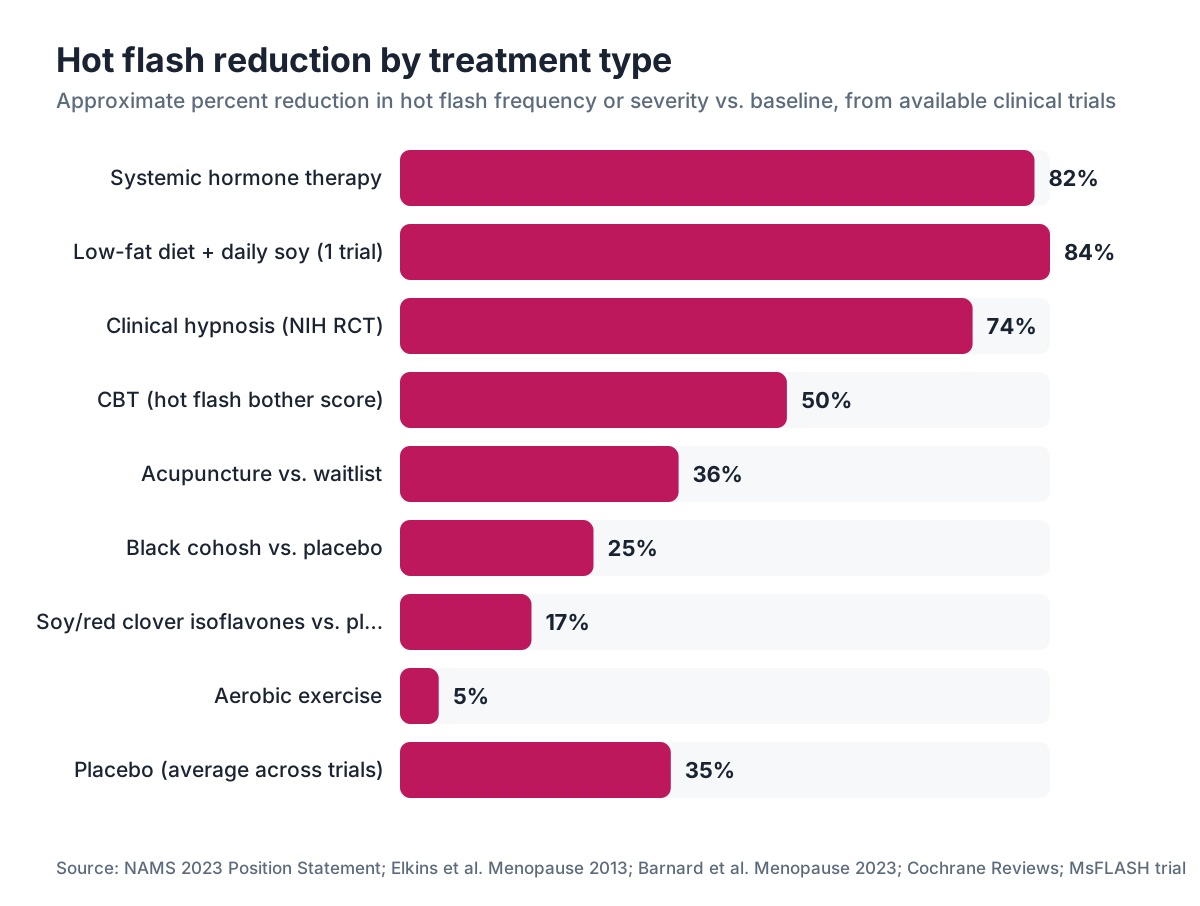
The table below shows approximate hot flash reduction percentages from available trials:
| Treatment | Hot flash reduction vs. baseline | Notes | |---|---|---| | Systemic estrogen/progestogen | 75-90% | Strongest evidence; NAMS endorsed | | Clinical hypnosis | ~74% | NIH-funded RCT; well-designed | | CBT (for bother) | ~50% reduction in problem rating | Changes distress, not frequency | | Low-fat diet + soy | ~84% hot flash reduction | One trial; needs replication | | Black cohosh | 20-30% vs. placebo | Cochrane review; modest effect | | Soy/red clover isoflavones | 10-25% vs. placebo | Meta-analysis; small clinical effect | | Aerobic exercise | No significant effect vs. placebo | MsFLASH trial | | Acupuncture | ~30-36% vs. waitlist | No significant difference vs. sham | | Placebo (across trials) | 25-50% | High placebo response is real |
For women who have contraindications to hormones, have had hormone-sensitive cancers, or simply prefer not to use them, this evidence hierarchy helps prioritize where to focus. CBT, hypnosis, and dietary changes have the most honest data. Acupuncture and black cohosh are reasonable second-tier options.
For women who are open to hormones but haven't been offered them, it is worth knowing that many women are never counseled about HRT by their clinicians. If you want to understand what conventional options look like, hormone replacement therapy and estrogen patch are good starting points. Platforms like WomenRx are designed specifically to give women access to evidence-based hormonal care without requiring a specialist referral.
What should you tell your doctor if you're using alternative perimenopause treatments?
Tell them everything. That sounds obvious, but research consistently shows that 50 to 70 percent of CAM users do not disclose their use to their conventional providers, usually because they assume the doctor will dismiss it or they think it does not count as "real" medicine [1].
Bring a list of supplements with brand names, doses, and how long you have been taking them. Your clinician needs this to check for drug interactions, assess liver enzymes if you have been on black cohosh long-term, and factor it into any new prescription decisions.
If your clinician dismisses your interest in alternative approaches entirely without discussion, that is a signal worth noting. Good evidence-based care in 2024 includes a conversation about the full range of options, including their relative effectiveness and risks. You deserve a clinician who takes your preferences seriously while also being honest about the evidence.
If you are in perimenopause and have not had a frank conversation about your symptoms, treatment options (both conventional and complementary), and your personal risk profile, that conversation is overdue. WomenRx offers telehealth consultations with clinicians who specialize in perimenopausal hormone care and can discuss all of your options honestly.
What is the best overall approach to perimenopause symptom management?
There is no single answer that fits every woman, but there is a reasonable framework.
Start with an honest symptom inventory. Hot flashes, sleep, mood, brain fog, vaginal symptoms, libido, and joint pain all have different evidence bases. Not every symptom requires the same intervention.
For vasomotor symptoms that are mild to moderate and you prefer non-hormonal approaches, the evidence hierarchy is: CBT for distress reduction, clinical hypnosis, dietary changes (especially low-fat plant-based with soy), black cohosh for short-term use, and phytoestrogen supplements as a distant fourth.
For sleep, CBT-I is first line regardless of cause. Melatonin at low doses (0.5 to 1 mg) can help with sleep onset. Treating the hot flashes themselves (with any method) often improves sleep as a secondary effect.
For mood, exercise has strong data for depression and anxiety in the general population even if its effect on hot flashes is underwhelming. CBT and MBCT have perimenopause-specific trial data. Consider a mental health evaluation if mood changes are significant; perimenopause is a genuine risk period for new-onset depression and anxiety, and it is underdiagnosed.
For genitourinary symptoms, vaginal moisturizers and lubricants are first line for mild symptoms. Vaginal estrogen is remarkably safe and effective for moderate to severe GSM, and most breast cancer organizations (including ACOG) consider low-dose vaginal estrogen acceptable even in women with a history of breast cancer in consultation with their oncologist.
For bone health, calcium, vitamin D, weight-bearing exercise, and a bone density test at the right time are the foundations.
And if you want to understand the full landscape of where menopause fits in your longer health picture, that context matters for every decision you make in perimenopause.
Frequently asked questions
Is black cohosh safe for long-term use in perimenopause?
NAMS and most experts recommend limiting black cohosh to six months or less due to rare but documented cases of hepatotoxicity. For short-term use it is generally considered safe for women without liver disease. It is not estrogenic, so it does not carry the same theoretical concerns as phytoestrogens for women with hormone-sensitive cancer histories, though data in that population is limited.
Can phytoestrogens like soy and red clover replace estrogen therapy?
No. Phytoestrogens bind estrogen receptors far more weakly than estradiol and produce clinically small effects on hot flash frequency. Meta-analyses show roughly 1 to 2 fewer hot flashes per day compared to placebo. Estrogen therapy typically reduces hot flash frequency by 75 to 90 percent. Women with mild symptoms may find phytoestrogens sufficient; those with moderate to severe symptoms usually do not.
Does acupuncture actually reduce hot flashes or is it just placebo?
Acupuncture reduces hot flash frequency compared to no treatment or waitlist control, but most rigorous trials show no significant difference between real and sham acupuncture. This suggests the effect comes from needling itself or the therapeutic encounter rather than traditional meridian mechanisms. It is a legitimate option for women who want non-pharmacological care, with realistic expectations about effect size.
Are there natural ways to reduce perimenopause-related anxiety and mood changes?
Yes. CBT and MBCT have trial data for perimenopausal mood symptoms. Regular aerobic exercise has strong general evidence for depression and anxiety. Ashwagandha at 240 mg of a standardized extract showed stress and anxiety improvements in a 2019 randomized trial. L-theanine at 200 mg has small but consistent data for anxiety reduction. For significant mood changes, a clinical evaluation is important since perimenopause is a genuine risk period for new-onset depression.
Can diet changes actually reduce hot flashes during perimenopause?
Possibly yes, more than most clinicians realize. A 2023 randomized trial found that a low-fat plant-based diet plus half a cup of soybeans daily reduced moderate-to-severe hot flashes by 84 percent over 12 weeks, versus 42 percent in controls. The effect appears driven partly by equol, a gut metabolite of soy isoflavones. This single trial needs replication, but the signal is strong enough to take seriously.
Is clinical hypnosis a legitimate treatment for perimenopause symptoms?
Yes, with real evidence behind it. A randomized, NIH-funded trial published in Menopause found five sessions of clinical hypnosis reduced hot flash frequency by 74 percent compared to a structured attention control. That is a larger effect than most herbal supplements produce. The therapy requires a trained clinician and is not the same as self-help recordings. Access is limited but it deserves more attention than it typically gets.
What supplements should I avoid during perimenopause because of drug interactions?
St. John's Wort is the most important to flag: it induces CYP3A4 and reduces blood levels of dozens of drugs including anticoagulants, oral contraceptives, antiretrovirals, and cyclosporine. Valerian potentiates sedatives and benzodiazepines. High-dose DHEA can affect androgen-sensitive medications. Always tell your pharmacist every supplement you take, since interaction checks require the full list.
Does exercise help with perimenopause hot flashes?
Probably not directly. The MsFLASH randomized trial found aerobic exercise did not significantly reduce hot flash frequency or severity compared to controls. But exercise consistently improves sleep quality, mood, cardiovascular health, and insulin sensitivity in perimenopausal women. Strength training specifically preserves muscle mass and bone density during the estrogen decline of perimenopause. Two to three resistance sessions weekly is a reasonable minimum.
What is the safest alternative to hormone therapy for perimenopause?
CBT for hot flash distress and CBT-I for insomnia have the strongest safety profiles and meaningful evidence of effect. Neither carries pharmacological risk. Clinical hypnosis from a trained provider is also low-risk. For supplements, black cohosh at short-term doses has the most evidence with manageable risk. For vaginal dryness, non-hormonal vaginal moisturizers are safe for essentially everyone.
Can I use alternative perimenopause treatments if I have had breast cancer?
Some, yes. CBT, hypnosis, exercise, and mind-body practices are safe for breast cancer survivors. High-dose phytoestrogen supplements are generally not recommended because of potential estrogenic activity, though food-based soy appears safe based on epidemiological data. Black cohosh is a grey area; some oncologists permit it short-term since it is not estrogenic, but guidelines differ. Always discuss with your oncologist before starting any supplement.
How do I know if an herbal supplement for perimenopause actually contains what the label says?
You largely cannot know without third-party verification. The FDA does not evaluate supplements for potency or purity before sale. Look for products that carry USP Verified, NSF International, or ConsumerLab.com certification, which indicates independent testing. A 2015 New York Attorney General investigation found many major store-brand herbal supplements contained no DNA evidence of the labeled herb.
What non-hormonal options exist for vaginal dryness in perimenopause?
Vaginal moisturizers (used regularly, 2 to 3 times weekly) and lubricants (for intercourse) are the first non-hormonal line. Hyaluronic acid vaginal inserts have performed comparably to estrogen cream in some small trials. Regular sexual activity, solo or partnered, maintains vaginal blood flow and elasticity. For moderate to severe symptoms, vaginal DHEA (prasterone) and ospemifene are FDA-approved non-systemic options.
Is melatonin helpful for perimenopause sleep problems?
Melatonin helps with sleep-onset difficulty and circadian disruption but does not address hot-flash-driven waking, which is a neurological event rather than a circadian one. Low doses (0.5 to 1 mg) work as well as higher doses for most people based on pharmacological data. For chronic insomnia in perimenopause, CBT-I has better long-term outcomes than any sleep medication and is recommended as first-line treatment by the American College of Physicians.
At what point should I stop trying alternative treatments and talk to a doctor about hormones?
If your symptoms are significantly disrupting sleep, mood, work, or relationships, and non-hormonal approaches have not produced meaningful improvement after 8 to 12 weeks of consistent use, that is a reasonable time to have a serious conversation about hormone therapy. NAMS guidelines indicate that for healthy women under 60 or within 10 years of menopause onset, the benefits of hormone therapy generally outweigh the risks for managing vasomotor symptoms.
Sources
- North American Menopause Society (NAMS), 2023 Nonhormone Therapy Position Statement
- Ayers B et al., Menopause 2012; MENOS trials, King's College London
- Elkins GR et al., Menopause 2013, NIH-funded randomized trial of clinical hypnosis
- Leach MJ, Moore V. Cochrane Database of Systematic Reviews 2012: Black cohosh for menopausal symptoms
- Lethaby A et al., Cochrane Database of Systematic Reviews 2007: Phytoestrogens for menopausal vasomotor symptoms
- Carmody JF et al., Menopause 2011; mindfulness-based stress reduction for hot flashes
- Lund KS et al., BMJ Open 2019; randomized trial of acupuncture for menopausal symptoms
- NIH Office of Dietary Supplements, Valerian Fact Sheet
- Barnard ND et al., Menopause 2023; randomized trial of low-fat plant-based diet with soy for hot flashes
- Sternfeld B et al., JAMA Internal Medicine 2014; MsFLASH aerobic exercise trial
- American College of Physicians, Annals of Internal Medicine 2016; Clinical Practice Guideline for Chronic Insomnia
- FDA, Prescribing Information for Vaginal Estrogen Products
- FDA, MedWatch Safety Alerts: Black Cohosh and Liver Injury