Amberen for perimenopause: does it actually work?
TL;DR: Amberen is an over-the-counter supplement sold for perimenopause symptoms. One small company-funded trial found modest improvements in hot flashes and mood in postmenopausal women. The FDA has not approved it, its main ingredient (ammonium succinate) has almost no independent research, and the evidence is far weaker than for hormone therapy. It probably won't harm most healthy women. It probably won't do much either.
What is Amberen and what does it claim to do?
Amberen is an over-the-counter supplement sold specifically for perimenopause and menopause symptoms. The line has two main versions: Amberen Perimenopause and Amberen Menopause. The company, Lunada Biomedical (rebranded from Chemo Dynamics), markets it as a way to relieve hot flashes, night sweats, mood swings, low energy, and weight gain without hormones.
The core claim is that Amberen works through something the company calls "metabolic support." That phrase has no standardized scientific meaning. The main active ingredient is listed as ammonium succinate (a salt form of succinic acid). The full formula also lists calcium disuccinate, monosodium L-glutamate, glycine, vitamins A and E, zinc succinate, and tocopheryl acetate [1].
Amberen Perimenopause is aimed at women who are still having periods but dealing with irregular cycles and early symptoms. A 60-capsule box runs roughly $40 to $60 and covers one month at the two-capsule-per-day dose. You can buy it at CVS, Walgreens, Target, and Amazon without a prescription.
Sold without a prescription does not mean FDA-approved. Supplements fall under DSHEA, the Dietary Supplement Health and Education Act of 1994, which does not require a company to prove a product works before selling it [2]. The FDA steps in only if a product turns out to be unsafe or if the label crosses into disease claims.
What does the clinical evidence on Amberen actually show?
One published trial gets cited for Amberen. It ran in Gynecological Endocrinology in 2010, enrolled 109 postmenopausal women, and used a randomized, double-blind, placebo-controlled design over 90 days. Women taking Amberen reported statistically significant reductions in hot flashes, night sweats, mood swings, and sexual dysfunction compared to placebo [3].
That sounds good on the surface. Four things make it hard to trust at face value. The study was funded by the manufacturer, and industry-funded supplement trials have a documented history of inflated effect sizes. The sample was 109 people, which is small. The women were postmenopausal, not perimenopausal, so even a real result may not carry over to a different hormonal stage. And no independent group has replicated it in the 15 years since.
The Menopause Society (formerly NAMS) does not list Amberen among recommended nonhormone therapies. Its 2023 nonhormone position statement is blunt that OTC supplements sit well below prescription options on evidence, and Amberen fits that description precisely [4].
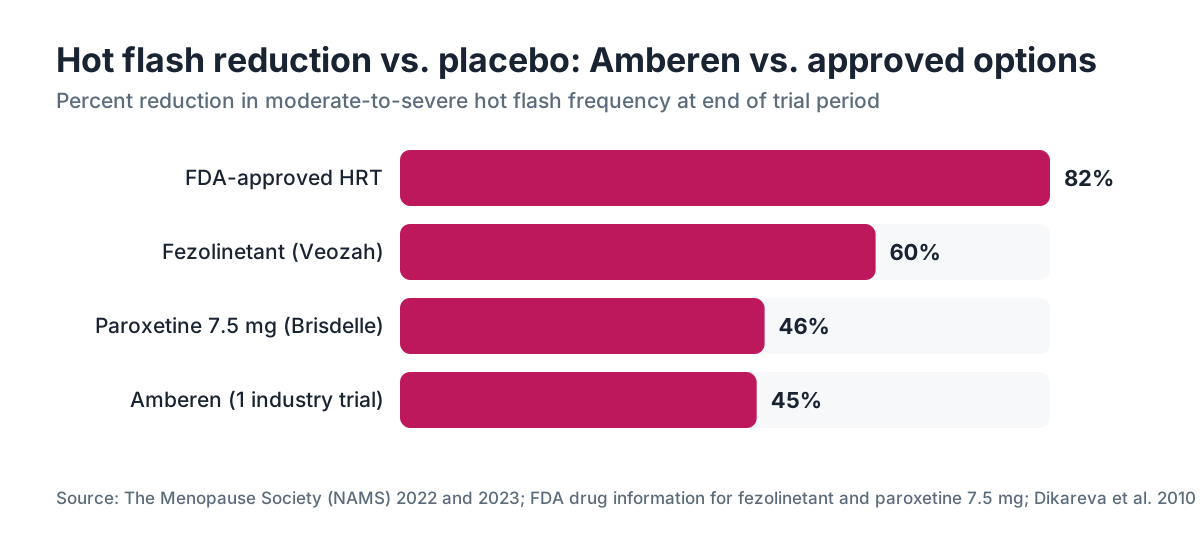
Compare that to fezolinetant (Veozah), the FDA-approved nonhormone prescription pill for moderate to severe vasomotor symptoms. Its approval rested on two phase 3 trials, each with roughly 500 to 600 women, showing about a 60 percent drop in moderate-to-severe hot flash frequency at 12 weeks versus roughly 45 percent for placebo [5]. That is the bar a real treatment clears. Amberen has not come close.
What is ammonium succinate and why does the company say it works?
Succinic acid is a natural compound in the citric acid (Krebs) cycle, the pathway your cells use to make ATP. The company's theory is that supplementing with ammonium succinate helps the hypothalamus regulate temperature and hormonal signaling more efficiently, which would then dial down vasomotor symptoms.
It is a plausible-sounding mechanism. The hypothalamus does regulate body temperature, and its sensitivity to swinging estrogen is what drives hot flashes. The trouble is the jump from "succinic acid is in the Krebs cycle" to "oral ammonium succinate fixes menopausal hot flashes." That jump needs a chain of evidence that does not exist in peer-reviewed literature outside the one company-funded trial.
Search PubMed for "ammonium succinate menopause" and you get essentially that 2010 trial plus a handful of reviews citing it. Nobody else has studied this compound in a perimenopausal population. Not automatically disqualifying. But it means the mechanism stays theoretical.
How does Amberen compare to hormone therapy for perimenopause symptoms?
This is the comparison that matters most, so here it is side by side.
| Feature | Amberen | FDA-Approved HRT | |---|---|---| | FDA approval for vasomotor symptoms | No | Yes | | Randomized trial evidence | 1 small industry-funded study | Dozens of independent trials | | Typical hot flash reduction vs. placebo | ~40-50% (single trial) | 75-90% [6] | | Addresses bone loss | No data | Yes (estrogen preserves bone density) | | Requires prescription | No | Yes | | Cost per month | ~$40-60 | $20-150+ depending on formulation | | Safety monitoring needed | None | Baseline history, periodic follow-up |
Hormone therapy is still the most effective treatment for perimenopausal symptoms. The Menopause Society's 2022 hormone therapy position statement puts it plainly: "Hormone therapy is the most effective treatment for vasomotor symptoms and the genitourinary syndrome of menopause" [4]. For women under 60 or within 10 years of their last period who have no contraindications, the benefit-risk math generally favors it.
Women who cannot take hormones, because of a history of estrogen receptor-positive breast cancer, uncontrolled hypertension, or personal preference, have other evidence-based nonhormone routes. SSRIs and SNRIs (paroxetine, venlafaxine), gabapentin, and fezolinetant all carry more rigorous evidence than Amberen [4].
If you are weighing your options, reading about hormone replacement therapy or the estrogen patch will give you a clearer picture of what those treatments actually involve.
Is Amberen safe, and are there any known side effects?
The ingredients do not raise obvious red flags for most healthy adults. Succinic acid is endogenous (your body makes it), the vitamins sit at modest doses, and glycine is an amino acid found in food. The 2010 trial reported no serious adverse events [3].
The monosodium glutamate (MSG) in the formula is worth a note for anyone sensitive to glutamate. MSG in a supplement is the same compound as in food. For most people it causes nothing. Women with a documented MSG sensitivity may get headaches or flushing.
Amberen has not been studied in women with estrogen-sensitive cancers, liver disease, or kidney disease. Because it has not been shown to have hormonal activity, the cancer-risk worry that hangs over some phytoestrogen supplements probably does not apply here. "Probably" is not the same as "studied and cleared."
Quality control is a fair concern with any supplement. DSHEA does not require third-party testing for purity, potency, or contamination before a product hits shelves [2][10]. Amberen's current packaging does not prominently show a USP, NSF, or ConsumerLab certification, which means what is in the capsule can differ from the label in ways you cannot easily check.
Does Amberen help with perimenopausal weight gain?
The product website suggests Amberen can help with weight management during perimenopause. No published trial supports a weight loss effect. The 2010 trial did not measure body weight at all.
Perimenopausal weight gain is real, and several forces push it at once: declining estrogen shifts fat toward the abdomen, metabolic rate slows, disrupted sleep raises cortisol, and many women in their 40s move less. No supplement has good evidence for reversing that pattern.
For women dealing with meaningful perimenopausal weight gain, the interventions with the clearest evidence are resistance training, higher protein intake, better sleep, and where appropriate, hormone replacement therapy to address the estrogen-driven fat redistribution. GLP-1 receptor agonists like semaglutide have strong randomized trial evidence for weight loss in women with obesity and are used more and more in perimenopausal and postmenopausal women, though they need a prescription and carry their own cost and side-effect profile. If you want the weight question in depth, semaglutide for weight loss is worth reading.
What are real alternatives to Amberen for perimenopause?
If you want to skip prescription hormones and still choose options with better evidence than Amberen, here is an honest ranking.
Fezolinetant (Veozah) is an FDA-approved nonhormone prescription pill. It blocks neurokinin B signaling in the hypothalamus, the actual pathway that drives hot flashes. It cut moderate-to-severe hot flash frequency by about 60 percent at week 12 in the SKYLIGHT 1 and SKYLIGHT 2 trials [5]. The catch is price: roughly $550 per month before insurance.
Paroxetine 7.5 mg (Brisdelle) is the only FDA-approved nonhormone drug made specifically for hot flashes. It is an SSRI at a lower dose than the antidepressant version. The effect is moderate, roughly a 33 to 60 percent reduction in hot flash frequency versus placebo in the trials behind its approval [7].
Venlafaxine, escitalopram, and gabapentin get used off-label with reasonable evidence for vasomotor symptoms. None of them require the hormonal conversation.
For women who want to stay in the supplement aisle, black cohosh has the largest research base among herbal options, though results are inconsistent and the Menopause Society does not give it a strong recommendation. S-equol (a soy isoflavone metabolite) has a small but independent evidence base. Neither matches prescription options.
Symptoms that are genuinely wrecking your quality of life deserve a real clinical conversation, not a supplement-aisle decision. Telehealth platforms like WomenRx that focus on women's hormones can help sort out whether prescription hormone therapy fits your history and symptom pattern.
How does Amberen Perimenopause differ from Amberen Menopause?
The company splits the two by intended audience. Perimenopause is marketed to women still having periods but hitting irregular cycles, mood changes, and early hot flashes. Menopause is marketed to women who have gone 12 months without a period.
The formulas are similar but not identical. Amberen Perimenopause carries a slightly different vitamin and mineral profile, and some versions add B vitamins. Neither version has its own dedicated clinical trial. The 2010 study enrolled postmenopausal women, so even the thin existing evidence applies more directly to the Menopause version than the Perimenopause one.
That leaves the controlled-trial evidence for Amberen Perimenopause specifically at essentially zero. The company is stretching an already-thin postmenopausal dataset to sell a product to a perimenopausal audience that was never studied.
If you are trying to figure out where you actually are in the transition, perimenopause age and when does menopause start will help you put your symptoms in context.
What do doctors and menopause specialists say about Amberen?
Most board-certified menopause specialists are skeptical of Amberen, mainly because the evidence is so thin. The Menopause Society (formerly NAMS) does not list it among recommended treatments in its clinical guidelines. The Endocrine Society's clinical practice guideline on menopausal symptom treatment does not mention it [8].
A gynecologist who focuses on menopause is unlikely to pick Amberen over proven options. Some primary care physicians may be neutral or simply unfamiliar with it. Women usually reach for Amberen when they are wary of hormones, lack a clinician who specializes in menopause, or want something they can grab at the drugstore.
That motivation makes sense. The menopause care gap in the U.S. is real. A 2022 survey reported in Menopause found that fewer than 20 percent of OB-GYN residency programs offer any dedicated menopause training [9]. Many women cannot easily reach a clinician who knows this area well, which is part of why supplements like Amberen keep selling.
What should I look for if I try Amberen, and when should I stop?
If you decide to try Amberen despite the weak evidence, a few practical points.
Give it a real trial period. The company recommends 90 days, which matches the one published trial. Quitting after two weeks because nothing happened is not a fair test. Ninety days is also long enough to tell whether it is doing anything useful.
Track your symptoms with numbers. Hot flashes per day and severity on a 1-10 scale take ten seconds to log in a phone note. Without a measured baseline, you cannot tell whether the supplement worked or your symptoms simply drifted better on their own.
Stop if any new symptom worries you, even one that seems unrelated. Stop if you reach 90 days with no meaningful change. At $50 a month, three months on a product that does nothing is a $150 experiment. Not catastrophic. But that is money and time that could go toward a telehealth visit with a hormone specialist.
Women with undiagnosed heavy bleeding, frequent debilitating hot flashes, significant mood disruption, or bone density concerns should not spend months on supplements. Those symptoms need diagnosis, not a supplement trial. Bone loss in particular is silent and speeds up in the first years after menopause. A bone density test is worth raising with your clinician if you have not had one.
What does the FDA say about supplements like Amberen?
The FDA regulates dietary supplements under DSHEA, signed into law in 1994. Under DSHEA, manufacturers do not have to prove safety or efficacy before selling a supplement. They must notify the FDA within 75 days of marketing a new dietary ingredient, and the label cannot claim to diagnose, treat, cure, or prevent a disease [2].
Amberen's label uses structure-function language like "relieves symptoms" and "metabolic support" instead of disease claims, which is how it stays inside DSHEA bounds. The line "These statements have not been evaluated by the Food and Drug Administration. This product is not intended to diagnose, treat, cure, or prevent any disease" is legally required. It is not a minor footnote. It is the company telling you, in the exact words DSHEA demands, that it has not proven the product works.
The FDA has taken action against supplement companies making hormone-like claims without evidence. Amberen has not been the subject of a public FDA warning letter as of this writing. That absence of enforcement does not mean the product works.
Frequently asked questions
Does Amberen actually work for hot flashes?
One small, company-funded trial found statistically significant reductions in hot flash frequency in postmenopausal women over 90 days. No independent group has replicated it. There is no trial in perimenopausal women. The effect, if real, looks much smaller than what FDA-approved hormone therapy or fezolinetant produces. Most menopause specialists would not rank it among evidence-based options.
How long does it take for Amberen to start working?
The manufacturer and the 2010 trial both used a 90-day treatment period. If you try it, give it three months before deciding it isn't working. Some women report changes in four to six weeks, but that timeframe comes from anecdote, not a controlled study.
Can I take Amberen while still having periods?
Amberen Perimenopause is marketed to women who still have periods but have perimenopausal symptoms. Nothing in its ingredient list is contraindicated for menstruating women in principle. But very irregular or very heavy cycles need clinical evaluation, not a supplement. Irregular bleeding can have causes other than perimenopause.
Is Amberen FDA approved?
No. Amberen is a dietary supplement regulated under DSHEA, not an FDA-approved drug. The FDA has not reviewed or approved it for safety or efficacy. The disclaimer on every box, that it is not intended to diagnose, treat, cure, or prevent any disease, is the DSHEA-required language confirming it never went through drug approval.
What are the side effects of Amberen?
The 2010 trial reported no serious adverse events. The most commonly noted mild effects are headache and nausea in a small number of users. The formula includes monosodium glutamate, which some women are sensitive to. There is no long-term safety data beyond 90 days. Women with estrogen-sensitive cancers, liver, or kidney disease should ask a physician before taking any supplement, Amberen included.
Can Amberen raise estrogen levels?
The manufacturer does not claim Amberen raises estrogen, and the one published trial did not measure hormone levels. The proposed mechanism is hypothalamic "metabolic support" rather than estrogenic activity. No published evidence shows Amberen changes FSH, LH, or estradiol. If you need to raise or stabilize estrogen, that takes prescription hormone therapy.
How does Amberen compare to black cohosh?
Black cohosh has a larger research base than Amberen, with multiple independent trials over more than 20 years, though results are mixed and the Menopause Society does not strongly recommend it. Amberen has one industry-funded trial. Neither is FDA-approved, neither matches hormone therapy for efficacy, and both are low-probability bets. Black cohosh has slightly more independent scrutiny.
Does Amberen help with perimenopausal weight gain?
No published evidence shows Amberen causes weight loss or prevents perimenopausal weight gain. The 2010 trial did not measure body weight. The company's weight-related marketing language has no clinical data behind it. Perimenopausal weight changes respond better to resistance training, protein intake, sleep quality, and, for eligible women, hormone therapy or GLP-1 medications.
Can I take Amberen with hormone therapy or antidepressants?
No formal drug interaction studies exist for Amberen. The ingredients at the listed doses have no well-documented interactions with standard HRT formulations or SSRIs. Still, combining supplements with prescription medications should go through your prescribing clinician, since some supplement ingredients affect drug metabolism. There is no published data confirming it is safe in combination.
Where can I buy Amberen and how much does it cost?
Amberen sells without a prescription at CVS, Walgreens, Target, Walmart, and Amazon. A one-month supply (60 capsules) usually costs $40 to $60. The company offers multi-month packages at a slight discount on its site. No insurance covers it because it is not an FDA-approved drug. Some prescription hormone therapies cost less per month after insurance.
Is Amberen safe for women who had breast cancer?
There is no data on Amberen in breast cancer survivors. The compound does not appear to have estrogenic activity, which is the main concern for estrogen receptor-positive survivors, but it has never been studied in this group. Women with a history of breast cancer should ask their oncologist before starting any supplement that claims to affect hormonal symptoms.
What is the difference between perimenopause and menopause?
Perimenopause is the transition phase, usually lasting four to eight years, when estrogen and progesterone fluctuate and cycles turn irregular. Menopause is the single point after 12 consecutive months without a period, typically around age 51 in the U.S. Symptoms can occur across both phases. The article on perimenopause age covers the timing in detail.
Sources
- Lunada Biomedical / Amberen product label (as reviewed in Dikareva et al., Gynecological Endocrinology, 2010)
- FDA, Dietary Supplements overview (DSHEA)
- Dikareva AV et al., "A randomized, double-blind, placebo-controlled study of Amberen," Gynecological Endocrinology, 2010
- The Menopause Society (NAMS), 2022 Hormone Therapy Position Statement and 2023 Nonhormone Therapy Position Statement
- FDA, Veozah (fezolinetant) drug information and approval
- The Menopause Society (NAMS), 2022 Hormone Therapy Position Statement
- FDA, Brisdelle (paroxetine 7.5 mg) drug information and approval
- Endocrine Society, Clinical Practice Guideline: Treatment of Symptoms of the Menopause, 2015
- Kling JM et al., survey of menopause training in U.S. OB-GYN residencies, reported in Menopause, 2022
- NIH Office of Dietary Supplements, Dietary Supplements: What You Need to Know