Am I in perimenopause? Symptoms, signs, and how to know
TL;DR: Perimenopause is the hormonal transition before your final period. It lasts four to eight years on average and usually starts in the mid-to-late 40s, though it can begin in the late 30s. Irregular periods, hot flashes, disrupted sleep, and mood changes are the most common signs. No single blood test confirms it. Your symptom pattern, cycle history, and sometimes FSH and estradiol together tell the story.
What is perimenopause, exactly?
Perimenopause means "around menopause." It's the stretch of time when your ovaries make less estrogen and progesterone, but you haven't yet gone 12 straight months without a period. That 12-month mark is the clinical line that defines menopause itself.
The transition is not one event. It's a hormonal reorganization that plays out over years. Estrogen doesn't decline in a tidy downward line. It swings. Some months estrogen surges well above your reproductive-age baseline before dropping again, which is why so many women get blindsided by symptoms they never saw coming.
The North American Menopause Society (NAMS) splits perimenopause into early and late stages. In early perimenopause, your cycle length shifts but you still ovulate fairly regularly. In late perimenopause, you might go 60 days or more between periods, ovulation gets sporadic, and symptoms tend to intensify. [1]
Here's what gets missed: perimenopause is not a disease. It's also not something you have to white-knuckle through. Real treatments exist, backed by real evidence, and the first step is naming what's actually happening in your body.
What age does perimenopause usually start?
Most women enter perimenopause between 45 and 55, with the average onset around 47 to 48. [2] But "most" leaves a lot of room. About 10% of women reach menopause before 45, and roughly 1% hit premature ovarian insufficiency (POI) before 40. [3]
If you're in your late 30s and your cycles are changing, take that seriously. See perimenopause age for a fuller breakdown of onset ranges by race and family history.
Race matters here more than medicine used to admit. The SWAN study (Study of Women's Health Across the Nation) tracked over 3,300 women for more than 20 years. It found that Black women entered perimenopause about two years earlier than white women on average, and had more frequent and more severe hot flashes. [2] Hispanic and Asian women showed different symptom profiles again. Your doctor's "you're too young" may be quoting a population average that doesn't describe you.
Family history is a strong predictor too. If your mother or older sister hit menopause early, your odds of doing the same go up meaningfully. Smoking pulls the whole timeline forward by roughly two years. [4] Chemotherapy and certain surgeries can trigger it at any age.
What are the most common perimenopause symptoms?
The symptom list is long, and that length is part of the problem. So many of these signs get pinned on stress, bad sleep, depression, or "just getting older." Here's what the evidence actually shows is common.
Menstrual irregularity is the defining feature of early perimenopause. Cycles may get shorter (under 25 days), then longer (over 38 days), or just unpredictable. The STRAW+10 staging system, built by reproductive scientists and endorsed by NAMS and the Endocrine Society, uses cycle length variability as its primary criterion. [1]
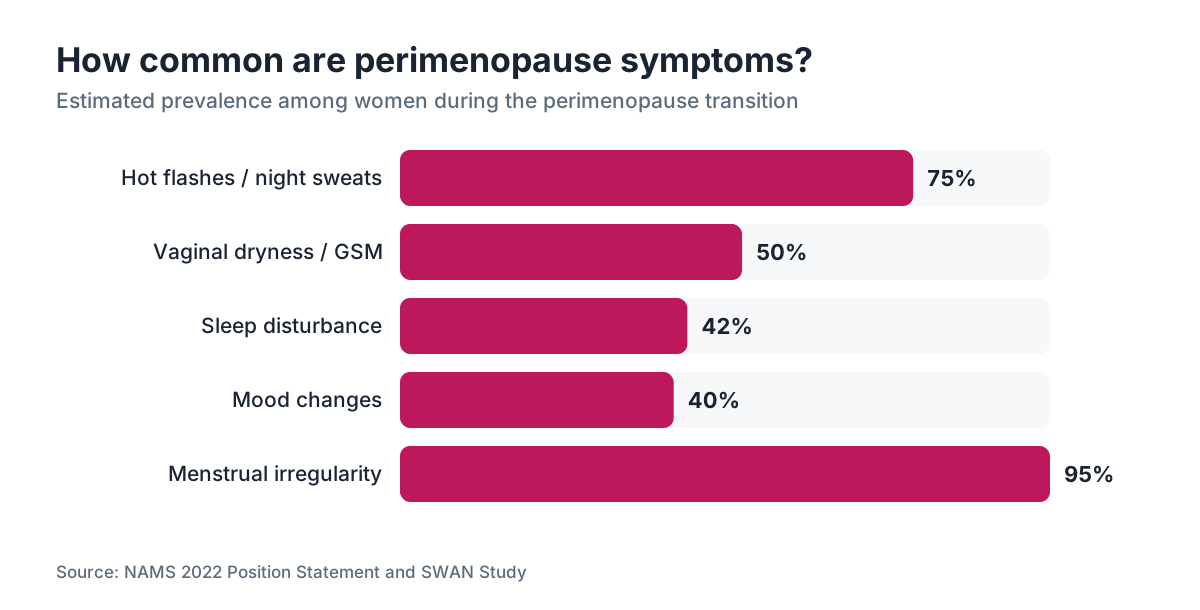
Vasomotor symptoms (hot flashes and night sweats) affect roughly 75% of women during the transition. [5] They can start two to three years before your last period and hang on well into postmenopause. Hot flashes aren't only uncomfortable. They're linked to poorer cardiovascular markers and to sleep loss bad enough to dent daytime thinking.
Sleep problems show up in over 40% of perimenopausal women, and the cause runs on more than one track: night sweats interrupt sleep directly, but falling progesterone also cuts slow-wave sleep on its own. [6]
Mood changes (irritability, anxiety, low mood) are real and hormonally driven, more than a reaction to a stressful life. Estrogen tunes serotonin and dopamine signaling. When estrogen goes erratic, mood tends to follow.
Cognitive changes like word-finding trouble and brain fog come up often, though the research on long-term cognitive effects is still moving.
Vaginal and urinary symptoms from falling estrogen include dryness, pain with sex, and more urgency or repeat UTIs. Together these are called genitourinary syndrome of menopause (GSM), and they affect roughly 50% of women in the transition. [5]
Other symptoms include joint pain, heart palpitations, lower libido, and changes in hair and skin. Some track to estrogen. Some track to progesterone. Some reflect how declining ovarian hormones knock into other systems like the thyroid. None of them should be waved off.
| Symptom | Estimated prevalence in perimenopause | Notes | |---|---|---| | Menstrual irregularity | Nearly universal | Defining feature of perimenopause | | Hot flashes / night sweats | ~75% | Can start years before last period | | Sleep disturbance | >40% | Multiple causes at once | | Mood changes | ~40% | Especially in late perimenopause | | Vaginal dryness / GSM | ~50% | Often under-reported | | Cognitive / brain fog | Variable | Research still evolving |
Can a blood test confirm perimenopause?
Short answer: not reliably, if you still have your uterus and are menstruating. This is where a lot of women get stuck. They go in, get labs, come back to results that "look normal," and get told they're probably just stressed.
FSH (follicle-stimulating hormone) and estradiol swing so hard during the transition that a single reading can mislead you completely. The Endocrine Society's clinical practice guideline says that in women over 45 with typical symptoms, the diagnosis should be clinical, based on symptom pattern and menstrual history, not on lab values. [7]
Labs still earn their place in specific situations.
FSH above 25 IU/L on two separate draws, taken on cycle days 2 to 5, points toward reduced ovarian reserve, though the numbers stay unreliable through perimenopause because they bounce. [7]
Estradiol below 30 pg/mL paired with symptoms and cycle changes fits late perimenopause or early postmenopause.
Anti-Mullerian hormone (AMH) holds steadier across the cycle and reads ovarian reserve better, but it isn't part of standard diagnostic criteria yet.
Thyroid testing belongs in the workup because hypothyroidism and perimenopause symptoms overlap heavily. Any evaluation should include TSH.
If you're under 40 and something feels off, labs matter far more, because POI (premature ovarian insufficiency) has to be ruled out or caught. The Endocrine Society recommends measuring FSH twice, four to six weeks apart, to diagnose POI. [3]
The practical move: bring a symptom diary to your appointment, more than a request for labs. Track cycle lengths, symptom timing, and severity. That pattern is diagnostic data.
How is perimenopause different from menopause?
Menopause is a single point in time: your final period, confirmed only after 12 months with no more periods. Everything from the first hormonal wobble up to that point is perimenopause. Everything after is postmenopause. Simple line, constantly blurred.
In practice, you don't know your last period was your last until a full year has passed. That's one reason the language trips people up. Plenty of women say "I'm in menopause" when they mean perimenopause. The distinction matters because treatment decisions shift a little depending on where you sit in the transition.
See menopause for the full clinical picture of life after the transition, and when does menopause start if you're trying to estimate your own timeline.
The average age of natural menopause in the US is 51 to 52. [4] From the start of perimenopause to the final period, most women spend four to eight years in transition, though the honest range runs from two to twelve years.
Why do perimenopause symptoms get misdiagnosed?
This happens constantly, and it deserves to be said plainly. Women in their late 30s and early 40s who report broken sleep, anxiety, irregular periods, and palpitations get handed diagnoses of generalized anxiety disorder, clinical depression, or thyroid disease. Sometimes those are right. Often they're incomplete.
A few things drive the pattern. The perimenopause symptom list overlaps heavily with anxiety and depression. Many physicians never got much training on hormonal transitions in women under 45. And the old story that menopause happens to "older" women means a 41-year-old having hot flashes often doesn't connect the dots herself.
Work drawn from the Menopause journal (published by NAMS) points to years of lag between symptom onset and a correct perimenopause diagnosis for many women. [1] That's years of unnecessary suffering and, in some cases, treatment aimed at the wrong target.
If you've been put on antidepressants for symptoms that feel more physical than mental, or your doctor blamed stress without ever checking hormones, asking for a fuller evaluation is entirely reasonable. A second opinion from a NAMS-certified menopause practitioner is often the fastest way through.
What makes perimenopause symptoms worse?
Several things can crank up the severity and stretch out the duration of perimenopause symptoms.
Smoking is the most consistently documented amplifier. Women who smoke reach menopause one to two years earlier and report more severe vasomotor symptoms. [4]
High BMI links to more severe hot flashes in postmenopause, though the relationship during perimenopause is messier. Fat tissue makes estrone (a weaker estrogen), so higher body fat can blunt some symptoms while prolonging the transition and raising other risks.
Chronic stress pushes up cortisol, which competes with progesterone at the receptor and can worsen sleep, mood swings, and hot flashes.
Poor sleep builds a loop: hormonal shifts wreck sleep, and sleep loss ramps up how sharply you feel those hormonal shifts.
Alcohol widens blood vessels and reliably triggers hot flashes. It also fractures sleep architecture and, taken regularly, raises breast cancer risk, which feeds into treatment decisions.
Diet quality counts. The WHI Dietary Modification Trial found no major menopausal symptom benefit from low-fat eating, but clinical data suggest high-glycemic diets may push hot flash frequency up. A Mediterranean-style pattern is the most evidence-consistent recommendation for perimenopausal women overall. [5]
What treatments actually help perimenopause symptoms?
The evidence here is clearer than most women get told. Start with what works best.
Hormone therapy (HT) is the most effective treatment for vasomotor symptoms, sleep disruption, and GSM, and it's the standard of care per both NAMS and the Endocrine Society for healthy women under 60 or within 10 years of menopause onset who have no contraindications. [5] The 2022 NAMS position statement puts it directly: "For women aged younger than 60 years or who are within 10 years of menopause onset and have no contraindications, the benefit-risk ratio is favorable for treatment of bothersome vasomotor symptoms." [5]
HT comes in many forms. Systemic estrogen (pills, patches, gels, sprays) covers hot flashes, sleep, mood, and bone density. Local vaginal estrogen or ospemifene handles GSM with little systemic absorption. Estrogen patches are a common delivery method, often preferred because they skip liver first-pass metabolism. Adding progesterone is required if you have a uterus, to protect the uterine lining.
Non-hormonal prescription options include fezolinetant (Veozah), an NK3 receptor antagonist for hot flashes that the FDA approved in 2023. [8] Paroxetine 7.5 mg (Brisdelle) is the only SSRI with an FDA indication for hot flashes. Gabapentin and clonidine have some data but more side effects.
Behavioral approaches like cognitive behavioral therapy for menopause (CBT-M) have randomized trial support for easing hot flash distress and improving sleep. Clinical hypnosis has cut hot flash frequency in NIH-funded trials.
Lifestyle changes like aerobic exercise, cooling techniques, and dodging triggers (alcohol, spice, heat) lower symptom burden in many women without touching the underlying cause.
For women gaining weight during perimenopause, the hormonal shift does drive metabolic changes and more visceral fat, separate from how much you eat. GLP-1 receptor agonists like semaglutide have their own evidence for metabolic and weight outcomes and may fit some women, though they don't touch the estrogen decline itself. A telehealth provider like WomenRx can look at both hormonal and metabolic needs in one visit, which helps because the two problems feed each other.
For a full look at hormone therapy choices, see hormone replacement therapy.
Does perimenopause affect bone density?
Yes, and the loss starts earlier than most people think. Bone loss speeds up during the perimenopausal transition and rolls on into early postmenopause. The Bone Health and Osteoporosis Foundation estimates women lose up to 20% of their bone density in the five to seven years after menopause. [6] Because that loss begins during perimenopause, not after it, this window is the one to act in.
Estrogen is a primary regulator of bone turnover. As it drops, osteoclast activity (bone breakdown) outruns osteoblast activity (bone building). The result is steady loss that stays silent until a fracture announces it.
The US Preventive Services Task Force recommends bone density testing (DEXA scan) for all women at 65, and for younger postmenopausal women with elevated fracture risk. [9] Some clinicians screen earlier in women with several risk factors. A bone density test gives you a baseline and tracks change over time.
Hormone therapy preserves bone density during the transition and lowers fracture risk. That's one of the clearest HT benefits, and it lasts beyond symptom relief.
When should I see a doctor about perimenopause symptoms?
Sooner than most women wait. That's the whole answer.
Many women stall because they're told their labs are normal, their symptoms are just stress, or they're "too young." Don't absorb that. If your periods have changed in length or regularity, if you're waking at 3 AM and can't drop back off, if your mood has shifted in ways that feel unlike your baseline, and especially if any of this kicked off in your late 30s or early 40s, those symptoms earn a real evaluation.
Get care promptly if:
You're under 40 and having these symptoms. POI needs evaluation and monitoring for cardiovascular and bone health.
You're bleeding very heavily or between periods. That always warrants a workup to rule out uterine pathology.
Symptoms are hitting your quality of life hard. That's not a bar to feel embarrassed about. It's a clinical indication.
You want to understand your options before things get worse. Starting early gives you more room to choose.
When you do see a provider, the STRAW+10 staging framework is the standard tool for placing you in the transition. Read up on it beforehand. The questions your provider should ask: how long are your cycles, how have they changed in the past year, and which symptoms bother you most? If they don't ask, volunteer it.
WomenRx evaluates perimenopausal symptoms through a hormone-focused lens, with options for both hormone therapy and metabolic support when that fits your situation.
What's the difference between perimenopause weight gain and regular weight gain?
They overlap, but perimenopause has its own mechanism. That's the honest version.
Falling estrogen shifts fat distribution toward visceral (abdominal) fat. This happens even in women whose total weight holds steady. Data from the SWAN cohort show intraabdominal fat climbs during the menopausal transition independent of aging and calorie intake. [2]
Metabolic rate changes too. Lean muscle drops with age, and estrogen had been propping up insulin sensitivity. As estrogen falls, glucose metabolism gets less efficient.
So "doing the same things and gaining weight anyway" is a real experience with a physiological basis. It is not a character flaw.
Exercise, especially resistance training, is the most evidence-consistent move for holding onto muscle and metabolic function during perimenopause. Hormone therapy can help with fat redistribution. For women with real weight or metabolic concerns, see semaglutide for weight loss for what the evidence shows about GLP-1 options in midlife women.
How long does perimenopause last?
Four to eight years on average, but the range is genuinely wide. Some women move through in two years. Others sit in the transition for a decade or more.
The late stage, defined by cycle intervals of 60 days or more, tends to run one to three years before the final period. [1] Once you clear 12 months without a period, you're in postmenopause, and symptoms often settle, though they don't always vanish.
Here's what nobody tells you: you can't know where you are in the transition in real time. You can estimate from cycle patterns and symptoms. You cannot confirm your last period was your last until 12 months have gone by. That uncertainty is real, and it's exactly why tracking cycles and symptoms in a journal or app over time gives your provider something useful to work with.
If you want typical timelines by age and stage, see menopause age for the full breakdown.
Frequently asked questions
Can I get pregnant during perimenopause?
Yes, and it surprises many women. You can ovulate sporadically throughout perimenopause, so pregnancy is possible even with irregular periods. Contraception is recommended until you've gone 12 full months without a period. Hormonal IUDs and progestin-only methods get used often in this phase because they also manage heavy bleeding.
What is the STRAW+10 staging system and why does it matter?
STRAW+10 (Stages of Reproductive Aging Workshop) is the clinical framework doctors use to place a woman in the menstrual transition. It uses cycle length variability as the primary marker. Stage minus 2 is early perimenopause (cycles vary by 7 or more days). Stage minus 1 is late perimenopause (60-plus day gaps). It's the most reproducible staging tool available and it guides treatment decisions.
Is perimenopause the same as premenopause?
No. Premenopause usually means the whole reproductive stretch before any transition begins. Perimenopause is the active hormonal transition, with measurable changes in cycle patterns and hormone levels. The terms get swapped in casual talk, but clinically they mark different stages. If your doctor says premenopause, ask them to place you on the STRAW+10 scale.
Do hot flashes always happen in perimenopause?
No. About 25% of women go through perimenopause without significant vasomotor symptoms. Likelihood and severity vary by race, BMI, smoking status, and individual physiology. No hot flashes doesn't mean you're not in perimenopause. Cycle changes and other symptoms can be your main signal.
Can anxiety be a sign of perimenopause?
Yes. Estrogen and progesterone both modulate GABA and serotonin pathways. When these hormones go erratic, anxiety, often described as feeling wired, on edge, or suddenly prone to panic, shows up commonly. It's especially true in late perimenopause. If your anxiety started or worsened alongside cycle changes, a hormonal evaluation makes sense before assuming a primary anxiety disorder.
What is premature ovarian insufficiency (POI) and how is it different from early perimenopause?
POI is loss of normal ovarian function before age 40, affecting about 1% of women. Unlike early perimenopause, which is a gradual transition, POI involves clearly elevated FSH (above 25 IU/L on two measurements four to six weeks apart) and low estradiol. Women with POI carry higher long-term risks for cardiovascular disease, osteoporosis, and cognitive changes, and typically need hormone therapy until the average age of natural menopause.
Can perimenopause cause hair loss?
Yes. Falling estrogen and progesterone, paired with a relative rise in androgenic influence, can trigger female-pattern hair thinning during perimenopause. Thyroid dysfunction (also more common in this age group) can cause hair loss too, so check both. Hormone therapy may help some women, but hair loss usually has more than one contributing factor.
Should I take supplements for perimenopause symptoms?
The evidence for most supplements is weak. Black cohosh has mixed trial results and some safety signals with prolonged use. Phytoestrogens (soy isoflavones) show modest data for hot flash reduction in some women. Magnesium glycinate has reasonable support for sleep. Vitamin D and calcium matter for bone health. No supplement matches hormone therapy for symptom severity. Be wary of anything marketed with exaggerated claims.
How does perimenopause affect sleep?
Several mechanisms run at once. Night sweats physically break up sleep by triggering arousal from slow-wave sleep. Progesterone, which has mild sedating properties, declines during perimenopause and lowers sleep quality on its own. Estrogen also affects circadian rhythm. The result is trouble falling asleep, frequent waking, and early morning waking. Hormone therapy addresses the hormonal root. CBT for insomnia is also well-supported.
Can my gynecologist diagnose perimenopause, or do I need a specialist?
Your gynecologist can and should diagnose and manage perimenopause, and many do it well. But not every physician gets extensive training in menopausal medicine. If you feel dismissed or undertreated, ask for a referral to a NAMS-certified menopause practitioner. The NAMS website keeps a provider directory you can search by location.
Will hormone therapy make me gain weight?
This is one of the most persistent myths. The evidence doesn't support weight gain from modern hormone therapy. The WHI study that fueled the fear used oral conjugated equine estrogen with medroxyprogesterone acetate at higher doses than current practice. Current lower-dose transdermal formulations don't cause weight gain in clinical trials and may actually help prevent the visceral fat shift that comes with estrogen decline.
Is perimenopause hereditary?
Timing looks substantially heritable. Studies of twins and mother-daughter pairs show age at menopause correlates more strongly with maternal age at menopause than with most environmental factors. If your mother had an early or late transition, that's useful predictive information. Genetics also shape symptom severity to some degree, though the mechanism isn't fully mapped.
What's the difference between perimenopause and thyroid problems?
The overlap is real and matters. Hypothyroidism causes fatigue, weight gain, mood changes, irregular periods, and brain fog. Perimenopause causes all of those too. Many women have both. A TSH test belongs in any perimenopause workup. Treating thyroid dysfunction alone may not clear every symptom if estrogen decline is also contributing, and vice versa.
How do I track perimenopause symptoms effectively?
Log your cycle start dates and lengths, and rate your most bothersome symptoms (hot flashes, sleep, mood, energy) on a simple 1-to-5 scale daily or weekly. Apps like Clue or Apple Health work for cycle tracking. A three-month log gives your provider meaningful pattern data. The Menopause Rating Scale is a validated symptom questionnaire used in research that you can complete and bring in.
Sources
- North American Menopause Society (NAMS), Menopause journal, STRAW+10 staging criteria
- Study of Women's Health Across the Nation (SWAN), University of Michigan / NIH
- Endocrine Society, Clinical Practice Guideline on Primary Ovarian Insufficiency
- Office on Women's Health, U.S. Department of Health and Human Services, Menopause page
- North American Menopause Society, 2022 Hormone Therapy Position Statement
- Bone Health and Osteoporosis Foundation (formerly National Osteoporosis Foundation)
- Endocrine Society, Clinical Practice Guideline on Menopause, 2015
- U.S. Food and Drug Administration (FDA), Veozah (fezolinetant) approval
- U.S. Preventive Services Task Force, Osteoporosis Screening Recommendation
- NIH National Institute on Aging, Menopause page