Will I lose weight if I stop HRT? What the evidence says
TL;DR: Stopping HRT is unlikely to cause weight loss. Most women stay the same weight or gain fat, especially around the abdomen, because estrogen loss speeds up the metabolic shift that drives menopause weight gain. The evidence shows HRT is weight-neutral to mildly protective against fat gain, not a cause of it.
What actually happens to your weight when you stop HRT?
Most women do not lose weight after stopping hormone replacement therapy. The evidence points the other way. Discontinuing estrogen-based HRT tends to track with fat gain, particularly visceral fat around the abdomen, not fat loss.
The confusion is understandable. Many women start HRT around perimenopause and notice weight creeping up at the same time. Blaming the hormones feels logical. But the timing is coincidental, not causal. Perimenopause itself, roughly ages 45 to 55 for most women, brings a metabolic slowdown driven by declining estrogen that happens whether or not you use HRT. [1]
When you stop HRT, you remove exogenous estrogen and your body drops back to its post-menopausal hormonal baseline. That baseline is the one most tied to central fat accumulation. So the real question is not "will I lose weight if I stop HRT?" It is "was HRT protecting me from gaining more?" The evidence says, modestly, yes.
Nobody should expect dramatic changes in either direction. Weight is shaped by dozens of variables. But if you stop HRT hoping the scale will drop, you are likely to be disappointed, and you may watch it move the other way.
Does HRT cause weight gain in the first place?
No, not meaningfully. HRT has a reputation for packing on pounds, and the clinical data does not back that reputation up. This is the root of the whole misunderstanding.
The Women's Health Initiative (WHI), one of the largest randomized controlled trials of HRT ever run, followed tens of thousands of postmenopausal women and found that conjugated equine estrogen plus medroxyprogesterone acetate did not cause significantly more weight gain than placebo over several years. [2] A Cochrane review of HRT and body weight reached the same place: combined or estrogen-only HRT produced little to no difference in body weight versus placebo in trials lasting up to two years. [3]
Where does the myth come from? A few places. The earliest oral contraceptives and some older progestins did cause fluid retention and appetite changes. Some women retain a little water when starting HRT, which shows on the scale in the first few weeks. And the timing of starting HRT overlaps with an age-related metabolic shift that drives weight gain on its own.
The type of progestogen matters a bit. Synthetic progestins like medroxyprogesterone acetate have glucocorticoid and androgen receptor activity that can cause fluid retention and insulin resistance in some women. Micronized progesterone (body-identical) is generally considered more weight-neutral. But neither form drives fat accumulation in any real way once you look at the data closely.
What does estrogen actually do to fat distribution?
Estrogen decides where your body parks fat. Before menopause, most women store it peripherally, in the hips, thighs, and breasts. That pattern is largely estrogen-driven. As estrogen falls after menopause, fat shifts toward the abdomen and the visceral depots deep around the organs. This is the "menopause belly" that shows up in many women's late 40s and 50s. [1]
Visceral fat is metabolically active in a harmful way. It pumps out inflammatory cytokines, worsens insulin sensitivity, and raises cardiovascular risk. This is not cosmetic. It is a genuine health concern.
Estrogen also affects resting metabolic rate, appetite regulation through leptin and ghrelin, and muscle mass preservation. When estrogen drops, metabolic rate slows and appetite signals can get noisy. HRT does not fully reverse this, but it does appear to blunt the size of the shift. [4]
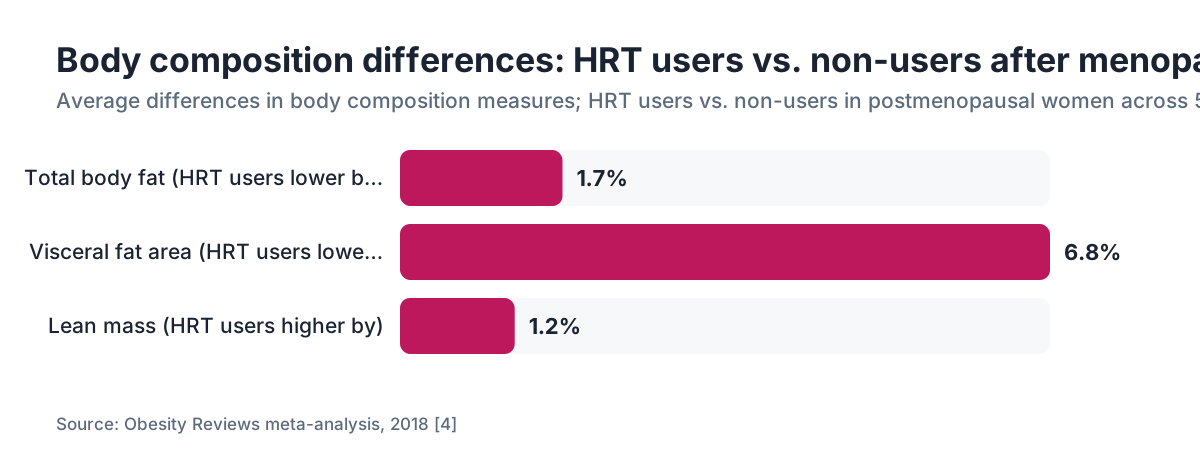
A 2018 meta-analysis in Obesity Reviews found that postmenopausal women on HRT carried significantly less visceral fat and a lower total body fat percentage than postmenopausal women not on HRT. [4] The effect was modest but held up across studies. Stop HRT and you give up that modest protection.
The chart below sums up what the data shows about body composition with and without HRT.
How much weight might I gain after stopping HRT?
There is no clean single number, because the studies differ in design, length, and population. The honest answer: individual variation is enormous.
Some women notice nothing after stopping. Others report gaining 5 to 10 pounds over six to twelve months, most of it around the middle. A subset get slammed with hot flashes and sleep disruption after stopping, and chronic sleep disruption is itself strongly tied to weight gain through cortisol and ghrelin dysregulation.
The Women's Health Initiative showed that women who stopped HRT mid-trial had a modest increase in abdominal adiposity compared to those who kept going, though the size of the effect was not large. [2]
There is a practical pathway here too. Stopping HRT often brings back vasomotor symptoms (hot flashes, night sweats) and sleep problems. Poor sleep raises cortisol. Elevated cortisol promotes fat storage and cranks up cravings for calorie-dense food. Plenty of women who gain weight after stopping HRT are gaining it partly through this sleep-stress route, not directly through the hormonal change.
The bottom line on numbers: do not expect to lose weight by stopping. Budget instead for the possibility of a 3 to 8 pound shift in the wrong direction over the first year, concentrated at the waist.
Are there any circumstances where stopping HRT could lead to weight loss?
Yes, a few narrow ones worth being honest about.
If you take a progestin-containing HRT and hold noticeable fluid, stopping could drop a few pounds of water weight. That is not fat loss, and it probably will not last.
If your formulation was a poorly matched dose causing metabolic effects (uncommon, but possible with certain synthetic progestins at high doses), switching or stopping might normalize some of that.
Some women take HRT alongside other medications or habits that are the real drivers of weight gain. If stopping HRT happens to coincide with a diet change or more exercise, the weight loss comes from those changes, not from ditching the hormones.
Then there is the psychological piece. If a woman is convinced HRT is behind her weight gain, deciding to stop may push her to change behaviors. The behavior does the work. The hormone change gets the credit.
These cases are real but narrow. For the average perimenopausal or postmenopausal woman, stopping HRT is not a weight loss strategy. The physiology just does not work that way.
What does the research say about HRT and body composition specifically?
Body weight is a crude measure. Body composition, the ratio of fat to lean mass, tells the more useful story, and this is where the HRT data gets interesting.
The 2018 Obesity Reviews meta-analysis, which pooled 59 studies, found that HRT users had less total body fat, less visceral fat, and more lean mass than non-users in postmenopausal populations. [4] The difference in body fat percentage averaged around 1 to 2 points. That sounds small. It translates to several pounds of fat mass and a meaningfully different metabolic risk profile.
The KEEPS trial (Kronos Early Estrogen Prevention Study) found that women on transdermal estradiol had better insulin sensitivity and less abdominal fat accumulation over four years than placebo, though again the effects were modest. [5]
Muscle is the underappreciated part of this conversation. Estrogen has a direct role in muscle protein synthesis. Postmenopausal women lose muscle faster than premenopausal women, a process called sarcopenia. HRT partly slows it. More muscle means a higher resting metabolic rate. Stopping HRT can speed muscle loss, which compounds over years into a slower metabolism and more fat. [4]
So even if the scale barely moves after you stop, what is under your skin may shift in a way that matters clinically.
What actually works for weight loss during and after menopause?
Hormones matter, but they are not the main lever for weight loss. The main levers are caloric intake, muscle mass, and sleep quality. Menopause complicates all three. Each is fixable.
Strength training is probably the highest-value single intervention for menopausal weight management. It preserves and builds muscle, raises resting metabolic rate, improves insulin sensitivity, and protects bone. [6] Two sessions a week hitting the major muscle groups is a reasonable floor.
Protein intake matters more after 45. Most women eat nowhere near enough to hold onto muscle through the fast hormonal shifts of perimenopause and menopause. Muscle physiology research supports a target of 1.2 to 1.6 grams per kilogram of body weight per day, though a dietitian can personalize that number for you.
Sleep is non-negotiable. Losing even one to two hours a night, chronically, is associated with meaningfully higher weight gain risk. This is an underrated argument for treating vasomotor symptoms aggressively: if HRT quiets your hot flashes and lets you sleep, the downstream metabolic payoff of that sleep is real.
For women who need more help, semaglutide for weight loss and other GLP-1 receptor agonists are now being used in perimenopausal and postmenopausal women with obesity. The STEP 1 trial showed roughly 15% average body weight reduction with semaglutide 2.4 mg weekly over 68 weeks, and interest is growing in how GLP-1 medications interact with the hormonal environment of menopause. [7] At WomenRx, we work with women living at exactly this intersection of hormone changes and weight.
For the wider hormonal backdrop, see our guide to menopause and our piece on when does menopause start.
Should I stop HRT to lose weight?
Based on the evidence, stopping HRT specifically to lose weight is unlikely to work and may backfire.
The North American Menopause Society (NAMS) states in its clinical guidance that HRT "does not cause weight gain," and it notes the perception of HRT-related weight gain is largely driven by the metabolic changes of the menopause transition itself. [1]
If you are thinking about stopping HRT for other reasons, breast cancer risk concerns, personal preference after a stretch of use, or resolved symptoms, those are all reasonable conversations to have with your prescriber. Just leave "it will help me lose weight" off the list, because the evidence does not support it.
If you are frustrated with your weight and suspect your HRT prescription is the problem, the more useful questions are these. Is the formulation right? Is the dose appropriate? Could the progestogen be swapped for something more weight-neutral? Could strength training, protein, sleep work, or a GLP-1 medication go alongside your HRT rather than replacing it?
Read more on the full picture of hormone replacement therapy and on delivery methods like the estrogen patch to see what your options look like.
What are the risks of stopping HRT abruptly?
Weight is one consideration. Symptom rebound is the more immediate one for most women.
Stopping HRT abruptly, especially estrogen, commonly triggers a return or worsening of vasomotor symptoms: hot flashes, night sweats, insomnia, mood changes. Some women get hit harder after stopping than before they ever started, a pattern sometimes called the "rebound effect," though the physiology behind it is not fully mapped.
The Endocrine Society recommends tapering HRT rather than stopping cold when discontinuation is the goal, partly to hold down symptom rebound. [8] Ask your prescriber about a tapering schedule if you plan to stop.
Bone density is the longer-term concern. Estrogen is a key regulator of bone remodeling. The fastest bone loss in women happens in the first five years after menopause, and HRT gives real protection against it. Stop HRT and that protection goes with it. Getting a bone density test before and after stopping is reasonable if you are at elevated osteoporosis risk. [6]
Cardiovascular effects hinge on timing. The "timing hypothesis" in HRT research holds that estrogen started within ten years of menopause or before age 60 tends to help the heart, while starting later may carry risk. Stopping earlier in that window likely carries less cardiovascular downside than stopping after many years. [2]
None of this means you must stay on HRT forever. It means the decision deserves a real conversation with a clinician who knows your history, not a solo call made in the hope of dropping a few pounds.
What if I want to lose weight and stay on HRT?
This is the combination the evidence supports best. There is no reason you cannot chase both at once.
HRT manages the hormonal environment: protecting bone, easing vasomotor symptoms, modestly blunting the fat redistribution of menopause. Weight loss tools (diet, strength training, sleep, and where appropriate GLP-1 medications) work the behavioral and pharmacological side of the energy balance equation. Different systems, no conflict.
GLP-1 receptor agonists like semaglutide and tirzepatide can be used alongside HRT. There are no known pharmacokinetic interactions between GLP-1 medications and estrogen or progesterone at standard doses. The SURMOUNT-1 trial of tirzepatide showed up to 22.5% mean body weight reduction in adults with obesity, including women in their perimenopausal and postmenopausal years, though the trial was not stratified by HRT use. [9]
If you are weighing a GLP-1 medication, our comparison of semaglutide vs tirzepatide breaks down the efficacy and side effect differences. You might also read up on compounded semaglutide if cost or access is a barrier.
At WomenRx, the approach is to treat hormones and weight together, because the two systems talk to each other. Treat one alone and you often leave the other hanging.
The short answer: keep your HRT if it is working for you, and layer in the interventions that actually move the needle on weight.
How long after stopping HRT will I notice changes in my body?
Vasomotor symptoms often come back within weeks of stopping, sometimes within days. Sleep disruption tends to follow fast.
Body composition changes take longer. Fat redistribution toward the abdomen unfolds over months to years, not days. Most women who notice weight changes after stopping HRT report them in the three to twelve month window.
Muscle loss speeds up gradually over one to two years without estrogen's partial protection, and this is the change most likely to show up as a slower metabolism rather than an obvious jump on the scale.
Bone density starts declining faster in the first two years after estrogen withdrawal. This is silent. Only a DEXA scan catches it.
If you stop HRT and want to track your response, the useful things to watch are waist circumference (better than scale weight for spotting visceral fat shifts), sleep quality, energy, and mood. Weigh yourself weekly under consistent conditions, but do not overread short-term swings, which are mostly water and food volume.
Frequently asked questions
Will I lose weight if I stop HRT?
Almost certainly not. The research consistently shows HRT is weight-neutral to mildly protective against fat gain, not a cause of it. Stopping HRT removes a modest barrier against the abdominal fat redistribution that comes with falling estrogen. Most women who stop either stay the same weight or gain a few pounds, especially around the abdomen, within the first year.
Does HRT cause weight gain?
The clinical evidence says no, not meaningfully. Major trials including the Women's Health Initiative found no significant difference in weight gain between HRT users and placebo groups. The perception that HRT causes weight gain comes from timing: many women start HRT during perimenopause, when age-related metabolic changes independently drive weight gain. The hormones are not the culprit.
Why do women gain weight during menopause even on HRT?
Menopause brings a real metabolic slowdown: muscle mass declines, resting metabolic rate drops, and fat redistribution toward the abdomen speeds up. HRT blunts but does not eliminate these changes. Diet, activity, sleep quality, and genetics all contribute. The hormonal environment is one factor among many, and no HRT formulation fully reverses the metabolic effects of aging and estrogen decline.
What is the best HRT for avoiding weight gain?
Transdermal estradiol (a patch, gel, or spray) combined with micronized progesterone is generally considered the most weight-neutral combination. Oral estrogen and synthetic progestins like medroxyprogesterone acetate carry more metabolic side effect potential, due to first-pass liver metabolism and progestin receptor activity. Ask your prescriber about body-identical hormone options if weight or metabolic concerns rank high for you.
How do I lose belly fat during menopause?
The most evidence-backed approaches are resistance training at least twice a week, adequate protein (around 1.2 to 1.6 grams per kilogram of body weight), consistent sleep, and cutting back on processed carbohydrates. GLP-1 medications like semaglutide show strong clinical results for abdominal fat reduction in menopausal women. HRT itself modestly reduces visceral fat accumulation compared to no HRT.
Will stopping HRT reduce bloating?
Possibly, briefly. Some women hold mild water on certain HRT formulations, particularly those with synthetic progestins. Stopping may reduce that fluid within a few weeks. But this is water, not fat, and the scale difference is small and temporary. Bloating from other causes, including gut changes related to menopause itself, will not necessarily improve.
Can I take a GLP-1 medication and HRT at the same time?
Yes. There are no known significant drug interactions between GLP-1 receptor agonists like semaglutide or tirzepatide and standard HRT formulations. Many women use both at once. GLP-1 medications target energy balance and appetite regulation; HRT manages the hormonal environment. They work on different systems and can complement each other for women dealing with both menopausal symptoms and weight.
How long does it take for weight to change after stopping HRT?
Body composition shifts take months to years, not days. Vasomotor symptoms often return within weeks. Fat redistribution toward the abdomen is a slower process, typically noticeable over three to twelve months. Muscle loss speeds up gradually over one to two years. If you track your body, watch waist circumference and sleep quality rather than daily scale weight, which fluctuates with water and food.
Is it safe to stop HRT abruptly?
Abrupt cessation is not dangerous in an acute sense, but it commonly causes significant vasomotor symptom rebound: intense hot flashes, night sweats, insomnia. The Endocrine Society recommends tapering rather than stopping cold to hold down symptom rebound. There are also longer-term considerations around bone density and cardiovascular protection, depending on your age and how long you have been on HRT.
Does stopping HRT affect muscle mass?
Yes, over time. Estrogen supports muscle protein synthesis and partly protects against sarcopenia, the age-related loss of muscle. Stopping HRT removes that partial protection. More muscle means a higher resting metabolic rate, so faster muscle loss after stopping HRT can compound into slower metabolism and more fat gain over one to three years. Resistance training significantly offsets this effect.
Will my hot flashes come back if I stop HRT?
Yes, for most women, especially if you were using HRT to manage hot flashes and night sweats. Vasomotor symptoms often return within weeks of stopping, and some women get them more intensely than before they started treatment. Roughly half of women see significant hot flashes recur within a year of stopping HRT, though this varies widely with how long you used it and how fast you taper.
What happens to bone density when I stop HRT?
Bone loss speeds up. Estrogen inhibits osteoclasts, the cells that break down bone. Without it, bone resorption increases. The first two to five years after estrogen withdrawal carry the highest risk of bone density loss. If you are stopping HRT, especially if you are already postmenopausal, discussing a bone density DEXA scan with your prescriber is a reasonable next step.
Does the type of HRT matter for weight?
Yes, somewhat. Oral estrogen undergoes first-pass metabolism in the liver and can affect triglycerides and SHBG differently than transdermal estrogen. Synthetic progestins vary in androgenic and glucocorticoid activity; some cause fluid retention and insulin resistance more readily than others. Micronized progesterone is generally considered the most metabolically neutral progestogen option currently available.
Can perimenopause cause weight gain before I even start HRT?
Yes, absolutely. The metabolic shift driven by fluctuating and declining estrogen begins in perimenopause, which can start in the early to mid-40s for many women. Fat redistribution toward the abdomen, muscle loss, and insulin sensitivity changes are all part of the perimenopause transition. This is why many women gain weight before they ever start HRT and mistakenly blame later gains on the medication.
Sources
- North American Menopause Society (NAMS), Menopause Practice: A Clinician's Guide
- NIH / National Heart, Lung, and Blood Institute, Women's Health Initiative
- Cochrane Database of Systematic Reviews, hormone therapy and body weight review
- Obesity Reviews, 'Menopausal hormone therapy and body composition: a systematic review and meta-analysis', 2018
- KEEPS Trial (Kronos Early Estrogen Prevention Study), published in Annals of Internal Medicine
- National Institute on Aging, NIH, osteoporosis and menopause resources
- STEP 1 Trial, New England Journal of Medicine, 2021 (semaglutide 2.4 mg for obesity)
- Endocrine Society Clinical Practice Guideline, 'Treatment of Symptoms of the Menopause'
- SURMOUNT-1 Trial, New England Journal of Medicine, 2022 (tirzepatide for obesity)
- FDA, Drugs section, hormone therapy product labeling (estradiol and medroxyprogesterone acetate)
- Journal of Clinical Endocrinology and Metabolism (JCEM), studies on estrogen and body composition in postmenopausal women