Why take progesterone at night: the science behind bedtime dosing
TL;DR: Oral micronized progesterone (like Prometrium) converts partly to a sedating metabolite called allopregnanolone in your gut and liver. Taking it at bedtime lets that sedation work for you instead of against you, improves sleep quality in clinical studies, and avoids the daytime drowsiness that causes many women to quit therapy early. Vaginal or cream forms don't carry the same sedating effect.
What does progesterone actually do in your body?
Progesterone is one of the two main female sex hormones, made mostly by the corpus luteum after ovulation and, during pregnancy, by the placenta. It readies the uterine lining for a fertilized egg, supports early pregnancy, and balances the effects of estrogen across your cycle.
But the uterus is only part of the story. Receptors for progesterone sit in the brain, breast tissue, bone, and cardiovascular system. The brain piece is what matters most for the bedtime dosing question.
When you take oral micronized progesterone, a big fraction of it gets metabolized before it ever reaches your bloodstream. The gut wall and the liver convert it into related compounds, the most important being allopregnanolone and its close cousin pregnanolone. These are neuroactive steroids, and they act on GABA-A receptors in the brain, the same receptors that benzodiazepines and alcohol target. The result is sedation, reduced anxiety, and a calming effect that can be genuinely useful or genuinely disruptive depending on when you take the dose [1].
This is not a minor side effect. It is a core property of oral progesterone that shapes every practical decision about how and when to take it. Non-oral forms, including vaginal suppositories, vaginal creams, and transdermal creams, largely skip first-pass liver metabolism, so they produce far lower allopregnanolone levels and much less sedating effect [2].
For a broader overview of how progesterone fits into hormone replacement therapy, including the difference between bioidentical and synthetic progestogens, that background article is worth reading first.
Why do doctors recommend taking progesterone at night specifically?
Bedtime dosing turns a side effect into a feature. That's the short version.
The sedating metabolite allopregnanolone peaks in your blood roughly one to three hours after you swallow an oral progesterone capsule [1]. Take it at 8 a.m. and that peak lands during your workday. Women report trouble concentrating, feeling foggy, or needing to lie down. Some just stop taking the medication, which is a real clinical problem, because consistent progesterone use matters for uterine protection in women on estrogen therapy.
Take the same capsule at 10 p.m. and the peak allopregnanolone level lands while you're asleep. The sedation becomes sleep support. The calming effect quiets the racing mind that keeps many perimenopausal and menopausal women awake.
The FDA-approved prescribing information for Prometrium (oral micronized progesterone 200 mg) states plainly that the drug caused dizziness and drowsiness in clinical trials, and the labeling recommends taking it at bedtime [3]. That's not a habit invented by practitioners. It is baked into the approved label.
Beyond tolerability, there's a separate question worth answering: does the timing actually improve sleep architecture, more than how fast you fall asleep? The next section takes that on.
Does progesterone actually improve sleep quality, or just cause drowsiness?
These are two different questions. A drug can knock you out fast without improving the quality or structure of your sleep. Benzodiazepines do exactly that: they sedate you but suppress the deeper stages of sleep you actually need.
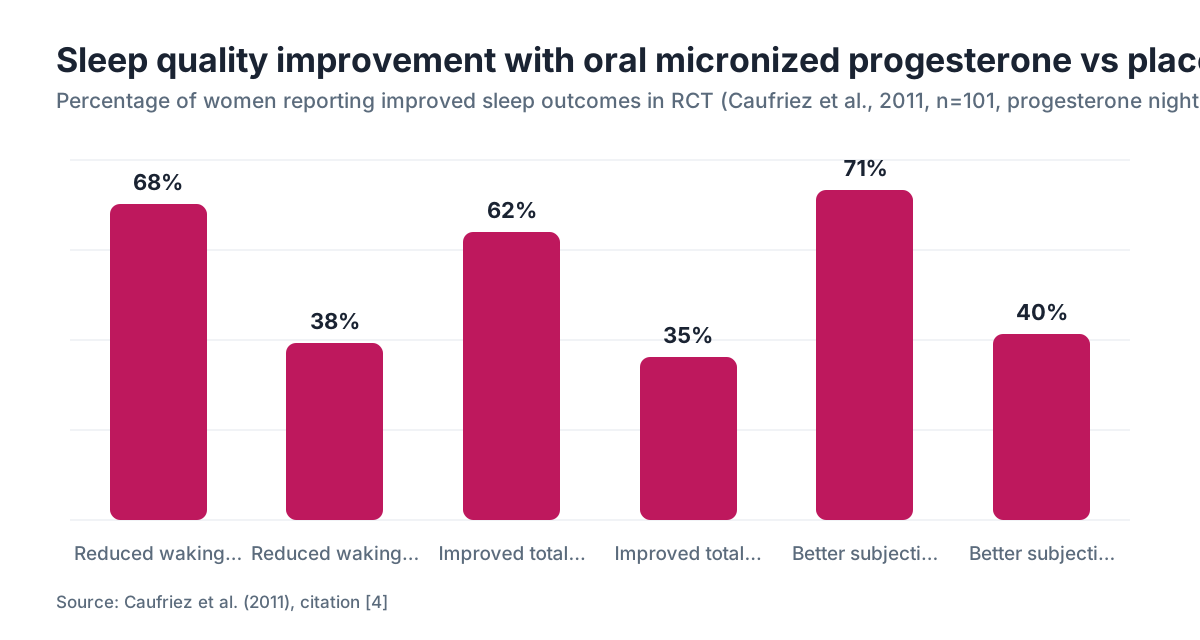
Progesterone, via allopregnanolone, seems to work differently. A randomized controlled trial published in Menopause in 2011 enrolled 101 recently menopausal women and assigned them to oral micronized progesterone or placebo. Women taking 300 mg progesterone for three weeks reported significantly better sleep quality, specifically less waking after sleep onset, than the placebo group [4]. The authors described it as a real improvement in sleep structure, not simply sedation.
A 2018 review in Climacteric looked at multiple studies on progesterone and sleep and concluded that oral micronized progesterone improved subjective sleep quality and reduced hot-flash-related awakenings in symptomatic menopausal women [5]. Hot flashes that fragment sleep were blunted partly through a direct thermoregulatory effect and partly through the GABA-mediated calming action.
Nobody has clean data on exactly which dose produces the best sleep architecture versus just heavier sedation. The clinical studies mostly used 100 mg to 300 mg. The 200 mg dose approved for menopausal hormone therapy in the US sits in the middle of that range. On a lower dose (100 mg is common for cycle support in perimenopause) the effect is real but milder.
For women in perimenopause noticing sleep disruption alongside irregular cycles, the sleep-improving property of bedtime progesterone is often one of the first benefits they feel. Perimenopause can begin years before the final period, and progesterone levels drop before estrogen does in many women, which means the sleep disruption often shows up before the hot flashes.
What happens if you take progesterone in the morning instead?
You absorb the same total amount of hormone over 24 hours. The uterine protection you need (if you have a uterus and are on estrogen) is the same. Serum progesterone measured in a blood test the next morning looks similar whether you dosed at night or in the morning.
What changes is the timing of the allopregnanolone peak. Morning dosing puts that peak right in your productive hours. Clinical experience keeps showing that women who take oral progesterone in the morning report more daytime drowsiness, more trouble concentrating, and occasionally dizziness, especially at doses of 200 mg or higher [3].
Some practitioners prescribe morning dosing on purpose for women with high anxiety or panic symptoms, where the daytime calming effect is welcome. That's a reasonable call. But for most women on standard menopausal hormone therapy, morning dosing is simply harder to tolerate and harder to stay consistent with.
There's one scenario where morning dosing comes up more: women who feel groggy or "hungover" the next morning from bedtime progesterone. This is real, especially at 300 mg. If that's you, the better move is usually a lower dose at bedtime rather than a switch to morning, but that's a conversation to have with your prescriber.
How does progesterone's sedating effect compare to sleep medications?
Allopregnanolone acts on GABA-A receptors, the same target as benzodiazepines (like Ativan or Valium), Z-drugs (like Ambien), and alcohol. The mechanism really is similar. But the intensity is much lower and the receptor subunit selectivity differs, which is why progesterone doesn't carry the dependency risk or the rebound insomnia that comes with chronic benzodiazepine or Z-drug use [1].
The FDA approved brexanolone (Zulresso), a synthetic intravenous form of allopregnanolone, specifically for postpartum depression in 2019. That approval formally confirmed that this progesterone metabolite has meaningful effects on the brain, not only on uterine tissue [6].
Progesterone is not a replacement for treating diagnosed insomnia or anxiety disorders. The effect on sleep in the clinical trials is real but modest. Women with severe insomnia often need more than bedtime progesterone can deliver. Think of it as a genuine bonus of a hormone you may need for other reasons, not the primary treatment for a sleep disorder.
| Feature | Oral micronized progesterone | Benzodiazepines | Z-drugs (e.g., zolpidem) | |---|---|---|---| | Mechanism | GABA-A (partial, via allopregnanolone) | GABA-A (direct, broad) | GABA-A (alpha-1 subunit) | | Dependency risk | Low/none documented | High | Moderate | | Rebound insomnia | Not reported | Common | Reported | | Uterine protection | Yes (with estrogen HRT) | No | No | | Morning grogginess | Mild to moderate | Often significant | Reported | | Rx for insomnia | Off-label benefit | Yes | Yes |
Does the timing of progesterone matter for uterine protection?
This is a safety question, and the answer is reassuring: no, timing does not meaningfully change how well progesterone protects the uterine lining.
Women with a uterus take progesterone alongside estrogen to prevent endometrial hyperplasia, an overgrowth of the uterine lining that estrogen alone drives and that can progress to endometrial cancer with long-term unopposed estrogen. The protective effect depends on total progesterone exposure over the dosing period, not on when during the 24-hour cycle the peak serum level lands [7].
The Menopause Society (formerly NAMS) states that adequate progestogen must be added to estrogen therapy for women with a uterus to prevent endometrial hyperplasia and cancer, and that this is the main medical reason for combined hormone therapy in women who still have a uterus [7]. Timing within the day is not addressed as a uterine-protection variable in current guidelines, because it isn't clinically relevant to that outcome.
Women who've had a hysterectomy don't need progesterone at all for uterine protection, though some providers and patients choose low-dose progesterone for the sleep, mood, and possible breast-protective effects. If that's you, the bedtime argument still holds for tolerability.
For anyone building or reviewing a hormone protocol, hormone replacement therapy covers the evidence on combined versus estrogen-only regimens in detail.
What dose is typically prescribed and does the dose change the bedtime logic?
In the United States, the FDA-approved oral micronized progesterone product (Prometrium) comes in 100 mg and 200 mg capsules [3]. The standard dose for endometrial protection in a woman on continuous combined HRT is 100 mg nightly. The dose used for secondary amenorrhea is 400 mg nightly for 10 days (a cyclic protocol). Some practitioners use 200 mg nightly continuously, particularly when stronger sleep support is the goal.
The bedtime logic holds at every dose, but morning grogginess risk scales with dose. At 100 mg, most women feel little next-morning effect. At 300 mg, morning grogginess turns up more often, especially in the first few weeks before tolerance to the sedating metabolite partially develops.
Compounded progesterone (available through compounding pharmacies) can be made in custom doses and even in modified-release formulations, though the evidence base for compounded preparations is thinner than for FDA-approved Prometrium. If you're weighing compounded options, progesterone breaks down the differences between FDA-approved and compounded forms.
Progesterone cream (topical) and vaginal progesterone suppress the first-pass metabolism that generates allopregnanolone, so they have far less sedating effect and the bedtime recommendation matters much less. Clinically, vaginal progesterone (like Endometrin or compounded vaginal suppositories) is often used in fertility protocols or for targeted uterine-lining support. The pharmacokinetics are genuinely different from oral.
Does taking progesterone at night help with anxiety and mood?
The GABA-A mechanism that causes sedation also produces calming effects. Allopregnanolone reduces amygdala reactivity, the part of the brain that runs threat detection. This is why low progesterone in the late luteal phase of the menstrual cycle (the week before your period) is linked to premenstrual anxiety and mood shifts in susceptible women, and why progesterone in that window can blunt those symptoms.
For perimenopausal and menopausal women, the GABA-A story is just as relevant. Progesterone levels fall sharply in perimenopause, often before estrogen does. The anxiety, heart palpitations, and irritability that many women in their 40s chalk up to "stress" are frequently tied to low progesterone [8]. Replacing progesterone can smooth those symptoms.
The calming, anxiety-reducing effect fades during daylight hours if you dose at night, since allopregnanolone clears the brain within roughly 6 to 8 hours. For mood coverage across the full 24-hour period, that's a partial effect at best. Women with significant perimenopausal anxiety sometimes find a small split dose (say, 50 mg in the morning and 100 mg at night) gives daytime coverage without too much daytime sedation. That's an off-label approach and needs close communication with a prescriber.
A telehealth service like WomenRx can help you work through exactly this kind of dosing question with a clinician who focuses on female hormone therapy, rather than a generalist who may be less familiar with the options.
One important caveat: the mood data for progesterone is mixed. Some women, especially those with a history of premenstrual dysphoric disorder (PMDD) or sensitivity to progestogens, report mood worsening with progesterone, possibly because allopregnanolone paradoxically excites rather than inhibits GABA-A receptors in that subgroup [9]. If progesterone makes your mood worse, that's a real and documented phenomenon worth flagging to your provider.
Are there women who should NOT take progesterone at bedtime?
The bedtime recommendation is a strong default, not a universal rule.
Women who work night shifts have flipped sleep schedules and should dose relative to their own sleep onset, not a clock time. "Bedtime" means right before you plan to sleep, whatever hour that is.
Women who've had a paradoxical worsening of mood or PMDD-like symptoms with progesterone may tolerate vaginal or low-dose oral progesterone better than standard oral dosing at any time of day. The timing question is secondary to whether the route is right.
Women taking other sedating medications (prescription sleep aids, benzodiazepines, opioids, certain antihistamines) need to discuss additive sedation risk with their prescriber before adding oral progesterone at night. The GABA-A effects can stack.
Pregnant women (progesterone is used in early pregnancy to support the luteal phase or in women with prior pregnancy loss) take it under very specific fertility-protocol timing that overrides any general bedtime advice.
And if you're taking oral progesterone and waking up feeling genuinely impaired rather than just a bit groggy, that's worth a conversation about dose reduction or switching to vaginal progesterone, which skips the allopregnanolone peak entirely.
Can progesterone help with perimenopause symptoms beyond sleep?
Yes, and this is underappreciated.
In perimenopause, cycles turn irregular because ovulation gets erratic. When you don't ovulate, you make little or no progesterone in the second half of the cycle, even if estrogen is normal or high. This creates a state of estrogen dominance relative to progesterone. Symptoms include heavier periods, breast tenderness, mood swings the week before your period, and disrupted sleep.
Adding low-dose cyclic progesterone (100 mg on days 14 through 28 of the cycle, for example) can regulate the cycle, lighten heavy bleeding, and meaningfully reduce the mood and sleep symptoms, all while bedtime dosing keeps tolerability high [7].
Bone is another area with some progesterone data, though it's weaker than the estrogen story. Some research suggests progesterone receptors on osteoblasts (bone-building cells) mean progesterone may support bone formation, rather than just slow resorption [8]. This is a secondary consideration next to estrogen's role in bone protection, and a bone density test is the right starting point if bone health worries you.
For a full picture of where perimenopause starts and what hormonal changes drive the symptoms, when does menopause start covers the timeline in detail. And perimenopause age explains why some women enter this phase in their late 30s while others sail through their mid-40s symptom-free.
How long does it take for bedtime progesterone to improve sleep?
Most women notice some sleep improvement within the first one to two weeks of bedtime dosing. The sedating effect of allopregnanolone is acute, meaning it happens with each dose, not after weeks of buildup. So the first night you take it at bedtime, you may sleep better or at least fall asleep more easily.
For the full picture (mood stability, hot flash reduction, cycle regulation in perimenopause) give it two to three cycles, or roughly 6 to 12 weeks, before drawing firm conclusions. Hormone therapy in general takes about this long to reach steady state and produce stable downstream effects.
If you've been taking progesterone for two to three months and still have significant sleep problems, the issue may not be progesterone dosing. Hot flashes waking you at 3 a.m. often respond better to estrogen optimization than to progesterone dose changes. An estrogen patch or other estrogen delivery method alongside progesterone addresses the thermoregulatory driver of sleep disruption that progesterone alone can't fix.
One thing to watch: initial morning grogginess usually eases over the first two to four weeks as the brain partly adapts to the regular allopregnanolone exposure. If it persists past a month, flag it.
What does the research still not know about progesterone timing?
Honesty means naming what the evidence doesn't answer cleanly.
Almost all the randomized trials on progesterone and sleep used specific doses (100 to 300 mg) and specific populations (recently menopausal women, mostly within 5 years of the final period). The data for women further postmenopausal, or for much younger perimenopausal women, is thinner.
The best dose for sleep benefit versus uterine protection has never been compared in a head-to-head trial built around timing as the primary variable. Clinicians mostly extrapolate from pharmacokinetic data (the allopregnanolone peak timing) and from tolerability reports rather than from large prospective timing trials.
The long-term effects of nightly GABA-A stimulation via allopregnanolone are not well studied. Benzodiazepines produce tolerance and dependence, with GABA-A receptor downregulation over time. Whether years of nightly progesterone produces subclinical receptor changes is genuinely unknown. Short-term and medium-term use (months to a few years) is well covered in the safety data; truly long-term effects remain an open question [5].
For women curious about whether other hormonal or weight-related treatments interact with progesterone timing, the intersection of GLP-1 receptor agonists and hormone therapy is an emerging area. At WomenRx, clinicians are seeing more women managing both menopause symptoms and weight with GLP-1s at the same time, which raises real questions about drug interactions and protocol design that the published literature hasn't fully answered yet.
Frequently asked questions
Can I take progesterone in the morning if I work night shifts?
Yes. The recommendation is to take oral progesterone at bedtime relative to your actual sleep time, not a specific clock hour. If you sleep from 8 a.m. to 4 p.m., take your progesterone around 7:30 a.m. The goal is to have the allopregnanolone peak land during sleep, not during waking hours, regardless of when those fall.
Does vaginal progesterone need to be taken at night too?
Not for the same reason. Vaginal progesterone bypasses most first-pass liver metabolism, so it generates very little allopregnanolone. The sedating effect is minimal. Vaginal preparations are often timed in fertility protocols based on cycle day rather than time of day. If you're using vaginal progesterone for uterine protection in HRT, your prescriber's instructions take priority over any general bedtime guidance.
Will progesterone at night make me groggy in the morning?
At 100 mg, most women have minimal morning grogginess after the first week or two. At 200 to 300 mg, morning grogginess is more common, especially early in treatment. It typically eases as your brain adapts over two to four weeks. If grogginess persists past a month at 200 mg, talk to your prescriber about a dose reduction or switching to vaginal progesterone.
Is there a difference between Prometrium and compounded progesterone for sleep?
Prometrium is FDA-approved oral micronized progesterone with standardized absorption data. Compounded oral progesterone can vary in particle size and oil vehicle, which affects absorption and the allopregnanolone conversion rate. The sleep effect should be similar if the compounded product is well-made, but the evidence base specifically uses Prometrium. Neither form is proven superior for sleep; the FDA-approved product has more consistent pharmacokinetic data behind it.
Can progesterone replace a sleep medication like melatonin or Ambien?
Not as a direct substitution. Progesterone's sleep effect is real but modest, working through GABA-A receptor modulation via allopregnanolone. Melatonin targets circadian timing rather than sleep architecture. Zolpidem (Ambien) is far more potent and carries dependency risks that progesterone does not. If you take progesterone for hormonal reasons and your sleep improves, that is a genuine benefit, but it is not approved or designed as a primary sleep disorder treatment.
Does taking progesterone at night affect my hormone blood test results?
Yes, timing matters for lab interpretation. Serum progesterone levels peak one to two hours after an oral dose. If your blood is drawn in the morning after a bedtime dose, levels will be lower than a peak and higher than a true baseline, roughly 8 to 12 hours post-dose. Ask your provider whether they want you to take your progesterone before or after the blood draw, and document the timing, so results are interpreted correctly.
Why does oral progesterone make you sleepy but the progesterone your body makes does not?
Your body's naturally produced progesterone does generate some allopregnanolone, and this is actually linked to the sleepiness many women feel in the first trimester of pregnancy and in the luteal phase. But natural progesterone is released gradually and in amounts calibrated to your cycle. Swallowing a 200 mg capsule creates a bolus effect, a concentrated burst of absorption that drives allopregnanolone higher and faster than the slow endogenous release.
What if progesterone makes my mood worse instead of better?
This is documented. A subgroup of women, particularly those with a history of PMDD or progesterone sensitivity, experience mood worsening with oral progesterone. Research suggests allopregnanolone can paradoxically excite GABA-A receptors in these women rather than inhibit them. Options include switching to vaginal progesterone (which generates far less allopregnanolone), trying a synthetic progestogen like norethindrone, or, if you've had a hysterectomy, skipping progesterone entirely. Discuss with your prescriber.
How long should I take progesterone at night before deciding if it works?
Sleep improvement can appear within the first one to two weeks since the allopregnanolone effect is immediate. For broader hormonal benefits like cycle regulation, mood stability, or hot flash reduction, allow 6 to 12 weeks. If you are still experiencing significant sleep disruption after 12 weeks of bedtime progesterone, the problem may be undertreated estrogen deficiency rather than a progesterone dosing issue.
Is it safe to take progesterone at night long-term?
Long-term safety data for oral micronized progesterone comes primarily from the Women's Health Initiative and observational European studies. Unlike synthetic progestogens (medroxyprogesterone acetate), oral micronized progesterone appears to carry a lower or neutral breast cancer risk signal in most studies, though the data is not conclusive past 5 to 7 years. Menopause Society guidelines support continued use when benefits outweigh risks, reassessed periodically. There is no documented dependence risk from the nightly GABA-A effect.
Can I take progesterone at night with other supplements like magnesium or melatonin?
No serious pharmacokinetic interactions are documented between oral progesterone and magnesium or melatonin. Practically, stacking progesterone with other sedating supplements (high-dose magnesium glycinate, melatonin, valerian) may increase morning grogginess. Introduce one at a time so you can identify what is causing any unwanted sedation. Always tell your prescriber everything you're taking nightly, including supplements.
Does progesterone at night help with night sweats?
Progesterone has a modest direct effect on night sweats. The primary driver of night sweats in menopause and perimenopause is estrogen decline, and estrogen therapy addresses that more effectively. Progesterone helps indirectly by improving sleep architecture so that when night sweats do occur, you return to sleep more easily. For severe night sweats, optimizing estrogen (via patch, gel, or spray) alongside bedtime progesterone usually works better than progesterone alone.
Does food affect how well oral progesterone is absorbed at night?
Yes, significantly. Taking oral micronized progesterone with food, particularly a meal containing fat, increases bioavailability by roughly 3-fold compared to taking it on an empty stomach. The Prometrium prescribing label notes this. Most practitioners recommend taking it with a light evening snack containing some fat, such as a few nuts or a small piece of cheese, to keep absorption consistent every night.
Sources
- Bhagwagar Z et al., Psychopharmacology (2004): allopregnanolone GABA-A mechanism review
- Stanczyk FZ et al., Menopause (2013): first-pass metabolism of oral versus vaginal progesterone
- FDA, Prometrium (progesterone, USP) Prescribing Information
- Caufriez A et al., Journal of Clinical Endocrinology & Metabolism (2011): RCT of oral micronized progesterone on sleep in postmenopausal women
- Hitchcock CL & Prior JC, Climacteric (2018): review of progesterone and sleep in menopausal women
- FDA, Zulresso (brexanolone) approval for postpartum depression (2019)
- The Menopause Society (formerly NAMS), Hormone Therapy Position Statement 2022
- Prior JC, Endocrine Reviews (1990): progesterone as bone-trophic hormone
- Backstrom T et al., Psychoneuroendocrinology (2014): paradoxical progesterone sensitivity in PMDD
- Women's Health Initiative Investigators, JAMA (2002): conjugated estrogen plus medroxyprogesterone acetate trial results
- Schüssler P et al., Pharmacopsychiatry (2008): progesterone promotes sleep via GABA modulation
- Sitruk-Ware R & Nath A, Maturitas (2010): pharmacokinetics of oral micronized progesterone including food effect