Why do I have night sweats but no hot flashes?
TL;DR: You can have night sweats without daytime hot flashes because the triggers are different. Perimenopause, thyroid disease, infections, medications, anxiety, and alcohol all cause nighttime sweating on their own. You don't need both symptoms for a real hormonal or medical cause. Tracking timing, patterns, and other symptoms for two weeks is the fastest way to figure out what's driving yours.
What actually causes night sweats, and why are they separate from hot flashes?
Night sweats and hot flashes are not the same event at two different times of day. A hot flash is a sudden, conscious wave of heat that spreads through the chest, neck, and face, usually with visible flushing and a fast heartbeat. A night sweat is drenching perspiration during sleep, sometimes bad enough to soak the sheets, and it can happen without that dramatic waking heat surge at all.
Here's why they split apart. Your hypothalamus, the brain region that runs body temperature, works on a tighter set point while you sleep. Any of a dozen triggers, hormonal swings, medications, infections, or nervous system changes, can nudge that set point far enough to switch on sweating without ever crossing the threshold for a hot flash you'd feel awake.
A 2014 review in Climacteric noted that vasomotor symptoms like hot flashes and night sweats share the same underlying mechanisms but can show up asymmetrically. Some women get only nocturnal sweating. Some get only daytime flashes. Some get both [1]. Having one without the other is common, not a diagnostic riddle.
Can perimenopause cause night sweats without hot flashes?
Yes, and this is the most overlooked answer to the question. Perimenopause is the transition before menopause, often starting in the early-to-mid 40s and sometimes as early as 35 [2]. Estrogen during this phase doesn't just fall. It swings. Some days it runs higher than it did at 30, other days it crashes.
Those swings disrupt the hypothalamus at night more than during the day for some women. Sleep itself involves a natural core temperature drop, and an unstable estrogen signal can make the hypothalamus misfire, switching on sweat without the full hot flash. Because estrogen isn't uniformly low yet, the steady daytime flushing that people picture with classic menopause may never show up, while the night sweating does.
The North American Menopause Society (NAMS) lists night sweats as one of the earliest, and sometimes the only, vasomotor symptom women report in early perimenopause [2]. If you're in your late 30s or 40s and sweating is wrecking your sleep, perimenopause belongs on the list even without daytime hot flashes. Our peri menopausal overview walks through what the transition actually feels like.
One real-world clue: perimenopausal night sweats often cluster in the second half of the menstrual cycle, when progesterone rises and then drops. If the sweating gets worse in the two weeks before your period, pay attention to that.
What medical conditions cause night sweats in women?
Set hormones aside and several medical conditions reliably drive night sweats. A working differential looks like this.
Infections. Tuberculosis is the textbook cause, but bacterial endocarditis, HIV, fungal infections, and post-COVID recovery all cause nocturnal sweating. If you also have unexplained fever, weight loss, or fatigue that won't quit, you need an infection workup.
Lymphoma and other cancers. Night sweats are a classic B symptom of Hodgkin's and non-Hodgkin's lymphoma, alongside fever and unintended weight loss. Rare, but serious enough that drenching night sweats lasting more than a few weeks should trigger a blood count and a physical exam.
Thyroid disorders. Hyperthyroidism speeds up metabolism and raises core body temperature, which spills into nighttime sweating without the daytime flushing pattern you'd expect from menopause. One TSH blood test rules it in or out. For how thyroid hormone works and when replacement makes sense, see our piece on thyroid hormone replacement therapy.
Hypoglycemia. Low blood sugar overnight, from diabetes medications, a skipped dinner, or reactive hypoglycemia, sets off an adrenaline surge that causes sweat. The timing is distinct: it tends to hit in the early morning hours when glucose bottoms out.
Autonomic dysfunction. Conditions like POTS (postural orthostatic tachycardia syndrome) affect the autonomic nervous system, which runs sweating. POTS is far more common in women, and disordered nighttime sweating is a frequently reported symptom [12].
| Condition | Sweating Pattern | Key Accompanying Signs | |---|---|---| | Perimenopause | Variable, cycle-linked | Irregular periods, mood shifts | | Hyperthyroidism | Diffuse, daytime too | Heart palpitations, weight loss | | Hypoglycemia | Early morning, 2-4 AM | Hunger, shakiness on waking | | Lymphoma | Drenching, persistent | Fever, swollen nodes, weight loss | | Infection (TB, HIV) | Often with fever | Cough, fatigue, weight loss | | Medication side effect | Dose-related, new onset | Temporal link to starting drug | | Anxiety/PTSD | Linked to stress, nightmares | Sleep disruption, hyperarousal |
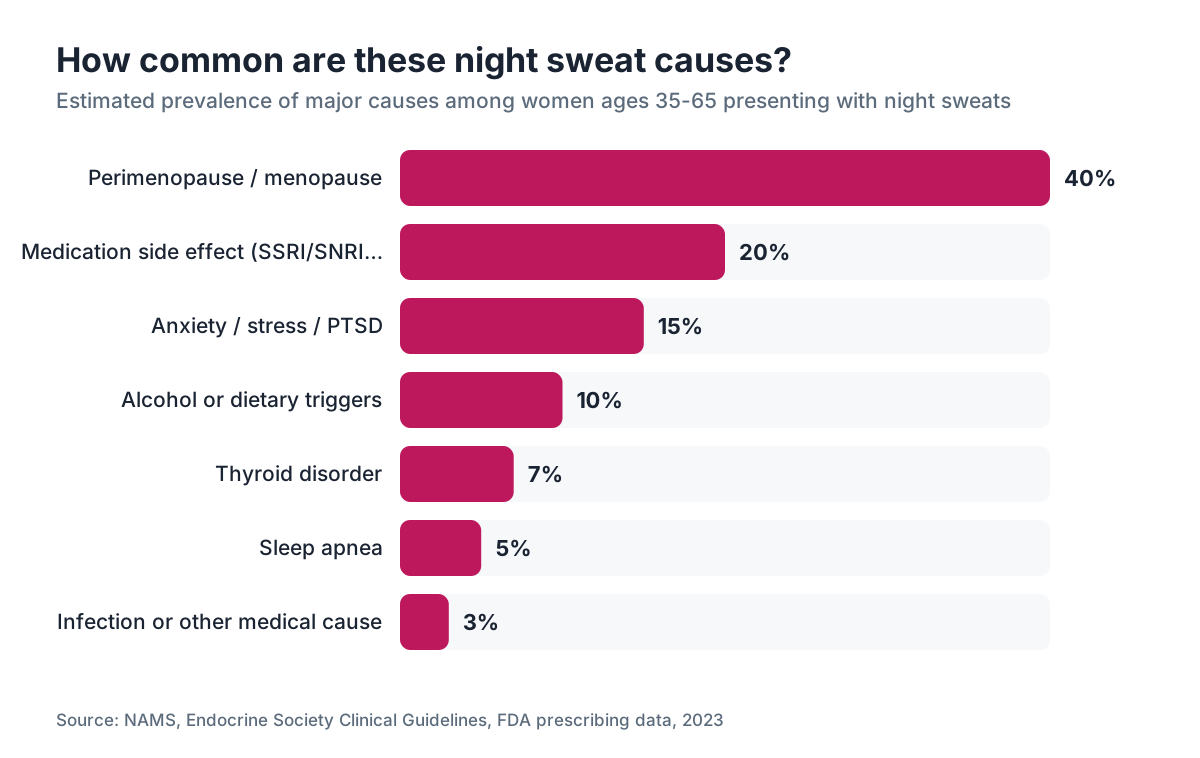
Which medications cause night sweats?
Medication-induced night sweats are more common than most people realize, and they're one of the easiest causes to fix once you spot them.
Antidepressants lead the pack. SSRIs (sertraline, escitalopram) and SNRIs (venlafaxine, duloxetine) cause night sweats in roughly 14 to 22 percent of users, based on published case series and drug labeling [4]. Serotonin acts on the hypothalamic temperature center. If your sweating started shortly after beginning or raising an antidepressant, that's almost certainly your answer.
Tamoxifen, used in breast cancer prevention and treatment, is notorious for both hot flashes and isolated night sweats. Its FDA-approved labeling lists hot flashes in up to 80 percent of users and names night sweats as a common adverse effect [5].
Other frequent culprits:
- Steroids (prednisone, dexamethasone), especially taken in the afternoon or evening
- High-dose niacin, often used for cholesterol
- Opioids, and opioid withdrawal
- Some blood pressure drugs, particularly calcium channel blockers
- Certain diabetes medications that lower blood sugar
When a drug is the cause, sweating usually starts within days to weeks of the new medication and often eases if you move the dose to morning or adjust the amount with your prescriber.
Can anxiety and stress cause night sweats without hot flashes?
Yes. Anxiety fires the sympathetic nervous system, the fight-or-flight pathway, and one of its most direct physical effects is sweating. At night, with fewer distractions, the body processes stress signals more intensely, and that can trigger sweating episodes that look and feel like classic night sweats.
PTSD is closely tied to nighttime sweating, often linked to nightmares or hyperarousal during specific sleep stages. A 2018 study in the Journal of Traumatic Stress found that hyperarousal symptoms, including nocturnal sweating, showed up in a large share of women with PTSD [3].
Generalized anxiety disorder also disrupts sleep architecture in ways that raise core body temperature. You don't need a formal diagnosis to have enough background stress to set off occasional night sweats, especially during hard stretches at work, in relationships, or around a big life change.
The tell with anxiety-driven night sweats is the correlation. They get worse during rough weeks and ease on vacation. They may come with a racing heart or a sense of dread on waking. And they usually don't track any hormonal cycle.
Does alcohol cause night sweats?
Yes, and it's one of the cleanest cause-and-effect relationships here. Alcohol first dilates blood vessels and makes you feel warm. As your body metabolizes it over the next few hours, it produces a rebound that includes sweating, a faster heartbeat, and broken sleep.
Even moderate drinking, two glasses of wine with dinner, can be enough to trigger noticeable night sweats, especially in perimenopausal women who already have some temperature dysregulation [6]. Alcohol suppresses the deeper stages of sleep and pushes body temperature up in the early morning, which is exactly when many people wake up drenched.
If you drink regularly and you're sweating at night, a two-week trial off alcohol tells you more than any lab. If the sweating drops off substantially, you have your answer.
How do I figure out what's causing my night sweats?
Keep a two-week symptom log before you see anyone. Write down the date, roughly what time the sweating woke you, how bad it was (damp versus soaked), what you ate and drank that day, any medications, your stress level, and where you are in your cycle. The patterns in that log usually point straight at the cause.
Your doctor will likely start with blood work. A reasonable first-pass panel for a woman 35 to 65 with night sweats includes:
- TSH (thyroid)
- CBC with differential (infection and lymphoma signal)
- Fasting glucose
- FSH and estradiol (if perimenopause is on the table)
- HIV test, if not done recently
- A basic metabolic panel
FSH (follicle-stimulating hormone) is tricky. Levels can read normal in early perimenopause because they swing so much day to day. NAMS guidance is clear that a single FSH value can't confirm or exclude perimenopause, especially in a woman still having periods [2]. Symptom history beats a snapshot lab.
If basic labs come back clean, your clinician may look at sleep (apnea causes drenching sweats), medications, and anxiety. If lymphoma symptoms are present, imaging may follow.
Want to know if perimenopausal hormone shifts are the driver? A telehealth provider like WomenRx can order hormone panels and read them against your symptom pattern, which is more useful than one lab value interpreted alone.
When should I see a doctor about night sweats?
Not every night sweat needs an urgent visit. Some patterns do.
See a doctor promptly if your night sweats are:
- Drenching (soaking sheets) and lasting more than three weeks with no obvious trigger
- Paired with unexplained weight loss of 10 pounds or more without trying
- Paired with swollen lymph nodes, a persistent fever, or a cough you can't explain
- New after starting a medication (tell your prescriber within the week)
- Paired with palpitations, heavy anxiety, or a feeling of dread on waking
If night sweats disrupt your sleep night after night, that alone is worth treating, even without any red flag above. Chronic sleep loss raises cardiovascular risk, dulls thinking, and drags down quality of life. You don't have to white-knuckle through months of bad sleep waiting for a reason that feels serious enough.
For what menopause medicine actually looks like now and what to ask at an appointment, the the new menopause overview is a good place to start.
Can hormone therapy help night sweats even without hot flashes?
Yes. If your night sweats come from perimenopausal or menopausal hormone changes, low-dose estrogen therapy has the strongest evidence of anything available. A 2017 Cochrane review of 24 trials found that hormone therapy cut the frequency of vasomotor symptoms, night sweats included, by roughly 75 percent compared with placebo [7].
Whether it's right for you depends on your history: cardiovascular risk, breast cancer history, clotting history. NAMS and the Endocrine Society both hold that for healthy women under 60 or within 10 years of menopause onset, the benefits of hormone therapy for symptom relief generally outweigh the risks [2][8].
If the sweats are medication-induced, reducing or switching the offending drug usually works better than piling on hormone therapy. If the cause is thyroid disease or infection, treating that condition is the fix.
Non-hormonal options with reasonable evidence:
- Venlafaxine (an SNRI) and paroxetine, both studied or FDA-approved for vasomotor symptoms in women who can't use estrogen [4]
- Cognitive behavioral therapy for menopause symptoms, with decent trial support for better sleep and less symptom distress
- Oxybutynin, an anticholinergic with some data for cutting hot flashes and night sweats
- Fezolinetant (brand name Veozah), an FDA-approved non-hormonal neurokinin B antagonist for moderate to severe vasomotor symptoms [9]
Do night sweats mean I'm in menopause?
Not necessarily. Menopause is defined as 12 straight months without a period, and the average age in the United States is 51 [2]. If you're still menstruating, you're not there yet. You may be in perimenopause, which can run anywhere from 2 to 10 years before the final period, and night sweats are very common in that window.
As the rest of this article covers, night sweats also have a long list of non-hormonal causes that have nothing to do with your reproductive stage. A 38-year-old with night sweats is more likely dealing with anxiety, medication effects, alcohol, or early perimenopause than full menopause. A 55-year-old has a higher prior probability of a hormonal cause, but still needs the other causes ruled out if the pattern is odd.
Missing hot flashes doesn't make menopause more or less likely. Some women move through the entire transition with only night sweats and no daytime flushing. Others get only daytime symptoms. The pattern varies enormously between individuals, shaped partly by genetics and partly by BMI, smoking history, and stress.
For a closer look at what the menopause society currently recommends and what the research actually shows, that resource covers where the standards of care are heading.
Are there lifestyle changes that reliably reduce night sweats?
Several, and they're worth trying before or alongside any medical treatment because the evidence is real and the downside is close to zero.
Room temperature. Keeping the bedroom below 67 degrees Fahrenheit (about 19 Celsius) is one of the most consistently recommended moves. A cooler room lowers the thermal load on the hypothalamus.
Alcohol and caffeine. Both trigger or worsen night sweats. No caffeine after noon and no alcohol within three hours of bed can change things within days.
Layered, breathable bedding. Moisture-wicking fabrics and blankets you can kick off without fully waking keep sleep intact even when sweating happens.
Weight management. Higher BMI is independently tied to more frequent and more severe vasomotor symptoms [6]. A modest 5 to 10 percent drop in body weight has been linked to symptom improvement in observational data. GLP-1 receptor agonists like semaglutide have become a real tool for weight management in perimenopausal women. If that's on your radar, our semaglutide news page tracks the current evidence.
Stress reduction. Mindfulness-based stress reduction (MBSR) has randomized trial support for lowering perceived severity of menopause symptoms including night sweats, even when it doesn't reduce measured sweat episodes.
Exercise timing. Vigorous exercise within two to three hours of bed raises core body temperature and can worsen night sweats in susceptible women. Move workouts to morning or early afternoon. Low effort, easy to test.
Frequently asked questions
Can night sweats without hot flashes still be perimenopause?
Yes. In early perimenopause, estrogen swings disrupt nighttime temperature regulation before they cause steady daytime flushing. NAMS lists night sweats as one of the earliest vasomotor symptoms of the transition. Some women have only nighttime symptoms through the entire perimenopausal phase and never get a classic daytime hot flash at all.
What blood tests should I ask for if I have night sweats?
A reasonable first panel includes TSH, CBC with differential, fasting glucose, FSH, and estradiol. If infection is possible, add an HIV test and consider a chest X-ray. If lymphoma symptoms are present, your doctor may order imaging. FSH alone won't confirm or rule out perimenopause in a woman still having periods. Symptom pattern matters more than a single value.
Can my antidepressant be causing my night sweats?
Very likely, if the sweating started around the same time as the medication. SSRIs and SNRIs cause night sweats in 14 to 22 percent of users by acting on the hypothalamic temperature center. Tell your prescriber. Options include switching medications, moving the dose to morning, or in some cases adding a low dose of an alpha-blocker to dampen the sweating.
Are drenching night sweats different from just sweating a little at night?
Clinically, yes. A true night sweat is severe enough to soak sleepwear or sheets. Light sweating from a warm room or a heavy blanket is something else. Drenching night sweats, especially those lasting more than three weeks, are more likely to have a medical cause and more likely to warrant evaluation than mild or occasional sweating.
Can anxiety cause night sweats without any other anxiety symptoms?
It can, especially in women who tend to somatize stress rather than feel it as worry. The sympathetic nervous system activation behind anxiety can trigger sweating without any conscious anxious feeling. If your sweating tracks stressful periods and eases during calmer ones, anxiety is worth exploring even if you don't feel anxious in the usual sense.
Is it normal to have night sweats in my 30s?
It depends on the cause. Early perimenopause can begin in the mid-to-late 30s for some women. Night sweats in your 30s are also commonly tied to stress, alcohol, medications, thyroid problems, or sleep disorders. They aren't automatically a sign of premature menopause, but if they're persistent, disruptive, or come with irregular periods, they deserve evaluation.
Can sleep apnea cause night sweats?
Yes. Obstructive sleep apnea causes repeated oxygen drops and arousals through the night. Those arousals activate the sympathetic nervous system, which can trigger sweating. Night sweats are reported by roughly 30 percent of people with sleep apnea. If you also snore, wake with headaches, or feel unrefreshed after sleep, ask for a sleep study.
Does tamoxifen cause night sweats?
Yes. Tamoxifen's FDA-approved labeling lists hot flashes in up to 80 percent of users, and night sweats are a common associated complaint. The cause is tamoxifen's anti-estrogenic effect on the hypothalamus. Venlafaxine and gabapentin have the best evidence for reducing tamoxifen-related vasomotor symptoms in women who can't use estrogen because of their cancer history.
What is fezolinetant and does it work for night sweats?
Fezolinetant (brand name Veozah) is an FDA-approved non-hormonal medication for moderate to severe vasomotor symptoms in menopausal women. It blocks neurokinin B, a brain signaling molecule that triggers the heat-dissipation response. Clinical trials showed a statistically significant reduction in hot flash and night sweat frequency versus placebo. It's an option for women who can't or don't want to use hormone therapy.
Can losing weight reduce night sweats?
There's observational evidence that higher BMI is tied to more frequent and more severe vasomotor symptoms, and that weight loss is linked to improvement. A 5 to 10 percent reduction in body weight has been associated with measurable symptom reduction in some studies. It's not a guaranteed fix, but it's a reasonable goal with benefits well beyond night sweats.
Why do I wake up soaking wet but feel cold afterward?
This is the classic pattern of a vasomotor episode. Your hypothalamus triggers sweating to cool the body, sometimes overshooting. Once the sweat evaporates, your wet skin loses heat fast and leaves you chilled. The hot-then-cold sequence is a useful clue that you're having a true vasomotor event rather than just sweating from a warm room.
Can night sweats affect my health beyond sleep disruption?
Yes. Chronic sleep disruption from any cause, night sweats included, is associated with higher cardiovascular risk, impaired glucose metabolism, cognitive trouble, and worse mood. For perimenopausal women, poor sleep compounds the mood and cognitive effects of estrogen swings. Treating the underlying cause of night sweats is a cardiovascular and cognitive health issue more than a comfort issue.
Should I try over-the-counter supplements for night sweats?
The evidence for most OTC menopause supplements is thin. Black cohosh has modest and inconsistent data; a 2012 Cochrane review found no significant benefit over placebo for vasomotor symptoms. Phytoestrogens (soy, red clover) show small effects in some trials. If you're considering a supplement marketed for menopause, read the ingredient list closely and talk to your clinician before assuming it does what it claims.
Sources
- Climacteric, 2014: 'Vasomotor symptom prevalence and severity during the menopausal transition'
- North American Menopause Society (NAMS), Menopause Practice: A Clinician's Guide
- Journal of Traumatic Stress, 2018: hyperarousal symptoms in women with PTSD
- FDA: SSRI and SNRI prescribing information, adverse effects
- FDA-approved labeling: Tamoxifen (Nolvadex) prescribing information
- NIH National Institute on Alcohol Abuse and Alcoholism: alcohol and sleep
- Cochrane Database of Systematic Reviews, 2017: Hormone therapy for vasomotor symptoms
- Endocrine Society Clinical Practice Guideline: Treatment of Menopause
- FDA: Veozah (fezolinetant) approval for vasomotor symptoms
- Cochrane Database of Systematic Reviews, 2012: Black cohosh for menopausal symptoms
- NIH National Heart, Lung, and Blood Institute: Sleep apnea symptoms and diagnosis
- Dysautonomia International: POTS in women, prevalence and symptoms