Why do hot flashes get worse at night? The science explained
TL;DR: Hot flashes worsen at night because core body temperature drops at bedtime, and low estrogen has already narrowed the hypothalamus's thermoneutral zone to almost nothing. A tiny temperature shift then trips the alarm. Warm bedding, cortisol at its overnight low, and a sleep-loss feedback loop make nighttime episodes more intense and more disruptive than daytime ones.
What actually causes a hot flash in the first place?
A hot flash is not random. It is the hypothalamus misfiring.
The hypothalamus sits at the base of your brain and runs your internal thermostat. It holds what researchers call the "thermoneutral zone," the temperature band inside which it does nothing at all. Rise above it, you sweat. Drop below it, you shiver. In a woman with steady estrogen, that band runs about 0.4 degrees Celsius wide [1]. Room enough for the normal ups and downs of a day.
When estrogen falls during perimenopause and menopause, the zone nearly collapses. The most cited explanation, from Dr. Robert Freedman and colleagues, is that low estrogen throws off central norepinephrine and serotonin, which leaves the hypothalamus hypersensitive to even a tiny upward nudge in temperature [1]. A shift of less than 0.1 degrees C can set off a full vasodilatory response: skin blood vessels open wide, heart rate climbs, and a wave of heat moves from the chest upward.
The Menopause Society (formerly NAMS) reports that vasomotor symptoms affect roughly 75 percent of women during the menopause transition [2]. That figure covers both daytime flashes and nighttime episodes. Same event. Very different experience.
Why do hot flashes get worse at night specifically?
Four things line up after dark to make nighttime flashes hit harder.
First, your core body temperature is supposed to drop at night. That is normal circadian rhythm at work: in the hours around sleep onset, core temperature falls by roughly 1 to 1.5 degrees Celsius [3], and that cooling is part of what lets you fall asleep. But if the thermoneutral zone is already paper-thin, any sharp move in core temperature, even a downward one that then rebounds, can overshoot and trip the hypothalamic alarm.
Second, you are lying flat under bedding. Blankets trap heat. A bed partner radiates it. Even a mildly warm room raises skin temperature enough to push a sensitized hypothalamus past its edge.
Third, cortisol bottoms out between midnight and 2 a.m. before it climbs toward the 6 to 8 a.m. peak. Cortisol has some steadying effect on temperature regulation, and its overnight low leaves the system with less margin [3].
Fourth, and this loop is circular but real: poor sleep nudges core body temperature up through inflammatory pathways. A woman already waking from hot flashes racks up sleep debt, which frays temperature regulation, which worsens the next night. A study in Menopause, the Menopause Society journal, found that women with more frequent night sweats had worse sleep architecture on polysomnography even on nights when no flash was recorded [4].
So a woman with three or four mild daytime flashes may still get one or two severe nighttime episodes that wake her fully, soak the sheets, and leave her heart racing for 20 minutes.
How is a night sweat different from a daytime hot flash?
The physiology is identical. The hypothalamus fires, peripheral vessels dilate, skin flushes, sweat starts. What changes is everything around it.
During the day you are moving, probably already a little warm, and the flash folds into the background. You notice it, fan yourself, and it passes in one to five minutes.
At night you are still, in a dark quiet room. The flash interrupts sleep instead of a task. The jump from calm sleep to sudden heat feels far more dramatic. And the sweat has nowhere to go: nightgown, sheets, and mattress cover all soak through. The cooldown, where your body dumps the heat it just generated, can take 10 to 20 minutes. By the time you are comfortable again you may have been awake for half an hour, and the next sleep cycle starts from zero.
The frequency pattern differs too. A study in Obstetrics and Gynecology using ambulatory skin conductance monitors found that raw flash count did not peak at night, but severity (the amplitude of the skin conductance response) ran measurably higher in nighttime episodes [4]. More intense, not necessarily more frequent. That distinction shapes treatment.
If you are in perimenopause and noticing the night episodes more than the daytime ones, that is the pattern most women describe. You are not imagining it.
What role does estrogen decline play in nighttime symptoms?
Estrogen does more than set the thermostat. It shapes the whole nightly temperature cycle.
Estradiol, the dominant estrogen before menopause, tunes serotonin and norepinephrine activity in the hypothalamus, and both help hold the thermoneutral zone open. It also affects melatonin indirectly, and melatonin is the signal that starts the nighttime core temperature drop [3]. When estrogen falls, melatonin rhythms can flatten or shift, so the temperature drop at sleep onset turns choppier and more likely to overshoot.
The Endocrine Society's clinical practice guideline on menopause states that estrogen-based hormone therapy is the most effective treatment for vasomotor symptoms, with symptom reduction of 75 percent or greater in clinical trials [5]. That covers daytime and nighttime episodes both, though many women on hormone therapy report night sweats fading before daytime flashes do, likely because the effect on circadian temperature regulation is more direct.
Estrogen is not the only hormone here. Progesterone has steadying and mildly sedating effects through GABA-A receptors, courtesy of its metabolites. Women in early perimenopause who stop ovulating run low on progesterone before estrogen drops much, which may be why night sweats can start years before the final period.
Does your sleep environment actually make night sweats worse?
Yes, and it is one of the few levers you can pull tonight without a prescription.
Sleep research on thermoregulation lands on an ambient temperature of 65 to 68 degrees Fahrenheit (18 to 20 degrees Celsius) for the most stable sleep in adults [3]. For women with vasomotor symptoms, some clinicians push lower, to 60 to 65 degrees Fahrenheit, because a cooler room buys more thermal margin before a flash tips into a full event.
Mattress type matters more than people expect. Memory foam holds far more heat than innerspring or latex and can raise skin temperature by 1 to 2 degrees over a night [6]. Cooling toppers with active water circulation (ChiliSleep, BedJet) have small but real data behind them. A pilot trial in Menopause in 2012 found women using a bedside cooling device reported a 42 percent drop in nighttime hot flash severity scores [6]. The sample was tiny (n=11), so hold that number loosely, but the mechanism is sound.
Natural fiber bedding (cotton, linen, bamboo-derived viscose) pulls moisture off skin faster than polyester blends. That matters because the second wave of misery comes from the wet-then-cooling sequence: you wake drenched, the sweat evaporates, and suddenly you are shivering. Moisture-wicking fabric breaks that cycle.
Layered bedding you can kick off in stages beats one heavy comforter every time.
What medical treatments are most effective for nighttime hot flashes?
Hormone therapy is first-line. That is the Menopause Society position, the Endocrine Society position, and the conclusion of the 2023 Menopause Society hormone therapy statement [2]. Systemic estrogen (pill, patch, spray, or gel), paired with progesterone or a progestogen in women with a uterus, cuts vasomotor symptom frequency and severity more reliably than any non-hormonal option.
For women who cannot or would rather not use estrogen, the options got better recently. The FDA approved fezolinetant (brand name Veozah) in May 2023 [7]. It is a neurokinin B receptor antagonist. It blocks the exact signaling pathway that drives the hypothalamic misfiring, no hormones involved. In the Phase 3 SKYLIGHT trials, fezolinetant cut moderate-to-severe hot flash frequency by about 60 percent versus about 45 percent for placebo at 12 weeks [7]. It is the first non-hormonal drug built for the underlying mechanism rather than borrowed from the antidepressant or blood pressure shelf.
The older non-hormonal options:
| Treatment | Evidence level | Typical reduction in flash frequency | Notes | |---|---|---|---| | SSRIs/SNRIs (paroxetine, venlafaxine) | Moderate (FDA-approved: paroxetine 7.5mg) | 40-65% | May affect libido; paroxetine interacts with tamoxifen | | Gabapentin | Moderate | 45-71% | Sedating, may actually help sleep architecture | | Clonidine | Low-moderate | 15-46% | Blood pressure effects limit use | | Cognitive behavioral therapy (CBT) | Moderate | Reduces distress more than frequency | Mindfulness variants show similar effect | | Fezolinetant | High (Phase 3 RCT) | ~60% frequency, ~75% severity | Liver monitoring required | | Systemic estrogen | High | 75%+ | First-line for eligible women |
Gabapentin deserves its own note for night sweats. Because it is mildly sedating, it tends to cut both flash frequency and the arousal response, so women may sleep through lower-intensity episodes that would otherwise wake them. A randomized trial in Obstetrics and Gynecology found gabapentin 900 mg per day reduced nighttime hot flash severity significantly more than placebo over 12 weeks [8].
If you are weighing your options, a telehealth provider like WomenRx can read your symptom pattern (nighttime-predominant versus mixed) and help you decide between hormone therapy, fezolinetant, or something else given your history. Nighttime-predominant symptoms with real sleep disruption usually argue for more aggressive treatment, because the sleep loss compounds.
Can lifestyle changes actually reduce nighttime hot flashes, or is that wishful thinking?
Lifestyle changes are real but modest. They will not do what hormone therapy does. They are also not nothing.
Alcohol raises core body temperature and shreds sleep architecture. One drink near bedtime increases nighttime waking by about 24 percent in sleep studies, and for women with vasomotor symptoms, that temperature effect stacks on top [3]. Cutting alcohol within 3 to 4 hours of sleep is one of the higher-yield moves you can make.
Spicy food and hot drinks before bed are worth skipping, not because they cause hot flashes, but because they briefly raise skin and core temperature, which can tip a sensitized thermostat over. Same mechanism as a warm room.
Exercise timing matters more than whether you exercise at all. Regular aerobic exercise modestly lowers hot flash frequency (a Cochrane review found a small positive effect), but a hard workout within 2 to 3 hours of bed raises core temperature and can worsen the night [9]. Push the intense sessions to morning or early afternoon.
Weight is genuinely relevant. Body fat acts as insulation and traps heat. Fat tissue does make estrone (a weak estrogen), yet higher BMI tracks with more severe vasomotor symptoms, not fewer, probably because the insulation outweighs any hormonal help [2]. The data are not perfectly clean, but the link between higher BMI and worse nighttime flashes holds up across cohorts, including the Study of Women's Health Across the Nation (SWAN).
Stress management and CBT earn their place. A 2013 randomized trial in Maturitas found that CBT aimed at hot flash beliefs cut self-reported distress from night sweats by about 43 percent, with the benefit holding at 6-month follow-up [10]. CBT does not block the flash. It changes how much the flash wakes and rattles you. For women whose nighttime disruption is amplified by anxiety about the flash itself, that is a real effect.
How long do nighttime hot flashes typically last?
Longer than doctors used to say.
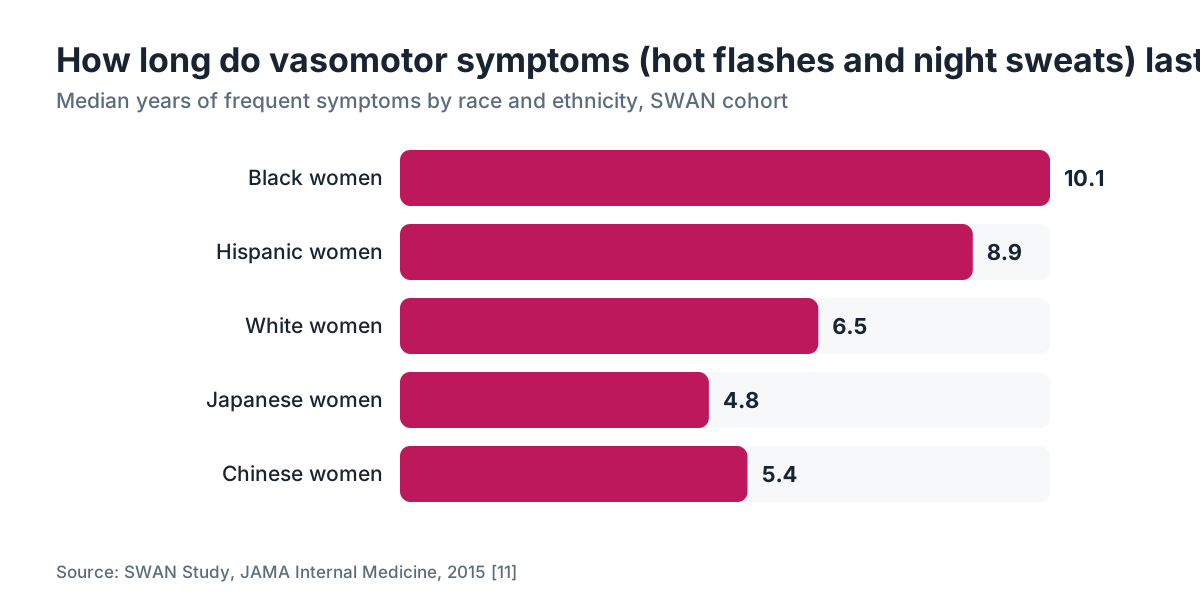
The old teaching was 2 to 3 years around menopause. The SWAN study, which followed more than 3,300 women over time, found the median duration of frequent vasomotor symptoms was 7.4 years. Women who started flashing in perimenopause, before their final period, had the longest run, a median of more than 11 years [11].
Nighttime episodes tend to linger at the tail end even as daytime flashes fade. Some women describe daytime flashes clearing within 2 to 3 years of menopause while night sweats grind on for years. The literature does not characterize this well, but it fits the circadian biology: the nightly temperature drop keeps challenging a sensitized thermostat long after daytime swings stop being provocative.
Race and ethnicity shape duration. SWAN found Black women had the longest median duration of frequent symptoms at 10.1 years, and Japanese and Chinese women the shortest at roughly 4 to 5 years [11]. These differences are real, poorly explained, and should factor into how aggressively you and your provider plan treatment.
For how the new menopause is being framed by researchers and advocates, the conversation has shifted hard toward recognizing these longer timelines.
Are there specific conditions that make nighttime hot flashes worse?
Several conditions sit on top of the basic menopausal flash and amplify nighttime symptoms.
Thyroid dysfunction is the one to rule out first. Hyperthyroidism raises basal metabolic rate and core body temperature, producing heat intolerance and night sweats that can look exactly like menopausal flashes. A TSH plus free T4 is a reasonable first step before you pin everything on menopause, especially if onset was sudden or came with palpitations and weight loss. If that workup turns up a thyroid problem, the piece on thyroid hormone replacement therapy goes deeper.
Anxiety and panic disorder produce nighttime heat through a different route entirely (autonomic nervous system activation, not hypothalamic thermoregulation), but they can coexist with menopausal flashes and make each one feel worse. Many women in perimenopause develop new anxiety as a neurological effect of estrogen swings, not as a reaction to life stress.
Obstructive sleep apnea causes nighttime sweating in about 30 percent of affected people. The apnea arousal fires the sympathetic nervous system, which can trigger flushing. Women with apnea and menopause together have a rough symptom picture, and sleep apnea gets more common after menopause, likely because progesterone (a mild respiratory stimulant) is gone.
Some medications cause or worsen hot flashes: tamoxifen, aromatase inhibitors used in breast cancer treatment, GnRH agonists, some antipsychotics, and opioid withdrawal. If night sweats started or worsened after a medication change, chase that connection.
What do supplements and vitamins actually do for night sweats?
The honest answer: modest at best, and the evidence is often thin.
Phytoestrogens (isoflavones from soy and red clover) have the most studied track record. A 2021 meta-analysis in Nutrients found isoflavone supplementation cut hot flash frequency by about 26 percent versus placebo [12]. Real, but not dramatic. Black cohosh has a long history of use, but a 2006 NIH-funded trial, the Black Cohosh and Multibotanical Study, found no significant benefit over placebo for flash frequency [9]. The Cochrane review concluded the evidence was too weak to recommend it.
Magnesium glycinate gets recommended for sleep and has a little pilot data hinting it may lower flash frequency, but no well-powered RCT exists. It is low-risk and reasonable if you are already magnesium-deficient (common on processed-food diets), just do not expect it to replace real treatment.
Menopause-branded multivitamins that bundle several botanicals carry the weakest per-ingredient evidence. If a product interests you, check whether any single ingredient has an actual RCT behind it, more than a mechanism story. Something like the CVS Menopause Multivitamin with Hot Flash Support or Health and Her Perimenopause Support can be reasonable as an adjunct, but neither belongs as primary therapy for significant nighttime symptoms.
Melatonin at low doses (0.5 to 1 mg) has some rationale given the circadian temperature-sleep link, and there is early evidence it may improve sleep quality in menopausal women. It does not directly cut flash frequency or severity.
When should you see a doctor about night sweats?
See a doctor when any of these fit.
You are waking more than 3 nights a week with heavy sweating. That threshold tracks with measurable sleep deprivation: cognitive fog, mood changes, and cardiovascular risk from chronic disruption.
You have night sweats, still get regular periods, and are under 40. Premature ovarian insufficiency affects about 1 percent of women under 40 and needs a workup separate from typical perimenopause.
You have night sweats plus unexplained weight loss, persistent fever, swollen lymph nodes, or a new breast lump. Those combinations mean ruling out malignancy before blaming menopause.
You are postmenopausal (no period for 12-plus months) and have any vaginal bleeding alongside night sweats. That combination needs urgent evaluation. The piece on whether bleeding after menopause is always cancer covers when to worry and when not to.
You have tried behavioral changes for 4 to 6 weeks with no real improvement and the symptoms are wrecking your days. At that point prescription options are warranted and available. There is no reason to white-knuckle through years of broken sleep when effective treatments exist.
The Menopause Society keeps a certified menopause practitioner directory if you want a specialist who takes vasomotor symptoms seriously. WomenRx also offers telehealth evaluation where in-person access is thin.
If you are in perimenopause and unsure which phase you are in, a provider can order FSH and estradiol levels, with the caveat that perimenopause hormones swing wildly and one normal value does not rule anything out.
Frequently asked questions
Why do I wake up at 3am with night sweats every night?
The 3 a.m. window lines up with cortisol's overnight low and a natural circadian temperature turning point. Core temperature, which fell through early sleep, begins climbing toward morning around 2 to 4 a.m. In a woman with a narrowed thermoneutral zone from low estrogen, that shift can fire the hypothalamus. Consistent 3 a.m. waking is a textbook perimenopause and menopause pattern, not a coincidence.
Do night sweats mean I'm definitely in menopause?
No. Night sweats are common in perimenopause, sometimes years before the final period, and can also come from thyroid disorders, anxiety, sleep apnea, medications, or infections. If you are under 45 or have other symptoms alongside the sweats, a full workup makes sense before assuming menopause. Elevated FSH plus consistent symptoms in the right age range points toward the transition, but no single test confirms it.
Can anxiety cause night sweats that feel like hot flashes?
Yes. Panic and anxiety activate the sympathetic nervous system, which dilates peripheral vessels and drives sweating through a different pathway than menopausal flashes. The subjective feeling can be identical. The tell: anxiety-driven episodes often come with dread, a racing heart before the heat starts, and stress or nightmare triggers. Menopausal flashes tend to arrive without any psychological warning.
What bedroom temperature is best for women with night sweats?
Thermoregulation research points to 65 to 68 degrees Fahrenheit (18 to 20 degrees Celsius) as optimal for sleep in general. For women with significant vasomotor symptoms, many clinicians suggest starting at 60 to 65 degrees Fahrenheit. A cooler room gives the body more thermal margin before a flash gets severe enough to wake you. A programmable thermostat set to drop at bedtime beats trying to cool a room that is already warm.
Is hormone therapy actually safe for treating night sweats?
For most healthy women under 60 or within 10 years of menopause onset, the benefits of hormone therapy outweigh the risks, per both the Menopause Society and the Endocrine Society. Risks are not zero, especially with a personal history of hormone-sensitive breast cancer, blood clots, or stroke. The decision is individual and worth a real conversation with a provider who reviews your full history, not a blanket yes or no.
How long will my night sweats last?
The SWAN longitudinal study found the median duration of frequent vasomotor symptoms was 7.4 years, and women who began symptoms in perimenopause ran a median of over 11 years. Night sweats can persist at the tail even after daytime flashes clear. Black women in SWAN had the longest median at about 10 years; Asian women the shortest at 4 to 5 years. These are medians, so half of women run shorter and half longer.
Does weight affect how bad my night sweats are?
Higher body weight tracks with more severe vasomotor symptoms, not fewer, even though fat tissue makes some estrogen. The leading explanation is insulation: body fat traps heat, which makes core temperature harder to manage and lowers the threshold for a flash to turn severe. The SWAN cohort showed this consistently. Modest weight reduction through any sustainable route tends to ease symptom burden over time.
Can I take melatonin for menopause night sweats?
Melatonin at low doses (0.5 to 1 mg) has some rationale: it helps start the nighttime core temperature drop that triggers sleep, and blunted melatonin rhythms show up in menopausal women. Early evidence suggests it may improve sleep quality in this group. It does not directly cut hot flash frequency or amplitude. Low-risk and reasonable as an adjunct, but not a substitute for treatments that address the thermoregulatory mechanism.
What is fezolinetant and how does it help night sweats?
Fezolinetant (brand name Veozah) is the first non-hormonal drug built for the mechanism of hot flashes. It blocks the neurokinin B receptor in the hypothalamus, the signaling pathway that triggers the thermoregulatory misfiring when estrogen is low. The FDA approved it in May 2023. Phase 3 SKYLIGHT data showed roughly 60 percent reduction in flash frequency versus about 45 percent for placebo at 12 weeks. It requires liver function monitoring.
Are night sweats worse in perimenopause or after menopause?
Both phases can be brutal, but many women report the most intense and unpredictable night sweats during late perimenopause, when estrogen swings wildly rather than sitting low. Erratic fluctuation may be harder for the hypothalamus to adapt to than a stable, low level. After menopause, some women find episodes turn more predictable even if they persist for years.
Does alcohol make night sweats worse?
Yes, consistently. Alcohol dilates blood vessels and raises core and skin temperature, and it disrupts sleep by suppressing REM and increasing nighttime arousals. Research suggests one drink near bedtime increases nighttime waking by roughly 24 percent. For a woman already at the edge of the thermoneutral zone, the temperature rise from alcohol is enough to push the hypothalamus into a flash. Stopping alcohol 3 to 4 hours before sleep is one of the higher-yield changes.
Can night sweats affect my heart health?
Indirectly, yes. Chronic sleep disruption from night sweats raises cortisol, increases inflammatory markers, and activates the sympathetic nervous system at night, all tied to higher cardiovascular risk over time. Vasomotor symptoms themselves mark underlying endothelial changes that track with cardiovascular risk in women. That is one reason treating significant night sweats is more than comfort. It is a cardiovascular consideration, particularly in the early menopause window.
Why do some nights seem much worse than others?
Night-to-night variability in severity is real and not random. Alcohol, a warmer room, a stressful day, a late heavy meal, hard evening exercise, and even where you sit in a monthly hormonal cycle if you still have irregular periods can all shift the threshold. Women with more day-to-day swing in estrogen, common in early perimenopause, tend to have more unpredictable nights than women in later stages where estrogen sits consistently low.
Sources
- Freedman RR, Thermoregulatory physiology of menopausal hot flashes, Seminars in Reproductive Medicine, 2005
- The Menopause Society (NAMS), 2023 Menopause Hormone Therapy Position Statement
- National Institute of Neurological Disorders and Stroke (NINDS), Brain Basics: Understanding Sleep
- Thurston RC et al., Objective and subjective measures of hot flashes and their association with sleep, Menopause, 2008
- Endocrine Society, Clinical Practice Guideline: Treatment of Menopause-Associated Vasomotor Symptoms, 2015
- Moran LJ et al., Cooling of the sleeping environment reduces nocturnal hot flash severity, Menopause, 2012
- U.S. Food and Drug Administration, FDA approval of Veozah (fezolinetant), May 2023
- Guttuso TJ Jr et al., Gabapentin's effects on hot flashes in postmenopausal women: a randomized controlled trial, Obstetrics and Gynecology, 2003
- Newton KM et al., Efficacy of black cohosh and multibotanical herbs for menopausal symptoms: a randomized trial, Annals of Internal Medicine, 2006
- Ayers B et al., The impact of cognitive behaviour therapy on menopause symptoms at 6-month follow-up, Maturitas, 2012
- Avis NE et al., Duration of menopausal vasomotor symptoms over the menopause transition, JAMA Internal Medicine, 2015
- Taku K et al., Extracted or synthesized soybean isoflavones reduce menopausal hot flash frequency and severity: systematic review and meta-analysis of randomized controlled trials, Nutrients, 2021