Why am I not losing weight on semaglutide? 9 real reasons
TL;DR: Semaglutide produces about 15% body weight loss on average in trials, but plenty of women lose far less or stall early. The usual culprits: a dose that never reached 2.4 mg, hidden calories from drinks and processed snacks, insulin resistance, perimenopause hormones slowing metabolism, thin sleep, alcohol, and lost muscle. Each one is fixable once you find which is yours.
What does semaglutide actually do for weight loss, and what did the trials show?
Semaglutide is a GLP-1 receptor agonist. It copies a gut hormone that tells your brain you're full, slows how fast food leaves your stomach, and quiets the dopamine-driven urge to eat. That is the whole mechanism. It is not a fat-burning drug. It is an appetite drug. The weight you lose comes from eating less, not from any direct effect on fat cells.
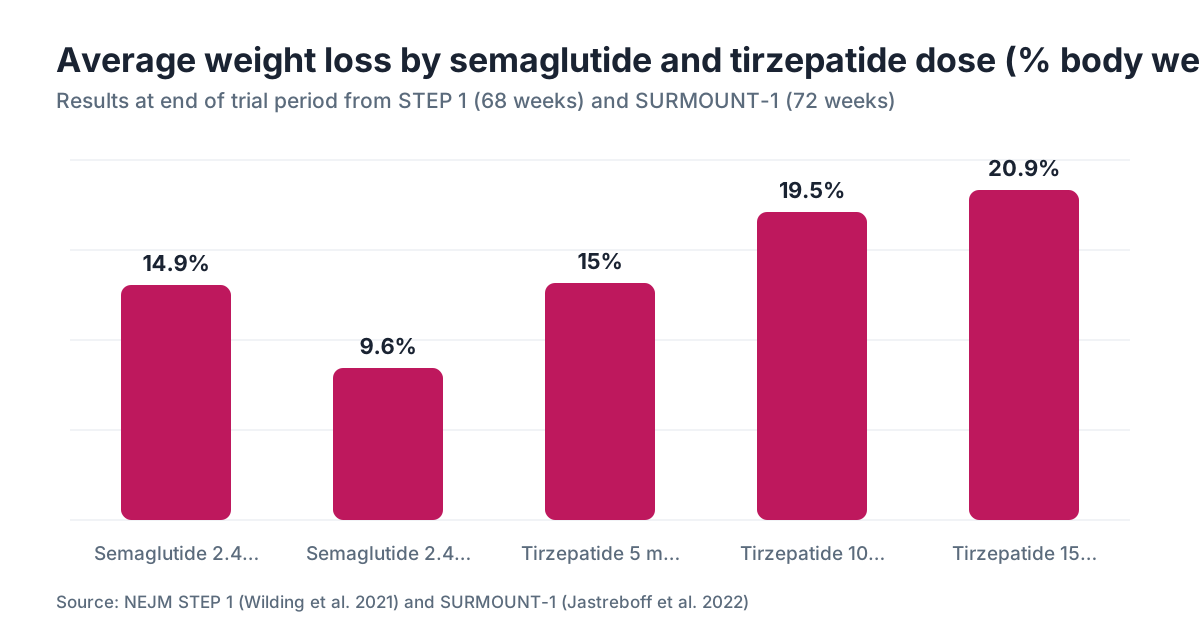
The STEP 1 trial, published in the New England Journal of Medicine in 2021, tested 2.4 mg subcutaneous semaglutide weekly in adults without diabetes. Participants lost an average of 14.9% of body weight over 68 weeks [1]. That is the number you see cited everywhere. Here's what the same paper also shows: the bottom quartile lost considerably less, and some people lost under 5%. The drug does not behave identically in every body.
For women, the picture gets messier. Hormonal status when you start, baseline insulin sensitivity, muscle mass, and how much cortisol you're running under stress all shape how much appetite suppression turns into a lower number on the scale. The trial populations included women, but the primary analysis never broke them out by menopausal status.
Before you decide the drug is failing, check one thing. Are you on the maintenance dose? The FDA-approved dose for weight management is 2.4 mg weekly. Most people spend months at 0.25, 0.5, or 1.0 mg during titration, and weight loss at those steps is modest [2]. The slow ramp is intentional and it protects your stomach, but it also means the drug has not reached full strength yet. If you're at or near 2.4 mg and still stuck, keep reading.
Could the dose be the main problem?
Yes, and it is probably the most underrated reason women stall. The standard titration goes: 0.25 mg for four weeks, then 0.5 mg, then 1.0 mg, then 1.7 mg, then 2.4 mg. Each step takes roughly a month. That is four to five months before you reach the dose that produced 14.9% weight loss in trials [1].
Some women climb faster with a physician's guidance. Others need extra weeks at a step because nausea is too rough. Both are fine. The trap is watching the scale barely budge at 0.5 mg, deciding the drug does nothing for you, and either quitting or losing heart before you ever hit a dose that was going to work.
Compounded semaglutide adds its own uncertainty. Concentration and fill accuracy vary by pharmacy [3]. If you're using a compounded version, the dose you think you're injecting may not match what's in the vial. That is a documented problem, not a hypothetical. Branded Wegovy or Ozempic from a licensed pharmacy does not carry that risk.
If your dose is right and you've sat at 2.4 mg for at least eight weeks with almost nothing on the scale, something else is driving the stall. The rest of this article is about finding it.
See our full breakdown: semaglutide for weight loss and compounded semaglutide.
How does perimenopause or menopause affect weight loss on semaglutide?
This is the section most weight loss articles skip, and for women over 35 it matters enormously. Falling estrogen changes where you store fat and how your cells respond to insulin, and semaglutide does nothing about that hormonal shift.
Estrogen governs fat storage location, insulin sensitivity, and to some degree how the hypothalamus reads appetite signals. As estrogen drops through perimenopause and menopause, several things happen at once: visceral fat piles up faster, insulin sensitivity falls, resting metabolic rate drops, and sleep quality frays (which pushes up ghrelin, the hunger hormone). Semaglutide handles the appetite side and leaves the rest untouched [4].
The North American Menopause Society describes the hormonal changes of menopause as directly tied to increased central adiposity, and notes these body composition shifts are partially independent of how much you eat [4]. Put plainly: you can cut calories because of semaglutide and still hold or gain fat around the middle because of what falling estrogen does to fat distribution.
This is why some women who add hormone therapy alongside a GLP-1 report better results than either one alone. As of 2025 there are no large randomized trials comparing semaglutide alone to semaglutide plus HRT in perimenopausal women. But the two attack different problems: semaglutide on appetite, estrogen on the environment pushing fat storage. If you're in perimenopause or past menopause and semaglutide isn't moving the needle, getting your hormone levels checked is a sensible next step.
Learn more about menopause, hormone replacement therapy, and estrogen patch options.
Is insulin resistance making semaglutide less effective?
Maybe. Semaglutide improves insulin sensitivity as a side effect, but it is not a direct sensitizer the way metformin is. If you carry significant insulin resistance, your body is already primed to store calories as fat and your hunger signals are scrambled. Semaglutide helps, but it may not fully override severe insulin resistance on its own.
Semaglutide started life as a diabetes drug. Polycystic ovary syndrome, prediabetes, and long-standing type 2 diabetes all involve real insulin resistance. Women with these conditions still lost weight in trials, but less: the STEP 2 trial enrolled adults with type 2 diabetes and found average weight loss of 9.6% on 2.4 mg semaglutide, against 14.9% in the non-diabetic STEP 1 population [1][5]. That gap is real, and part of it comes from how insulin resistance blunts the drug.
Get your fasting insulin, HOMA-IR, and HbA1c checked for a clearer picture. If those numbers look bad, your prescriber may add metformin or talk about switching to tirzepatide, which hits both GIP and GLP-1 receptors and does better in insulin-resistant patients. The SURMOUNT-1 trial found average weight loss up to 20.9% with tirzepatide 15 mg, well above the semaglutide trials [6].
See the full comparison at semaglutide vs tirzepatide.
Are you eating back the calories without knowing it?
This is uncomfortable to say, and it is also the single most common explanation for a semaglutide plateau. The drug turns hunger down. It does not turn it off, and it does nothing about the calories you eat when you aren't hungry.
Semaglutide doesn't change the caloric density of food, the habits that drive eating out of boredom or stress, or the way ultra-processed food slides past your satiety signals. Research on GLP-1 agonists keeps showing the same thing: people who track what they eat lose more than people who trust their appetite alone.
The patterns that quietly derail women: liquid calories (alcohol, juice, sweetened coffee), processed snacks that are small but dense, big portions of calorie-heavy food that still feel modest, and nighttime eating after the drug's peak effect has faded. Semaglutide's half-life is about seven days, so it's always in your system, but the appetite suppression is not flat across the day.
If you've never logged your food for two weeks on semaglutide, do it now. Weigh solid foods on a scale, not in cups. Most people are genuinely startled by what shows up. This is not about blame. It's about data. You can't fix what you can't see.
Protein deserves its own line. Aim for roughly 1.2 to 1.6 grams per kilogram of body weight daily, the range in Endocrine Society guidance, to protect muscle during a caloric deficit. Muscle burns more calories at rest. Women who skimp on protein on semaglutide can shed real muscle alongside fat, which drops resting metabolic rate and makes the plateau feed itself [7].
Could muscle loss be slowing your metabolism?
Yes, and it's easy to miss. When you lose weight fast through a caloric deficit, you lose fat and muscle together. GLP-1 agonists are no exception. The STEP trials didn't report lean mass in their primary analyses, but smaller body composition studies found semaglutide-driven weight loss includes meaningful muscle loss.
For women over 40, this compounds. Muscle mass already declines with age, and the loss speeds up after menopause. Drop more muscle through rapid weight loss and your resting metabolic rate falls further, so your body burns fewer calories at rest. Over a few months that alone can flatten the scale even while your appetite stays suppressed.
Resistance training is not optional if you're on semaglutide and want the loss to stick. Two to three sessions of progressive resistance work a week, paired with enough protein, preserves most lean mass during weight loss. The Endocrine Society recommends resistance exercise specifically for women during weight management [7]. This is the difference between losing fat and losing fat plus the muscle you need to hold that loss.
Bone density is worth watching too if you're dropping weight fast. Caloric restriction plus low estrogen is a rough combination for bone. A bone density test makes sense if you've been on semaglutide more than a year and carry risk factors for osteoporosis.
How do sleep and stress affect weight loss on semaglutide?
Bad sleep raises ghrelin (the hunger hormone), lowers leptin (the fullness hormone), and pushes up cortisol. Semaglutide works partly by improving leptin sensitivity, so chronic high ghrelin and cortisol from poor sleep fight the drug head-on.
A 2010 study in JAMA Internal Medicine found that sleep-restricted dieters on the same caloric deficit lost significantly less fat and more lean mass than well-rested dieters [9]. Semaglutide does not shield you from that.
For women in perimenopause and menopause, disrupted sleep is nearly universal. Night sweats, waking at 3 a.m., trouble falling asleep: all common, all tied to declining estrogen and progesterone. Progesterone has a GABAergic sedative effect, so when it drops, sleep quality usually drops with it [4]. If you aren't sleeping, your hormones are driving hunger and fat storage even while semaglutide tries to suppress appetite.
Chronic stress does the same damage through cortisol. High cortisol drives visceral fat specifically, the exact fat that is hardest to move in menopausal women. If your life carries a heavy stress load and your sleep is thin, fixing those two may do more for your weight trajectory than any dose change.
Learn about progesterone and its role in sleep for women in this phase.
Does alcohol stop semaglutide from working?
It can slow it to a crawl. Alcohol carries 7 calories per gram (close to fat), wrecks the second half of your sleep, raises cortisol, loosens your food choices, and does nothing for fullness the way protein or fiber does. One or two glasses of wine a few nights a week easily adds 200 to 400 calories that never register.
Here's a strange twist: some people on GLP-1 agonists say alcohol tastes different or that their cravings for it fade. That's real. GLP-1 receptors sit in reward pathways, and animal studies show reduced alcohol-seeking with GLP-1 agonism. But the effect varies a lot person to person. Don't assume the drug has handled your drinking for you.
If you drink regularly and don't count those calories, cutting alcohol for 30 days is one of the cleanest experiments you can run to see how much it's feeding your plateau.
Are there other medications or conditions that block weight loss?
Yes. Several common medications blunt weight loss or cause weight gain outright. If you started any of these around the time you started semaglutide, they may be canceling it out.
| Medication class | Effect on weight | Notes | |---|---|---| | Antidepressants (mirtazapine, paroxetine, amitriptyline) | Weight gain of 2-5+ kg average | SSRIs vary; mirtazapine is highest risk | | Antipsychotics (quetiapine, olanzapine) | Significant weight gain | Can exceed 10 kg | | Insulin and sulfonylureas | Weight gain | Semaglutide partially offsets in T2D | | Prednisone / oral corticosteroids | Weight gain, raises insulin resistance | Even short courses at high doses | | Beta-blockers (propranolol, metoprolol) | Modest weight gain, reduce exercise capacity | Cardioselective may be better | | Depo-Provera (medroxyprogesterone) | Weight gain | Switch if possible |
Conditions matter too. Hypothyroidism is the one most often missed. The American Thyroid Association estimates about 5% of the U.S. population has hypothyroidism, with women affected five to eight times more often than men, and many cases go undiagnosed [8]. Even subclinical hypothyroidism can pull resting metabolic rate down enough to block meaningful weight loss. A simple TSH test tells you where you stand.
Cushing's syndrome (excess cortisol) is rarer but produces the exact pattern many women describe: fat concentrated in the abdomen and face, trouble losing despite eating less, and fatigue. Worth ruling out if your prescriber hasn't already.
What does a semaglutide plateau actually mean and how long should you wait?
A plateau is not the drug failing. Weight loss on semaglutide follows a curve: fast in the first 12 weeks, slower from weeks 12 to 28, then often a true flat stretch around weeks 52 to 68. That matches the STEP 1 curve, where most of the loss happened before week 36 and then leveled off [1].
A plateau of four to six weeks is normal and expected. Your body is adapting. Resting metabolic rate drops as you lose weight (adaptive thermogenesis), and appetite can creep back. None of that is unique to semaglutide. It happens with every sustained caloric deficit.
A plateau longer than eight weeks, when you're on maintenance dose, tracking food carefully, exercising, sleeping decently, and have had your hormones and thyroid checked, is your cue to re-evaluate the drug itself. Options at that point: add metformin, address hormone deficits with HRT, switch to tirzepatide, or work with a registered dietitian to rebuild the diet around protein and fiber.
WomenRx works with women on exactly this kind of evaluation, looking at hormone levels, GLP-1 response, and which combination of moves actually fits where a woman is in life. The full picture matters more than just nudging the dose up.
When should you consider switching from semaglutide to tirzepatide?
Consider it after 12 weeks at semaglutide 2.4 mg with no movement, once you've addressed the fixable factors. Tirzepatide activates both GLP-1 and GIP receptors, and GIP may help the energy-expenditure side in ways GLP-1 alone does not. The SURMOUNT-1 trial showed weight loss of 15.0% on 5 mg, 19.5% on 10 mg, and 20.9% on 15 mg tirzepatide at 72 weeks in adults without diabetes [6]. That top figure sits meaningfully above semaglutide's 14.9%.
Switching is not a failure. These are different drugs with different mechanisms, and the fact that one suits a given person better is entirely predictable from the biology.
Not everyone tolerates tirzepatide's side effects, which resemble semaglutide's, though some people find one clearly worse than the other. Cost and insurance coverage differ. These are real practical limits to weigh alongside the efficacy numbers.
Read the full comparison: semaglutide vs tirzepatide.
What can you do this week if semaglutide has stopped working?
Start with the changes that move the needle most, in order. Here's what the evidence actually supports.
First, confirm your dose is right and the medication is stored properly: refrigerated, not frozen, used before expiration. Five minutes, and it clears the most basic variable.
Second, track everything you eat for two weeks with a food scale. Add up your protein. If it's under 100 grams a day, that's your first diet fix.
Third, get labs: TSH, fasting glucose, fasting insulin, HbA1c, and a basic metabolic panel. Add estradiol and FSH if you're over 38 and haven't had them checked. Add total and free testosterone if fatigue and low drive ride alongside the plateau.
Fourth, look at your sleep honestly. Under seven hours or waking multiple times a night is likely part of the problem. For women in perimenopause, that often means treating the underlying hormone decline rather than reaching for a sleep aid.
Fifth, start or recommit to resistance training. Twice a week preserves muscle. Three times is better. This is not optional for lasting results on any weight program.
Do all five and still see nothing after eight more weeks, and the conversation with your prescriber should turn to combination therapy or a different drug. That's not giving up. That's advocating for yourself.
WomenRx offers a free initial consultation for women who want their hormones and GLP-1 response looked at together, because these two systems are not independent.
Also worth reading: semaglutide and semaglutide for weight loss.
Frequently asked questions
How long does it take for semaglutide to start working for weight loss?
Most people feel some appetite suppression within the first one to two weeks, but real scale movement usually takes four to eight weeks at a therapeutic dose. The STEP 1 trial found most weight loss happened between weeks 4 and 36. If you've been on the maintenance dose of 2.4 mg for less than eight weeks, the drug may simply need more time.
Can you build a tolerance to semaglutide over time?
Tolerance isn't well documented with semaglutide the way it is with stimulants. What actually happens is metabolic adaptation: as you lose weight your resting metabolic rate falls, so holding the same deficit takes more effort. It looks like tolerance but it's your body's energy regulation adjusting. The same adaptation shows up with any sustained caloric restriction, drug or not.
Why am I losing inches but not pounds on semaglutide?
If your clothes fit better and your waist is shrinking while the scale sits still, you're likely losing fat and holding or building muscle, especially if you exercise. Body composition beats scale weight as a metric. Muscle is denser than fat, so a leaner body takes up less space at the same weight. This is a good outcome, not a sign the drug quit.
Does menopause make semaglutide less effective?
Menopause doesn't make semaglutide fail, but its hormonal environment creates resistance to weight loss that semaglutide alone doesn't touch. Falling estrogen raises visceral fat storage and cuts insulin sensitivity. Some women find adding hormone replacement therapy alongside semaglutide works better than either one alone, though large randomized trials of that exact combination aren't published yet.
What should I eat on semaglutide to maximize weight loss?
Prioritize protein (at least 1.2 to 1.6 grams per kilogram of body weight daily per Endocrine Society guidance), non-starchy vegetables, and fiber-rich whole foods. They keep you full and protect muscle. Skip ultra-processed snacks and liquid calories, which are dense but never trigger the satiety pathways semaglutide is boosting. Tracking food with a scale for at least two weeks exposes hidden calories.
Can hypothyroidism prevent weight loss on semaglutide?
Yes. Hypothyroidism lowers resting metabolic rate and can fully cancel the deficit that appetite suppression creates. The American Thyroid Association estimates hypothyroidism affects around 5% of the population, with women affected five to eight times more often than men. A simple TSH test catches it. If your thyroid is undertreated, fix the levothyroxine dose before blaming semaglutide.
Is it normal to plateau on semaglutide after a few months?
Completely normal. The STEP 1 curve shows the fastest weight loss in the first 16 weeks, then a clear slowdown. A plateau of four to six weeks during an otherwise good run is expected. A plateau lasting more than eight weeks despite maintenance dose, calorie tracking, and exercise is the point where it makes sense to investigate other causes.
Should I take semaglutide and hormone replacement therapy at the same time?
There's no clinical contraindication between semaglutide and standard HRT. They address different problems: semaglutide cuts appetite, HRT improves the hormonal environment driving fat storage and metabolic slowdown in menopause. Many prescribers are comfortable with both together. Whether you need HRT depends on your hormone levels and symptoms, not on being on a GLP-1.
What is the difference between Ozempic and Wegovy for weight loss?
Both contain semaglutide but at different approved doses and indications. Ozempic is FDA-approved for type 2 diabetes, with doses up to 2 mg weekly. Wegovy is FDA-approved for chronic weight management at 2.4 mg weekly. That higher dose produced the 14.9% weight loss in STEP 1. Using Ozempic off-label at lower doses typically produces less weight loss.
Why did I lose weight fast at first on semaglutide and then stop?
Early rapid loss on semaglutide is partly water and glycogen, more than fat, which makes the first weeks look faster than they are. After that drop, fat loss slows and metabolic adaptation kicks in: resting metabolic rate falls as you weigh less and your body conserves energy. That's physiology, not the drug quitting. More protein and resistance training help keep things moving.
Does tirzepatide work better than semaglutide if semaglutide stopped working?
The SURMOUNT-1 trial showed average weight loss up to 20.9% with tirzepatide 15 mg versus semaglutide's 14.9% in comparable populations. For people who plateau on semaglutide despite fixing lifestyle and dose, tirzepatide is a reasonable next step. Its dual GIP and GLP-1 mechanism may work better in significant insulin resistance. Discuss the switch with your prescriber after ruling out fixable factors first.
Can stress cause semaglutide to stop working?
Chronic stress raises cortisol, which drives visceral fat and raises blood sugar, working directly against semaglutide. High cortisol also disrupts sleep, which pushes up ghrelin and appetite. Semaglutide doesn't neutralize high cortisol. If your stress load is heavy and constant, addressing it through sleep, therapy, exercise, or stress management isn't optional for weight loss.
How do I know if my compounded semaglutide is dosed correctly?
Compounded semaglutide has variable concentration and fill accuracy depending on the pharmacy. If you're on a compounded version and not responding at what you believe is a therapeutic dose, ask the pharmacy for a certificate of analysis for your specific lot and confirm the concentration in your vials. Switching to branded Wegovy clears this up if supply allows. The FDA has raised concerns about compounded GLP-1 formulations.
Sources
- New England Journal of Medicine, Wilding et al. 2021, STEP 1 trial
- FDA, Wegovy (semaglutide) Prescribing Information
- FDA, Drug Safety Communications on compounded semaglutide
- North American Menopause Society (NAMS), Menopause Practice: A Clinician's Guide
- New England Journal of Medicine, Davies et al. 2021, STEP 2 trial
- New England Journal of Medicine, Jastreboff et al. 2022, SURMOUNT-1 trial
- Endocrine Society, Clinical Practice Guideline: Obesity in Adults
- American Thyroid Association, General Information on Hypothyroidism
- JAMA Internal Medicine (Annals of Internal Medicine), Nedeltcheva et al. 2010, Sleep and Weight Loss
- FDA, Ozempic (semaglutide) Prescribing Information