Why am I gaining weight on HRT? What the research actually shows
TL;DR: HRT itself does not cause fat gain in most women. Estrogen therapy actually reduces visceral fat accumulation after menopause. Weight gain on HRT is usually the menopause transition itself, the wrong progestogen, fluid retention from oral estrogen, an undertreated thyroid, or lifestyle shifts that started before HRT began. Most of these have fixable solutions.
Does HRT actually cause weight gain, or is something else going on?
HRT does not cause fat gain in most women, and well-designed studies back that up. The confusion is understandable. Many women start hormone therapy right in the middle of the menopause transition, which is exactly when body composition shifts anyway, with or without hormones.
The Women's Health Initiative Observational Study followed more than 92,000 postmenopausal women and found that hormone therapy users gained less weight over a three-year period than women who did not use it [1]. A 2011 meta-analysis in Climacteric found the same pattern: estrogen therapy reduced total body fat and visceral fat compared to placebo [2].
So if the scale is climbing since you started HRT, the honest answer is that HRT is probably not the primary cause. But several real mechanisms can make it feel that way. Most of them are fixable.
What changes in menopause that makes weight gain so common?
The biology here explains why so many women blame their HRT when the transition itself is the actual driver.
Estrogen does a lot more than manage hot flashes. It influences where fat is stored, how sensitive your cells are to insulin, and how much lean muscle you maintain. As estrogen drops in perimenopause and after menopause, fat storage shifts from the hips and thighs toward the abdomen and visceral organs. This is not cosmetic. Visceral fat is metabolically active and tied to higher insulin resistance.
Muscle mass declines with age at roughly 3 to 8 percent per decade after 30, and it accelerates after menopause [3]. Muscle burns more calories at rest than fat does, so losing it quietly lowers your resting metabolic rate. You can eat the exact diet you have eaten for 20 years and still gain fat, purely because your body composition shifted underneath you.
Sleep disruption compounds the problem. Night sweats and other symptoms wreck sleep, and poor sleep raises ghrelin, your hunger hormone, while lowering leptin, the hormone that signals fullness. One night of partial sleep deprivation can push next-day calorie intake up by 200 to 300 calories. If that happens four nights a week, the math adds up fast.
None of this is caused by HRT. All of it can begin before you start hormone therapy, which is why women feel like HRT triggered the gain when it was already in motion.
How much weight do women typically gain during the menopause transition?
The Study of Women's Health Across the Nation (SWAN), a long-running prospective cohort, found women gained an average of about 1.5 kg (roughly 3.3 pounds) per year through perimenopause, with the rate stabilizing somewhat after the final period [4]. The full transition can span 7 to 14 years. That accumulates.
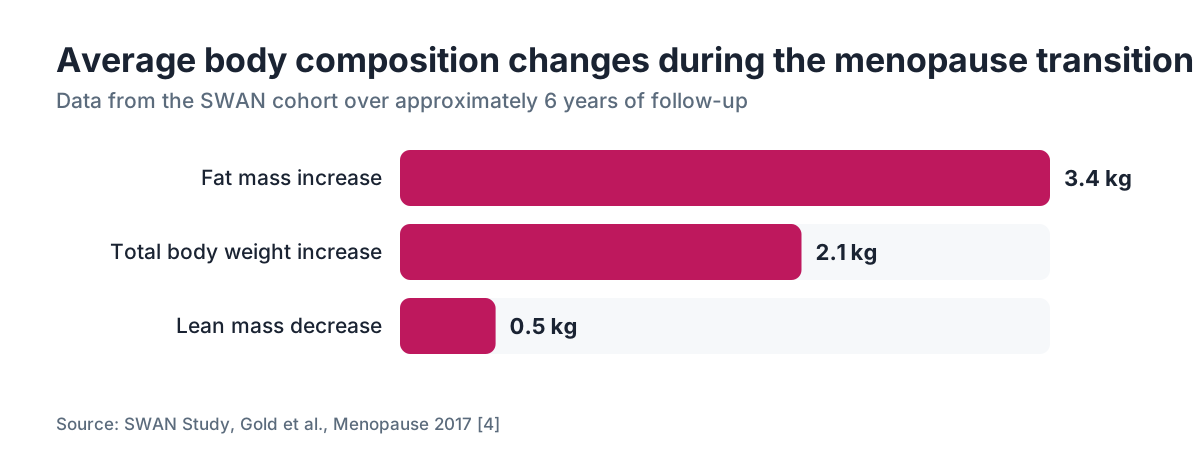
Here is the part most women miss. The weight gain in SWAN was not evenly distributed. Fat mass rose about 3.4 kg over six years of follow-up while lean mass fell, which means the scale number understates the metabolic shift. Your weight can stay nearly flat while your fat percentage climbs and your muscle percentage drops.
This is why BMI is a poor tool during this stretch. Two women with identical BMIs can carry very different metabolic risk depending on their muscle-to-fat ratio.
| Metric | Change over ~6 years in SWAN cohort | |---|---| | Total body weight | +2.1 kg average | | Fat mass | +3.4 kg | | Lean mass | -0.5 kg | | Waist circumference | +4 to 6 cm |
Source: SWAN study, published data from Gold et al. and related analyses [4].
Can the type of progestogen in your HRT cause weight gain?
Yes. This is one of the most clinically useful distinctions to understand, because progestogens do not all behave the same way in the body.
Synthetic progestins like medroxyprogesterone acetate (MPA), used in the original Women's Health Initiative trial, bind to androgen and glucocorticoid receptors on top of progesterone receptors. That cross-reactivity can promote fluid retention, increase appetite, and blunt the good effects estrogen has on insulin sensitivity. MPA still shows up in some combined oral contraceptives and older HRT formulations.
Micronized progesterone (the bioidentical form, sold as Prometrium in the US) has a much more selective binding profile. It lacks the same androgenic and glucocorticoid activity. The KEEPS trial (Kronos Early Estrogen Prevention Study) and the E3N cohort both found that women on micronized progesterone had more favorable metabolic and cardiovascular profiles than women on synthetic progestins [5].
Norethisterone (norethindrone) is another synthetic progestin used in some HRT formulations. It has moderate androgenic activity and can worsen lipid profiles in some women.
If you are on combined HRT and gaining weight, ask your prescriber which progestogen you are taking and whether micronized progesterone fits your situation. That is a reasonable, evidence-based conversation to have.
Does the delivery method (pill vs patch vs gel) affect weight?
It does, and the route of estrogen matters more than most women realize.
Oral estrogen passes through the liver before it reaches the bloodstream. This is called first-pass metabolism. That liver processing raises levels of sex hormone-binding globulin (SHBG) and C-reactive protein, and it changes how the liver handles glucose and triglycerides. Some women on oral estradiol get meaningful fluid retention from these hepatic effects.
Transdermal estradiol (patch, gel, or spray) skips the liver. It delivers estrogen straight into the bloodstream through the skin at steady, lower concentrations. Multiple studies found that transdermal estradiol has a more neutral effect on triglycerides and inflammatory markers than oral forms, and it does not raise venous thromboembolism risk the way oral estrogen does [6].
If you are on oral estrogen and noticing puffiness, bloating, or a few pounds of apparent gain, switching to a patch or gel at an equivalent dose sometimes clears it within a few weeks. The fluid is not fat, but it feels like weight gain and it is worth addressing.
A telehealth practice like WomenRx that specializes in hormone therapy can walk through whether a route change makes sense for your regimen.
Could your thyroid be the real cause?
Hypothyroidism is common in perimenopausal and postmenopausal women, and its symptoms overlap almost completely with menopause: fatigue, weight gain, brain fog, cold intolerance, constipation, low mood. It is easy for both patient and clinician to pin everything on menopause and never check the thyroid.
The American Thyroid Association estimates that one in eight women will develop a thyroid disorder during her lifetime, and prevalence rises sharply after 50 [7]. Subclinical hypothyroidism, where TSH is elevated but free T4 is still normal, is especially easy to miss.
Ask for a basic thyroid panel (TSH, free T4, and ideally free T3) if your weight gain comes with fatigue, dry skin, hair loss, or constipation, especially if your HRT seems to handle your estrogen symptoms well but the weight keeps climbing. For more on thyroid hormone's role in metabolism, see our piece on thyroid hormone replacement therapy.
Treating even subclinical hypothyroidism can reverse several pounds of metabolic weight gain. That is not a small thing.
Is there a link between HRT dose and weight changes?
A dose that is too low can leave you with worse metabolic outcomes than the right dose. When estrogen is too weak to blunt the full menopausal shift, women keep on with poor sleep, higher cortisol, and more visceral fat deposition.
A dose that is too high (particularly with certain progestins) can push fluid retention and appetite the other way.
There is no universal correct dose. The Endocrine Society's clinical practice guideline on menopause hormone therapy recommends the lowest dose that adequately treats symptoms, titrated to individual response [8]. Still, many women in practice are underdosed, especially on transdermal estradiol, because providers trained on older guidelines use doses calibrated for oral formulations.
A standard transdermal estradiol dose runs from 0.025 mg per day to 0.1 mg per day (25 mcg to 100 mcg). Women who were on oral estradiol at 1 mg or 2 mg per day sometimes feel undertreated after a switch to the equivalent transdermal dose without proper titration. If your hormones do not feel like they are working, the dose may genuinely be too low, and the metabolic cost of undertreated menopause is real.
What does cortisol have to do with HRT weight gain?
Cortisol gets left out of this conversation too often. Perimenopause and early postmenopause come with elevated cortisol reactivity, partly because estrogen normally modulates the hypothalamic-pituitary-adrenal (HPA) axis. When estrogen drops, that buffering fades.
High cortisol parks fat in the abdomen, pushes glucose into the bloodstream, and drives appetite for calorie-dense food. It also wrecks sleep, which loops back and raises cortisol again.
Women in high-stress phases of life (career pressure, aging parents, financial strain) often hit those years right when menopause arrives, so the cortisol exposure stacks. No hormone therapy fixes a stress physiology problem. That takes actual stress reduction, real sleep, and sometimes an assessment of adrenal function.
If your cortisol stays high, even well-optimized HRT will move the scale only a little, because the cortisol signal is actively working against the estrogen signal.
Can GLP-1 medications help with weight gain during or after HRT?
Yes, and this is where the conversation has shifted in the last three years.
GLP-1 receptor agonists like semaglutide (Ozempic, Wegovy) and tirzepatide (Mounjaro, Zepbound) hit the metabolic drivers estrogen therapy does not fully cover: insulin resistance, elevated appetite, and the slowed gastric emptying that makes overeating easy.
The STEP 1 trial found semaglutide 2.4 mg weekly produced an average weight loss of 14.9% of body weight at 68 weeks in adults with overweight or obesity [9]. SURMOUNT-1 with tirzepatide showed larger reductions, with the highest dose (15 mg) producing mean weight loss of 20.9% at 72 weeks [10].
These trials were not designed for menopausal women specifically, but observational data and clinical experience suggest women in this group respond well, often better than expected, because the GLP-1 mechanism directly counters the insulin resistance that estrogen loss causes.
HRT and GLP-1 therapy are not competing choices. Many clinicians now run them together: estrogen to protect bone density, cardiovascular health, and symptoms; a GLP-1 for the weight and metabolic piece. For background on semaglutide, see is semaglutide the same as Ozempic and the latest in semaglutide news.
WomenRx offers GLP-1 prescribing alongside hormone therapy for women who want both conversations in one place.
What changes to diet and exercise actually work in this hormonal context?
The advice that worked in your 30s may not work now, and that is not a willpower problem. It is a physiology problem.
Protein matters more after menopause than before. Muscle protein synthesis becomes less efficient with age (anabolic resistance), so you need more dietary protein to hold the same muscle. Most guidelines for menopausal women suggest 1.2 to 1.6 grams of protein per kilogram of body weight per day, well above the general adult RDA of 0.8 g/kg [3]. For a 150-pound (68 kg) woman, that is roughly 80 to 110 grams of protein a day.
Resistance training is not optional if metabolic health is the goal. It is the most direct way to preserve and rebuild muscle, improve insulin sensitivity, and keep resting metabolic rate from sliding. Two to three sessions a week of progressive resistance work produces measurable changes in muscle-to-fat ratio within 8 to 12 weeks.
Carbohydrate quality matters more than quantity for most women. Refined carbs spike insulin, and with declining estrogen reducing insulin sensitivity, that spike is harder to clear. Swap refined carbs for high-fiber whole foods, vegetables, legumes, and whole grains to lower average blood glucose and stay full longer.
Alcohol deserves a direct mention. Even moderate drinking raises cortisol, disrupts sleep architecture, and adds empty calories. Plenty of women notice real changes in body composition when they cut alcohol in perimenopause, even though the same intake did nothing visible at 35.
None of these changes are dramatic or new. But their relative weight shifts in menopause, and if you have been doing the same things without results, the ratio probably needs to change.
When should you go back to your prescriber about weight on HRT?
Go back when the weight gain is clearly beyond what the transition alone explains, when you have given lifestyle changes a genuine 8 to 12 weeks, or when you suspect your current regimen is wrong for you.
Specifically, book a conversation if you are on a synthetic progestin and have never discussed micronized progesterone, if you are on oral estrogen with bloating or fluid retention, if your TSH has not been checked in the last year, or if your HRT dose was set low and never adjusted.
Bring data. A few weeks of tracking protein intake, sleep hours, and exercise gives your provider something to work with. If your prescriber waves off weight concerns without examining the regimen, that is a signal to seek a second opinion from someone with real menopause expertise. The Menopause Society (formerly NAMS) keeps a provider directory that can help you find a certified menopause practitioner.
For context on the broader shift in menopause care, The New Menopause covers how clinical thinking has changed. Knowing what good care looks like makes it easier to recognize when you are not getting it.
You deserve a prescriber who takes this seriously. Weight in menopause is not cosmetic. It is cardiovascular risk, bone health, and quality of life.
Frequently asked questions
Does estrogen make you gain weight?
No. Estrogen therapy in the menopause context tends to reduce visceral fat compared to no treatment. The Women's Health Initiative Observational Study found hormone therapy users gained less weight than non-users over three years. Weight gain women notice after starting HRT is usually the continuation of the menopause transition itself, fluid retention from oral estrogen, or the wrong progestogen, not estrogen causing fat gain.
Why am I bloated and puffy since starting HRT?
Bloating and fluid retention are most often linked to oral estrogen (pill form) or synthetic progestins. Oral estrogen triggers liver proteins that can cause water retention. Switching to transdermal estradiol (patch, gel, or spray) often clears puffiness within a few weeks. If you are on a synthetic progestin, ask your prescriber about micronized progesterone too.
Will stopping HRT help me lose weight?
Unlikely, and stopping may make things worse. HRT protects against the visceral fat accumulation that accelerates after estrogen drops. Women who stop estrogen therapy often shift faster toward abdominal fat storage. If weight is the concern, optimize the type and route of HRT rather than stopping it. Stopping also removes bone density and cardiovascular benefits.
What is the best HRT for weight loss?
No HRT formulation is proven to cause weight loss on its own. The most metabolically favorable combination is transdermal estradiol paired with micronized progesterone. It avoids the fluid retention of oral estrogen and the androgenic and glucocorticoid effects of synthetic progestins. It does not guarantee weight loss but removes the regimen as an active obstacle. A GLP-1 medication addresses weight more directly if that is the goal.
Can perimenopause cause weight gain even before periods stop?
Yes. Estrogen becomes erratic in perimenopause years before the final period, and the metabolic effects (more visceral fat, declining muscle, insulin resistance) can start well before official menopause. SWAN data shows weight and body composition changes beginning in early perimenopause. This is one reason weight gain in the mid-40s surprises women who have held stable weight for years. See also our article on peri menopausal symptoms.
Why does my belly fat keep increasing even on HRT?
Several possible reasons: your estrogen dose may be too low to fully offset visceral fat redistribution; your progestogen may have androgenic activity that promotes abdominal fat; cortisol from poor sleep or chronic stress is adding to the signal; or protein intake and resistance training are not enough to hold muscle. Visceral fat responds to the whole metabolic picture, not estrogen alone. Target each factor one at a time.
How do I know if my thyroid is causing my weight gain on HRT?
Request a thyroid panel including TSH and free T4. Symptoms pointing toward thyroid over menopause include persistent cold hands and feet, constipation, hair thinning across the whole scalp (more than the temples), and fatigue that does not lift with better sleep. Thyroid disorders affect one in eight women over a lifetime and are more common after 50. Elevated TSH with normal free T4 (subclinical hypothyroidism) can cause weight gain. See our piece on thyroid hormone replacement therapy.
Can I take a GLP-1 and HRT at the same time?
Yes. HRT and GLP-1 receptor agonists like semaglutide or tirzepatide work on different biological mechanisms and are not contraindicated together. Many clinicians now prescribe both: HRT for symptoms, bone protection, and cardiovascular benefit; a GLP-1 for appetite regulation, insulin sensitivity, and weight reduction. The STEP 1 and SURMOUNT-1 trials confirm substantial weight loss with these agents. Discuss your full medication list with your prescriber before starting.
Does progesterone cause weight gain?
Synthetic progestins (like medroxyprogesterone acetate or norethindrone) can cause fluid retention, increased appetite, and insulin resistance in some women because they bind receptors beyond the progesterone receptor. Micronized progesterone (bioidentical) has a more selective binding profile and is much less linked to these effects. The distinction matters: ask which progestogen you are on and whether a switch makes sense.
How long does it take for HRT to stop causing water retention?
Fluid retention from oral estrogen or a synthetic progestin usually improves within two to four weeks of switching to transdermal estradiol or micronized progesterone. If it has not improved after six weeks on the new formulation, look at other causes (dietary sodium, venous insufficiency, thyroid). True fat gain takes months to build; rapid increases in the first few weeks of HRT are almost always fluid.
What should I eat on HRT to avoid weight gain?
Prioritize protein at 1.2 to 1.6 grams per kilogram of body weight daily to counter menopausal anabolic resistance and hold muscle. Replace refined carbs with high-fiber whole foods to support insulin sensitivity. Cut alcohol, which disrupts sleep and raises cortisol. These shifts matter more in perimenopause and menopause than at younger ages because estrogen loss removes the metabolic buffer you used to have. Caloric restriction alone, without protein and resistance training, tends to cost you muscle, not fat.
Is bleeding after menopause related to HRT weight gain?
Bleeding after menopause is not related to weight gain and needs its own evaluation. Any uterine bleeding more than 12 months after the final period needs a workup to rule out endometrial pathology. It is not a side effect to note and move past. See our detailed article on is bleeding after menopause always cancer for when it is and is not concerning.
Does testosterone therapy help with weight in menopause?
Testosterone helps maintain muscle mass and libido, and some women in menopause have low testosterone. Adequate testosterone supports the ability to build and hold lean mass with resistance training, which indirectly helps body composition. But testosterone is not a weight-loss treatment on its own, and high doses cause androgenic side effects. The evidence base for testosterone in women is narrower than for estrogen. It is typically added after estrogen therapy is optimized.
Sources
- Climacteric, Salpeter et al. meta-analysis 2010
- American College of Sports Medicine, Chodzko-Zajko et al. Exercise and Physical Activity for Older Adults
- SWAN Study, Gold et al., Menopause 2017
- KEEPS Trial, Harman et al., Annals of Internal Medicine 2014
- Canonico et al., Circulation 2007 (transdermal estradiol and VTE risk)
- American Thyroid Association, General Information
- Endocrine Society Clinical Practice Guideline: Treatment of Menopause
- STEP 1 Trial, Wilding et al., NEJM 2021
- SURMOUNT-1 Trial, Jastreboff et al., NEJM 2022
- Menopause Society (NAMS) Position Statement on Hormone Therapy 2022
- FDA Prescribing Information, Prometrium (micronized progesterone)