When to worry about perimenopausal bleeding: a clear guide
TL;DR: Irregular cycles and heavier periods are common in perimenopause. Some patterns are different. Get evaluated within days if periods come less than 21 days apart, you soak more than one pad per hour for two hours, you bleed after 12 months without a period, or you spot after sex. Endometrial cancer risk climbs after 45, so unusual is not the same as harmless.
What counts as normal perimenopausal bleeding?
Normal perimenopausal bleeding is unpredictable bleeding: cycles that shorten first, then lengthen and scatter, with flow that runs heavier or lighter than your old normal. Perimenopause is the transition before your final period, and it can start anywhere from your late 30s to your early 50s. See our guide on perimenopause age for when this usually begins.
During this window estrogen and progesterone stop following a monthly pattern. Follicle-stimulating hormone (FSH) spikes erratically. Ovulation becomes unreliable. That hormonal chaos shows up in your uterus.
The North American Menopause Society (NAMS) describes the typical pattern this way: cycles shorten first (many women drop from 28-day cycles to 21-24 days), then lengthen and become unpredictable, with heavier or lighter flow than before [1]. Skipping a cycle, then having two close together, is textbook. Clots smaller than a quarter are common. Spotting between periods happens.
Here is the biology. Without consistent ovulation, your uterine lining builds up under estrogen and never gets the progesterone signal that triggers a clean, timed shed. The lining thickens, and when it finally lets go, the flow can be heavy. Annoying, sometimes debilitating, but a recognized part of perimenopause and not a red flag on its own.
The practical rule: if your period has always been somewhat irregular and it stays in roughly the same disruptive-but-patterned zone, that is perimenopause doing what perimenopause does. The alarm bells ring when something changes sharply from your own baseline, or when you cross one of the specific thresholds below.
What bleeding patterns actually signal a problem?
Seven patterns should send you to a clinician within days, not at your next annual exam.
1. Cycles shorter than 21 days. When periods arrive less than three weeks apart repeatedly, the lining is not getting time to stabilize. This can reflect heavy unopposed estrogen or, less often, a structural problem like polyps or submucosal fibroids.
2. Soaking a pad or tampon more than once per hour for two or more consecutive hours. The American College of Obstetricians and Gynecologists (ACOG) uses this as the clinical threshold for heavy menstrual bleeding (HMB) that needs workup [2]. At that rate you are also at real risk of iron-deficiency anemia. Quantitative studies put pathologic loss at more than 80 mL per cycle, but the pad-per-hour rule is the proxy most clinicians actually use.
3. Bleeding after 12 consecutive months without a period. This is postmenopausal bleeding by definition, and it has to be evaluated. Full stop. A 2018 systematic review in JAMA Internal Medicine found endometrial cancer in roughly 10 percent of women who present with postmenopausal bleeding [3]. Ten percent is not a small number.
4. Bleeding after sex (postcoital bleeding). This can come from cervical ectropion, which is harmless, but it can also mean cervical dysplasia, endometrial polyps, or cervical cancer. It always warrants a pelvic exam and, depending on your Pap history, a colposcopy.
5. Bleeding between periods that lasts more than a few days or keeps recurring. Occasional mid-cycle spotting around ovulation is common. Spotting that shows up most months, drags on for days, or is getting heavier is a different animal.
6. Periods that last longer than 7 days repeatedly. Prolonged bleeding is one of the ACOG criteria for HMB and often points to an anatomic cause: polyps, fibroids, or adenomyosis.
7. Any bleeding with pelvic pain, pressure, or a feeling of fullness. Together these raise concern for fibroids big enough to distort the uterine cavity, ovarian masses, or, rarely, gynecologic cancer.
These are not wait-and-see situations. They are call-this-week situations.
How does endometrial cancer risk fit into this?
Endometrial cancer risk builds during and after perimenopause, and unopposed estrogen is the main reason why. Endometrial (uterine) cancer is the most common gynecologic cancer in the United States. The American Cancer Society estimates roughly 67,880 new cases in 2024, with a median diagnosis age of 63 [4].
Here is the mechanism. When you stop ovulating consistently, progesterone production drops while estrogen keeps going, sometimes at high levels. Estrogen tells endometrial cells to grow. Without progesterone to counteract it, that growth can move from simple hyperplasia (excess thickness, usually benign) to complex atypical hyperplasia (precancerous) to carcinoma.
Risk factors that stack on top of this include:
- BMI over 30 (fat tissue makes estrogen independent of the ovaries)
- Never having been pregnant
- Diabetes or insulin resistance
- A history of polycystic ovary syndrome (PCOS)
- Tamoxifen use for breast cancer
- Lynch syndrome or other hereditary colon cancer syndromes
For women on hormone therapy, the type matters enormously. According to the National Cancer Institute, estrogen-only therapy in a woman with a uterus raises endometrial cancer risk, while combination estrogen-plus-progestogen therapy does not, and may lower it compared to no therapy [5]. That is why progesterone is not optional for women with a uterus who take estrogen. See our guide on hormone replacement therapy for how this gets prescribed.
A thickened endometrial stripe on ultrasound is the first objective clue clinicians look for. The standard threshold: a stripe greater than 4-5 mm in a postmenopausal woman warrants biopsy [6]. In perimenopausal women the number is fuzzier because the lining changes with cycle phase, but thickening beyond 12-16 mm at any phase, or an irregular or heterogeneous look, generally triggers tissue sampling.
What tests will a doctor actually order?
A workup for abnormal perimenopausal bleeding follows a predictable sequence: imaging first, tissue sampling next, direct visualization if the picture stays unclear.
Transvaginal ultrasound (TVUS) is almost always step one. It measures endometrial stripe thickness and picks up fibroids, polyps, and ovarian cysts. TVUS has roughly 80-90 percent sensitivity for endometrial pathology in symptomatic women [6]. Not painful for most women, though it can be uncomfortable.
Endometrial biopsy (EMB) is the key test when the concern is the lining itself. A thin catheter goes through the cervix and pulls a small tissue sample. Office-based EMB has roughly 91 percent sensitivity for endometrial carcinoma in postmenopausal women, per a meta-analysis in the Annals of Internal Medicine [7]. In perimenopausal women sensitivity runs a bit lower, because sampling is blind and cancer, if present, can be focal. A negative biopsy reassures but does not settle the question if the sampling was difficult or incomplete.
Saline infusion sonohysterography (SIS or SHG) sharpens the view of the cavity by filling it with saline during ultrasound. It is especially good at catching polyps that standard TVUS misses. Many gynecologists order it when the first ultrasound is inconclusive.
Hysteroscopy is the gold standard for seeing the cavity directly and taking targeted biopsies. It is usually held in reserve for abnormal or inconclusive prior tests, or for persistent bleeding despite a negative initial workup.
Lab work typically includes a complete blood count (checking for anemia from blood loss), thyroid-stimulating hormone (thyroid disorders cause abnormal bleeding), and sometimes prolactin. If hormone therapy is in play, levels may be checked to see whether the regimen fits.
Clinical judgment sets the order. A 38-year-old with one heavy period after starting a new medication gets a different workup than a 52-year-old with three months of intermenstrual bleeding and an elevated BMI.
Does heavy bleeding in perimenopause always mean something serious?
No. Most heavy perimenopausal bleeding is structural, not cancer.
Uterine fibroids are present in up to 70 percent of white women and up to 80 percent of Black women by age 50, per National Institute of Environmental Health Sciences data [8]. Submucosal fibroids, which grow into the cavity, are the ones most likely to drive heavy and prolonged bleeding. Intramural fibroids (inside the muscle wall) can also contribute. Fibroids are not cancer. They do not turn into cancer. But they can make periods miserable and, in some cases, bad enough to cause symptomatic anemia.
Endometrial polyps are another common culprit. These benign overgrowths of the lining cause irregular spotting and heavier periods in a lot of perimenopausal women. Most are harmless, though a small share carry atypical cells and get removed for a closer look under the microscope.
Adenomyosis, where endometrial glands grow into the uterine muscle, causes heavy, crampy, drawn-out periods. It is confirmed reliably only by pathology after hysterectomy, though MRI does a decent job. It does not raise cancer risk.
Bleeding disorders are underdiagnosed in women with heavy periods. Von Willebrand disease, the most common inherited bleeding disorder, affects roughly 1 percent of the population and often shows up as heavy periods that have been happening for years. If you have always had heavy periods plus easy bruising, nosebleeds, or long bleeding after dental work, ask for a coagulation screen.
The takeaway: getting evaluated does not mean you will walk out with a scary diagnosis. It means you will know what you are dealing with. Fibroids, polyps, and adenomyosis all have treatments. Ignoring them just extends the misery.
How is abnormal perimenopausal bleeding treated?
Treatment depends on the cause and how much the bleeding is wrecking your life. There is no single protocol.
Hormonal therapy is the most common medical route when no structural lesion is driving the bleeding. Combined hormonal contraceptives (pills, patch, ring) get prescribed often in perimenopause even when contraception is not the point, because the progestin steadies the lining and cuts flow. The levonorgestrel intrauterine system (Mirena) reduces menstrual blood loss by 71-95 percent in clinical trials and is one of ACOG's first-line treatments for HMB [9]. Progestin-only therapy, taken cyclically (10-14 days per month) or continuously, is another way to oppose estrogen-driven buildup.
Menopausal hormone therapy (MHT) can actually calm heavy perimenopausal bleeding by supplying steady, predictable hormone levels instead of the natural roller coaster. It has to include enough progestogen for women with a uterus. Services like WomenRx that focus on women's hormonal health can assess whether MHT fits your picture, including which progestogen type and dose make sense.
Non-hormonal medications include tranexamic acid, an antifibrinolytic that reduces loss during the period (not between periods), and NSAIDs like ibuprofen or naproxen, which cut prostaglandin-driven blood loss by roughly 20-30 percent. These work on the period itself, not the cycle.
Procedural options include endometrial ablation, which destroys most of the lining and stops or sharply reduces periods in 80-90 percent of women. It is outpatient, and recovery runs a few days. Ablation is off the table if there is any suspicion of cancer or hyperplasia, and it works poorly when large fibroids distort the cavity. One catch: after ablation, future endometrial biopsies get harder to read.
Hysterectomy is definitive. No uterus, no bleeding. Major surgery, real recovery time, but for women with severe adenomyosis, large fibroids, or recurrent hyperplasia who are done with fertility, it ends the problem for good.
Fibroid-specific treatments include uterine fibroid embolization (UFE), which cuts off the blood supply to fibroids without surgery, and newer drugs like relugolix (Myfembree) and elagolix (Oriahnn). These are GnRH antagonists that suppress ovarian hormone output to shrink fibroids and reduce bleeding. They are not long-term answers on their own because full suppression is not sustainable indefinitely, but they can bridge you to menopause or to a procedure.
What does bleeding look like when perimenopause is ending?
As perimenopause winds down, periods usually get lighter and further apart, not heavier. A common pattern: several months of regular-ish cycles, then a long gap, then one or two more periods, then nothing. The average American woman reaches menopause (12 consecutive months without a period) at age 51-52 [10].
If bleeding gets heavier as you close in on what you think is your last period, flag it. Not because heavier is always pathological, but because the reflex of "this must just be perimenopause" can delay a diagnosis. The wind-down pattern varies, and some women do have heavier final periods. Still not something to diagnose yourself.
Once you have gone 12 months without bleeding, any return is postmenopausal bleeding and needs evaluation. There is no benign version of "oh, my period just came back." Vaginal atrophy can cause light spotting from fragile tissue, and that is usually harmless, but you cannot assume it without an exam. Endometrial pathology has to be ruled out.
For more on the timeline of this whole transition, see our articles on when does menopause start and menopause age.
Can hormone therapy cause or change perimenopausal bleeding?
Yes, and it is a common source of confusion and needless worry. When you start combination HRT (estrogen plus progestogen), irregular breakthrough bleeding is expected for the first 3-6 months while the lining adjusts to a new hormonal environment.
Most guidelines, including NAMS, treat unscheduled bleeding in the first 6 months of a new regimen as usually not a red flag. What warrants investigation is bleeding that persists past 6 months, or new bleeding after months of a stable or bleed-free pattern [1].
The progestogen type matters. Micronized progesterone (Prometrium) tends to cause more irregular spotting in the early months but is generally well tolerated long-term. Synthetic progestins like medroxyprogesterone acetate and norethindrone acetate give better cycle control for some women but come with different side-effect profiles.
Estrogen dose and delivery route shape the bleeding pattern too. Sequential HRT (estrogen every day, progestogen for 10-14 days per cycle) produces a withdrawal bleed at the end of each progestogen phase, like a light period. Continuous combined HRT (both hormones daily) aims to suppress the lining enough to stop bleeding entirely. Most women on continuous combined HRT become bleed-free within 6-12 months, though the transition can be bumpy.
If you are on an estrogen patch or another formulation and suddenly bleed heavier or more often after months of stability, that is the pattern to get checked. A changed pattern on a stable regimen worries me more than the expected early adjustment.
If you are not on HRT yet and want to understand your options, our hormone replacement therapy guide covers formulations, evidence, and how to raise it with a clinician.
When should you go to the ER versus make a regular appointment?
Most abnormal perimenopausal bleeding is urgent but not an emergency. You need to be seen within days to a couple of weeks, not necessarily tonight.
Go to the emergency room or call 911 if:
- You are soaking through a pad or tampon every 15-30 minutes for more than an hour, especially with dizziness, lightheadedness, or a racing heart. This is hemorrhagic blood loss.
- You pass clots larger than a golf ball repeatedly over several hours.
- You get sudden severe pelvic pain with heavy bleeding and feel faint. This raises concern for a ruptured ectopic pregnancy if you could be pregnant, or a uterine or ovarian emergency.
Call your gynecologist or primary care provider for an appointment within a week or two if:
- You had your first episode of truly heavy bleeding (soaking through protection in under an hour) that then resolved.
- You have had postcoital bleeding for the first time.
- Your cycles suddenly turned much shorter (under 21 days) or longer (over 35-45 days) compared to your own norm.
- You have had any bleeding more than 12 months after your last period.
A telehealth visit can work as a first step for some of these, mainly to get a referral or order initial labs. But anything that might need a pelvic exam or ultrasound will eventually need an in-person visit. Do not let convenience be the reason you delay a physical workup.
WomenRx clinicians can help you sort out whether your bleeding pattern needs immediate in-person care or whether hormonal evaluation and a care plan is the right starting point.
What questions should you bring to your appointment?
Walk in with your bleeding history written down. Clinicians can only act on what you can describe, and "it's been heavy lately" tells them almost nothing.
Track and bring:
- The start and end dates of your last 3-6 periods
- Your heaviest day: how many pads or tampons, whether you soaked through them, whether you passed clots and roughly how large
- Any bleeding between periods: when, how much, how many days
- Any bleeding after sex
- Any pelvic pain: when it hits, how severe, what it feels like (cramping vs. pressure vs. stabbing)
- Every medication and supplement, including hormones, phytoestrogens, and herbal products (black cohosh, red clover, and dong quai can all affect bleeding)
Questions worth asking:
- What is my endometrial stripe thickness, and does it call for a biopsy?
- Does my pattern warrant a saline sonogram or hysteroscopy, or is ultrasound enough?
- Should I get a CBC to check for anemia?
- Is this pattern typical for where I am in perimenopause, or does it suggest something that needs treatment?
- If we start hormonal treatment, what bleeding should I expect in the first 3-6 months, and when do I call you?
Being specific about your bleeding is not oversharing. It is the data your clinician needs to make the right call.
Does weight affect perimenopausal bleeding risk?
Weight affects perimenopausal bleeding directly, through biology, more than indirectly. Fat (adipose) tissue contains an enzyme called aromatase that converts androgens into estrogen. The more adipose tissue you carry, the more estrogen your body makes outside the ovaries.
In perimenopause, when ovarian estrogen is already erratic, this peripheral estrogen adds to the unopposed estrogen load on the lining. Higher body weight is one of the strongest modifiable risk factors for both endometrial hyperplasia and endometrial cancer [4].
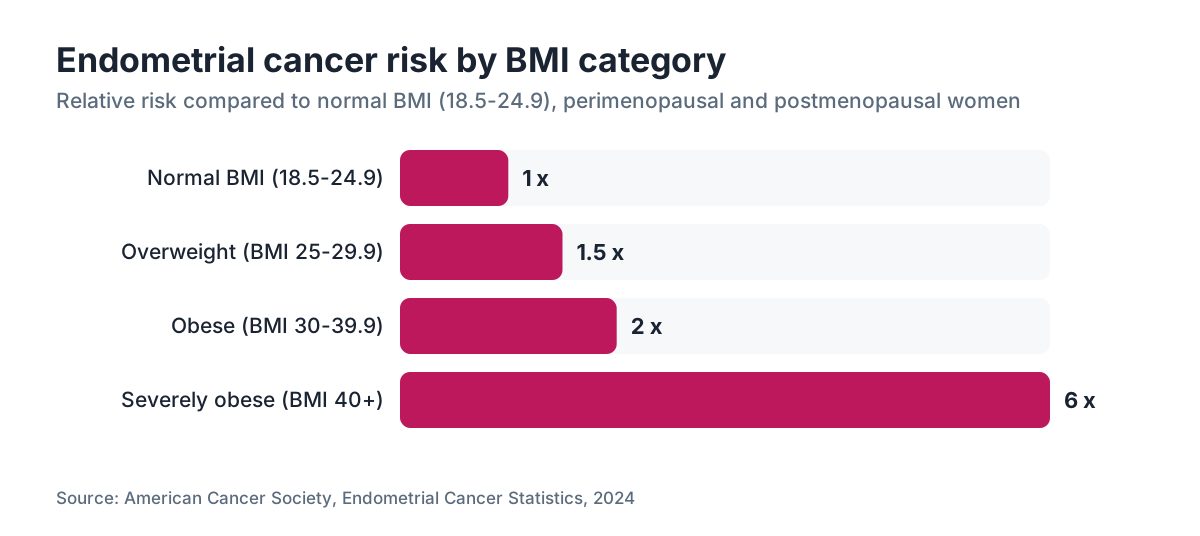
A BMI above 30 roughly doubles endometrial cancer risk compared to a normal BMI, and a BMI above 40 raises it about 6-fold, per population data from the American Cancer Society [4]. That is not a moral judgment. It is a biological mechanism with clinical consequences.
For women managing weight as part of their perimenopausal health, this is one legitimate reason clinicians sometimes bring up GLP-1 receptor agonists in this age group. Those conversations sit outside this article, but if you want to understand how weight management crosses into hormonal health, our guides on semaglutide for weight loss and semaglutide cover it.
Losing even 5-10 percent of body weight can measurably cut aromatase-driven estrogen production. It does not replace gynecologic evaluation if you already have abnormal bleeding, but it is a real lever.
Frequently asked questions
Is it normal to skip periods for months and then bleed heavily in perimenopause?
Yes, this is one of the most classic perimenopausal patterns. Skipping ovulation for months lets the lining build up under estrogen without the progesterone signal to shed it. When bleeding finally comes, it can be much heavier than usual. That said, if it soaks more than one pad per hour for two hours, that crosses into territory worth evaluating regardless of how it started.
How long does irregular bleeding in perimenopause typically last?
The average perimenopause lasts 4-8 years, though it ranges from about 1 year to more than 10. Irregular bleeding is most pronounced in the final 1-2 years before the last period, when cycle variability peaks. There is no precise endpoint until you hit 12 consecutive months without any bleeding, which marks menopause by definition.
Can a Pap smear detect uterine cancer or endometrial problems?
No. A Pap smear screens for cervical cell changes, not endometrial abnormalities. Incidental endometrial cells on a Pap can occasionally prompt more workup, but a normal Pap gives no reassurance about the uterine lining. Endometrial pathology is evaluated by transvaginal ultrasound and, when indicated, endometrial biopsy. Different tests, different clinical decisions.
Is spotting after menopause ever benign?
Sometimes, yes. Vaginal atrophy from low estrogen leaves fragile tissue that can bleed with minimal trauma, including after sex or a pelvic exam. Cervical and endometrial polyps can also cause light spotting. But none of this can be assumed without an exam and usually an ultrasound. The rule holds: any bleeding after 12 months without a period needs evaluation. Roughly 10 percent of cases turn out to be endometrial cancer.
Can fibroids cause bleeding that looks like a period?
Yes. Submucosal fibroids, which protrude into the cavity, cause heavy and prolonged menstrual-type bleeding that is often indistinguishable from other causes without imaging. They can also cause bleeding between periods. Transvaginal ultrasound catches most clinically significant fibroids. Saline sonography is more sensitive for smaller submucosal fibroids that distort the cavity but may hide on standard ultrasound.
What is the endometrial stripe, and what thickness is concerning?
The endometrial stripe is the measurement of the uterine lining on transvaginal ultrasound. In postmenopausal women, a stripe greater than 4-5 mm is the standard threshold for recommending biopsy, per ACOG. In perimenopausal women the normal range shifts with cycle phase, but an irregular, heterogeneous, or markedly thickened appearance typically prompts further workup regardless of the exact millimeter measurement.
Do birth control pills help with heavy perimenopausal bleeding?
They do, and it is one of their most evidence-backed uses in perimenopause. Combined oral contraceptives regulate the cycle, sharply reduce menstrual blood loss, and provide contraception, which matters because perimenopausal women can still ovulate and conceive. The levonorgestrel IUD (Mirena) is equally effective or better for reducing flow, and many women prefer it to daily pills. Both are ACOG first-line options for heavy menstrual bleeding.
Can stress cause abnormal bleeding in perimenopause?
Stress can disrupt the hypothalamic-pituitary-ovarian axis and contribute to irregular ovulation, which affects the cycle. So yes, high stress can add to the irregularity of perimenopausal cycles. But stress alone is not a sufficient explanation for heavy bleeding, prolonged bleeding, or postmenopausal bleeding. Blaming concerning symptoms on stress without a proper workup is a way to miss diagnoses that need treatment.
Is it safe to take ibuprofen for heavy periods every month?
Short-term, yes. NSAIDs like ibuprofen or naproxen taken at the onset of your period and continued for 3-5 days cut prostaglandin-driven blood loss by roughly 20-30 percent in clinical studies. They are not a permanent fix and carry the usual NSAID risks with long-term daily use: stomach irritation, kidney stress, and cardiovascular concerns. If you rely on ibuprofen every month to get through your period, that is a signal to discuss better management with a clinician.
How is adenomyosis different from fibroids, and can it explain heavy bleeding?
Adenomyosis is when endometrial glands and stroma grow into the uterine muscle wall, making the uterus enlarged and boggy. Fibroids are distinct smooth-muscle tumors. Both cause heavy, prolonged, painful periods, but adenomyosis usually brings more diffuse cramping and a uniformly enlarged uterus on ultrasound or MRI. Definitive diagnosis requires pathology after hysterectomy. Hormonal suppression and the levonorgestrel IUD are the main non-surgical options.
Can thyroid problems cause heavy periods in perimenopause?
Yes. Hypothyroidism (underactive thyroid) is a well-documented cause of heavy menstrual bleeding and is more common in women over 40. It is easy to miss because symptoms overlap with perimenopause: fatigue, weight gain, feeling cold, brain fog. A TSH blood test is a simple screen and is generally part of the workup for abnormal perimenopausal bleeding. Treating hypothyroidism often normalizes the bleeding without more intervention.
What does it mean if my doctor says I have endometrial hyperplasia?
Endometrial hyperplasia means the lining is abnormally thickened, usually from excess estrogen without enough opposing progesterone. Simple hyperplasia without atypia carries a low cancer risk and is often treated with progestin therapy. Complex atypical hyperplasia has a 25-30 percent risk of progressing to endometrial cancer and is typically treated with high-dose progestin or, for women done with childbearing, hysterectomy. The pathology report tells you which type you have.
Does having a hysterectomy make these concerns go away?
If you had a total hysterectomy (uterus and cervix removed), you have no endometrium and cannot develop endometrial cancer or have uterine bleeding. You still have ovaries unless those were removed too, so ovarian function and ovarian cancer risk still apply. If you had a partial (supracervical) hysterectomy with the cervix left in place, you may still have a little endometrial tissue at the cervical stump and should ask your surgeon whether monitoring is needed.
Sources
- North American Menopause Society (NAMS), Menopause Practice: A Clinician's Guide
- American College of Obstetricians and Gynecologists (ACOG), Practice Bulletin on Heavy Menstrual Bleeding
- Clarke MA et al., JAMA Internal Medicine, 2018: Association of Endometrial Cancer Risk With Postmenopausal Bleeding in Women
- American Cancer Society, Endometrial (Uterine) Cancer Statistics
- National Cancer Institute, Endometrial Cancer Prevention (PDQ)
- ACOG Committee Opinion, The Role of Transvaginal Ultrasonography in Evaluating the Endometrium of Women With Postmenopausal Bleeding
- Dijkhuizen FP et al., meta-analysis on accuracy of endometrial sampling in the diagnosis of endometrial carcinoma
- National Institute of Environmental Health Sciences (NIEHS), Uterine Fibroids
- ACOG Practice Bulletin No. 128, Diagnosis of Abnormal Uterine Bleeding in Reproductive-Aged Women
- NAMS, The Menopause Guidebook