When does perimenopause start? Age, signs, and what to do
TL;DR: Perimenopause usually starts between 45 and 55, with the average onset around age 47. Some women notice changes in their late 30s. The transition lasts 4 to 8 years on average. The first signs are irregular periods, hot flashes, disrupted sleep, and mood shifts. Hormone therapy is an option from your first bothersome symptom, more than after your last period.
What age does perimenopause usually start?
The average age of perimenopause onset is around 47, and the honest range is 40 to 55 for most women [1]. About 1 in 20 women enter it before 40, which gets a separate name: premature ovarian insufficiency or early menopause [2]. A smaller group notices hormonal shifts in their late 30s without ever meeting the clinical criteria for POI.
Genetics is the strongest predictor. If your mother hit menopause at 50, you'll probably land somewhere close. Smoking moves the clock forward by about 2 years on average [1]. Chemotherapy and pelvic radiation can pull the timeline forward by as much as a decade.
Race and ethnicity matter too. The SWAN study (Study of Women's Health Across the Nation) found that Black women tend to enter perimenopause earlier and report more hot flashes and night sweats than white women, while Asian women report fewer on average [3]. These are population averages, not promises about your own body, but they help you read your own symptoms.
Body mass index has a modest link: very low BMI tracks with an earlier transition, higher BMI with a later one, probably because fat tissue keeps making some estrogen [1].
So here's the reassurance. If you're 44 and your periods are shifting, you're not imagining it and you're not early. You're right in the middle of the typical range.
How long does perimenopause last?
The average is 4 to 8 years, but the real spread runs from about 1 year to more than 10 [3]. The SWAN study, which followed over 3,000 women for nearly 20 years, put the median transition at roughly 5 to 7 years, measured from the first irregular cycle to the final period [3].
Perimenopause ends the day you've gone 12 full consecutive months without a period. That day is menopause. Everything before it is perimenopause; everything after is postmenopause. The words trip people up because clinicians sometimes say "menopause" when they mean the whole transition.
Women who start earlier, before 45, tend to have longer transitions. Women who start closer to 50 often get a compressed one, more like 1 to 3 years [3]. Nobody can predict your personal runway with any precision, which is exactly why waiting until it's "officially" over before treating symptoms makes so little sense.
What are the first signs of perimenopause?
Irregular periods are usually the first solid sign. Your cycle might shorten (say, 21 days instead of 28), stretch out, or skip months. Heavy flow one month, spotting the next. This happens because estrogen and progesterone are swinging rather than declining in a straight line, so some cycles run high-estrogen and heavy, others barely register [1].
Hot flashes affect about 75% of women during the transition at some point [10]. They often show up before cycles look obviously irregular, which catches a lot of women off guard. Night sweats are the same event after dark, and they're a leading reason sleep falls apart and drags fatigue, mood, and brain fog along with it.
Brain fog is real and under-discussed. Studies show measurable changes in verbal memory and processing speed during the transition, with some recovery once it ends [5]. Still, a sharp drop in cognition deserves a doctor's attention, because thyroid disease and sleep apnea (both more common in these years) can mimic it and make it worse.
Other early signs include:
- Worse PMS or new mood swings, often peaking the week before your period
- Vaginal dryness or a change in libido
- Breast tenderness
- Achy joints
- Anxiety, sometimes new panic attacks
One caveat on this list. It isn't a checklist you have to complete. Some women get every item; some get irregular periods and a few night sweats and nothing else. There's no single "normal" version of this.
How is perimenopause diagnosed?
No single blood test diagnoses perimenopause. FSH (follicle-stimulating hormone) rises as the ovaries slow down, and a high reading points toward the transition. But FSH swings wildly during perimenopause, so one draw tells you almost nothing [1]. A "normal" FSH on a Tuesday doesn't rule anything out if your periods are irregular and you're 46.
Estradiol is just as jumpy. It can look normal or even high early on (the ovaries sometimes overshoot before they fade), then drop hard in late perimenopause [1].
The diagnosis is mostly age plus symptoms. The Menopause Society (formerly NAMS) and the Endocrine Society both treat perimenopause as a clinical call, not a lab value [1][6]. A good clinician asks about cycle changes, symptoms, and family history.
AMH (anti-Mullerian hormone) is a better marker of ovarian reserve and can hint at how far along you are, but it earns its keep in fertility work, not routine perimenopause diagnosis [6].
If you're under 45 with symptoms, testing makes more sense, because thyroid disease, high prolactin, and premature ovarian insufficiency all need to be ruled out [2]. For a 48-year-old with textbook symptoms, the workup can be short.
What is HRT for perimenopause, and what does it actually do?
HRT stands for hormone replacement therapy. In the perimenopause context you'll also see MHT (menopausal hormone therapy), the term the Menopause Society prefers. The point is to replace the estrogen (and usually progesterone, if you have a uterus) your ovaries are now making on and off, which steadies the swings driving your symptoms [4].
Estrogen does the heavy lifting. It handles hot flashes, night sweats, vaginal dryness, and sleep disruption. It also protects bone: estrogen is one of the main regulators of bone remodeling, and bone loss speeds up sharply in the years around your final period [7].
Progesterone (or a synthetic progestogen) gets added for women with a uterus to keep estrogen from overgrowing the uterine lining [4]. Micronized progesterone, the bioidentical form, is usually better tolerated and easier on sleep than the older synthetic progestins.
Testosterone is getting more attention for women in perimenopause, mostly for low libido, energy, and possibly cognition, though it isn't FDA-approved for women in the US and nearly all use is off-label [4].
HRT comes as pills, patches, gels, sprays, and vaginal rings or creams. Transdermal estrogen (patch, gel, spray) skips the first pass through the liver and carries a lower clot risk than oral estrogen, which is why most clinicians reach for it first [4]. There's more on the delivery methods at estrogen patch.
Here's the short version. HRT doesn't only quiet symptoms. Started early in the transition and before 60, it has a real record of protecting bone, improving quality of life, and, for the right woman, lowering cardiovascular risk [4][8].
When should you start HRT in perimenopause?
You don't have to wait for menopause. The Menopause Society's 2022 position statement says hormone therapy is appropriate for symptomatic women during perimenopause, with the caveat that women who are still cycling may need contraception alongside it [4]. If hot flashes, night sweats, broken sleep, or mood symptoms are wrecking your days, that's a fair time to raise it.
The "timing hypothesis" from the cardiovascular research suggests that starting hormone therapy close to the transition (within 10 years of the final period, or before age 60) tracks with cardiovascular benefit, while starting well after menopause carries a different risk picture [8]. That's about long-term heart protection, not symptom relief.
For bones, earlier is better. Bone loss speeds up in the 2 to 3 years on either side of the final period [7]. Waiting for an osteoporosis diagnosis means you've already lost ground that's hard to win back. The bone density test page covers how to track it.
If you have a strong family history of early heart disease or osteoporosis, the case for starting as soon as symptoms appear is even stronger.
Contraindications are real. Active or recent breast cancer, unexplained vaginal bleeding, active blood clots, and certain clotting disorders are all reasons to use caution or pick alternatives. The conversation with your clinician should weigh your own risk profile, not a generic rule.
How do you get on HRT for perimenopause?
It starts with a clinician who takes menopause seriously, and that isn't always your GP. Surveys keep finding that many women had their symptoms brushed off as anxiety or stress [4]. The Menopause Society keeps a "Find a Menopause Practitioner" directory of certified clinicians at menopause.org.
At the visit, expect to talk through your cycle history, symptom timeline, personal medical history, family history (breast cancer and heart disease especially), and contraception if you're still cycling.
You'll usually get a baseline check: blood pressure, sometimes labs (thyroid, lipids, occasionally FSH and estradiol for context), and a pelvic or breast exam depending on your last one. Your mammogram should be current.
A typical starting prescription might be transdermal estradiol (a patch or gel) plus oral micronized progesterone 200mg for 12 days each calendar month (if you're still having periods) or nightly (if you're postmenopausal) [4].
Telehealth has made access much easier. Platforms that focus on women's hormones, including WomenRx, can prescribe and manage HRT without a trip to a specialist, which matters if you live somewhere underserved.
Expect a follow-up around 3 months to see how the dose is landing and whether it needs tweaking. HRT isn't set-and-forget; dialing it in takes a couple of rounds. The full walkthrough is at hormone replacement therapy.
Is HRT safe? What does the current evidence actually say?
The safety picture shifted hard after the Women's Health Initiative (WHI) trial published in 2002. WHI found a small absolute rise in breast cancer with combined estrogen-progestogen therapy (about 8 extra cases per 10,000 women per year) and an early cardiovascular signal [8]. That trial used oral conjugated equine estrogen plus medroxyprogesterone acetate in women who averaged 63 and were more than 10 years past menopause. The results got misapplied to younger women just entering perimenopause.
Reanalysis of the WHI data and later studies cleared much of that up. For women under 60 or within 10 years of menopause, the absolute risks are small and the benefits (quality of life, bone protection, possibly cardiovascular) are real [4][8]. The Menopause Society's 2022 position statement says: "For women aged younger than 60 years or who are within 10 years of menopause onset and have no contraindications, the benefit-risk ratio is favorable for treatment of bothersome VMS and for those at elevated risk for bone loss or fracture" [4].
The type of progestogen matters. Micronized progesterone appears to carry a lower breast cancer signal than synthetic progestins like MPA [4]. Transdermal estrogen carries a lower clot risk than oral [4].
Breast cancer is the question most women ask first, and it deserves a straight answer. For combined HRT used under 5 years, the absolute increase is small. For longer use, it's more nuanced and worth an individual conversation. Estrogen-only HRT (for women without a uterus) doesn't appear to raise breast cancer risk and may slightly lower it [8].
Bottom line: the 2002 panic came from a misread of data from an older group on older formulations. Current formulations, in the right woman at the right time, have a favorable safety profile for most perimenopausal women.
What else happens to your body during perimenopause besides hot flashes?
Quite a lot, and most of it gets no airtime.
Cardiovascular risk starts climbing. Estrogen protects the arterial walls, so as it falls, LDL cholesterol rises and HDL tends to drop [1]. Blood pressure often creeps up. A woman with a clean cardiac profile at 40 can have a meaningfully worse lipid panel by 50. That's why these years are a good time to get a baseline cardiovascular check.
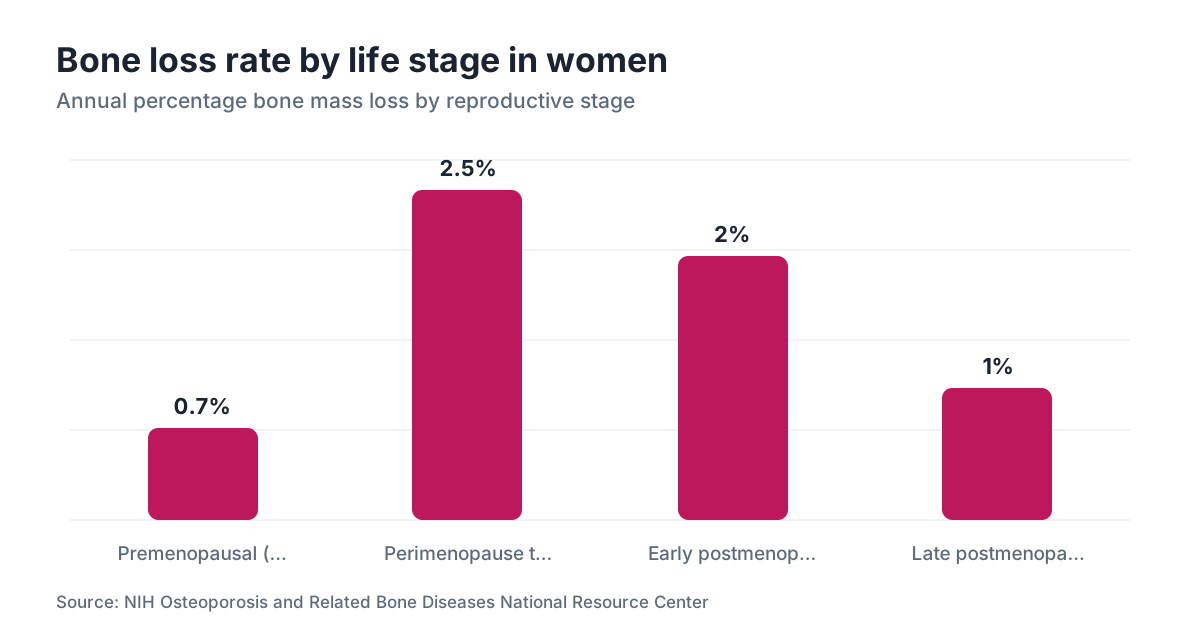
Bone loss accelerates. Women lose an estimated 2% to 3% of bone mass per year in the 3 years around the final period, against roughly 0.5% to 1% per year in earlier adulthood [7]. Across the full postmenopausal stretch, women can lose 25% to 30% of trabecular bone. That's the engine behind higher fracture risk later. More at bone density test.
Sleep changes at the structural level. Estrogen and progesterone both help regulate sleep. Set night sweats aside and women in perimenopause still show shifts in slow-wave and REM sleep [5]. Sleep apnea also becomes more common after menopause.
Body composition shifts. Even with no change in diet or exercise, many women see more visceral (abdominal) fat and less muscle. This isn't only about calories; it's the metabolic fallout of changing estrogen and a relative rise in androgens [1]. Some women find GLP-1 receptor agonists help with the weight that won't budge on lifestyle alone. The semaglutide for weight loss page covers that.
Skin and hair change. Collagen production drops about 30% in the first 5 years after menopause, so skin gets thinner and less elastic [1]. Hair may thin, shed more, or change texture. These aren't vanity problems. They're signs of systemic estrogen decline.
When does perimenopause end and menopause begin?
Menopause is 12 consecutive months with no period and no other explanation (pregnancy, breastfeeding, a medication that stops cycles) [1]. It's a single point in time, not a phase. The average age of natural menopause in the US is 51.3 [3].
Until that 12-month mark, you're still in perimenopause, no matter how bad your symptoms are or how many months you've already skipped. This matters, because you can still ovulate and get pregnant in perimenopause even with wildly irregular cycles. Contraception is worth discussing with your clinician until you clear the 12-month milestone.
After menopause, you're postmenopausal for the rest of your life. Plenty of symptoms, hot flashes especially, can run for years, sometimes more than a decade past the final period in a real share of women [4]. The idea that symptoms switch off at menopause is just wrong. See when does menopause start and menopause for what follows.
The perimenopause age page goes deeper on what predicts your own timeline.
Should you track your hormones during perimenopause?
Tracking hormones is useful in specific situations, not as routine surveillance. Because estrogen and FSH bounce around day to day during the transition, one blood draw usually creates more confusion than clarity [1].
FSH above 25 IU/L on two readings taken at least a month apart, alongside cycle irregularity, fits fairly well with perimenopause or the move into menopause. FSH that stays above 40 IU/L with amenorrhea for 4 months or more in a woman under 40 prompts a workup for premature ovarian insufficiency [2].
Thyroid testing (TSH at minimum) genuinely earns its place, because hypothyroidism mimics half the perimenopause list: fatigue, weight gain, brain fog, irregular cycles. Ruling it out is cheap and simple [1].
Once you're on HRT, checking estradiol can help titrate the dose, especially if symptoms hang on or side effects show up. A level of 40 to 200 pg/mL is the usual therapeutic target for symptom control, though some women need the low or high end of that range [4].
You don't need to spend hundreds on elaborate hormone panels sold by wellness brands. A tight set of labs (TSH, FSH, estradiol, and maybe a lipid panel and fasting glucose given the cardiovascular shifts) gives you something to act on without the noise.
Frequently asked questions
Can perimenopause start at 35?
It's uncommon but possible. Perimenopause before 40 is classified as premature ovarian insufficiency (POI) and affects roughly 1 in 100 women. Symptoms starting at 35 to 38 without meeting POI criteria do happen, especially with a family history of early menopause or after certain medical treatments. If you're under 40 with irregular cycles and classic symptoms, get a workup including FSH, estradiol, and TSH.
What is the difference between perimenopause and menopause?
Perimenopause is the transition leading up to menopause, usually 4 to 8 years, when hormones fluctuate and cycles turn irregular. Menopause is the single point of 12 consecutive months without a period. The average age of menopause in the US is 51.3. After that you're postmenopausal. Most symptoms people call "menopause" actually begin during perimenopause.
What is HRT and how does it help with perimenopause?
HRT (hormone replacement therapy, also called MHT) replaces estrogen and usually progesterone to steady the hormonal swings behind perimenopause symptoms. It reduces hot flashes, night sweats, and sleep disruption in most women, protects bone density, and helps mood and cognitive symptoms for many. Transdermal estrogen paired with micronized progesterone is the current preferred formulation for most perimenopausal women.
When should I start HRT in perimenopause?
As soon as symptoms are hurting your quality of life, there's no medical reason to wait. The Menopause Society says HRT is appropriate for symptomatic perimenopausal women. Starting within 10 years of the transition also appears to carry a more favorable cardiovascular profile than starting later. If you're still cycling, you'll need to discuss contraception alongside HRT with your provider.
How do I get on HRT for perimenopause?
Book with a gynecologist, internist, or menopause-certified clinician. The Menopause Society's provider directory at menopause.org lists certified specialists. Telehealth platforms focused on women's hormones can also prescribe and manage HRT. Your provider will review your history, assess symptoms, and typically start with transdermal estradiol plus progesterone if you have a uterus. Expect a follow-up at 3 months to adjust dosing.
Is HRT safe for perimenopausal women in their 40s?
For most women under 60 without contraindications, the evidence supports a favorable benefit-risk profile. The Menopause Society's 2022 position statement says the ratio is favorable for treating bothersome symptoms in women under 60 or within 10 years of menopause. Transdermal estrogen carries lower clot risk than oral; micronized progesterone carries a lower breast cancer signal than older synthetic progestins. Your individual risk factors still matter and should be discussed with your clinician.
What blood tests diagnose perimenopause?
No single test settles it. FSH above 25 IU/L on two readings plus cycle irregularity fits the transition, but FSH moves too much to trust on one draw. Estradiol is just as variable. TSH is worth testing because hypothyroidism mimics many symptoms. For women under 45, more thorough testing is warranted to rule out premature ovarian insufficiency and other causes.
Why are my periods so irregular in perimenopause?
Estrogen and progesterone swing rather than decline in a straight line during perimenopause. Some cycles are anovulatory (no egg released), so progesterone doesn't rise to trigger a normal period. Some run high-estrogen and produce a heavy bleed. Others barely register. This uneven pattern reflects ovaries responding inconsistently to pituitary signals as the egg supply drops. It's normal, but persistently heavy or very frequent bleeding needs evaluation.
Can you get pregnant during perimenopause?
Yes. You can still ovulate during perimenopause even with very irregular cycles. Pregnancy rates are lower than in your 20s and 30s, but unintended pregnancies in perimenopausal women are well documented. You need contraception until you've gone 12 consecutive months without a period (menopause). HRT does not provide contraception. Discuss options with your clinician, especially if you're under 50.
Does perimenopause cause weight gain?
Perimenopause shifts body composition toward more visceral (abdominal) fat and less muscle, even without a change in calories. Falling estrogen alters where fat lands, and the relative rise in androgens adds to it. Total weight may not jump much, but distribution does. Resistance training, higher protein, and in some cases hormone therapy help. GLP-1 receptor agonists are another option some women explore for the metabolic changes of this transition.
How is perimenopause different from just getting older?
The hormonal shifts of perimenopause are distinct from general aging. Estrogen, progesterone, and testosterone decline in a specific pattern tied to ovarian aging rather than calendar age. The symptoms (vasomotor, cognitive, sleep, bone loss) have measurable hormonal drivers, more than lifestyle ones. Aging and perimenopause do overlap and amplify each other. That's why the years around 45 to 55 often feel like a turning point out of proportion to "just getting older."
What happens to bones during perimenopause?
Bone loss speeds up during the transition. Women lose an estimated 2% to 3% of bone mass per year in the 3 years around the final period, against about 0.5% to 1% annually in earlier adulthood. Over the full postmenopausal stretch, cumulative loss can reach 25% to 30% of trabecular bone. Estrogen therapy, calcium, vitamin D, resistance exercise, and a baseline DEXA scan are all relevant tools here.
Can perimenopause cause anxiety and depression?
Yes, and it's underrecognized. Fluctuating estrogen affects serotonin and GABA signaling, which raises vulnerability to mood disorders. Women with a history of PMS or postpartum depression seem more sensitive to these swings. New anxiety or panic attacks in a woman in her mid-40s with other perimenopause symptoms should prompt consideration of hormonal factors alongside standard mental health evaluation. HRT helps mood for some women; antidepressants remain a valid option too.
What's the difference between bioidentical and conventional HRT?
Bioidentical hormones have the same molecular structure as the hormones your body makes. Many FDA-approved HRT products, including micronized progesterone and estradiol patches and gels, are bioidentical. The term is also used by compounding pharmacies for custom formulations, which lack FDA oversight for potency and purity. Compounded bioidenticals aren't inherently safer or more effective than regulated products. What matters most is the formulation (transdermal over oral, micronized progesterone over synthetic progestins) and correct dosing.
Sources
- Endocrine Society, Menopause Overview (endocrine library)
- NICHD (NIH), Primary Ovarian Insufficiency (POI)
- SWAN, Study of Women's Health Across the Nation, NIH/NIA
- The Menopause Society (NAMS), 2022 Hormone Therapy Position Statement
- National Institute on Aging, Menopause and Brain/Sleep Health
- American College of Obstetricians and Gynecologists (ACOG), Menopause clinical guidance
- NIH Osteoporosis and Related Bone Diseases National Resource Center
- Women's Health Initiative, WHI, NIH/NHLBI
- CDC, Women's Reproductive Health