When does perimenopause begin? Age, signs, and what to expect
TL;DR: Perimenopause usually begins between ages 45 and 55, with the average onset around 47. But roughly 1 in 10 women notice changes in their late 30s or early 40s. The transition lasts 4 to 7 years for most women, sometimes a decade. Irregular periods are almost always the first sign, though hormone shifts can start before your cycle changes.
What is perimenopause and how is it different from menopause?
Perimenopause is the transition leading up to menopause. Menopause is a single point in time: the day you've gone 12 straight months without a period. Everything before that mark, while your hormones swing and your cycles change, is perimenopause.
The Menopause Society (formerly NAMS) defines perimenopause as the stretch from the first signs of reproductive aging (usually irregular cycles) through the first year after your final period. [1] It's not a disease. It's a hormonal transition every woman goes through, but the timing, the symptoms, and the pace vary enormously from one woman to the next.
During perimenopause, your ovaries gradually make less estrogen and progesterone. The decline is not smooth. Estrogen can swing hard from month to month, sometimes week to week, which is part of why symptoms feel so random. You might have a textbook 28-day cycle one month and a 60-day gap the next.
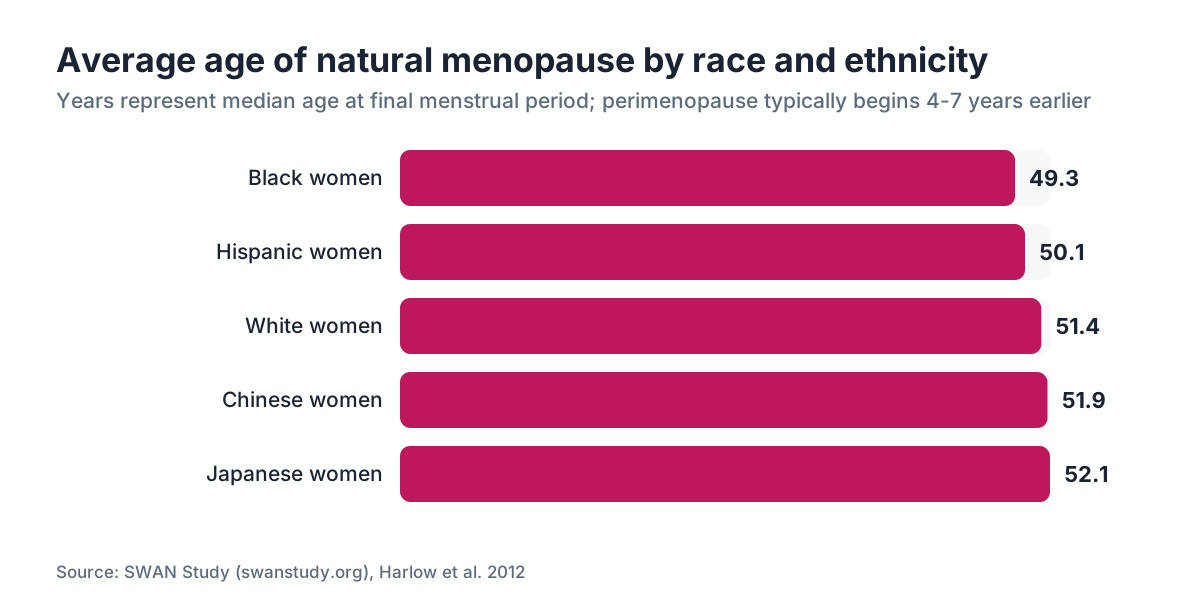
Menopause gets confirmed only in the rearview mirror, once 12 period-free months have passed. The average age of menopause in the United States is 51. [2] Perimenopause runs ahead of that by 4 to 7 years on average, though some women live in it for a decade or more. See our full article on menopause for what happens after the 12-month mark.
What is the average age perimenopause begins?
Most women start perimenopause between 45 and 55, with onset clustering around 47 to 48. [2] The Study of Women's Health Across the Nation (SWAN), a large multisite study funded by the National Institutes of Health, put the average age of transition onset at about 47.5 years. [3]
"Average" hides a wide spread. Some women notice hormonal shifts in their late 30s. Others sail through to their early 50s before anything changes. The 12-month menopause marker usually lands around 51, which means the transition was quietly underway years earlier.
Race and ethnicity shift the timing. SWAN found Black women reach menopause about 8.5 months earlier than white women, and Hispanic women reach it somewhat earlier too. [3] Genetics matter as well. If your mother went through menopause early, there's a decent chance you will, though it's no guarantee.
Body weight plays a smaller part. Women with a lower BMI tend to reach menopause slightly earlier. And women who smoke reach natural menopause 1 to 2 years earlier than nonsmokers, a finding that holds up across study after study. [4]
Check our related article on perimenopause age for a breakdown by demographic group.
Can perimenopause start in your 30s?
Yes, and it happens more than most women expect. Early perimenopause, meaning hormonal changes before age 45, affects roughly 10% of women. [4] Premature ovarian insufficiency (POI), sometimes called premature menopause, is a separate condition. It affects about 1% of women under 40, and it means the ovaries lose most of their function before 40. POI is not the same as ordinary early perimenopause, and it carries different medical stakes. [5]
A woman in her late 30s or early 40s with irregular cycles, worse PMS, broken sleep, or new mood swings could easily be in early perimenopause. It gets missed constantly. Clinicians often pin these symptoms on stress, thyroid trouble, or depression before they ever check reproductive hormones.
If you're under 40 with symptoms, ask for FSH (follicle-stimulating hormone) and estradiol levels. One high FSH reading doesn't prove anything on its own, because levels bounce around. But a pattern over time, read alongside your symptoms and cycle changes, tells a clearer story.
Early perimenopause has real health consequences. More years at lower estrogen means cardiovascular risk climbs sooner and bone density drops sooner. Women who start the transition early may benefit from hormone therapy earlier too. The Endocrine Society's clinical practice guideline notes that women with early menopause (before 45) face higher risk of cardiovascular disease, osteoporosis, and cognitive change than women who reach menopause at a typical age. [6]
What are the first signs that perimenopause is starting?
Irregular periods are the hallmark first sign. Your cycle may get shorter (under 21 days between periods), longer, heavier, lighter, or just unpredictable. The Menopause Society marks the early transition as cycles that vary by 7 or more days from your usual length. [1] That's the formal clinical line.
Many women feel hormone-related symptoms before their cycles change in any obvious way. Common early signs include:
- Hot flashes, which affect about 75% of women in perimenopause at some point [2]
- Night sweats and broken sleep
- Mood changes, anxiety, or a shorter fuse
- Brain fog or trouble concentrating
- Vaginal dryness or a shift in libido
- PMS that's louder than it used to be
- Breast tenderness
- Weight gain, especially around the middle
Nobody gets all of these, and intensity ranges widely. Some women barely register the whole transition. Others find perimenopause harder than the years after. There's no reliable way to predict which camp you'll land in from genetics or lifestyle alone.
Hot flashes deserve their own note, because the timing surprises people. They start in perimenopause for most women, not after menopause. SWAN found that for the majority of women, hot flashes begin 2 or more years before the final period and can drag on 7 to 10 years after. [3] The idea that hot flashes wait until after menopause is simply wrong for most women.
Progesterone usually drops before estrogen does in early perimenopause, which is part of why sleep trouble and mood symptoms tend to show up first. You can read more about progesterone and how low levels hit sleep and mood specifically.
How long does perimenopause last?
The average run is 4 to 7 years, and the range is genuinely wide. Some women clear it in 2 years. Others spend more than a decade in transition before hitting that 12-month milestone. SWAN reported a median duration of about 7.4 years from the early transition to the final period. [3]
How long it lasts depends partly on when it starts. Women who begin the transition earlier in their 40s tend to have a longer one. Women who start later often move through faster. Smoking shortens the transition because it speeds up ovarian aging overall.
Symptoms don't march from bad to gone in a straight line. Many women feel their worst in late perimenopause, the 1 to 2 years right before the final period, when estrogen is at its most volatile. After the 12-month mark, hot flashes often continue but can become more predictable as estrogen settles at a lower, steadier baseline.
For more on that timeline, see our companion article on when does menopause start, which covers what happens at and after the 12-month mark.
How do doctors diagnose perimenopause, and what lab tests matter?
No single lab test confirms perimenopause. The diagnosis is clinical, built from your age, your symptoms, and your menstrual history. Menopause Society guidelines say plainly that hormone testing is not required to diagnose perimenopause in women over 45 with typical symptoms and irregular cycles. [1]
Tests do earn their place in specific situations. If you're under 45, if your symptoms are murky, or if a provider wants to rule out thyroid disease, these are the ones commonly ordered:
| Test | What it shows | Limitation | |---|---|---| | FSH (follicle-stimulating hormone) | High FSH suggests declining ovarian function | Fluctuates widely; one result is not diagnostic | | Estradiol (E2) | Low or variable levels support perimenopause | Also fluctuates; a normal result doesn't rule it out | | TSH (thyroid-stimulating hormone) | Rules out thyroid dysfunction | Thyroid problems can mimic perimenopause | | AMH (anti-Mullerian hormone) | Reflects ovarian reserve | More useful for fertility than perimenopause timing | | LH (luteinizing hormone) | Rises with declining ovarian function | Less useful than FSH alone |
FSH above 10 IU/L during the early follicular phase can flag the start of ovarian aging, while FSH in confirmed menopause typically runs above 40 IU/L. [5] Because FSH and estradiol swing so much in perimenopause, one test grabbed at a random point in your cycle can mislead. Repeat measurements over several months give a truer read.
Thyroid disease (both hypo and hyper) and iron deficiency anemia can all cause irregular periods, fatigue, mood swings, and hot flashes. Rule both out before you chalk everything up to perimenopause.
What factors make perimenopause start earlier than average?
A handful of factors reliably pull the start date forward:
Smoking. This is the best-established changeable factor. Smoking is tied to menopause arriving 1 to 2 years earlier than in nonsmokers, and the effect grows with how much you smoke. [4] Toxins in cigarette smoke damage follicles and burn through them faster.
Family history. Age at menopause runs in families. If your mother or sisters finished before 45, your odds of an early transition are meaningfully higher.
Cancer treatment. Chemotherapy and pelvic radiation can damage ovarian tissue and trigger premature or abrupt menopause. How hard it hits depends on the drugs used, the radiation field, and your age at treatment.
Surgical history. Removing both ovaries (bilateral oophorectomy) causes immediate surgical menopause. A hysterectomy that leaves the ovaries in place stops periods but doesn't cause menopause, though some evidence suggests it may nudge the natural transition slightly earlier.
Lower body weight. Fat tissue makes some estrogen once the ovaries slow down. Women with very low body fat have less of that buffer, which can mean an earlier or rougher transition.
Autoimmune conditions. Thyroid disease and lupus come with slightly higher rates of premature ovarian insufficiency. [5]
Chronic stress. Animal studies show stress hormones can suppress ovarian function, and some population data links long-term psychological stress to earlier menopause. In humans, though, the effect is hard to pin down.
Does perimenopause affect weight gain and metabolism?
Yes, and the mechanism is real. This is more than a story we tell about aging. Estrogen shapes fat distribution, insulin sensitivity, and appetite hormones. As it falls, fat shifts from the hips and thighs (subcutaneous fat) toward the belly (visceral fat). Visceral fat carries more metabolic and cardiovascular risk than the fat under your skin. [6]
SWAN tracked an average weight gain of about 5 pounds across the transition, with belly fat rising even in women whose total weight barely moved. [3] Muscle mass tends to slip during these years too, which drops your resting metabolic rate.
Women in perimenopause often find the diet and exercise that worked at 35 just stops working. That's not in your head. The metabolic shift is real, and it usually calls for a different approach: resistance training to hold onto muscle, protecting your sleep (poor sleep drives cortisol and appetite hormones the wrong way), and sometimes rethinking what's on the plate.
For women whose weight changes are significant and paired with metabolic risk factors, GLP-1 receptor agonists like semaglutide are a studied option. In the STEP 1 trial published in the New England Journal of Medicine, semaglutide 2.4 mg weekly produced a mean weight reduction of 14.9% over 68 weeks. [7] Platforms like WomenRx evaluate women for semaglutide for weight loss alongside their full hormonal picture, which matters because treating weight without addressing estrogen decline often gives you half a result.
The link between hormones and weight in this transition is still an open research question. Nobody has clean data yet on exactly how hormone therapy changes GLP-1 response, but the clinical overlap is real enough to raise with a provider who understands both.
What treatments are available to manage perimenopausal symptoms?
The menu is wider than most women get told. Here's an honest rundown:
Hormone therapy (HT). For most healthy women under 60 who are within 10 years of menopause onset, the benefits of hormone therapy outweigh the risks. [6] The Endocrine Society's clinical practice guideline puts it this way: "For most women younger than 60 years or within 10 years of menopause onset, the benefits of hormone therapy for bothersome vasomotor symptoms are greater than the risks." [6] HT works on hot flashes, night sweats, mood, sleep, vaginal symptoms, and bone density. You can read more about hormone replacement therapy in detail.
Estradiol delivered through the skin (patch or gel) skips first-pass liver metabolism and is the lower-risk route for most women. See our article on estrogen patch for dosing and options.
Progesterone. If you still have your uterus, you need progesterone alongside estrogen to protect the uterine lining. Micronized progesterone (Prometrium) appears to have a better safety and tolerability profile than synthetic progestins for most women. [8] Our article on progesterone covers that difference.
Non-hormonal prescriptions. Fezolinetant (Veozah), which the FDA approved in May 2023, is a neurokinin 3 receptor antagonist made specifically for hot flashes. [9] SSRIs and SNRIs like paroxetine (the only FDA-approved non-hormonal option for hot flashes) and venlafaxine cut hot flash frequency with moderate results.
Lifestyle. Resistance training holds muscle and bone. Cutting back on alcohol often helps sleep and hot flashes. Some women find certain eating patterns change how intense symptoms feel, though the evidence there is mixed.
Supplements. Isoflavones, black cohosh, and the like have mixed, modest evidence. They aren't regulated like drugs, and quality is all over the map. Some women get relief. Most studies show smaller effects than hormone therapy.
How does perimenopause affect bone density and long-term health?
Bone loss speeds up sharply during the menopausal transition. Across the 5 to 10 years around your final period, you can lose 10% to 20% of your total bone mass. [10] The first 1 to 2 years after menopause bring the fastest loss, but the process starts in perimenopause.
Estrogen is the main regulator of bone remodeling in women. As it falls, osteoclasts (the cells that break bone down) get relatively busier than osteoblasts (the cells that build it back). The net result is bone loss that pushes up osteoporosis risk.
The U.S. Preventive Services Task Force recommends bone density screening (a DEXA scan) for all women 65 and older, and for younger postmenopausal women with risk factors. [10] If you have risk factors like early perimenopause, low body weight, a family history of fracture, or a past eating disorder, asking for a baseline scan sooner makes clinical sense. Our article on bone density test walks through the process.
Cardiovascular risk shifts during perimenopause too. Estrogen protects blood vessels, and its decline comes with rising LDL cholesterol, climbing blood pressure, and unfavorable changes in vascular inflammation. Women with existing cardiovascular disease or several risk factors should have this conversation with their doctor at the start of perimenopause, not after menopause.
Cognitive changes, especially trouble with word recall and working memory, get reported often in perimenopause. The evidence suggests they mostly track with sleep disruption and hormone swings rather than permanent decline, and they usually ease in postmenopause. But timing of hormone therapy may matter here. The "critical window" hypothesis holds that estrogen started early in the transition may do more for long-term brain health than estrogen started years after menopause. [6]
When should you see a doctor about perimenopausal symptoms?
Anytime symptoms drag on your quality of life, it's worth a conversation. You don't have to wait until things are unbearable or until you've officially hit menopause. Perimenopause can run for years, and grinding through it untreated when good options exist makes no sense.
Get evaluated if:
- You're under 40 with irregular periods, hot flashes, or other signs of hormonal change (this warrants a workup for premature ovarian insufficiency)
- You've missed 3 or more periods and you're not pregnant
- Hot flashes or night sweats wreck your sleep regularly
- Mood changes, anxiety, or depression are new or clearly worse
- You have heavy or prolonged bleeding (this needs evaluation to rule out uterine polyps, fibroids, or endometrial changes)
- Vaginal dryness or discomfort is affecting your relationship or daily life
- You want to understand your bone and cardiovascular risk going forward
Most women bring these concerns to a primary care doctor or gynecologist. Menopause-focused practitioners, including those at telehealth platforms like WomenRx, work specifically on hormonal transitions and can spend more time on the whole picture: symptoms, labs, and treatment across hormones and metabolic health.
Don't let a provider wave off your symptoms as "just stress" or "just aging" without a real evaluation. Perimenopause is a physiological transition with real treatment options.
Frequently asked questions
What is the earliest perimenopause can start?
Perimenopause can begin as early as the mid-30s, though that's uncommon. About 10% of women enter the transition before 45. Premature ovarian insufficiency, a separate condition affecting about 1% of women, involves ovarian function declining before 40. If you're under 40 with irregular cycles and hormonal symptoms, get FSH and estradiol levels checked along with thyroid function.
Is perimenopause the same as premenopause?
No. Premenopause technically means the whole reproductive stretch before any menopausal transition begins. Perimenopause is the active transition, marked by hormonal changes, irregular cycles, and symptoms. The two get used loosely and interchangeably, which breeds confusion. Clinically, perimenopause is the right word for the transition, and it ends 12 months after your final period.
Can you get pregnant during perimenopause?
Yes. You can still ovulate and conceive in perimenopause even with irregular cycles. Fertility drops sharply during this transition, but it doesn't reach zero until you've gone 12 straight months without a period. If you don't want to get pregnant, keep using contraception until you've reached confirmed menopause. Worth raising with a provider, because irregular cycles make it easy to wrongly assume you can't conceive.
How do I know if my irregular periods are perimenopause or something else?
Irregular periods after 40 are most often perimenopause, but other causes need ruling out: pregnancy, thyroid disease, hyperprolactinemia, polycystic ovary syndrome, and structural issues like fibroids or polyps. Heavy or prolonged bleeding especially warrants evaluation to rule out endometrial changes. A basic workup with TSH, FSH, estradiol, and a pelvic exam covers most bases.
What does early perimenopause feel like?
Early perimenopause often feels like PMS getting worse: more irritability before your period, cycles that run slightly heavier or lighter, mild sleep disruption, occasional breast tenderness. Hot flashes may not have shown up yet. Many women blame stress or age without spotting the hormonal cause. The change clinicians watch for is cycle length varying by 7 or more days from your usual pattern.
Does stress cause perimenopause to start earlier?
Chronic stress may modestly speed up the transition, but the evidence isn't strong enough to say stress directly causes early perimenopause in healthy women. Cortisol can suppress reproductive hormones, and some population studies link long-term stress to earlier menopause. Genetics and smoking have far more consistent and larger effects on timing than stress does.
Can a blood test confirm perimenopause?
Not definitively. FSH and estradiol swing so much during perimenopause that a single test can read normal even in a woman with clear symptoms. Menopause Society guidelines say hormone testing isn't required to diagnose perimenopause in women over 45 with typical symptoms and cycle changes. Testing helps most when you're under 45, symptoms are atypical, or a provider wants to rule out thyroid or other causes.
Does perimenopause cause anxiety and mood changes?
Yes, and it's underrecognized. Fluctuating estrogen and progesterone directly affect serotonin and GABA pathways in the brain, which regulate mood and anxiety. Women with a history of PMS or postpartum depression seem more sensitive to these shifts. Broken sleep piles on. For some women, treating the underlying hormonal swing with low-dose hormone therapy helps mood more than antidepressants alone.
How is perimenopause different in women who've had a hysterectomy?
If both ovaries came out (bilateral oophorectomy), menopause is immediate and surgical, whatever your age. If the ovaries stayed, you go through natural perimenopause on a normal timeline but without periods to track. That makes timing harder to read. Symptoms like hot flashes, sleep changes, and mood shifts become your main signals, and hormone testing matters more since cycles can't guide you.
Will hormone therapy make perimenopausal symptoms go away?
For most women, hormone therapy sharply reduces hot flashes, night sweats, sleep disruption, mood changes, and vaginal symptoms. It's not 100% for everyone, and finding the right type and dose takes some adjustment. The Endocrine Society and the Menopause Society both hold that for healthy women under 60 within 10 years of menopause onset, the benefits generally outweigh the risks when symptoms are bothersome.
Can perimenopause last 10 years?
Yes. The average is 4 to 7 years, but some women stay in the transition for a decade or more. SWAN found a median of about 7.4 years from early transition to final period, with wide variation. Women who start earlier tend to have a longer perimenopause. The worst symptoms usually cluster in the 1 to 2 years right before and after the final period.
Does what you eat affect when perimenopause starts or how bad symptoms are?
Diet doesn't reliably change when perimenopause begins, but it can change how severe symptoms feel. Higher phytoestrogen intake (soy, flaxseed) may modestly reduce hot flashes in some women, though the effect is smaller than hormone therapy. Adequate calcium and vitamin D throughout perimenopause matters for bone. Cutting back on alcohol and skipping large meals before bed can improve hot flashes and sleep.
Sources
- The Menopause Society (formerly NAMS), Menopause Practice: A Clinician's Guide
- NIH National Institute on Aging, Menopause overview
- SWAN (Study of Women's Health Across the Nation), NIH-funded multisite study; Harlow et al., Menopause 2012
- Gold EB, American Journal of Human Biology 2011, Natural history of the menopausal transition
- NIH Eunice Kennedy Shriver National Institute of Child Health and Human Development, Premature Ovarian Insufficiency
- Endocrine Society Clinical Practice Guideline, Treatment of Symptoms of the Menopause 2015
- Wilding et al., STEP 1 trial, New England Journal of Medicine 2021
- Fournier A et al., Breast Cancer Research and Treatment 2008; micronized progesterone tolerability data
- FDA Drug Approvals, Veozah (fezolinetant), approved May 2023
- U.S. Preventive Services Task Force, Osteoporosis to Prevent Fractures: Screening (2018)