When does menopause usually start? Age, signs, and what to expect
TL;DR: Menopause, defined as 12 straight months without a period, hits at an average age of 51 in the United States. Most women land somewhere between 45 and 55. The lead-up, perimenopause, usually starts in the mid-to-late 40s and runs 4 to 8 years. Genetics, smoking, and surgery can move that window years earlier or later.
What is the average age menopause starts?
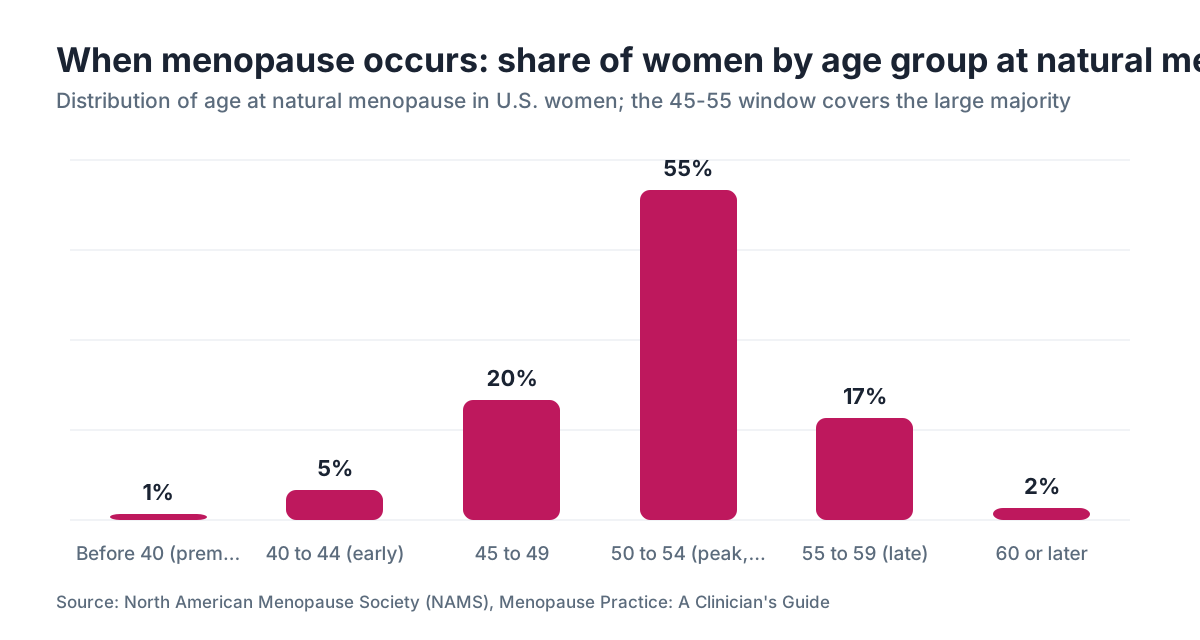
The average age of natural menopause in the United States is 51, according to the North American Menopause Society (NAMS). [1] That figure has barely moved across decades of data. It is an average, not a deadline. The normal range runs from about 45 to 55, so a woman who stops menstruating at 47 and one who stops at 54 are both squarely normal.
"Menopause" has a precise clinical meaning. You have reached it on the day that marks 12 consecutive months without a menstrual period, assuming nothing else explains the gap. [1] Before that day, you are in perimenopause. After it, every year is postmenopause.
That distinction changes everything. Symptoms, hormone levels, and treatment decisions all look different depending on which stage you are actually in. Plenty of women in their late 40s get told they are "going through menopause" when they are really in perimenopause, which can drag on for years before the final period ever arrives.
For the full arc of the transition, see our guide to menopause.
What age range is considered normal for menopause?
NAMS classifies natural menopause before age 40 as premature menopause (also called primary ovarian insufficiency), and menopause between 40 and 45 as early menopause. [1] Both deserve a workup with a clinician, because the health stakes, especially for bones and the heart, differ from menopause that shows up in the early 50s.
On the other end, menopause after 55 gets called late menopause. Research links later menopause to a modestly higher risk of breast and endometrial cancer, probably from longer lifetime estrogen exposure, though the absolute increase is small. [2]
Here is how the categories break down:
| Timing | Age range | Label used clinically | |---|---|---| | Much earlier than typical | Under 40 | Premature menopause / POI | | Earlier than typical | 40 to 44 | Early menopause | | Normal range | 45 to 55 | Natural menopause | | Later than typical | After 55 | Late menopause |
If your periods stop before 45 with no surgical cause, the standard first step is a workup that checks FSH (follicle-stimulating hormone) and estradiol.
When does perimenopause usually start, and how long does it last?
Perimenopause usually begins in the mid-to-late 40s, though some women notice changes in their late 30s. [1] The Stages of Reproductive Aging Workshop criteria (STRAW+10), the framework clinicians use to classify reproductive aging, marks the "late reproductive stage" starting around 42 to 45 in many women, with FSH already climbing before periods turn irregular. [3]
The whole transition, from the first erratic cycle to the final period, averages 4 to 8 years. [1] Some women clear it in two. For others it stretches past a decade. Late perimenopause, the 12 months following the last period, tends to be the roughest.
The classic early tell is a change in cycle length. Periods that ran every 28 days start showing up every 21, or every 35. Then they skip. Hot flashes, broken sleep, and mood swings intensify as the ovaries fire more erratically. Brain fog that women pin on stress or anxiety often has a hormonal driver at this stage.
For a closer look at the age patterns, our perimenopause age article goes deep on the data.
What factors make menopause start earlier or later?
Genetics is the single biggest predictor. If your mother reached menopause at 48, yours is likely to land nearby. Studies of mother-daughter and twin pairs put the heritability of menopause age at 44 to 65 percent. [4]
Smoking is the best-documented factor you can actually control. Current smokers reach menopause 1 to 2 years earlier than non-smokers. [2] Nicotine is toxic to ovarian follicles and interferes with estrogen metabolism.
Other factors that tend to pull menopause earlier:
- Chemotherapy or pelvic radiation (can cause immediate or accelerated ovarian failure)
- Surgical removal of both ovaries (oophorectomy), which triggers immediate surgical menopause
- Lower body weight and BMI
- Autoimmune conditions including thyroid disease, rheumatoid arthritis, and lupus
- Fragile X premutation carrier status
Factors tied to later menopause include higher BMI, more pregnancies, and certain genetic variants. Oral contraceptives do not appear to change the final age of menopause, though they can mask perimenopause by keeping cycles regular.
Race and ethnicity matter too. The Study of Women's Health Across the Nation (SWAN), which followed more than 3,000 women across multiple ethnic groups, found that Black women reach menopause about 8.5 months earlier than white women, while Hispanic and Japanese-American women trended slightly later. [5] SWAN also found Black and Hispanic women reported more frequent and more severe hot flashes than white women.
What are the first signs that menopause is approaching?
The earliest and most reliable signal is a shift in your cycle. Periods may crowd together (cycles under 25 days), then start skipping. Heavy periods mixed with barely-there ones are common early on, as estrogen swings up and down before its overall decline.
Hot flashes hit roughly 75 percent of women during the transition. [1] They often start in perimenopause, peak in late perimenopause and early postmenopause, and in some women last more than a decade. SWAN found the median duration of moderate-to-severe vasomotor symptoms was 7.4 years. [5]
Other early signs that get blamed on everything but hormones:
- Sleep disruption (often from night sweats, but also on its own)
- Vaginal dryness or discomfort during sex
- Mood shifts, more anxiety, a shorter fuse
- Trouble concentrating or short-term memory lapses
- Joint aches
None of these confirm menopause by itself, and all of them have other causes worth checking. Thyroid dysfunction, in particular, overlaps heavily with perimenopause and gets missed constantly.
How do doctors confirm that menopause has started?
For a woman in her late 40s or early 50s with typical symptoms and no period for 12 months, no lab test is needed. [1] The diagnosis is clinical, made on the calendar.
FSH and estradiol help when the picture is murky, especially for women under 45 or those on hormonal contraception that hides their cycles. A fasting FSH consistently above 30 to 40 IU/L, measured twice at least a month apart, alongside low estradiol, is consistent with ovarian insufficiency or menopause. [6] But FSH bounces around a lot in perimenopause, so one normal result rules out nothing.
Anti-Mullerian hormone (AMH) reflects remaining ovarian reserve and drops steadily in the years before menopause. Some clinicians use it to gauge how close a woman is to her final period, though it gives no precise date and is not a standard test for confirming menopause.
Women who had a hysterectomy but kept their ovaries have no period to count. Hormone levels and symptoms are the only guide, and timing in that case is an estimate, not a confirmed diagnosis.
If you are weighing hormonal options at or after this point, hormone replacement therapy is a solid next read.
Does menopause cause weight gain, and why does it happen?
Weight gain around menopause is real, but hormones take more of the blame than the evidence supports. The average woman gains about 1.5 pounds a year in midlife, and studies point to aging and less physical activity as the main drivers, with hormonal change adding to it rather than causing all of it. [5]
What hormones clearly change is where the fat goes. Falling estrogen shifts storage from the hips and thighs to the belly, even in women whose total weight holds steady. That visceral fat carries higher metabolic risk. Lean muscle also declines as estrogen falls, which drops resting metabolic rate.
Hormone therapy, estrogen in particular, appears to modestly cut visceral fat and preserve lean mass in postmenopausal women, though it is not a weight loss drug. [7]
GLP-1 receptor agonists like semaglutide and tirzepatide have become an option for midlife weight gain that will not budge with lifestyle changes. If that is part of your calculation, WomenRx has clinicians who work specifically with women managing hormones and weight at this stage. Our semaglutide for weight loss article covers how these drugs work and what the trials actually show.
What are the health risks of early menopause?
Early menopause, and premature ovarian insufficiency before 40 especially, carries health consequences that do not apply the same way to menopause at the typical age.
Bone loss speeds up sharply without estrogen. Bone density starts falling in perimenopause and drops fastest in the first few years after the final period. Women who reach menopause early rack up more years of low estrogen and, with them, higher fracture risk later on. [8]
Cardiovascular risk climbs after menopause, and an earlier menopause means a longer stretch without estrogen's protective effect on lipids and vessels. SWAN data found women with early natural menopause had higher rates of coronary artery disease than women who reached menopause at typical ages. [5]
Cognitive change is an active research question. Estrogen has receptors throughout the brain, and the timing of hormonal decline relative to when hormone therapy starts may shape cognitive outcomes in ways researchers are still sorting out.
For premature or early menopause, most societies, including NAMS and the Endocrine Society, recommend hormone therapy at least until the average natural menopause age of 51, absent a specific contraindication. [1][6] The logic: this replaces what the body would have had anyway, rather than adding something beyond normal physiology.
Is surgical menopause different from natural menopause?
Yes, and the gap is large. Natural menopause arrives slowly, with perimenopause giving years of runway. Surgical menopause, from bilateral oophorectomy (removal of both ovaries), is instant. Estrogen crashes from reproductive levels to near zero within 24 to 48 hours of surgery.
That abruptness makes symptoms hit harder. Hot flashes run more severe, sleep falls apart faster, and mood shifts land more suddenly than in natural menopause. Women who have surgical menopause before the natural age face the same long-term bone and cardiovascular risks as women with premature ovarian insufficiency, and those risks are generally treated as more urgent with hormone therapy.
Hysterectomy alone (uterus out, ovaries left in) does not cause surgical menopause. That said, some research suggests ovarian function may decline a bit earlier after hysterectomy, possibly from changes in blood supply to the ovaries. [2]
Women with surgical menopause who no longer have a uterus do not need a progestogen to protect against endometrial cancer. Estrogen alone is the usual prescription. Our progesterone article explains how the two hormones interact in therapy decisions.
Can you still get pregnant during perimenopause?
Yes. This catches a lot of women off guard. Ovulation still happens in perimenopause, even with irregular cycles, and pregnancy stays possible until menopause is confirmed by 12 consecutive months without a period. [1] Fertility drops a lot in these years, but the drop is not to zero.
NAMS recommends that women who do not want to conceive keep using contraception until menopause is confirmed. [1] The FSH rule some clinicians repeat (FSH over 30 means you are done) is not reliable on its own, because FSH swings wildly in perimenopause.
Pregnancy in perimenopause carries higher risks: more chromosomal abnormalities, more miscarriage, more gestational diabetes, and more hypertensive disorders of pregnancy. Worth a real conversation with an OB if pregnancy is on the table.
Hormonal contraception suppresses FSH and regulates your cycle, which makes those markers useless for telling where you are in the transition. Switching to a non-hormonal method for a while, or staying on the pill until 50 or 51 and then testing, are the usual approaches clinicians take.
What treatments help with menopause symptoms at this stage?
Hormone therapy is still the most effective treatment for hot flashes, night sweats, vaginal symptoms, and sleep disruption from menopause. [1] For women who reach menopause before 60 and within 10 years of their final period, the benefits generally outweigh the risks, absent a specific contraindication. Clinicians call this the "timing hypothesis" or the "window of opportunity."
Estrogen is the workhorse for vasomotor symptoms. Women with a uterus need a progestogen added to protect the lining. Form, dose, and route (pill, patch, gel, spray, IUD) all shift the risk-benefit picture. Transdermal estrogen, for one, does not raise clotting risk the way oral estrogen can. Our estrogen patch article covers formulations in depth.
Non-hormonal options with real evidence behind them:
- Paroxetine 7.5 mg (the only FDA-approved non-hormonal hot flash treatment)
- Fezolinetant (Veozah), an FDA-approved neurokinin B antagonist cleared in 2023 for vasomotor symptoms [9]
- Gabapentin and clonidine (off-label, more modest evidence)
For vaginal symptoms specifically, low-dose vaginal estrogen works extremely well, has minimal systemic absorption, and is considered safe even for women who cannot use systemic hormone therapy. [1]
At WomenRx, clinicians work through this exact decision, matching women to treatments by symptom profile, history, and what the evidence supports. If hormone therapy is on your mind, read the hormone replacement therapy guide first so you walk into that conversation ready.
What should you do when you think menopause is starting?
Start tracking your cycles, even loosely. Note the first day of each period, the length, and any symptoms. This gives a clinician something real to work with, and it helps you see the moment 12 consecutive months without a period have actually passed.
Book a visit with a clinician who takes menopause seriously, meaning one who takes a real symptom history, talks through options, and does not wave off hot flashes as just aging. The Menopause Society keeps a directory of certified menopause practitioners at menopause.org. [1]
Baseline labs that make sense around menopause: thyroid function (TSH) to catch overlap, a lipid panel (cardiovascular risk shifts here), and fasting glucose or HbA1c (insulin resistance often worsens after menopause). NAMS recommends a bone density scan at 65 for all postmenopausal women, or earlier with risk factors like early menopause, low body weight, or a fracture history. [8]
And be honest about the symptoms you have been playing down. Broken sleep, mood swings, and cognitive fog in perimenopause are not personal failings and they are not in your head. They have documented physiological causes, and there is an option for every one of them.
Frequently asked questions
When does menopause usually start?
Natural menopause arrives at an average age of 51 in the U.S., within a normal range of 45 to 55. The lead-up, perimenopause, usually starts in the mid-to-late 40s and runs 4 to 8 years. Menopause is confirmed after 12 consecutive months without a menstrual period. Genetics, smoking, and surgical history can move the timing meaningfully in either direction.
Can menopause start in your 40s?
Yes. Perimenopause commonly begins in the early-to-mid 40s, and some women reach actual menopause (12 months without a period) by their late 40s. Menopause between 40 and 44 is called early menopause and deserves evaluation for bone and cardiovascular health. Menopause before 40 is classified as premature ovarian insufficiency and warrants a full workup.
What are the earliest signs of menopause?
The earliest reliable sign is a change in cycle length: periods arriving closer together or further apart than usual. Hot flashes, night sweats, broken sleep, mood changes, and vaginal dryness often follow. These typically begin in perimenopause, sometimes years before the final period. Thyroid dysfunction mimics many of these symptoms and is worth ruling out.
How do you know if you are in perimenopause or menopause?
Perimenopause means your cycles are changing but you are still having periods, even irregular ones. Menopause is confirmed only after 12 consecutive months without a period. For women whose cycles are hidden by hormonal birth control, FSH and estradiol can help estimate where you are, though FSH fluctuates a lot during the transition and a single test is not definitive.
Does stress cause early menopause?
Chronic stress has not been shown to directly cause early menopause the way smoking or genetics do. It does affect the hypothalamic-pituitary-ovarian axis and can throw off cycles temporarily. Some research links higher psychological stress to more severe menopause symptoms, but the evidence tying stress to an earlier final menopause age is weak.
Does smoking cause early menopause?
Yes. Current smokers reach menopause an average of 1 to 2 years earlier than non-smokers. This is one of the most consistently replicated findings in menopause research. The mechanism involves nicotine's toxic effect on ovarian follicles and its impact on estrogen metabolism. Former smokers appear to carry lower risk than current smokers, though some residual effect lingers.
What is the difference between premature menopause and early menopause?
Premature menopause, also called primary ovarian insufficiency (POI), means menopause before age 40. Early menopause refers to menopause between 40 and 44. Both carry higher risks of bone loss, cardiovascular disease, and possibly cognitive change compared to menopause at the typical age. Most guidelines recommend hormone therapy for both at least until age 51.
Will my menopause timing be similar to my mother's?
Probably. Twin and mother-daughter studies estimate that age at natural menopause is 44 to 65 percent heritable. If your mother reached menopause at 47, you are more likely than average to do the same. Even so, smoking, chemotherapy, surgery, and other factors can override genetic tendency, and variation within families is common.
Can blood tests confirm menopause?
For a woman in her late 40s or early 50s with no period for 12 months, blood tests are not needed. For women under 45, or those on hormonal contraception, FSH and estradiol help clarify the picture. FSH consistently above 30 to 40 IU/L with low estradiol supports the diagnosis, but a single test is not enough because FSH fluctuates during perimenopause.
How long do menopause symptoms typically last?
SWAN found the median duration of moderate-to-severe hot flashes was 7.4 years. Some women have symptoms for only 2 to 3 years; others endure them for more than a decade. Symptoms often peak in late perimenopause and the first few postmenopausal years. Women who reach menopause younger, or whose symptoms start before the final period, tend to have longer symptom duration.
Is weight gain inevitable at menopause?
Significant weight gain is not inevitable, but it is common. The average woman gains about 1.5 pounds a year in midlife, with aging and reduced activity contributing more than hormones alone. Hormones mainly change fat distribution: falling estrogen shifts storage toward the abdomen. Resistance training, dietary attention, and for some women hormone therapy or GLP-1 medications can meaningfully counter those changes.
Should I get a bone density scan at menopause?
NAMS recommends a bone density scan (DXA) at age 65 for all postmenopausal women, or earlier with risk factors such as early or premature menopause, low body weight, a history of fracture, or long-term corticosteroid use. Menopause speeds up bone loss, and knowing your baseline helps guide decisions about calcium, vitamin D, exercise, and whether medication is warranted.
Can I get pregnant during perimenopause?
Yes. Ovulation continues intermittently during perimenopause, and pregnancy stays possible until menopause is confirmed by 12 consecutive months without a period. Fertility is much lower but not zero. NAMS recommends continuing contraception through perimenopause for women who do not want to conceive. Perimenopausal pregnancy carries higher risks of chromosomal abnormalities and obstetric complications.
Does menopause affect heart health?
Yes. Estrogen protects blood vessel function and lipid profiles. After menopause, LDL cholesterol tends to rise and cardiovascular risk goes up. Women with early or premature menopause face a longer stretch without that protection and have higher rates of coronary artery disease than women with typical-age menopause. Hormone therapy started in early postmenopause may reduce that risk.
Sources
- North American Menopause Society (NAMS), Menopause Practice: A Clinician's Guide
- Office on Women's Health, U.S. Department of Health & Human Services, Menopause page
- Harlow SD et al., STRAW+10: addressing the unfinished agenda of staging reproductive aging. Menopause, 2012
- Murabito JM et al., Heritability of age at natural menopause in the Framingham Heart Study. J Clin Endocrinol Metab, 2005
- Study of Women's Health Across the Nation (SWAN), National Institute on Aging
- Endocrine Society Clinical Practice Guideline: Management of Menopause
- Santen RJ et al., Menopausal hormone therapy and body composition. J Clin Endocrinol Metab, 2014
- National Osteoporosis Foundation / Bone Health and Osteoporosis Foundation, Clinician's Guide to Prevention and Treatment of Osteoporosis
- FDA, Drug Approval: Fezolinetant (Veozah) for vasomotor symptoms of menopause, 2023
- National Institute on Aging, What Is Menopause?
- MedlinePlus, National Library of Medicine, Menopause