When does menopause stop? What to expect and for how long
TL;DR: Menopause is a single day: the 12-month mark after your last period. After that you're postmenopausal for life. Hot flashes usually ease within 4 to 7 years, but 15% of women get them into their 70s. Weight gain and bone loss don't reverse on their own. They need active treatment.
What exactly is menopause, and when is it "over"?
Here's where the confusion starts. Menopause is not a phase or a season. It's one specific moment: the point 12 full months after your last period, with no bleeding in between. That's it. One day.
The North American Menopause Society defines it plainly: "Menopause is defined as the permanent cessation of menstruation, determined in retrospect after 12 consecutive months of amenorrhea without pathological cause." [1] So on the anniversary of your final period, you hit menopause. The day after, you're postmenopausal.
What people usually mean when they ask "when does menopause stop" is really: when do the symptoms stop? That's a longer, messier answer. The hormonal chaos before your final period (perimenopause) and the hot flashes, broken sleep, and brain fog that follow are not menopause itself. They're symptoms of the transition around it.
Think of it as three stages. Perimenopause is the runway leading up to your last period, often 4 to 10 years long. Menopause is the single point in time. Postmenopause is everything after, which means the rest of your life.
How long does perimenopause last before menopause?
Most women spend 4 to 10 years in perimenopause before that final period, with an average around 7 years. [2] It usually starts in the mid-to-late 40s, though some women begin in their late 30s. Our full breakdowns of perimenopause age and when menopause starts go deeper.
During perimenopause, estrogen and progesterone swing unpredictably. Periods get irregular. Hot flashes, sleep trouble, mood shifts, and vaginal dryness can all show up before your final period. That's why so many women feel blindsided. The worst symptoms often hit while they're still technically premenopausal.
The median age of natural menopause in the United States is 51, with a normal range of roughly 45 to 55. Anything before 40 is premature ovarian insufficiency, a separate medical issue that needs its own workup. [3] For the wider picture, see menopause age.
How long do menopause symptoms last after your final period?
This is the real question, and the honest answer is: longer than most doctors used to say.
The Study of Women's Health Across the Nation (SWAN) tracked women for more than two decades and found the total duration of vasomotor symptoms (hot flashes and night sweats) averaged about 7.4 years. For women whose symptoms started before their final period, the average stretched to 11.8 years. [4] A 2015 analysis in JAMA Internal Medicine put the median duration of moderate-to-severe hot flashes at 10.2 years. [4]
That's not what most women hear in a 15-minute appointment. The old "you'll be through this in 2 to 3 years" line comes from shorter, smaller studies.
Here's the good news. Symptoms peak in the two years around the final period, then generally trend down. Here's the catch. "Trending down" doesn't always mean gone. Around 15% of women still get hot flashes into their 70s. [4]
Other symptoms run on their own clocks:
- Vaginal dryness and genitourinary symptoms often don't improve on their own and may get worse without treatment. [5]
- Sleep disruption may ease as hot flashes fade, but many women find it lingers.
- Mood changes tied to hormonal flux often settle in late perimenopause and early postmenopause. Not always.
- Joint pain is common in postmenopause and can be partly estrogen-related.
- Bone loss speeds up in the first 5 to 7 years after the final period and does not stop on its own. [3]
For symptom control, hormone replacement therapy is the most studied and effective treatment for hot flashes and night sweats. An estrogen patch or oral estrogen, usually paired with progesterone if you have a uterus, can cut hot flash frequency sharply.
When do hot flashes stop?
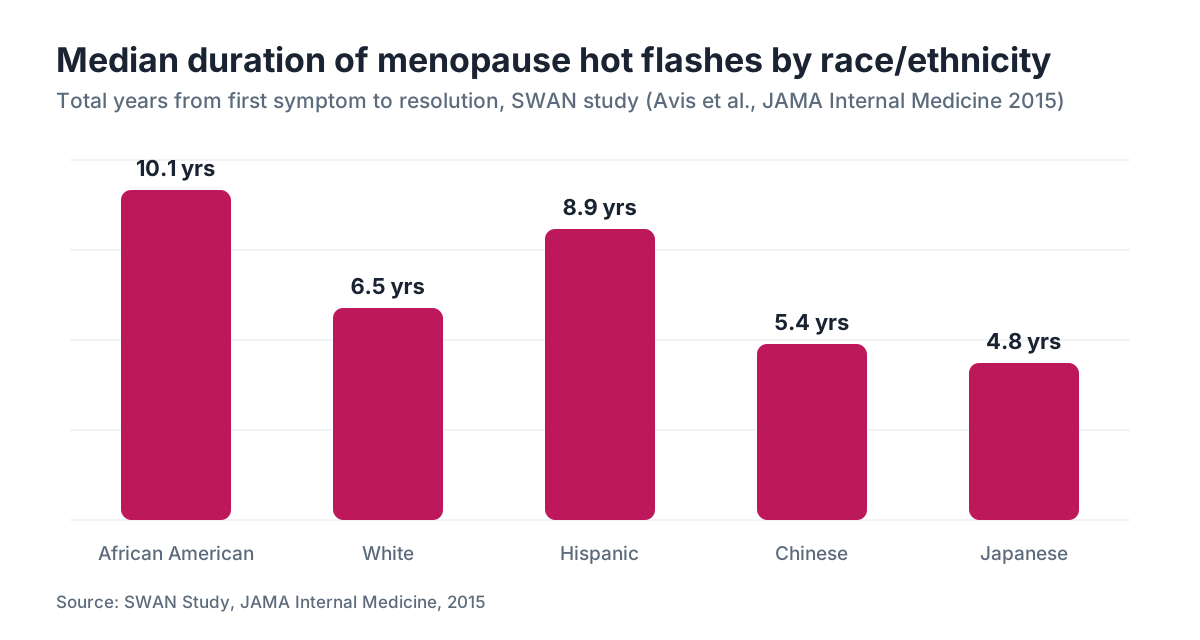
Hot flashes are the symptom women most want to put a date on. SWAN gives the clearest picture we have, and it varies a lot by group. Median duration from first symptom to last was 10.1 years for African American women, the longest in the study. For Japanese and Chinese women it ran shorter, roughly 4.8 to 5.4 years. White women landed around 6.5 years. [4]
Race, body weight, smoking history, depression, anxiety, and how early you first noticed symptoms all shape how long hot flashes last. Women who notice them before their period stops tend to have a much longer road overall.
Still having hot flashes in postmenopause? You're not doing anything wrong. You're in the longer-duration group, and there are treatments. FDA-approved options include hormone replacement therapy and the non-hormonal drug fezolinetant (Veozah), which the FDA cleared in 2023 for moderate-to-severe vasomotor symptoms of menopause. [6]
Does menopause weight gain ever stop on its own?
The uncomfortable truth: for most women, menopausal weight gain doesn't reverse on its own once symptoms ease. Two things drive it, and neither self-corrects. Falling estrogen redirects fat storage toward the belly. Normal aging shrinks muscle mass and slows metabolism. Both persist into postmenopause. [7]
The average woman gains about 1.5 pounds a year in the years around menopause, and much of it settles at the midsection even when the scale barely moves. [7] Visceral fat (the deep abdominal kind) climbs as estrogen drops, and it carries higher cardiometabolic risk than the fat just under your skin.
Muscle loss matters just as much. Sarcopenia (age-related muscle loss) speeds up after menopause, and less muscle means a lower resting metabolic rate. The calorie math that worked at 38 stops working at 52. That's biology, not a willpower problem.
So no. Stopping or reversing menopause weight gain takes active work. It does not sort itself out.
How do I stop menopause weight gain? What actually works?
There's no single fix, but there is a clear hierarchy of evidence.
Hormone therapy. Estrogen therapy does not cause weight gain, and it may blunt the shift toward belly fat. A meta-analysis in Climacteric found hormone therapy modestly reduced waist circumference and visceral fat versus placebo. [8] It's not a weight loss drug, but it addresses part of the hormonal mechanism behind abdominal fat.
Resistance training. Probably the most underused tool here. Building and keeping muscle counters the metabolic slowdown. Two to three sessions a week of progressive resistance work has solid evidence for weight maintenance in postmenopausal women. [7]
Protein. Aim for 1.2 to 1.6 grams of protein per kilogram of body weight per day to protect muscle during a calorie deficit. Most women in midlife eat well below that.
GLP-1 receptor agonists. This is where the evidence has grown fast. Semaglutide (Ozempic/Wegovy) and tirzepatide (Mounjaro/Zepbound) produce real weight loss in women across the menopausal transition. In the STEP 1 trial, semaglutide 2.4 mg cut body weight by an average of 14.9% over 68 weeks in adults with overweight or obesity. [9] In SURMOUNT-1, tirzepatide at 15 mg produced an average 22.5% reduction. [10]
These drugs work by curbing appetite and slowing gastric emptying. They aren't menopause-specific, but the size of the effect is real and both are FDA-approved for chronic weight management. To weigh your choices, see our semaglutide vs tirzepatide breakdown or read up on semaglutide for weight loss.
WomenRx offers GLP-1 prescriptions for eligible women, which is worth exploring if diet and exercise alone haven't moved the needle.
Sleep. Bad sleep pushes hunger hormones the wrong way (ghrelin up, leptin down) and raises cortisol. Treating night sweats and sleep disruption is more than comfort care. It directly affects weight.
What about supplements? The evidence for supplements marketed for menopause weight gain is thin. Nothing comes close to the evidence base of hormone therapy or GLP-1s for this. Magnesium, vitamin D, and omega-3s support general health but won't move the scale in any meaningful way. Black cohosh and phytoestrogens have limited evidence for hot flashes and less for weight. If you're hunting for the best supplements for menopause weight gain, the honest answer is that none clear a high bar alone. They can round out a reasonable routine. They're not the lever.
What is postmenopause, and what health risks continue after symptoms ease?
Postmenopause is the rest of your life after that final-period anniversary. Estrogen and progesterone now sit low and stable. Symptoms may ease, but the low-estrogen state has downstream effects that persist and compound.
Bone density. The fastest bone loss happens in the first 5 to 7 years after the final period, when women can lose 2 to 3% of bone density per year. [3] After that the rate slows but doesn't stop. This is why a bone density test (DEXA scan) is recommended at age 65 for all women, or earlier with risk factors or early menopause. [11]
Cardiovascular risk. Before menopause, estrogen offers some heart protection. After it, women's heart disease risk climbs steadily and roughly matches men's by the mid-60s. High LDL, rising blood pressure, and more visceral fat all feed into it.
Genitourinary syndrome of menopause (GSM). Vaginal and urinary symptoms (dryness, painful sex, recurrent UTIs, urinary urgency) fall under this heading. Unlike hot flashes, GSM usually doesn't improve on its own. Local vaginal estrogen treats it well, has minimal systemic absorption, and is considered safe for most women, including many breast cancer survivors. [5]
Cognitive changes. Some women notice memory and processing-speed changes during the transition. The research is genuinely mixed on whether estrogen therapy protects cognition, and timing matters a lot. The "critical window" hypothesis suggests benefit when it starts early in menopause. [8]
Postmenopause is not a finish line. It's a different physiological state that needs its own proactive management.
Can anything make menopause end sooner, or speed up the transition?
No. The timing of your final period is set by your ovarian reserve, your genetics, and factors like smoking, which speeds ovarian aging by 1 to 2 years on average. [2] You can't rush perimenopause to a close.
Hormone therapy doesn't stop or accelerate the transition. It manages symptoms while the transition runs its natural course. The same goes for every other treatment.
Surgical menopause (bilateral oophorectomy, removal of both ovaries) creates an immediate, abrupt menopause instead of a gradual one. It's linked to more severe symptoms and a sharper rise in cardiovascular and bone risk, especially when surgery happens before 45 without hormone therapy afterward. [3]
If someone is selling a product that claims to end or speed up menopause, that claim has no support in biology or evidence.
What does GLP-1 medication actually do for women in perimenopause and postmenopause?
GLP-1 receptor agonists weren't designed for menopausal women, but they work especially well in a group where the hormonal deck is stacked against weight loss. They cut appetite through the central nervous system, slow gastric emptying, and improve insulin sensitivity. All three target problems that worsen during the menopause transition.
The STEP 1 trial enrolled adults with a BMI of at least 27, and a large share were perimenopausal or postmenopausal women, though the trial wasn't stratified by menopausal status. The FDA approved semaglutide (Wegovy) at 2.4 mg weekly for chronic weight management in 2021. [9]
Tirzepatide (Zepbound), approved by the FDA in 2023, acts on both GLP-1 and GIP receptors, which may explain the larger average weight loss in SURMOUNT-1. [10]
Want the detail on semaglutide or compounded semaglutide as an option? Both are worth understanding. The practical reality: a GLP-1 prescription is real medicine with real side effects (nausea, GI distress, muscle-mass considerations) and needs medical supervision. It's not a casual supplement decision.
WomenRx prescribers work specifically with women in this hormonal stage, which matters because GLP-1 dosing, timing, and pairing with hormone therapy is not one-size-fits-all.
How to talk to your doctor about symptoms that won't stop
Plenty of women are still told their symptoms should be gone by now, or that hormone therapy is too risky to discuss. The evidence has shifted a lot since the early 2000s, when the first Women's Health Initiative results scared many prescribers off HRT. Reanalysis, longer follow-up, and updated guidelines from NAMS and the Endocrine Society have clarified the risk picture. [1] [8]
The current NAMS position, from its 2022 Hormone Therapy Position Statement, is that for healthy women under 60 or within 10 years of menopause onset, the benefits of hormone therapy for symptom management outweigh the risks for most women. [1]
If your provider brushes off symptoms or won't discuss options, a second opinion from a menopause-specialist provider is reasonable. NAMS keeps a directory of certified menopause practitioners.
Come with specifics. How often your hot flashes hit. Your sleep quality. Your weight trend over the past 2 to 3 years. Your last bone density result if you have one. The more specific you are, the more you get out of the appointment.
Frequently asked questions
When does menopause stop?
Menopause itself is a single point in time, the 12-month anniversary of your last period. It doesn't "stop" because it isn't a phase. What most people mean is when do symptoms stop. Hot flashes average 7 to 12 years of duration, though 15% of women get them into their 70s. Some symptoms like vaginal dryness may persist indefinitely without treatment.
How long does menopause last on average?
Counting from the start of perimenopause to when most symptoms resolve, the full transition can run 10 to 14 years. Perimenopause alone averages 7 years. The vasomotor symptom phase averages 7.4 years but varies widely. The SWAN study found women who developed symptoms before their final period had a median duration of nearly 12 years.
Is there an age when menopause symptoms stop completely?
There's no universal cutoff. Most women see clear improvement in hot flashes by their late 50s, but a real minority continue into their 60s or 70s. Genitourinary symptoms (vaginal dryness, urinary urgency) often persist regardless of age unless treated. Bone loss and cardiovascular risk changes from low estrogen are permanent without intervention.
How do I stop menopause weight gain?
The best-supported strategies are resistance training (2 to 3 times a week), protein of 1.2 to 1.6 g per kg of body weight daily, hormone therapy to reduce central fat redistribution, and GLP-1 receptor agonists (semaglutide, tirzepatide) for significant weight loss. Sleep quality matters more than most people realize: poor sleep raises ghrelin and drives overeating. Supplements have weak evidence for weight specifically.
What are the best supplements for menopause weight gain?
Honestly, no supplement has strong evidence for menopause-specific weight loss. Vitamin D, magnesium, and omega-3s support general health in postmenopause but don't move the scale on their own. Phytoestrogens and black cohosh have some evidence for hot flash reduction, not weight. If supplements appeal to you, run them alongside lifestyle changes and medical options, not instead of them.
Do menopause symptoms get worse before they get better?
Yes, for many women. Symptoms often peak in the 1 to 2 years right before and after the final period, when hormonal variability is most extreme. This is sometimes called the late perimenopause surge. After the final period, estrogen settles at a low level and many women find the unpredictable swings ease, even if some symptoms continue at lower intensity for years.
What happens to your body after menopause ends?
After the final-period anniversary, you're in postmenopause permanently. Estrogen stays low and stable. Hot flashes often ease over the following years, but bone density keeps declining (fastest in years 1 to 7), cardiovascular risk rises, and genitourinary symptoms often worsen without treatment. Many women find postmenopause more manageable than perimenopause once they have the right support and treatment.
Can menopause symptoms come back after they stop?
Hot flashes can ebb and flow. Stress, illness, major weight changes, and stopping hormone therapy abruptly can all trigger or re-intensify them. If you stop HRT suddenly, symptoms often return, so tapering is generally recommended. New or returning symptoms years into postmenopause should be evaluated by a provider to rule out other causes.
Does weight gain in menopause go away on its own?
No. The hormonal drivers of menopausal weight redistribution (falling estrogen shifting fat to the abdomen, loss of muscle mass, insulin sensitivity changes) don't self-correct in postmenopause. Active work is needed: resistance training, protein targets, and possibly hormone therapy or GLP-1 medications for women with significant weight to lose. Waiting it out is not an effective strategy.
Will hormone therapy make me gain or lose weight during menopause?
Hormone therapy does not cause weight gain. This is a common misconception. Studies including a meta-analysis in Climacteric found estrogen therapy modestly reduces waist circumference and visceral fat versus placebo. It's not a weight loss treatment, but it helps counter the estrogen-driven shift toward belly fat. Many women find weight easier to manage once their symptoms are treated and sleep improves.
Is semaglutide (Ozempic or Wegovy) effective for menopause weight gain?
Yes, semaglutide is effective for weight loss in women across the menopausal transition, though it's not approved specifically for menopause-related weight gain. In the STEP 1 trial, semaglutide 2.4 mg weekly produced an average 14.9% body weight reduction over 68 weeks. It addresses appetite and insulin sensitivity, both affected by the menopause transition. It requires a prescription and medical supervision.
At what age should I get a bone density test?
The U.S. Preventive Services Task Force and NAMS recommend a baseline DEXA scan at age 65 for all women. If you had early menopause (before 45), significant steroid use, or other osteoporosis risk factors, screening is recommended earlier. Bone loss speeds up in the first 5 to 7 years after the final period, so knowing your baseline early matters for prevention.
Can you be in menopause for 20 years?
In a sense, yes. Postmenopause is a permanent state that lasts the rest of your life. The symptomatic phase (hot flashes, sleep disruption) usually resolves within 7 to 12 years for most women, but the low-estrogen state continues indefinitely. The long-term health effects, including bone and cardiovascular risk, persist and need ongoing management even after noticeable symptoms fade.
How do I know if I am still in perimenopause or already in menopause?
You only know you've reached menopause in retrospect: after 12 full consecutive months without a period. During that waiting year, you're still technically in perimenopause. FSH (follicle-stimulating hormone) blood tests can hint at where you are, but they fluctuate and aren't definitive. Tracking your period history is the most reliable method. Once you pass that 12-month mark, you're postmenopausal.
Sources
- North American Menopause Society (NAMS), 2022 Hormone Therapy Position Statement
- Office on Women's Health, U.S. Department of Health and Human Services, Menopause overview
- National Institute on Aging, NIH, Menopause and bone health
- Avis NE et al., JAMA Internal Medicine, 2015 (SWAN study duration of menopausal symptoms)
- American College of Obstetricians and Gynecologists (ACOG), Genitourinary Syndrome of Menopause
- FDA Drug Approval: Veozah (fezolinetant), 2023
- Greendale GA et al., Journal of Clinical Endocrinology & Metabolism, menopause and body composition
- Endocrine Society, Clinical Practice Guideline: Treatment of Symptoms of the Menopause
- Wilding JPH et al., New England Journal of Medicine, 2021 (STEP 1 trial, semaglutide 2.4 mg)
- Jastreboff AM et al., New England Journal of Medicine, 2022 (SURMOUNT-1 trial, tirzepatide)
- U.S. Preventive Services Task Force, Osteoporosis Screening Recommendation, 2018