When does menopause start? Age, stages, and what to expect
TL;DR: Menopause is one day: the 12-month mark after your last period. The average age in the U.S. is 51, and most women land there between 45 and 55. Perimenopause is the messy part before it, the phase with hot flashes and irregular cycles. It usually starts in your mid-to-late 40s and runs a median of 7.4 years.
What age does menopause start for most women?
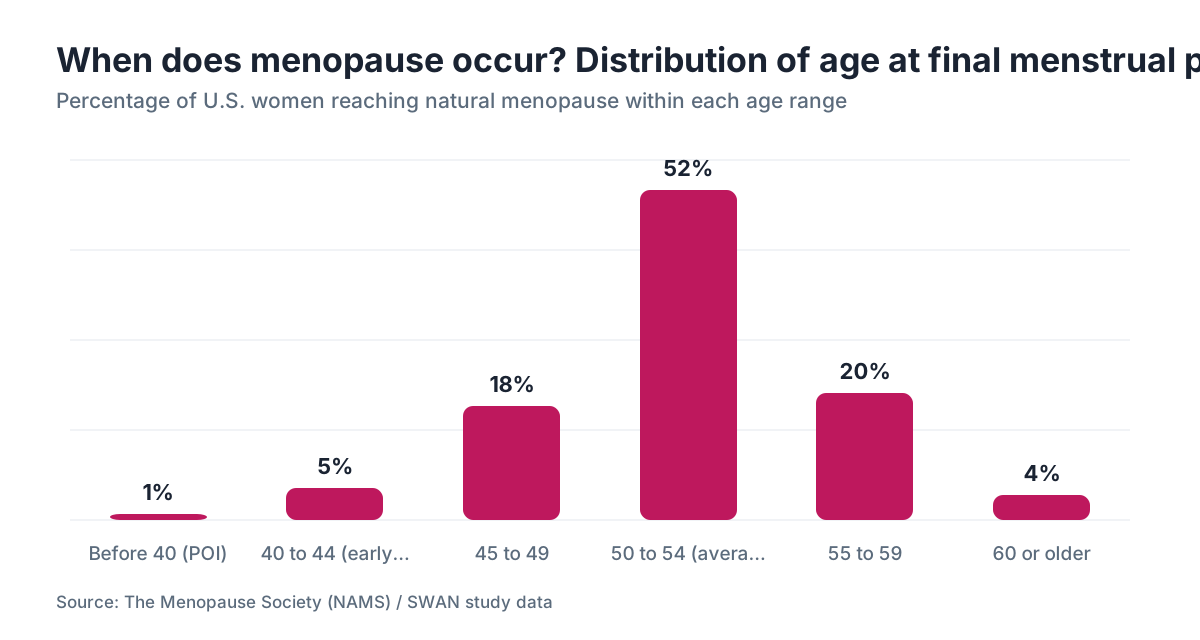
The average age of menopause in the United States is 51 [1]. That figure comes from decades of population data, and it has barely moved across generations.
Here's the part that trips people up. Menopause is a single point in time, not a season of symptoms. The clinical definition is 12 straight months without a period, with no other medical cause. The day you hit that 12-month mark is your menopause date. Everything before it is perimenopause. Everything after is postmenopause.
So when someone says menopause "starts," she usually means one of two things: symptoms first showing up (that's perimenopause, often mid-to-late 40s) or periods stopping for good (the average age of 51). Both answers are correct. It depends on the question.
The normal range is wide. Menopause anywhere from 45 to 55 is completely typical [1]. Step outside that window and the labels change: menopause before 45 is early menopause, and menopause before 40 is premature ovarian insufficiency (POI), which has its own causes and its own health stakes.
What is the average age of menopause in the U.S.?
The median age of natural menopause is 51, according to The Menopause Society [1]. The Study of Women's Health Across the Nation (SWAN), one of the largest long-term studies of midlife women ever run, confirmed that number and added the part people forget: the transition from early perimenopause to the final period takes a median of 7.4 years [2].
SWAN also found that Black women reach menopause about 8.5 months earlier than white women on average, and that Japanese and Chinese American women tend to reach it slightly later [2]. These are averages across thousands of women, not a forecast for you.
Genetics is the strongest predictor of your own timing. If your mother or an older sister went early, your odds shift. Smoking is the biggest lever you can actually control: smokers reach menopause 1 to 2 years earlier than nonsmokers [3]. Body weight matters less and in a messier way. Very low body fat is tied to earlier menopause, but carrying extra weight does not reliably push it later.
One number worth keeping: menopause before 40 affects about 1% of women, and early menopause between 40 and 45 affects roughly 5% [1].
What are the stages of menopause and how do they differ by age?
There are three stages. Get them straight and most of the confusion disappears.
Perimenopause is the transition. Estrogen and progesterone start swinging instead of cycling on a predictable monthly beat. Most women enter it in their mid-to-late 40s, though some start at 40. Periods turn irregular, cycles shorten or stretch, and hot flashes, night sweats, broken sleep, and mood shifts move in. You can still get pregnant during perimenopause because ovulation still happens, just without a schedule. The perimenopause age guide breaks down what tends to happen year by year.
Menopause is the single retroactive date: exactly 12 months after your last period. You only recognize it in the rearview mirror.
Postmenopause is everything after. Hormones settle at a new, lower baseline. Some symptoms ease for many women, but genitourinary symptoms like vaginal dryness and urinary frequency tend to stick around or get worse without treatment. This stage carries higher risk for bone loss and heart disease, which is why it matters more medically than symptomatically.
The Stages of Reproductive Aging Workshop (STRAW+10), the framework clinicians actually use, splits perimenopause into early and late phases by cycle variability [4]. Early stage: cycles vary by 7 or more days. Late stage: cycles run 60 or more days apart. That late stage is usually when symptoms peak.
When does perimenopause typically start and how long does it last?
Perimenopause usually starts in the mid-to-late 40s, with 47 a commonly cited average for the earliest perimenopausal changes [2]. Some women notice shifts at 40 or 41. A few sail through to 50 without a hint.
Duration varies more than people expect. SWAN puts the median at 7.4 years, with a range of roughly 1 to 13 years [2]. Earlier starters tend to have longer transitions. Later starters tend to have shorter ones.
What shows up first is usually a change in cycle length and flow. Hot flashes follow, and they hit about 75% of women during the transition [1]. Sleep trouble often comes next. Brain fog, mood changes, and joint pain get short shrift in clinical guidelines, but women report them constantly.
One caution. A single odd period, or even a few missed months, does not confirm perimenopause. Thyroid problems, high stress, big weight swings, and heavy exercise can all scramble cycles. If you're under 45 and your cycles are changing, check TSH and a full thyroid panel before you chalk it up to menopause.
What causes early menopause or premature ovarian insufficiency?
Early menopause (before 45) and premature ovarian insufficiency, or POI (before 40), are related but not the same.
POI affects about 1% of women [5]. The ovaries stop working normally before 40, but unlike surgical menopause, POI can be intermittent. Ovarian function sometimes flickers back, and pregnancy, though rare, stays possible. POI is linked to autoimmune conditions, fragile X premutation carrier status, and Turner syndrome, yet in about 90% of cases no specific cause turns up [5].
Early menopause between 40 and 45 has similar causes plus a stronger tie to chemotherapy, radiation, and certain medications. Removing both ovaries (bilateral oophorectomy) triggers immediate surgical menopause at any age.
Why this matters beyond a birthday: women with POI or early menopause carry meaningfully higher long-term risk for osteoporosis, cardiovascular disease, and earlier death compared to women who reach menopause at the average age [5]. Both The Menopause Society and the Endocrine Society recommend hormone therapy for these women until at least the average age of natural menopause, unless a specific contraindication rules it out [1][6].
Get a bone density test at diagnosis. Bone loss speeds up the moment estrogen drops, and a baseline scan is worth having.
What factors affect the age menopause starts?
A handful of things genuinely shift the timing. Some you can change. Most you can't.
| Factor | Effect on Menopause Age | Strength of Evidence | |---|---|---| | Smoking | 1-2 years earlier | Strong [3] | | Mother's menopause age | Significant predictor | Strong [3] | | Chemotherapy/radiation | Earlier, sometimes POI | Strong [5] | | Bilateral oophorectomy | Immediate | Definitive | | Nulliparity (never pregnant) | Slightly earlier | Moderate [2] | | Lower body weight/BMI | Slightly earlier | Moderate [2] | | Higher altitude | Earlier in some populations | Limited | | Oral contraceptive use | No consistent effect | Mixed | | Race/ethnicity | Modest variation | Moderate [2] |
Genetics explains a big share of the spread. A 2021 genome-wide association study in Nature identified more than 290 genetic variants tied to the timing of natural menopause [3]. Many cluster around DNA repair pathways, which fits the biology: ovarian reserve fades as egg-cell DNA repair capacity fades.
The practical read: if you smoke and your mother went early, you're carrying two real risk factors. Quitting smoking is the one lever most women can pull to keep menopause from arriving sooner than it otherwise would.
How do you know if you're in perimenopause or already in menopause?
For most women this is a clinical call, not a lab result.
FSH (follicle-stimulating hormone) climbs as ovarian function declines, and a single high FSH reading (usually above 25 to 30 IU/L, depending on the lab) in a symptomatic woman with irregular periods fits perimenopause. But FSH bounces around wildly during the transition, so one normal reading doesn't rule it out, and one high reading in a woman still cycling doesn't confirm menopause [1].
If you've gone 12 months without a period and you're in the expected age range, you've reached menopause. No test needed. The tricky case is when periods stop abruptly in your early 40s or younger, because then you have to rule out pregnancy, thyroid disease, hyperprolactinemia, and primary ovarian insufficiency before calling it natural menopause.
AMH (anti-Mullerian hormone) tracks ovarian reserve and falls steadily through the 40s, but it earns its keep in fertility work, not in pinpointing menopause. The honest truth: no blood test reliably predicts your menopause date within a year or two.
Symptoms are still the most useful signal. Mid-40s, cycles changing, hot flashes and broken sleep? You're almost certainly in perimenopause, whatever a single hormone test says.
What symptoms typically appear at the start of menopause?
Hot flashes are the headline symptom, hitting about 75% of women during the transition [1]. They usually start in perimenopause, peak in the early postmenopause years, and for about 15% of women drag on for 15 years or more [2].
Here's the fuller arc of what shows up and roughly when.
Early perimenopause brings quiet changes first. Shorter cycles, periods a little heavier or lighter, sleep that breaks up now and then. Hot flashes may begin, but mild.
Late perimenopause is when things sharpen. Night sweats wreck sleep. Mood shifts, including anxiety and low-grade depression, run higher during the transition than at other reproductive stages [2]. Brain fog, trouble concentrating, and memory complaints are real and documented, even though guidelines barely mention them.
Genitourinary syndrome of menopause (GSM), which covers vaginal dryness, irritation, and urinary frequency, tends to surface in late perimenopause and early postmenopause. It does not resolve on its own.
Joint pain, thinner skin, and fat shifting toward the belly also land in this window. Weight change around menopause is part hormonal and part ordinary aging, and pulling the two apart is notoriously hard.
If you're weighing whether midlife weight change warrants treatment, the semaglutide for weight loss page lays out what the evidence actually shows for GLP-1 medications in this group.
Does menopause start at a different age for different races and ethnicities?
Yes, and SWAN is the best source we have.
Across the roughly 3,000 women SWAN followed in several racial and ethnic groups, Black women reached their final period about 8.5 months earlier than non-Hispanic white women on average [2]. Hispanic women landed near the white median. Japanese and Chinese American women trended slightly later.
Black women in SWAN also reported more frequent and more bothersome hot flashes, both before and after the final period, than white women [2]. The mechanisms aren't fully worked out. Differences in hormone metabolism, stress exposure, and access to care all likely feed into it.
These are population averages. The spread inside any one group is bigger than the gap between groups. Your family history and the modifiable factors above tell you more about your own timing than any group number.
One consequence worth flagging: because Black women on average reach menopause earlier and run more severe vasomotor symptoms, they may spend longer exposed to the cardiovascular and bone risks of postmenopause. That's a good reason to have an early, informed talk with a clinician about hormone replacement therapy.
Should you start hormone therapy at the beginning of menopause?
Timing matters a lot here, and the evidence has moved over the past decade.
The "timing hypothesis," or window of opportunity, is now well-supported. Women who start hormone therapy within 10 years of menopause or before age 60 appear to get cardiovascular benefit, while women who start much later may not, and some data point to possible harm in older starters [6][7]. The Endocrine Society's 2022 guideline states, "For most healthy symptomatic women under age 60 or within 10 years of menopause, the benefits of hormone therapy outweigh the risks" [6].
Symptoms alone are reason enough to consider treatment. Hot flashes, night sweats, and wrecked sleep cut into quality of life in measurable ways, and hormone therapy is the most effective treatment for vasomotor symptoms, with response rates far above any non-hormonal option [1][10].
Start the conversation early, ideally in perimenopause, and you keep more doors open. Wait until symptoms are severe or years have passed since your last period, and you're starting from a worse spot.
Want the full option set? The what is HRT explainer covers formulations, routes, risks, and how individualized prescribing works in practice. For women who'd rather explore hormone replacement therapy by telehealth than wait months for a specialist, WomenRx connects you with clinicians who focus on menopause care.
On bones specifically: postmenopause is when loss accelerates hardest. A bone density test around the time of menopause gives you a baseline that pays off later, especially with early menopause.
What is the difference between early menopause and premature menopause?
People use the terms interchangeably, but clinically they mean different things.
Early menopause means the final period lands between 40 and 44. It affects roughly 5% of women [1]. The cause is often unclear, but it can trace to autoimmune factors, genetics, or past chemotherapy or radiation.
Premature menopause usually stands in for premature ovarian insufficiency (POI): ovarian function failing before 40. About 1% of women hit this [1]. POI differs from menopause in a specific way. Ovarian function is insufficient, not necessarily gone. About 5 to 10% of women with POI still ovulate now and then and can conceive naturally.
The stakes are high in both. Estrogen deficiency starting in the 40s or earlier sharply raises the risk of osteoporosis, cardiovascular disease, cognitive decline, and earlier death compared to women who reach menopause at the average age [5]. That's why professional societies specifically recommend hormone therapy for POI and early menopause, not as a comfort measure but as protection, continued at minimum until the average age of natural menopause [1][6].
For women diagnosed with POI, the progesterone page explains why progesterone belongs alongside estrogen in anyone with an intact uterus.
How do lifestyle and health history affect menopause timing?
A few things genuinely move the needle. A few things get blamed without the evidence to back it.
Smoking is the best-established lifestyle factor. The effect is dose-dependent: heavier smokers go earlier than lighter smokers, and the mechanism looks like direct toxic damage to ovarian follicles [3]. Losing 1 to 2 years is no small thing given what follows.
Body weight is more tangled. Women with very low BMI, or those who've had significant amenorrhea from over-exercise or undereating, tend toward earlier menopause, probably through reduced ovarian reserve or hypothalamic suppression. High BMI does not appear to reliably delay menopause, whatever some popular sources claim.
Chemotherapy and pelvic radiation can damage the ovaries directly, causing temporary amenorrhea or permanent POI depending on the drug, dose, and age at treatment [5]. Younger women bounce back better. Women in their late 30s or 40s facing cancer treatment should ask about fertility preservation and ovarian protection before starting.
Surgery matters too. Hysterectomy alone, ovaries left in place, does not cause menopause but may nudge it slightly earlier, possibly because the uterus contributes a little to ovarian blood supply [3]. Bilateral oophorectomy causes immediate surgical menopause at any age.
Oral contraceptives suppress ovarian function but don't preserve it. They don't delay natural menopause, and they can mask perimenopausal symptoms, which makes it harder to tell where you are in the transition.
Frequently asked questions
What age do women start menopause?
Most women start noticing perimenopause symptoms in their mid-to-late 40s, with the earliest changes averaging around age 47. The final menstrual period, the official start of menopause, hits an average age of 51 in the U.S. The normal range is 45 to 55. Outside that range, menopause is classified as early (40-44) or premature (under 40).
Can menopause start at 40?
Yes. Menopause before 45 is early menopause and affects about 5% of women. Menopause or ovarian insufficiency before 40 is premature ovarian insufficiency (POI) and affects about 1% of women. Both carry higher long-term risk for bone loss and heart disease, and hormone therapy is generally recommended for both until at least the average age of natural menopause.
What are the first signs that menopause is starting?
The earliest signs are usually changes in cycle length or flow, with cycles shortening under 25 days or stretching unpredictably. Hot flashes and night sweats are the most recognized early symptoms, affecting about 75% of women in the transition. Sleep disruption, mood changes, and brain fog also show up early for many women, often before periods become obviously irregular.
How long does perimenopause last before menopause?
The median is 7.4 years, according to the SWAN study, with a range of roughly 1 to 13 years. Women who enter perimenopause earlier tend to have longer transitions. You're officially in postmenopause the day you've gone 12 full months without a period.
What is the difference between perimenopause and menopause?
Perimenopause is the transition phase: hormones fluctuate, symptoms appear, and periods still happen but turn irregular. Menopause is the single point in time defined as 12 consecutive months without a period. Postmenopause is everything after. Most symptoms people call "going through menopause" actually happen during perimenopause, not after.
Is menopause earlier if your mother had early menopause?
Yes. Family history is one of the strongest predictors of your own timing, and ovarian aging is significantly heritable. If your mother or older sisters reached menopause before 45, your risk of early menopause goes up. No genetic test is currently recommended for routine clinical use to predict your timing precisely.
Does smoking affect what age menopause starts?
Yes, consistently. Smokers reach menopause 1 to 2 years earlier than nonsmokers on average. The effect is dose-dependent, so heavier smoking means earlier onset. The mechanism appears to be direct toxic damage to ovarian follicles. This is one of the few modifiable factors with a well-established, clinically meaningful effect on menopause timing.
Can a blood test tell me when I will start menopause?
Not reliably. FSH rises during perimenopause and fits the transition when it's elevated alongside symptoms, but it swings widely and a single test can't predict timing within a useful window. AMH reflects ovarian reserve but isn't precise enough to pinpoint your menopause date. Symptoms and cycle changes remain the most actionable indicators.
What is the difference between surgical menopause and natural menopause?
Surgical menopause happens when both ovaries are removed (bilateral oophorectomy), causing immediate, complete estrogen withdrawal at any age. Natural menopause is a gradual hormonal decline over years. Surgical menopause typically brings more severe, abrupt symptoms. Women who have surgical menopause before the average natural age carry higher risk for heart disease, bone loss, and cognitive changes.
Does race or ethnicity affect when menopause starts?
Yes, modestly. The SWAN study found Black women reach menopause about 8.5 months earlier than white women on average and report more frequent, more bothersome hot flashes. Hispanic women had timing similar to white women. Japanese and Chinese American women trended slightly later. Individual variation within any group is larger than the differences between groups.
Should I start hormone therapy as soon as perimenopause begins?
That depends on symptom burden and individual risk, not age alone. The evidence supports starting hormone therapy within 10 years of menopause or before age 60 for most healthy symptomatic women. Starting in perimenopause is reasonable if symptoms are hurting your sleep, mood, or quality of life. A clinician with menopause expertise should review your full picture first.
Does having a hysterectomy cause menopause?
Hysterectomy alone (uterus removed, ovaries left) does not cause menopause. Your ovaries keep making hormones, and you'll reach natural menopause at a genetically influenced age, though some data suggest it may come slightly earlier. Removing both ovaries at any surgery causes immediate surgical menopause. After a hysterectomy you lose periods as a signal, so hormone monitoring becomes more useful.
What is premature ovarian insufficiency and how is it different from early menopause?
Premature ovarian insufficiency (POI) is reduced or absent ovarian function before age 40. Early menopause is the final period between ages 40 and 44. POI isn't always permanent: about 5 to 10% of women with POI still ovulate intermittently. Both need evaluation, both carry higher long-term health risks, and both are treated with hormone therapy until at least the average age of natural menopause.
Can stress or major illness cause menopause to start earlier?
Severe psychological stress can disrupt the hypothalamic-pituitary-ovarian axis and cause temporary amenorrhea, but that isn't true menopause. Major illness, big weight loss, and extreme exercise can also suppress cycles. Whether chronic stress genuinely speeds permanent ovarian aging is biologically plausible but not established in human studies. Autoimmune disease has a clearer link to POI.
Sources
- The Menopause Society (NAMS), Menopause Practice: A Clinician's Guide
- Study of Women's Health Across the Nation (SWAN), University of Michigan
- Ruth KS et al., Nature 2021: Large-scale genome-wide association study of age at menopause
- Harlow SD et al., Climacteric 2012: STRAW+10 Staging System for Reproductive Aging
- National Institutes of Health, Office on Women's Health: Premature ovarian insufficiency
- Endocrine Society Clinical Practice Guideline: Treatment of Menopause-Associated Vasomotor Symptoms, 2022
- Manson JE et al., JAMA 2017: Menopausal Hormone Therapy and Long-term All-Cause and Cause-Specific Mortality
- Centers for Disease Control and Prevention (CDC): Reproductive Health
- National Institute on Aging (NIA): Menopause
- The Menopause Society (NAMS), 2022 Hormone Therapy Position Statement